
Walk into any modern architectural marvel these days, and there's a good chance you'll spot it—the seamless, expansive surfaces that make spaces feel larger, more cohesive, and undeniably luxurious. From hotel lobbies to high-end homes, the shift toward bigger, bolder material panels is hard to miss. But what's driving this trend? And more importantly, how do these "big slabs" stack up against the tried-and-true regular tiles we've relied on for decades? Today, we're breaking down the showdown between MCM Big Slab (part of the MCM big slab board series) and regular tiles, with a little help from new rock cut stone real photos that put their size advantages front and center. Spoiler: The difference is night and day.
Before we dive into comparisons, let's get clear on what MCM Big Slab actually is. MCM stands for Modified Composite Material, a cutting-edge blend of natural minerals, polymers, and fibers designed to mimic the look and feel of natural stone—think travertine, granite, or marble—but with a twist: it's lightweight, flexible, and engineered for performance. The MCM big slab board series takes this a step further by offering panels in sizes that regular tiles can only dream of. We're talking 4x8 feet, 5x10 feet, even larger in some cases. Compare that to standard tiles, which typically max out around 24x24 inches (and that's on the "big" end—most are smaller), and you start to see why designers are getting excited.
But MCM isn't just about size. It's part of a broader innovation in building materials, sitting alongside other MCM lines like the 3D printing series and flexible stone options. These materials are built to solve the pain points of traditional options: heavy natural stone that's hard to install, tiles that crack easily, or surfaces that require constant maintenance. So when we talk about MCM Big Slab, we're talking about a material that's as practical as it is pretty.
Regular tiles—ceramic, porcelain, even natural stone tiles—have been the backbone of interior and exterior design for generations. They're affordable, widely available, and come in a rainbow of colors and patterns. Need a backsplash for a tiny bathroom? Tiles. Want to cover a kitchen floor on a budget? Tiles. They're the go-to for small-scale projects where precision cutting and quick replacement are priorities. But here's the rub: their size limitations create a host of issues that become impossible to ignore as spaces get bigger or design ambitions grow.
Think about it: Every tile requires a grout line. On a kitchen wall with 12x12-inch tiles, that means dozens of seams—each one a potential trap for dirt, mold, or unsightly discoloration. On a commercial space like a restaurant dining area, those seams multiply, creating a busy, fragmented look that feels dated. And installation? Cutting tiles to fit corners, curves, or odd angles is time-consuming, and even the most skilled installer can't hide the fact that each tile is a separate piece. Regular tiles are like puzzle pieces—great for small pictures, but messy when you're trying to paint a mural.
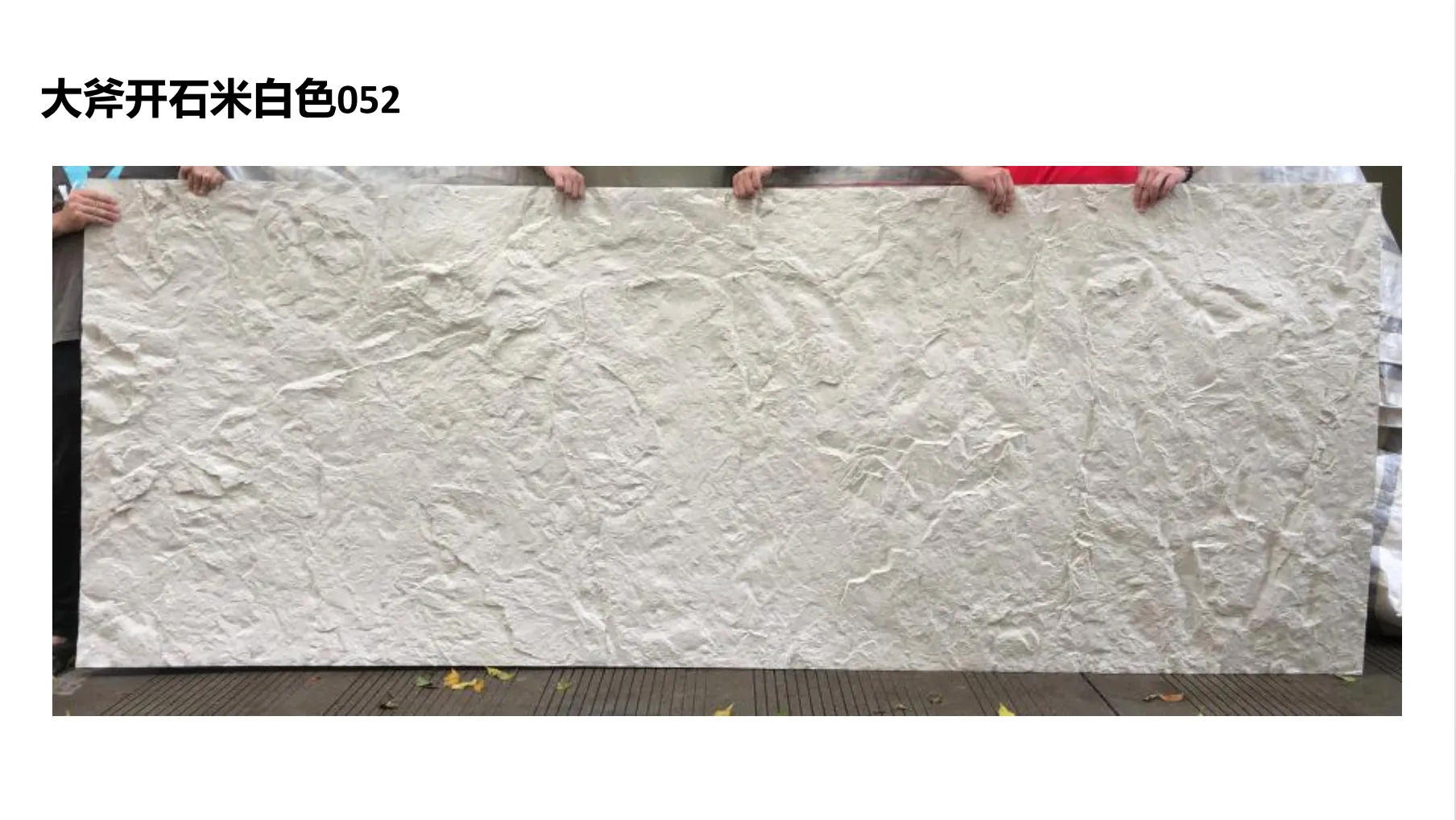
Now, let's get to the star of the show: size. The new rock cut stone real photos we've been referencing? They're a game-changer. Rock cut stone, with its rough-hewn texture and natural veining, is a popular choice for adding rustic charm or industrial edge to a space. But when you cut it into regular tiles, that texture gets chopped up. Seams interrupt the flow of the stone's natural pattern, turning what should feel organic and seamless into a grid of small, disconnected squares.
Enter MCM Big Slab. In the rock cut stone real photos, the difference is stark. One image shows a feature wall clad in MCM Big Slab rock cut stone: the texture runs uninterrupted from floor to ceiling, with only a handful of barely visible seams where panels meet. The stone's natural "grain" feels like it was chiseled from a single block, creating depth and movement that draws the eye. In the adjacent photo, the same rock cut stone in regular tile form looks… busy. The grout lines break up the texture, making the wall feel cluttered, almost chaotic. It's the same material, but the presentation is worlds apart.
This isn't just about aesthetics, though. Size impacts everything from installation time to long-term durability. Let's break it down.
Installing regular tiles is a labor-intensive process. Each tile needs to be measured, cut (often with specialized tools), spaced evenly, and set with mortar before grout is applied. On a 10x10-foot wall with 12x12-inch tiles, that's 100 individual tiles to place—each requiring precision. Even for a seasoned installer, that could take a full day or more. Add in cuts for outlets, windows, or corners, and you're looking at multiple days.
MCM Big Slab? A 10x10-foot wall might only need 3-4 panels, depending on the slab size. Since MCM is lightweight (often 70% lighter than natural stone slabs), installers can handle panels solo or with minimal help, no heavy machinery required. And because the panels are flexible, they can bend slightly to fit uneven surfaces, reducing the need for tedious cutting. Mike, a contractor with 20 years of experience, puts it this way: "Last month, we did a 20x30-foot exterior facade with regular stone tiles. It took three guys four days. The next week, we used MCM Big Slab for a similar-sized wall—two guys, one day. The client saved on labor costs, and we avoided the back pain from hauling heavy tiles. Win-win."
Grout lines might seem like a small detail, but they have a huge impact on how a space feels. On a floor or wall covered in regular tiles, seams create visual "noise"—tiny lines that disrupt the flow of color or texture. In high-moisture areas like bathrooms or kitchens, those seams are also a breeding ground for mold and mildew, no matter how well you clean them. Over time, grout fades, cracks, or discolors, making even a newly tiled space look worn.
MCM Big Slab minimizes seams by design. With larger panels, there are far fewer joints to worry about. And when seams are necessary, they're often filled with a color-matched, flexible sealant that blends into the panel, making them almost invisible. The result? A surface that feels "whole." Take the rock cut stone real photos again: the MCM slab wall reads as a single, unified texture, while the tiled version looks like a patchwork quilt. For designers aiming for a minimalist or high-end aesthetic, that difference is non-negotiable.
Regular tiles are tough, but their small size makes them prone to chipping and cracking—especially at the edges. drop a heavy pot on a kitchen floor with tile, and there's a good chance you'll chip a corner. Over time, foot traffic, temperature changes, or even minor shifts in the building's structure can cause tiles to loosen or crack. And when a tile breaks? You have to find an exact match (which is hard, since tile colors fade over time) and redo the grout around it—hardly a seamless fix.
MCM Big Slab, thanks to its composite construction, is surprisingly durable. The flexible stone core resists cracking under impact, and the large panels distribute weight more evenly, reducing stress on any single point. Plus, MCM is UV-resistant, water-resistant, and fade-proof, making it ideal for both indoor and outdoor use. Sarah, a property manager for a chain of boutique hotels, swears by it: "We used regular marble tiles in our first hotel's lobby, and within a year, we had chips and stained grout. We switched to MCM Big Slab travertine in the next location, and three years later, it still looks brand new—even with guests dragging luggage and kids running around."
Regular tiles limit creativity. Their small size means patterns repeat quickly, and bold designs (like a large-scale floral or geometric print) get muddled by seams. Want to mimic the look of a giant slab of marble? With tiles, you're stuck with a "faux" version that never quite captures the real thing's grandeur.
MCM Big Slab, on the other hand, is a designer's playground. Because panels are large, you can showcase the full beauty of natural patterns—like the sweeping veins of travertine (starry blue) or the rich, dark tones of dolomitic travertine (dark grey)—without interruption. And since MCM is part of the 3D printing series, manufacturers can even create custom textures or gradients that regular tiles can't replicate. Imagine a wall clad in MCM Big Slab with a 3D-printed wave pattern, or a countertop that fades from lunar peak silvery to lunar peak golden—all in one seamless slab. Regular tiles? They'd need hundreds of small, precisely colored pieces, and the effect would still feel choppy.
| Feature | MCM Big Slab (MCM big slab board series) | Regular Tiles |
|---|---|---|
| Size Range | Typically 4x8 ft to 5x10 ft (custom sizes available) | Mostly 12x12 in to 24x24 in (rarely larger than 36x36 in) |
| Weight | Lightweight (5-8 lbs per sq ft) | Heavy (15-25 lbs per sq ft for natural stone tiles) |
| Installation Time (100 sq ft) | 2-4 hours (with 2 installers) | 8-12 hours (with 2 installers) |
| Joint/Seam Visibility | Minimal (3-5 seams per 100 sq ft) | High (dozens to hundreds of seams per 100 sq ft) |
| Design Flexibility | Unlimited—large patterns, gradients, 3D textures (via MCM 3D printing series) | Limited—small, repeating patterns; seams disrupt large designs |
| Durability | Impact-resistant, crack-resistant, UV/water-resistant | Prone to chipping at edges; grout lines stain/mold easily |
| Best For | Large walls, floors, exteriors, high-traffic areas, statement pieces | Small spaces (bathrooms, backsplashes), budget projects, quick repairs |
To be fair, regular tiles still have their place. If you're tiling a tiny powder room with intricate mosaic patterns, or you need a quick, cheap fix for a rental property, tiles are practical. But when it comes to spaces that demand impact, MCM Big Slab is in a league of its own. Let's look at a few scenarios:
Commercial designers live and die by first impressions, and MCM Big Slab delivers. Imagine a hotel lobby with a 20-foot-tall wall clad in MCM Big Slab travertine (starry blue)—the stone's natural pits and veining stretch from floor to ceiling, creating a dramatic focal point. No grout lines, no clutter—just pure, unbroken beauty. Regular tiles here would feel busy and cheap, undermining the luxury vibe. Similarly, restaurants using MCM Big Slab for bar tops or dining room walls can create a cohesive, high-end look without blowing the budget on natural stone.
Modern homes are all about open spaces—kitchens that flow into living rooms, master bathrooms with walk-in showers, and outdoor patios that blend with indoor areas. MCM Big Slab is perfect for these layouts. A kitchen island with a 5x8 ft MCM Big Slab countertop (say, in marble interstellar gray) becomes the centerpiece of the room, with no seams to interrupt the stone's pattern. A bathroom with MCM Big Slab flexible stone walls feels spa-like, with smooth, grout-free surfaces that are easy to clean. Regular tiles, in contrast, would chop these spaces into small, disconnected sections—hardly the "open" feel homeowners crave.
Outdoor spaces are where MCM Big Slab truly outshines tiles. Exterior walls, patios, and pool surrounds need to withstand rain, sun, and temperature swings—and regular tiles often fail here. Grout lines absorb water, leading to mold and mildew, and freeze-thaw cycles can crack tiles. MCM Big Slab, with its water-resistant core and large panels, avoids these issues. A pool deck clad in MCM Big Slab gobi panel stays cool underfoot, resists slipping, and looks seamless—no more tripping over uneven tile edges. And since MCM is lightweight, it won't add extra stress to a building's structure, unlike heavy natural stone slabs.
We've talked a lot about the benefits, but nothing drives the point home like seeing it with your own eyes. The new rock cut stone real photos we mentioned earlier? They're a revelation. Let's walk through a few standouts:
Photo 1: Indoor Feature Wall – On the left, MCM Big Slab rock cut stone: the wall is 12x8 ft, covered in a single panel (with one seam at the 8-foot mark). The stone's rough texture and natural color variations flow seamlessly, creating a rugged yet refined look. On the right, the same rock cut stone in 18x18-inch tiles: the wall has 32 tiles, each with a grout line. The texture feels broken, and the grout (even in a matching color) creates a grid that distracts from the stone's beauty. It's like comparing a mural painted on a single canvas to one painted on a mosaic of small tiles—both use the same colors, but one feels complete.
Photo 2: Outdoor Patio – MCM Big Slab rock cut stone covers a 20x15 ft patio with just 6 panels. The surface is smooth and even, with no tripping hazards. Rainwater runs off easily, and there's no sign of mold or mildew in the seams (which are sealed with flexible caulk). The regular tile patio next to it? Dozens of grout lines, some already discolored from dirt, and a few tiles that have lifted slightly—common after a winter of freeze-thaw cycles. The MCM patio looks brand new; the tile patio looks like it's seen better days.
Photo 3: Commercial Bar Top – A restaurant bar in downtown Chicago opted for MCM Big Slab rock cut stone, and the result is stunning. The bar stretches 15 feet, with a single slab (plus one seam hidden behind the sink). The stone's natural veining runs the length of the bar, making it feel like a solid block of stone quarried just for this space. The regular tile bar across the street? 12x12-inch tiles with visible grout lines that trap spills and require constant scrubbing. Guess which bar gets more compliments?
At the end of the day, the choice between MCM Big Slab and regular tiles comes down to your priorities. If you want a budget-friendly, quick fix for a small space, tiles might work. But if you're after a seamless, high-end look, faster installation, and long-term durability—especially in large or high-traffic areas—MCM Big Slab is the clear winner. It's not just a material; it's a design tool that lets you create spaces that feel intentional, cohesive, and truly one-of-a-kind.
And with innovations like the MCM 3D printing series and flexible stone options, the possibilities are only growing. Imagine a future where your home's walls are printed on-site with custom 3D textures, or your kitchen countertop is a single slab of MCM that mimics the look of aged wood or polished concrete—all without seams, weight issues, or maintenance headaches. Regular tiles, for all their reliability, can't keep up.
The shift toward larger, more innovative materials like MCM Big Slab isn't just a trend—it's a response to how we live and design today. We want spaces that feel open, connected, and beautiful, and regular tiles, with their small size and endless seams, hold us back. MCM Big Slab, with its size, flexibility, and durability, is leading the charge toward a more seamless, sustainable, and stunning built environment.
So the next time you're planning a renovation or new build, do yourself a favor: skip the tiles. Look at the rock cut stone real photos, imagine the possibilities with MCM Big Slab, and see for yourself how bigger really is better. Your space (and your sanity) will thank you.
Recommend Products












