
Walk into any modern building—whether it's a sleek office lobby, a cozy café, or a sprawling residential complex—and you'll notice something subtle but powerful: the materials shaping its walls, floors, and facades. They're not just there to cover surfaces; they tell a story, set a mood, and even influence how we move through a space. But here's a little-known secret that architects and designers swear by: size matters . The dimensions of building materials can make or break a project, affecting everything from installation time to the final aesthetic. Today, we're diving into two standout players in the world of cladding and surfacing: the MCM Big Slab Board Series and the Standard Charcoal Burnt Wood Board. Let's unpack why their size differences are more than just numbers on a spec sheet—they're game-changers for anyone who cares about beauty, efficiency, and innovation.
Before we jump into size, let's get to know our two materials. First up is the MCM Big Slab Board Series —part of the broader MCM (Modified Composite Material) family, which has been turning heads in architecture circles for its blend of durability and design freedom. Think of MCM as the rebel with a cause: it's lightweight, flexible, and made using cutting-edge processes like the 3D printing series , which allows for precision that traditional materials can't match. At its core? Flexible stone —a key ingredient that gives MCM its strength without the heft of natural stone. But what really makes the Big Slab stand out? Its name says it all: this isn't your average panel.
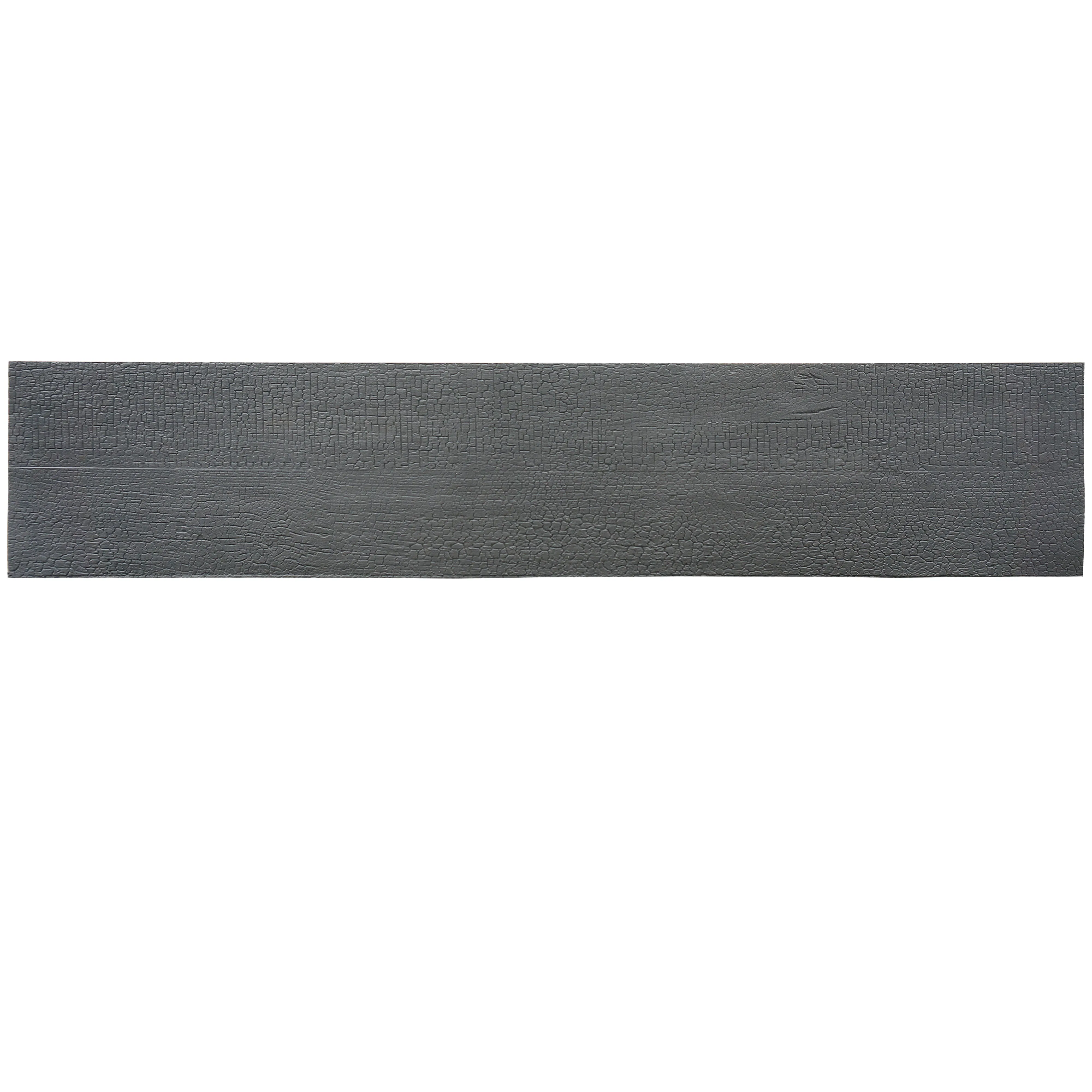
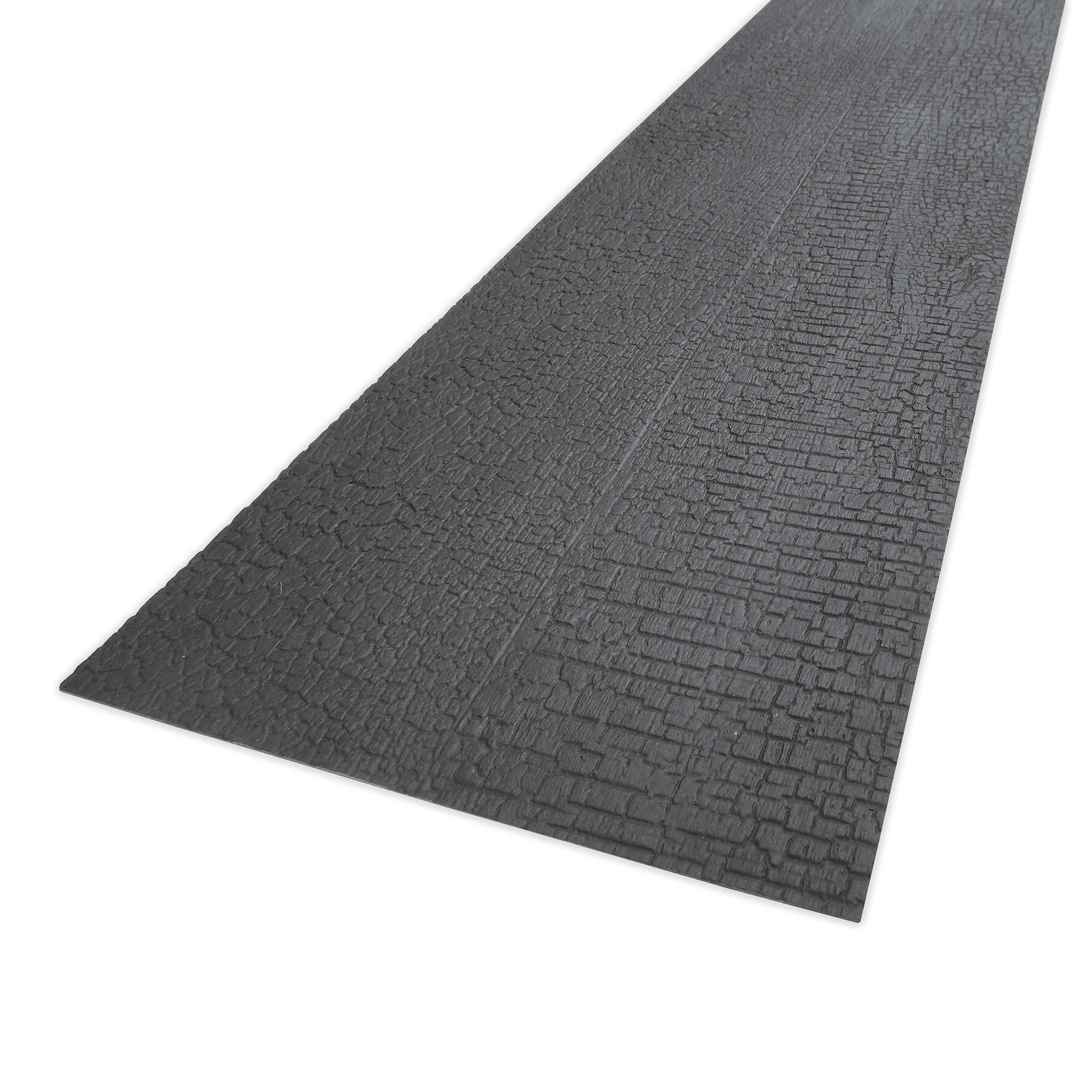
On the other side, we have the Standard Charcoal Burnt Wood Board —a classic with a rustic charm. Picture the warm, weathered look of wood that's been charred (a technique dating back centuries, known as shou sugi ban in Japan), giving it that rich, almost smoky texture. It's beloved for bringing organic warmth to spaces, from restaurant walls to home exteriors. But here's the catch: traditional wood-based boards, even modern ones, have size limitations. They're typically cut to smaller, more manageable dimensions, which has worked for decades—but is that still enough in a world where bigger, bolder designs are the norm?
Let's start with a simple question: when you're designing a wall that stretches 10 meters wide, would you rather use 10 small panels or 2 large ones? The answer might seem obvious, but the implications go deeper than just fewer trips to the hardware store. Smaller panels mean more seams. More seams mean more opportunities for gaps, water intrusion, or just plain visual clutter. They also mean more labor hours—each panel needs to be measured, cut, and secured, adding up quickly on a tight timeline. Larger panels, on the other hand, can create a seamless, uninterrupted surface that feels expansive and intentional. That's the promise of the MCM Big Slab—and the challenge the Charcoal Burnt Wood Board often faces.
Let's talk numbers. A standard MCM Big Slab typically clocks in at dimensions like 1200mm x 2400mm (that's 4 feet by 8 feet, for those who prefer imperial). Some variants even push 1500mm x 3000mm—think of a single panel that's taller than most ceilings! Compare that to the Charcoal Burnt Wood Board, which usually maxes out around 600mm x 1200mm (2 feet by 4 feet). That's a massive difference in coverage. To cover a 20m² wall, you'd need roughly 7 Charcoal Burnt Wood Boards (assuming no waste) versus just 1 or 2 MCM Big Slabs. Let that sink in: fewer panels mean fewer cuts, fewer fasteners, and far less time spent aligning edges. It's like the difference between tiling a backsplash with 1x1 inch mosaics versus 12x24 inch tiles—one feels like a chore, the other like a breeze.
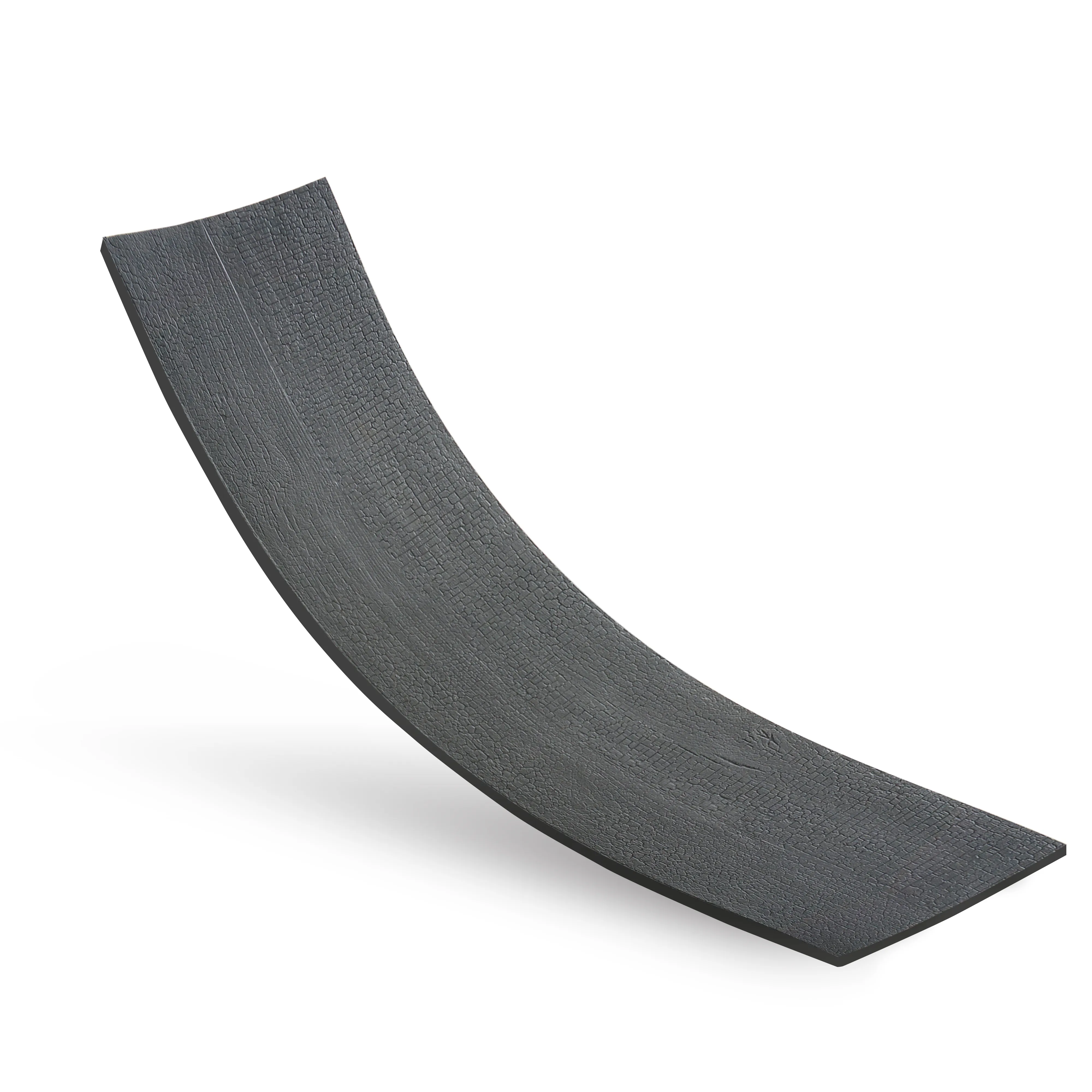
But size alone isn't the MCM Big Slab's only trick. Remember that flexible stone we mentioned earlier? It's what allows these large panels to stay lightweight—often weighing in at 8-12 kg/m², compared to natural stone's 25-30 kg/m² or even Charcoal Burnt Wood's 15-20 kg/m². That lightness is a lifesaver during installation. Imagine hoisting a 2400mm panel up a scaffolding: with MCM, a two-person crew can handle it; with heavier materials, you might need machinery or extra labor. And because it's flexible, it can even bend slightly to follow curves or uneven surfaces—no more cracked panels when the wall isn't perfectly straight. It's the kind of material that makes contractors smile and architects dream bigger.
Don't get us wrong—Charcoal Burnt Wood Boards have a lot going for them. That charred texture? It's unbeatable for adding warmth and character. Run your hand over it, and you can feel the history in the grain, like the material has stories to tell. It's perfect for spaces where coziness is key: a mountain cabin, a boutique hotel lobby, or a café that wants to feel like a friend's living room. But when it comes to size, those charm points can turn into challenges.
Let's say you're designing a restaurant with a 15-meter-long feature wall. Using Charcoal Burnt Wood Boards (600mm wide each), you'd end up with 25 vertical seams (that's one every 600mm). Even with careful installation, those seams are going to be visible—little lines that break up the flow of the wall. Some designers lean into this, using the seams as a design element, but others see them as distractions. Then there's the installation timeline: each of those 25 panels needs to be sanded, sealed (to protect against moisture), and secured. On a tight construction schedule, that extra time can throw off deadlines. And let's not forget weight: at 15 kg per panel, that 15-meter wall would weigh around 375 kg—compared to MCM Big Slab's roughly 180 kg for the same area. That added weight might require reinforcing the wall structure, adding cost and complexity.
Sometimes, numbers speak louder than words. Let's put the size advantages (and trade-offs) of both materials into a clear, easy-to-digest table. Think of this as your cheat sheet for choosing between the two:
| Feature | MCM Big Slab Board Series | Standard Charcoal Burnt Wood Board |
|---|---|---|
| Typical Dimensions | 1200mm x 2400mm (up to 1500mm x 3000mm) | 600mm x 1200mm (max 800mm x 1600mm for premium variants) |
| Weight per m² | 8-12 kg | 15-20 kg |
| Seams per 20m² Wall | 1-2 (minimal, almost invisible) | 6-8 (visible, requires careful alignment) |
| Installation Time (for 20m²) | 2-3 hours (2-person crew) | 5-6 hours (2-person crew, including sealing) |
| Best For | Large, seamless surfaces (lobbies, exteriors, curved walls) | Smaller, textured accents (feature walls, ceilings, furniture) |
Let's step out of the spec sheet and into the field. Meet Sarah, an architect working on a community center in a busy urban area. Her client wants the main hall to feel open and airy, with a wall that stretches 25 meters—no seams, no interruptions. "We originally considered Charcoal Burnt Wood because the client loved the warmth," Sarah recalls. "But when we did the math, we realized we'd have over 40 seams. That's 40 places where dirt could collect, where the wood might expand or contract differently, and where the eye would get pulled away from the overall design." Instead, they went with MCM Big Slab in a light travertine finish. "The install took half the time we budgeted, and the wall looks like a single, continuous slab of stone. The client walked in and said, 'That's exactly what I imagined—but better.'"
Then there's Mark, a contractor who specializes in boutique retail spaces. He recently used Charcoal Burnt Wood Boards for a coffee shop's interior accent wall. "The client wanted that rustic, cabin vibe, so we embraced the seams," he says. "We staggered the panels and used a dark grout to make the lines part of the design. It worked, but it took extra time to align everything perfectly. If it was a larger space—like a department store—I'd probably suggest MCM instead. Seams add character in small doses, but in big areas, they just look messy."
You might be wondering: Are larger panels more prone to damage? It's a fair question. After all, a bigger surface has more area to potentially crack or warp, right? Not with MCM Big Slab. Thanks to its composite makeup and 3D printing series manufacturing (which ensures uniform density), it's surprisingly tough. The flexible stone core resists impacts, and the material is UV-stable, moisture-resistant, and even fire-retardant. In coastal areas, where salt air can eat away at wood, MCM holds up beautifully—no rotting, no warping, no need for yearly sealing. Charcoal Burnt Wood, by contrast, needs regular maintenance (think annual sealing) to protect against moisture and pests, especially in humid climates. Those seams we talked about? They're also potential weak points: water can seep in, leading to mold or warping over time.
That said, Charcoal Burnt Wood's smaller size can be an advantage in one scenario: repair. If a single 600mm panel gets damaged, you can replace just that one. With MCM Big Slab, a large panel might mean replacing a bigger section. But here's the flip side: MCM is so durable that damage is rare. "In 10 years of installing MCM, I've only had to replace a panel once—after a construction accident," Mark notes. "Charcoal Burnt Wood? I've replaced panels due to water damage, scratches, even termites. It's beautiful, but it's high-maintenance."
At the end of the day, the "better" material depends on the project. If you're designing a cozy bookstore with low ceilings and intimate nooks, Charcoal Burnt Wood's smaller size and warm texture might be exactly what you need. It's about creating a space that feels lived-in and welcoming. But if you're aiming for grandeur—think a hotel lobby with 10-meter ceilings, a museum's sweeping exterior, or a corporate headquarters that wants to project modernity—MCM Big Slab's size is a superpower. It lets you create surfaces that feel endless, that draw the eye upward, and that make a statement without saying a word.
And let's not forget sustainability. MCM's lightweight nature reduces transportation emissions (fewer trucks needed to haul panels), and its composite materials often include recycled content. Charcoal Burnt Wood, while natural, requires cutting down trees—though many brands use reclaimed or FSC-certified wood to mitigate this. Still, when it comes to minimizing waste during installation, MCM has the edge: larger panels mean fewer offcuts, less material ending up in landfills.
So, what's the verdict? The MCM Big Slab Board Series and Standard Charcoal Burnt Wood Board are both excellent materials, but their size differences carve out distinct niches. MCM Big Slab shines in large-scale, modern projects where efficiency, seamless design, and low maintenance are priorities. It's the material for dreamers who want to push boundaries and create spaces that feel larger than life. Charcoal Burnt Wood Board, meanwhile, is for the storytellers—those who value texture, tradition, and warmth in smaller, more intimate settings.
At the end of the day, the best material is the one that aligns with your project's goals. But if there's one takeaway, it's this: don't underestimate the power of size. It's not just about numbers on a spec sheet; it's about how a material makes people feel when they step into a space. And in a world where first impressions matter, a seamless, expansive surface can turn a "nice room" into an unforgettable experience.
So, whether you're an architect sketching your next masterpiece or a homeowner picking materials for a renovation, remember: size isn't just a detail. It's the foundation of great design.
Recommend Products












