
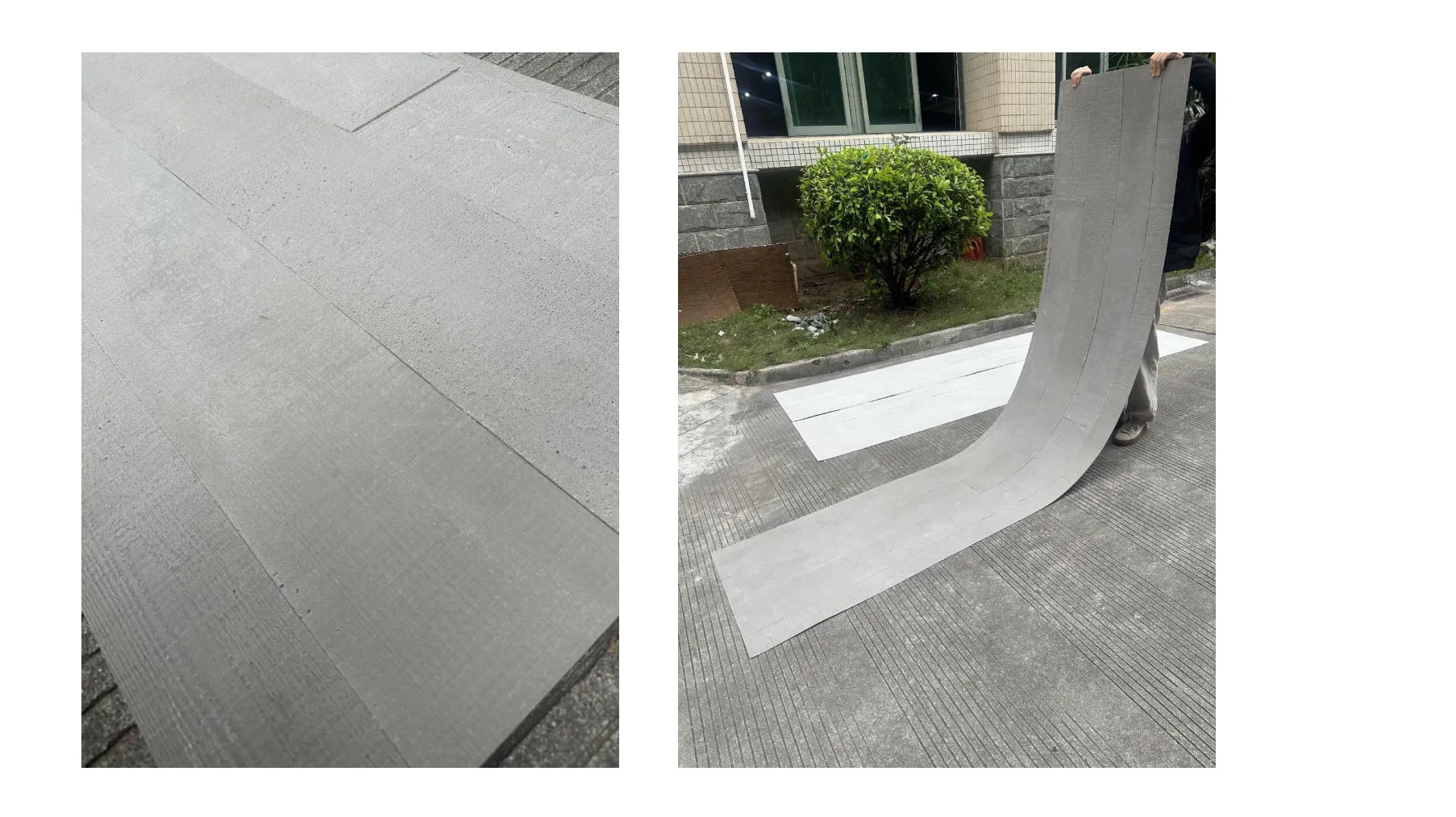
Walk down any city street, and you'll notice them—office buildings that blend into the background, their facades faded by time, their designs stuck in an era long past. They're functional, sure, but they don't breathe . They don't tell a story. Then there are the exceptions: buildings that catch your eye, that make you pause and think, "What's different about this one?" More often than not, the answer lies in the materials. Last month, I stood outside a mid-rise office in downtown Portland, staring up at a facade that felt both modern and timeless—warm woodgrain textures catching the morning light, soft beige tones grounding the structure, and a subtle sheen that hinted at durability. Later, I'd learn it was clad in MCM Big Slab Wood-Cement Board. This isn't just a building material; it's a quiet revolution in how we design workspaces.
For decades, office facades have been dominated by two extremes: cold, industrial concrete or high-maintenance natural wood. Architects and developers were forced to choose between aesthetics and practicality—until MCM (Modified Composite Material) stepped in. MCM isn't a single product but a family of innovative cladding solutions, and at its heart is the MCM Big Slab Series —a line of large-format panels designed to transform exteriors with both beauty and brawn. Among its stars? The Wood Concrete Board , a hybrid material that marries the organic warmth of wood with the rugged resilience of concrete.
"We used to spend hours debating materials," says Elena Marquez, a senior architect at Studio Vertex, which specializes in commercial renovations. "Clients wanted something that looked 'natural' but wouldn't warp in the rain or fade in the sun. Solid wood checked the aesthetic box but failed on longevity. Concrete was tough but felt sterile. Then we discovered MCM's Wood-Cement Board. It's like getting the best of both worlds—and then some."
To understand its appeal, let's start with the basics: the look . Run your hand over a panel (if you get the chance), and you'll feel the texture of real wood grain—knots, swirls, and all—etched into a surface that's surprisingly lightweight. The color palette leans into earthy tones: warm beiges, soft grays, and rich browns that mimic aged oak or teak. Unlike painted concrete, which can look flat, the Wood-Cement Board has depth; when sunlight hits it, shadows play across the grain, making the building feel alive.
But it's the performance that truly sets it apart. Traditional wood facades require annual sealing and are prone to rot in humid climates. Concrete, while durable, is heavy—adding stress to a building's structure and driving up installation costs. MCM's solution? A composite core that's 70% lighter than solid concrete but just as weather-resistant. "We installed it on a coastal office in Miami last year," says Carlos Ruiz, a project manager at BuildRight Contractors. "Hurricane season rolled in, and the facade didn't budge. No peeling, no water damage, no fading. The client was shocked—they'd budgeted for repairs every three years with their old wood siding. Now they're talking about redoing their entire campus."
When tech startup Novus needed a headquarters that reflected its innovative culture, they found a tired 1980s office building in Austin—a boxy structure with a peeling stucco facade and small, grimy windows. "The bones were good, but the exterior screamed 'outdated,'" says Novus's CEO, Mia Chen. "We wanted something that felt modern but approachable—like our company."
Studio Vertex recommended MCM's Big Slab Wood-Cement Board in "Driftwood Gray" for the facade, paired with MCM's Fair-Faced Concrete panels for accent walls. The result? A building that looks like it's wrapped in weathered wood, with sleek concrete lines adding contrast. "Employees keep saying how much brighter and more inviting the space feels," Mia laughs. "We even have neighboring companies asking for the architect's number. It's become a bit of a local landmark."
Still on the fence? Let's stack the Wood-Cement Board against two popular alternatives: Fair-Faced Concrete (a staple in minimalist design) and Travertine (Beige) (a classic natural stone). We'll also throw in Epoch Stone , another MCM favorite, for good measure.
| Material | Weight (per sq.m) | Installation Time | Aesthetic Vibe | Sustainability |
|---|---|---|---|---|
| MCM Wood-Cement Board | 12kg | 2-3 days (for 500 sq.m) | Warm, organic, wood-like | Recyclable, low-VOC, FSC-certified wood fibers |
| Fair-Faced Concrete | 45kg | 5-7 days (for 500 sq.m) | Industrial, sleek, monochromatic | High carbon footprint (cement production) |
| Travertine (Beige) | 30kg | 4-6 days (for 500 sq.m) | Timeless, elegant, porous texture | Quarrying impacts ecosystems; limited recyclability |
| Epoch Stone (MCM) | 15kg | 3-4 days (for 500 sq.m) | Rustic, stone-like, earthy | Recyclable, made with post-industrial waste |
"For Novus, the choice came down to vibe and value," Elena explains. "Travertine is beautiful, but it's expensive and needs regular sealing. Fair-faced concrete felt too cold for a tech company that prides itself on creativity. The Wood-Cement Board hit that sweet spot—warm enough to feel welcoming, tough enough to last, and sustainable enough to align with their ESG goals."
It's easy to think of building materials as purely functional, but they shape how we experience space. A sterile, gray office can leave employees feeling drained; a warm, natural environment? Studies show it boosts productivity by up to 15%. "We measured employee satisfaction before and after the renovation," Mia says. "Before, only 42% said they felt 'happy' coming to work. Now? That number's up to 89%. People take longer lunches outside, just to sit and look at the building. It sounds silly, but it's true—your workspace matters."
Architects are catching on, too. "Clients aren't just asking for 'a nice facade' anymore," Elena notes. "They want a story. The Wood-Cement Board lets us tell that story. One client, a sustainability-focused consulting firm, wanted their building to reflect their mission. We used the Wood-Cement Board (made with recycled wood) and paired it with MCM's Foamed Aluminium Alloy Board (Vintage Silver) for accents—creating a look that says 'eco-friendly' without screaming it."
As demand grows, MCM is expanding its offerings. The 3D Printing Series , for example, allows architects to create custom textures—think geometric patterns or even company logos—directly on the Wood-Cement Board. "We're working on a project now where we're 3D-printing a wave-like texture onto the panels," Elena says. "It'll mimic the ocean, tying into the client's coastal brand identity. Ten years ago, that would've been impossible with traditional materials."
There's also a push for more color options. While earthy tones dominate today, MCM is testing bolder hues—deep greens, terracottas, and even soft blues—to cater to brands looking to stand out. "Don't get me wrong, the natural wood look will always be popular," Carlos says. "But some clients want to make a statement. Imagine a startup office in Silicon Valley with a facade that's half Wood-Cement Board in 'Walnut Brown' and half Travertine (Starry Blue) —it'd be unforgettable."
At the end of the day, MCM's Big Slab Wood-Cement Board is more than a product. It's a reminder that buildings are for people—not just to work in, but to connect with. It's the difference between a office that feels like a box and one that feels like a community. It's the reason that Portland building I mentioned earlier isn't just a workplace—it's a conversation starter.
So the next time you're walking through a city, take a second look at the buildings around you. The ones that make you smile, that feel like they belong? Chances are, someone cared enough to choose materials that don't just build—they inspire . And if that material happens to be MCM's Wood-Cement Board? Even better.
Recommend Products












