
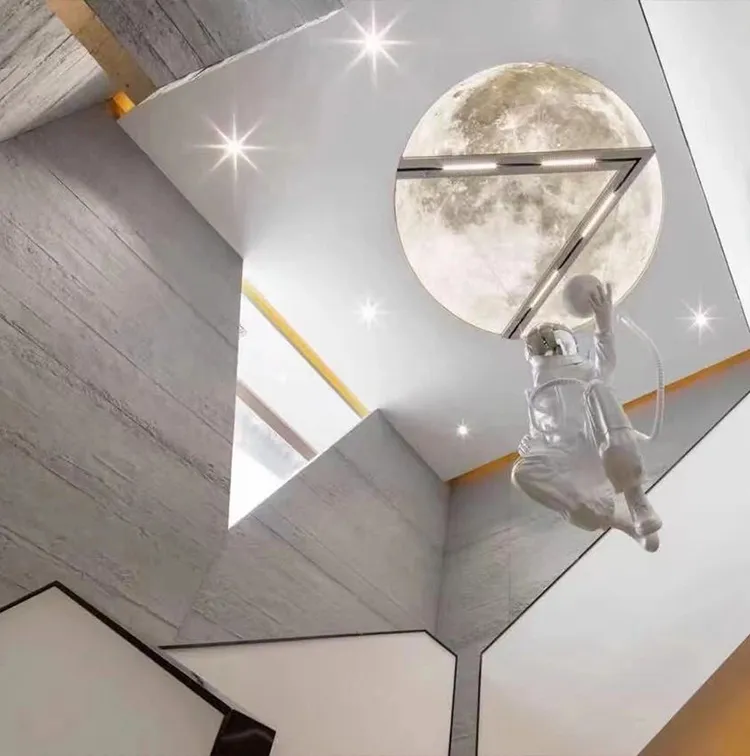
Walk into any cutting-edge sustainable building today, and you'll notice something different about the walls, facades, and even ceilings. They're not just structures—they're statements. Textured, durable, and designed with purpose, these surfaces often share a common secret: they're made with MCM Cement Board . In an era where green building certifications like LEED, BREEAM, and WELL have shifted from "nice-to-have" to "must-have," MCM's innovative product lines are emerging as the go-to choice for architects, developers, and builders who refuse to compromise between sustainability and aesthetics. Let's dive into why MCM Cement Board isn't just a material—it's a catalyst for the future of eco-conscious construction.
At its core, MCM Cement Board is a marvel of modern material science. Unlike traditional concrete or natural stone, which often come with heavy environmental footprints—think quarrying, high carbon emissions, and transportation costs—MCM products are engineered to minimize impact without sacrificing performance. The magic lies in their composition: a blend of cement, recycled aggregates, and proprietary additives that create a lightweight, flexible, and incredibly durable material. But what truly sets MCM apart is its versatility, spanning multiple series that cater to every design need, from industrial chic to rustic warmth.
Take, for example, the MCM 3D Printing Series . This line redefines customization by leveraging 3D printing technology to create intricate textures and patterns that would be nearly impossible (or wildly wasteful) to achieve with traditional manufacturing. Imagine a facade that mimics the undulating waves of a desert dune or the rough-hewn look of ancient stone—all printed with precision, using only the exact amount of material needed. The result? Drastically reduced waste during production, a key factor in earning green building certification points for waste reduction.
Then there's MCM Flexible Stone , a game-changer for designers who crave the beauty of natural stone but recoil at its environmental cost. Traditional stone cladding requires heavy extraction, transportation, and cutting, often leading to significant material waste. MCM Flexible Stone, by contrast, is thin, lightweight, and adaptable, meaning it can be curved, bent, or shaped to fit even the most complex architectural designs—all while using a fraction of the resources. It's stone, reimagined: same visual appeal, but with a carbon footprint that's a fraction of the real thing.
Green building certifications aren't just about "being green"—they're about measurable, verifiable actions. Let's break down how MCM Cement Board and its sister products check the boxes for the most rigorous standards, from LEED to BREEAM.
LEED, the most widely recognized green building rating system globally, awards points across categories like Materials and Resources (MR), Energy and Atmosphere (EA), and Indoor Environmental Quality (EQ). MCM products shine here:
BREEAM, popular in Europe and Asia, emphasizes holistic sustainability, including sourcing, energy use, and ecological impact. MCM products excel in categories like:
MCM's product portfolio is vast, but a few lines stand out as particular MVPs for green building projects. Let's explore how they contribute to certification goals while elevating design.
Natural stone is timeless, but its extraction is notoriously damaging. Quarrying disrupts ecosystems, consumes massive amounts of water, and releases CO2 into the atmosphere. MCM Flexible Stone offers a solution: it replicates the texture and color of natural stone—think travertine (starry green) with its celestial speckles or Bali Stone with its warm, earthy tones—without the need for mining. At just 3-5mm thick, it's also incredibly lightweight, reducing transportation emissions by up to 60% compared to traditional stone cladding. For projects chasing LEED MR Credit 5 (Sustainable Sourcing), this is a no-brainer.
The construction industry is one of the world's biggest waste generators, with up to 15% of materials ending up in landfills during building. The MCM 3D Printing Series flips this script. By printing designs layer by layer, it uses only the material required for the final product, slashing waste to less than 2%. Imagine a hotel lobby with a wave panel facade—curved, organic, and printed to fit the space exactly. No excess, no scraps, just pure design. This level of precision is a goldmine for BREEAM's Wst 03 credit (Construction Waste Reduction) and LEED MR Credit 3 (Construction Waste Management).
Metals in construction often get a bad rap for high embodied energy, but foamed aluminium alloy board (vintage silver) and its counterparts ( vintage gold , gold ) are rewriting the rules. Foamed aluminium is 70% lighter than solid aluminium, cutting transportation costs and emissions. It's also 100% recyclable, with a closed-loop lifecycle that aligns with LEED MR Credit 2 (Construction Waste Management). Aesthetically, it adds a touch of modern elegance—think a restaurant facade with vintage silver panels that catch the light, creating a warm glow without the need for extra lighting (hello, energy savings!).
Travertine is a classic, but natural travertine is porous, heavy, and often imported from far-flung quarries. Travertine (starry green) from MCM solves these issues. Engineered to mimic the stone's characteristic pitted texture, it's reinforced with fiberglass for strength and treated to resist moisture, making it ideal for both indoor and outdoor use. Its "starry" finish—speckles of iridescent green—adds a unique flair, proving sustainability doesn't mean boring design. For projects aiming for WELL Certification (which focuses on occupant well-being), this material contributes to biophilic design, connecting people to nature without depleting it.
To truly understand MCM's impact, let's compare it to common building materials using key sustainability metrics. The table below highlights how MCM Cement Board and select products stack up against natural stone, traditional concrete, and solid aluminium—all through the lens of green building certification criteria.
| Material | Embodied Carbon (kg CO2/m²) | Recyclability | Durability (Years) | Installation Waste (%) | LEED Points Potential* |
|---|---|---|---|---|---|
| MCM Cement Board | 12-15 | 85% (recyclable/reusable) | 50+ | 3-5% | 4-6 |
| Natural Stone (Travertine) | 35-45 | Low (difficult to recycle) | 30-40 | 15-20% | 1-2 |
| Traditional Concrete | 25-30 | Moderate (crushed for aggregates) | 40-50 | 10-12% | 2-3 |
| Foamed Aluminium Alloy (MCM) | 8-10 | 100% (closed-loop recycling) | 60+ | 2-4% | 5-7 |
*Estimated points based on LEED v4.1 Materials and Resources credits.
The numbers speak for themselves. MCM Cement Board and its lines consistently outperform traditional materials in carbon footprint, recyclability, and waste reduction—all critical for green certifications. For instance, the 85% recyclability rate of MCM Cement Board directly contributes to LEED MR Credit 5: Solid Waste Management, while its low embodied carbon helps projects meet stringent carbon neutrality targets.
Sustainability isn't just about metrics—it's about people. MCM's commitment to green building extends to the communities that interact with its products. Take, for example, a affordable housing project in Portland, Oregon, clad in MCM Big Slab Board Series . The lightweight slabs reduced installation time by 30%, cutting labor costs and allowing the developer to allocate more funds to energy-efficient appliances and solar panels. The result? A LEED Gold-certified building where residents enjoy lower utility bills and healthier indoor air—all because the cladding choice prioritized both planet and people.
Or consider a school in Madrid, Spain, using MCM Flexible Stone in its classrooms. The material's acoustic properties dampen noise, creating a calmer learning environment, while its low VOC emissions ensure students aren't breathing in harmful chemicals. It's a small detail, but one that aligns with WELL Certification's focus on mental and physical well-being—proof that sustainable materials can directly improve quality of life.
As green building certifications evolve to demand even higher standards—think LEED Zero, which requires net-zero carbon emissions—materials like MCM Cement Board will only grow in importance. With ongoing innovations, such as incorporating carbon-capturing additives or using 100% recycled content, MCM is poised to stay ahead of the curve. Imagine a future where every building's facade not only looks stunning but actively reduces the planet's carbon load—a future MCM is helping to build, one slab, panel, and print at a time.
In the end, green building certifications are more than just plaques on a wall. They're proof that we can build smarter, live better, and protect the planet—all without sacrificing the beauty and functionality we crave. And in that mission, MCM Cement Board isn't just a solution. It's a partner.
So the next time you walk into a LEED Platinum office or a BREEAM Outstanding school, take a closer look at the walls. Chances are, you'll see MCM's mark—and know that behind that texture, that durability, that beauty, lies a commitment to a greener, brighter future.
Recommend Products












