
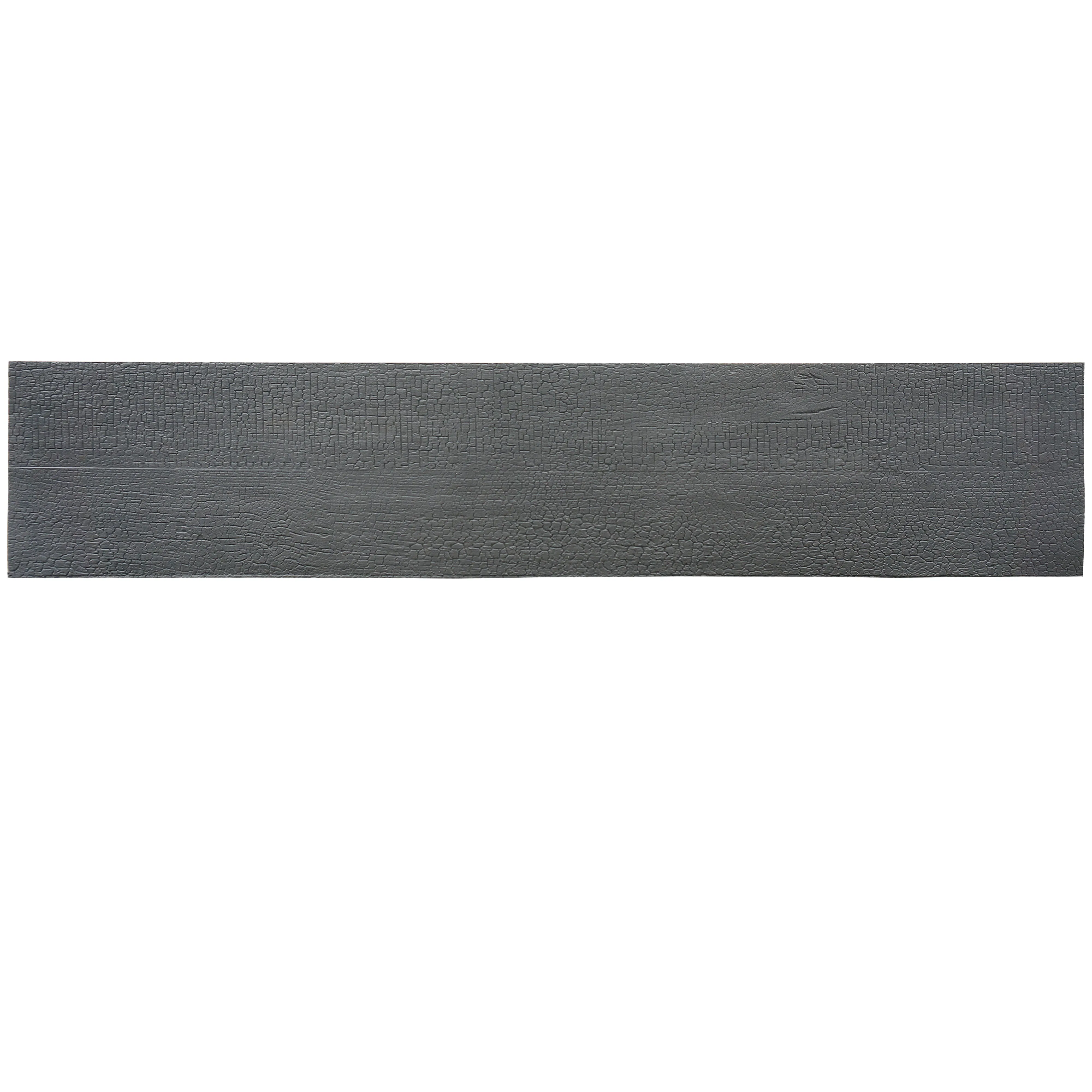
Walk into a busy home office where the kids are laughing upstairs, the fridge hums in the kitchen, and a neighbor's lawnmower roars outside. Or step into a trendy restaurant where the chatter of diners blends with clinking cutlery and the upbeat playlist—all while you're trying to hear the person across the table. Noise, in its many forms, has a way of seeping into our spaces, disrupting focus, relaxation, and connection. But what if the solution to quieter, more peaceful environments was hiding in the walls themselves? Enter MCM Charcoal Burnt Wood Board: a material that doesn't just elevate aesthetics with its rich, smoky (texture) but also stands as a silent guardian against unwanted sound.
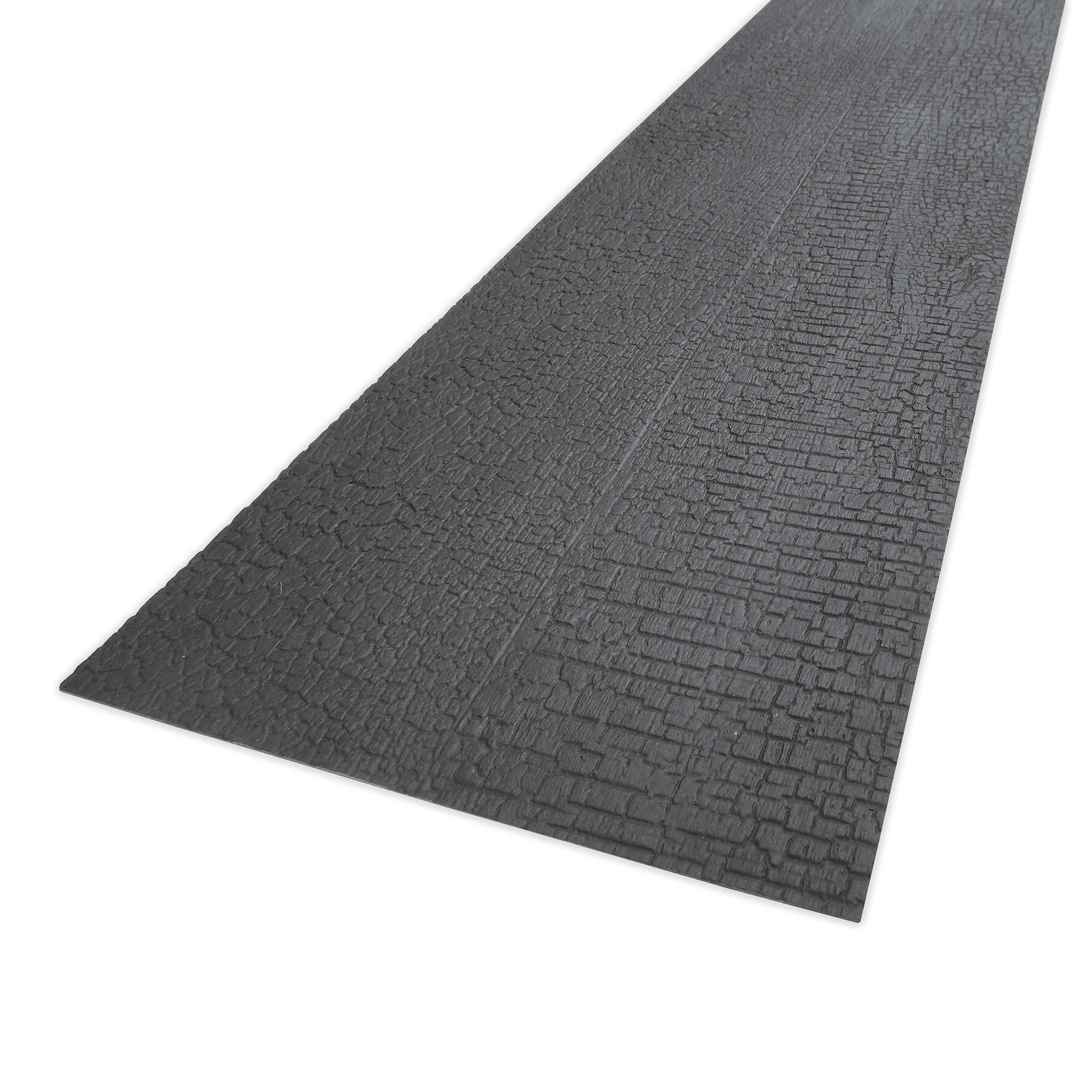
Before diving into its sound-busting superpowers, let's get to know the star of the show. MCM, or Modified Composite Material, is a revolutionary category of building materials designed to blend durability, flexibility, and sustainability—traits that have made it a favorite among architects and designers worldwide. The Charcoal Burnt Wood Board is a standout in this lineup, crafted through a specialized process that mimics the ancient art of Shou Sugi Ban, a Japanese technique where wood is charred to enhance its resistance to fire, pests, and decay. But MCM takes it further: instead of solid wood, it uses a composite core (often recycled fibers, resins, and minerals) wrapped in a thin layer of real wood veneer that's carefully charred, creating that distinctive, depth-filled finish—think deep blacks with hints of amber and gray, like wood kissed by flame and time.
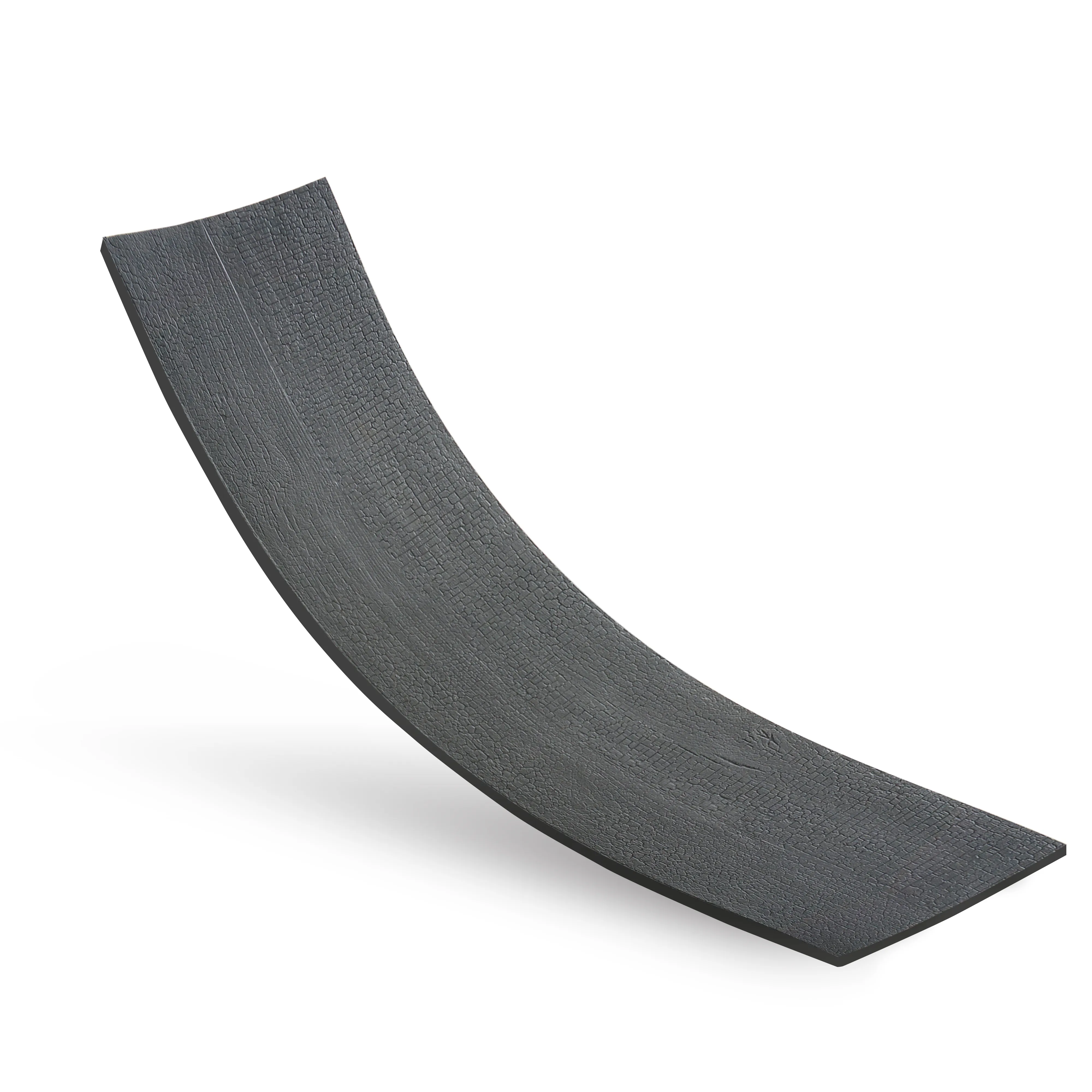
What sets it apart from traditional charred wood? For starters, it's lightweight—up to 70% lighter than solid timber—making it easier to transport, install, and work with on-site. It's also flexible, able to bend around curves or adhere to uneven surfaces without cracking, a feat that solid wood (or even rigid materials like fair-faced concrete) can't match. And while it looks like it belongs in a rustic cabin or a modern industrial loft, its performance credentials are where it truly shines—especially when it comes to sound insulation.
Sound is just energy traveling through the air in waves. When those waves hit a surface, three things can happen: they're reflected (echo), transmitted (pass through the material), or absorbed (converted into heat). For a material to be a good sound insulator, it needs to excel at the latter two—blocking transmission and absorbing echoes. MCM Charcoal Burnt Wood Board does both, thanks to a clever combination of density, structure, and chemistry.
While MCM is lightweight, its composite core is surprisingly dense. Unlike hollow materials (which let sound pass through easily) or overly porous ones (which can't block low-frequency noise), the core is engineered to have a balanced density that resists the transfer of sound waves. Imagine sound as a series of tiny punches against a wall—if the wall is too soft, the punches go through; too hard, they bounce back (echo). MCM Charcoal Burnt Wood Board's core acts like a firm yet slightly yielding barrier, absorbing some of the punch and blocking the rest.
The charred wood veneer isn't just for show—it's a key player in sound absorption. When wood is charred, it develops millions of tiny pores and cavities, like a microscopic sponge. These pores trap sound waves, causing them to bounce around inside and lose energy instead of reflecting off the surface. This is why spaces with porous materials (like carpets or acoustic foam) feel quieter—they reduce echo and reverberation. MCM Charcoal Burnt Wood Board's surface takes this to the next level: the charring process creates a network of micro-pores that act like a (sound-absorbing) net, catching high-frequency sounds (like voices, dishes clinking, or typing) that are most annoying in daily life.
Sound doesn't just travel through the air—it also moves through solids as vibrations. If a wall is made of a single, rigid material (like fair-faced concrete), vibrations from a slamming door or a loud TV can travel through the wall and into adjacent rooms. MCM Charcoal Burnt Wood Board's layered structure—composite core + charred veneer—breaks this chain. The core's viscoelastic properties (it's slightly springy) dampen vibrations, turning mechanical energy into minimal heat instead of letting it pass through. It's like adding a shock absorber to your walls—smoothing out the "jolts" of sound before they can spread.
Numbers tell the story best. Let's compare MCM Charcoal Burnt Wood Board to other common building materials using two key metrics: Sound Transmission Class (STC) and Noise Reduction Coefficient (NRC) . STC measures how well a material blocks sound from passing through (higher = better blocking), while NRC measures how much sound it absorbs (0 = no absorption, 1 = total absorption). Here's how it stacks up:
| Material | STC Rating | NRC (0-1) | Key Sound Insulation Features |
|---|---|---|---|
| MCM Charcoal Burnt Wood Board | 42-45 | 0.80-0.85 | Balanced blocking + absorption; porous charred surface; vibration-damping core |
| Fair-Faced Concrete | 40-43 | 0.05-0.10 | Good blocking, poor absorption; reflects sound, causing echo in large spaces |
| Wood Grain Board (Solid Timber) | 25-30 | 0.20-0.30 | Low blocking; moderate absorption but prone to vibration transmission |
| MCM Flexible Stone | 38-40 | 0.60-0.70 | Good flexibility, moderate absorption; better for aesthetics than acoustic performance |
| Polished Concrete | 40-42 | 0.05-0.15 | Hard, reflective surface; blocks sound but amplifies echo |
The table speaks volumes: MCM Charcoal Burnt Wood Board not only blocks sound as effectively as (or better than) fair-faced concrete but absorbs 8-17 times more sound than polished concrete or solid wood. That means in a room lined with MCM Charcoal Burnt Wood Board, you're not just preventing noise from escaping—you're also creating a space where sound feels "softer," more controlled, and less overwhelming. For example, in a restaurant with high ceilings and hard surfaces, adding MCM panels to the walls could reduce echo by 60-70%, making conversations easier without cranking up the volume.
Sound insulation isn't a one-size-fits-all need—different spaces demand different solutions. MCM Charcoal Burnt Wood Board's versatility makes it a star in nearly every setting, from cozy homes to bustling commercial hubs. Let's break down its top applications:
In homes, noise often comes from the most unexpected places: a teenager's gaming session in the basement, a partner's late-night Zoom calls, or even the hum of appliances. MCM Charcoal Burnt Wood Board shines here, especially in:
Offices, co-working spaces, and retail stores thrive when noise is managed. Too much chatter or equipment noise can tank productivity; too little can feel sterile. MCM Charcoal Burnt Wood Board strikes the balance:
Hotels, restaurants, and resorts live and die by guest experience—and nothing ruins a stay faster than noisy neighbors or a dining room where you can't hear your date. MCM Charcoal Burnt Wood Board adds both luxury and peace:
Sound insulation is a headline feature, but MCM Charcoal Burnt Wood Board brings more to the table—making it a smart investment for any project:
Charred wood is naturally resistant to fire, mold, and pests, and MCM amplifies that. Its composite core resists warping, cracking, or rotting, even in humid climates (think bathrooms or coastal homes). Unlike solid wood, it won't shrink or expand with temperature changes, so your walls stay smooth and intact for decades.
As a green building material, MCM Charcoal Burnt Wood Board checks all the boxes: it uses recycled materials in its core, requires less energy to produce than traditional stone or concrete, and is 100% recyclable at the end of its life. Plus, its durability means less frequent replacement—reducing waste over time. For projects aiming for LEED certification, this is a major win.
Let's not forget the obvious: it looks stunning . The charcoal burnt finish adds warmth, texture, and character to any space—whether you're going for a modern minimalist vibe, a rustic cabin feel, or an industrial loft aesthetic. Unlike acoustic foam (which is functional but ugly) or plain drywall (which needs endless decor to liven up), MCM Charcoal Burnt Wood Board is a design statement in itself. It pairs beautifully with other materials too—think metal accents, warm lighting, or even contrasting MCM products like flexible stone for a layered look.
Traditional soundproofing materials (like mass-loaded vinyl or acoustic drywall) can be heavy, messy, and time-consuming to install. MCM Charcoal Burnt Wood Board, being lightweight and flexible, is a breeze. It can be cut with standard tools, adhered directly to walls with construction adhesive, or even nailed/screwed in place. Contractors love it because it speeds up installation times (and thus reduces labor costs), and DIYers appreciate how user-friendly it is—no special training required.
In a world that feels increasingly loud, finding peace and quiet has become a luxury. MCM Charcoal Burnt Wood Board doesn't just sell a product—it sells an experience: the experience of a home where you can hear yourself think, a restaurant where laughter feels warm (not overwhelming), an office where focus comes naturally. It's a rare blend of form and function: a material that protects your ears and pleases your eyes, that works as hard in a cozy cottage as it does in a sleek skyscraper.
Whether you're building a new space or renovating an old one, don't overlook the power of sound. The right materials can transform "just a room" into a sanctuary, a workplace into a productivity hub, a gathering spot into a place where connections thrive. And with MCM Charcoal Burnt Wood Board, you're not just choosing sound insulation—you're choosing a material that understands what matters most: the way a space feels .
So, the next time you're dreaming up your ideal space, ask yourself: What does quiet mean to me? If it means peace, focus, and the freedom to be fully present, then MCM Charcoal Burnt Wood Board might just be the missing piece.
Recommend Products












