
Walk into any home, café, or office, and the first thing that catches your eye—after the people, of course—is the materials that shape the space. They're not just backdrop; they're storytellers. A rough-hewn stone wall might whisper of mountain cabins, while sleek ceramic tiles shout modern minimalism. But in the world of building materials, choosing between tradition and innovation often feels like weighing comfort against progress. Today, we're diving into two contenders: the time-tested ceramic tile and the rising star, MCM Charcoal Burnt Wood Board. Beyond aesthetics, we're getting gritty with pH levels, durability, and real-world performance—because the best spaces aren't just beautiful; they're built to last, adapt, and feel human .
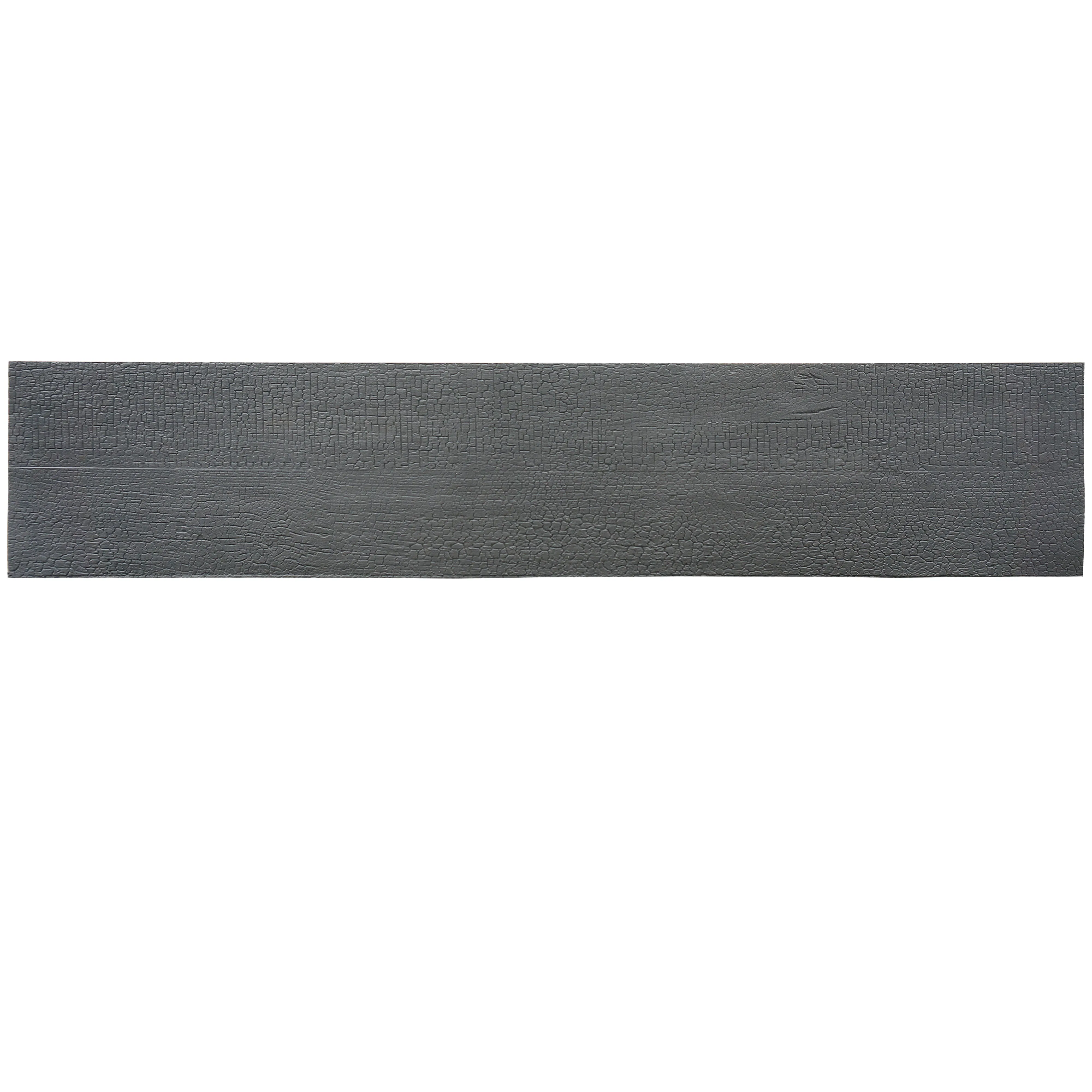
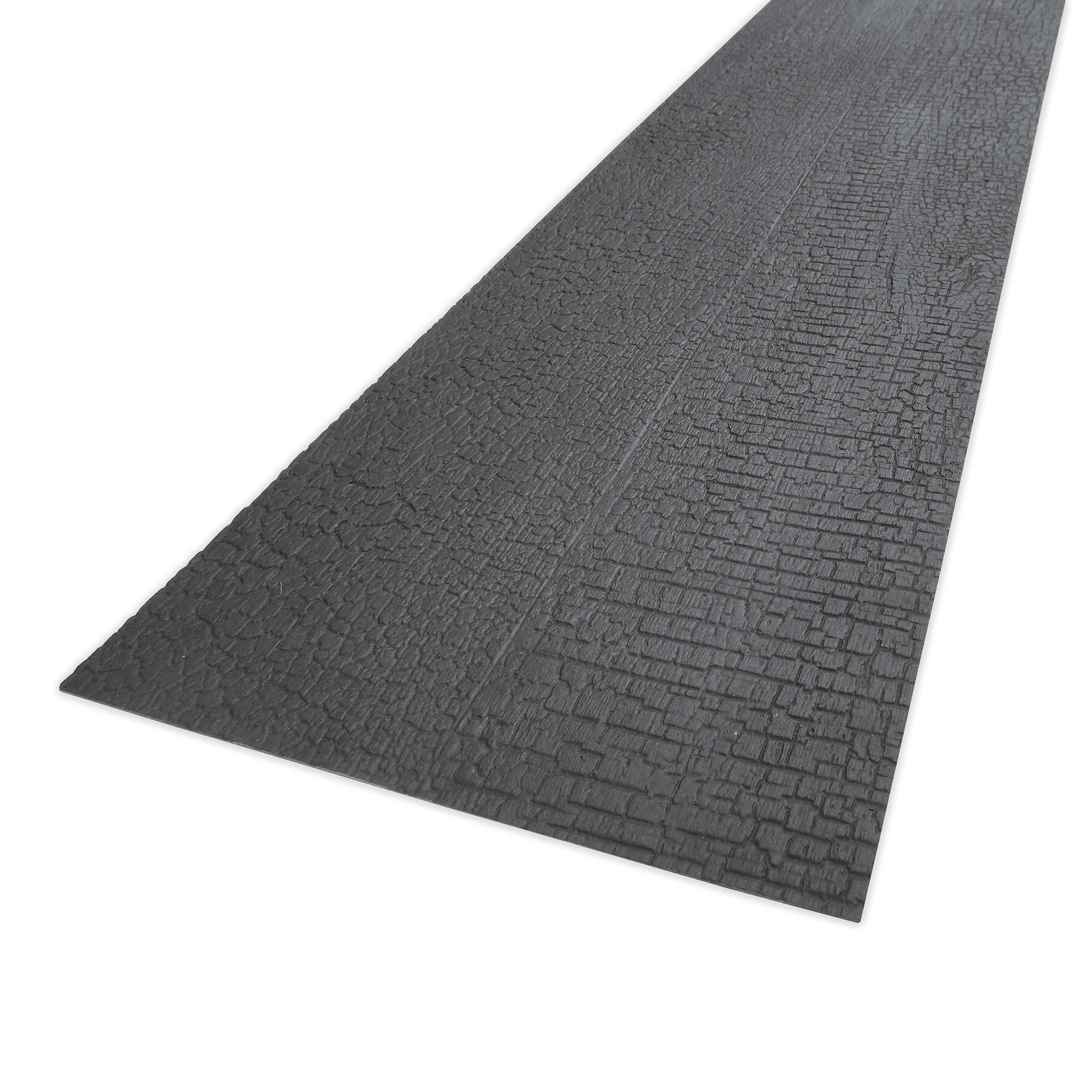
If you've ever run your hand over a charred wood fence and marveled at its deep, smoky texture—then wished it could wrap around a curved wall or climb a staircase without cracking—meet your new favorite material. MCM Charcoal Burnt Wood Board is part of the broader MCM flexible stone family, a line of modified composite materials designed to mimic natural textures with none of the heaviness or fragility. Think of it as nature's beauty, reimagined for the demands of modern design.
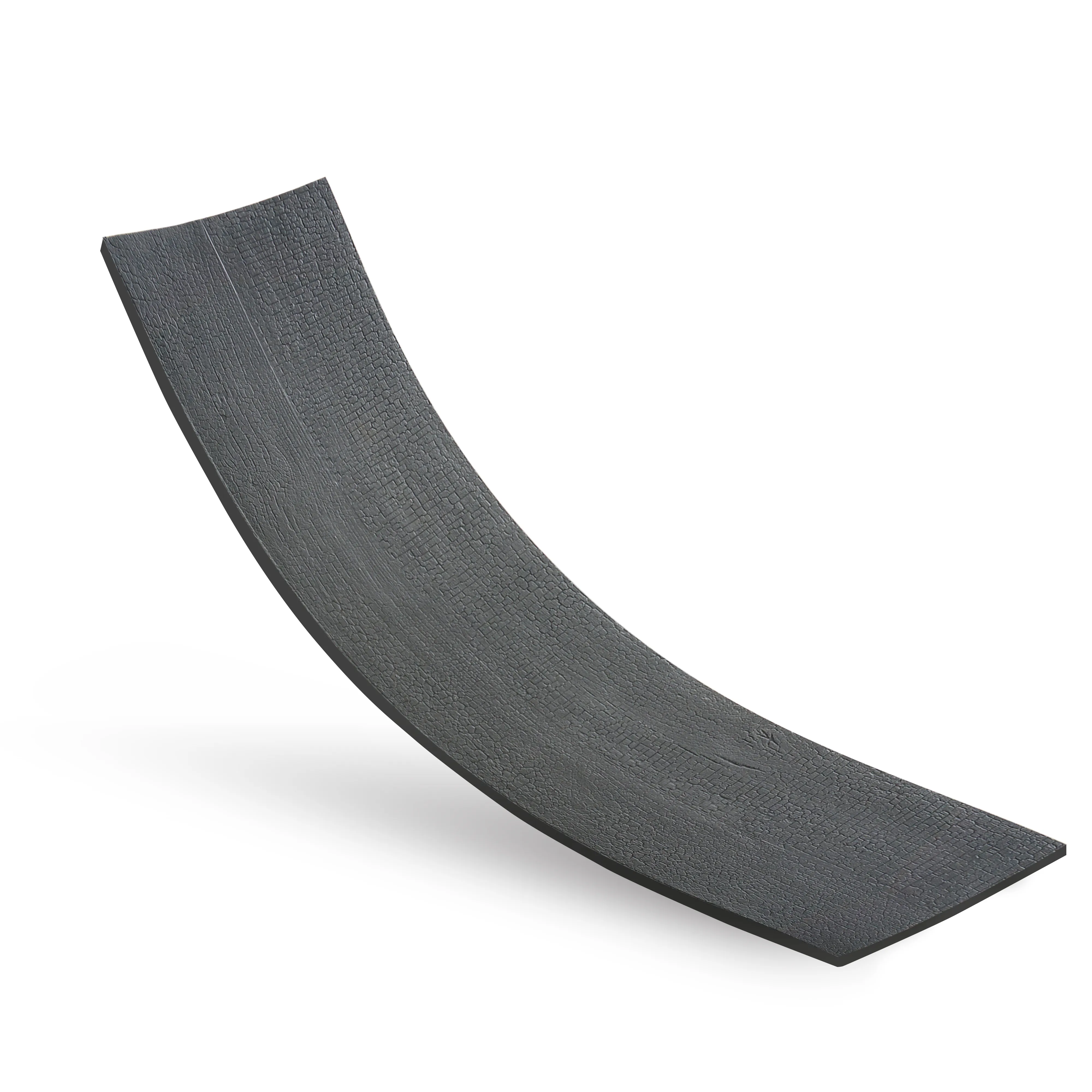
Crafted under the MCM project board series , this board starts with organic fibers—often bamboo or recycled wood pulp—blended with mineral composites and a flexible binder. The result? A sheet that's thin (as little as 3mm), lightweight (about 3kg per square meter), and surprisingly tough. Run a fingernail across it, and you'll feel the charred wood grain, complete with the subtle cracks and variations that make natural wood so charming. But unlike real burnt wood, it won't splinter, warp, or rot. It's the kind of material that makes designers grin: "Finally, a wood-look finish that works everywhere ."
Ceramic tiles need no introduction. They're the granduncle of building materials—sturdy, familiar, and found in 9 out of 10 homes worldwide. Made from clay, sand, and water, they're shaped, glazed (or left unglazed), and fired at scorching temperatures (up to 2,200°F) until they harden into the dense, glossy squares we know. For decades, they've been the go-to for kitchens, bathrooms, and entryways, prized for their water resistance and easy-to-clean surface. But let's be honest: They can feel… cold . Like a well-behaved guest who never stays late, but never tells a story either.
pH—potential of hydrogen—measures how acidic or alkaline a substance is, on a scale from 0 (acidic) to 14 (alkaline). You might remember it from high school science, but here's why it matters for your walls and floors: Materials with extreme pH levels (too acidic or too alkaline) can cause headaches down the line. A highly alkaline tile might react with acidic cleaning products, leaving streaks or discoloration. An overly acidic material could corrode metal fixtures, like the nails holding up your backsplash. Even mold loves extremes—acidic environments can encourage mildew growth, while alkaline ones might break down adhesives over time.
Neutral is the sweet spot (pH 6-7). It plays nice with sealants, paints, and neighboring materials, and it's less likely to fade, warp, or damage surfaces it touches. So, how do our two contenders stack up?
To get the real scoop, we turned to material science experts and industry testing data. Here's what we found:
MCM's manufacturing process is all about balance. The composite blend—organic fibers, mineral additives, and a low-VOC binder—results in a pH level typically between 6.2 and 6.8. That's just slightly acidic to neutral, right in the "goldilocks zone." Why does this matter? For starters, it means you won't have to worry about chemical reactions with adhesives. Unlike some stone materials (looking at you, fair-faced concrete , with its high alkaline punch), MCM Charcoal Burnt Wood Board won't leach minerals that discolor paint or weaken grout. In humid spaces like bathrooms, its neutral pH also makes it less hospitable to mold, which thrives in acidic or highly alkaline environments.
Ceramic tiles, thanks to their clay-and-mineral composition, tend to lean alkaline. Most unglazed tiles hover around pH 7.5-8.5, while glazed varieties can hit 8.0-9.0 (the glaze adds a layer of alkaline minerals). This isn't inherently bad—alkaline surfaces are resistant to acids, which is why ceramic tiles hold up so well to lemon juice spills in kitchens. But there's a catch: Over time, alkaline materials can react with acidic cleaners (think vinegar-based solutions), causing the glaze to dull or etch. And if you're installing tiles over a substrate like wood, the alkaline leaching (slow release of minerals) can weaken the adhesive bond, leading to loose tiles down the line.
pH is just one piece of the puzzle. Let's talk about the stuff that actually affects your daily life: How hard is it to install? Will it scratch when your kid drags a toy truck across it? Can it handle a rogue coffee spill? Here's how the two materials compare across key metrics.
| Metric | MCM Charcoal Burnt Wood Board | Ceramic Tiles |
|---|---|---|
| Durability | Flexible (resists cracks from impacts); scratch-resistant with a topcoat; UV-stable (won't fade in sunlight). | Hard but brittle (prone to chipping if dropped on edges); glaze can scratch if not sealed; color fades slowly in direct sunlight. |
| Moisture Resistance | Waterproof when sealed; no grout lines (if installed as large sheets) to trap mold. | Glazed tiles are waterproof, but grout lines absorb moisture—requires regular sealing to prevent mildew. |
| Installation Ease | Lightweight (3kg/m²); cuts with a utility knife; installs with standard adhesives; bends to fit curved surfaces (e.g., columns, archways). | Heavy (15-20kg/m²); requires a reinforced subfloor; needs precise cutting with a wet saw; grouting adds 24+ hours to drying time. |
| Aesthetics | Organic texture with deep, smoky wood grain; available in custom lengths/widths; warm, tactile feel. | Uniform appearance (can feel "mass-produced"); limited to tile sizes (6x6", 12x12"); cold to the touch. |
| Sustainability | Made with recycled wood/bamboo fibers; low-VOC production; lightweight = lower shipping emissions; 100% recyclable at end-of-life. | Clay mining impacts ecosystems; high firing temperatures (energy-intensive); heavy = higher transportation carbon footprint; grout contains cement (high CO2). |
Let's start with the basics: Can it take a beating? Ceramic tiles are tough—drop a plate on them, and the plate might shatter, but the tile stays intact. But hit the edge with a hammer, and it'll chip or crack (ceramic is hard, not flexible). MCM Charcoal Burnt Wood Board, on the other hand, bends. Its composite core acts like a shock absorber—imagine dropping a ball on a wooden floor vs. a concrete slab. The MCM board might flex, but it won't crack. And when it comes to scratches? A quick topcoat sealant makes it resistant to pet claws, furniture legs, and even the occasional keys-in-pocket slide.
Bathrooms are the ultimate moisture battleground. Ceramic tiles have a reputation for being "waterproof," but that's only half the story. The tiles themselves (especially glazed ones) repel water, but the grout lines? They're porous. Without regular sealing (every 6-12 months), water seeps in, leading to moldy grout and, over time, rotting subfloors. MCM Charcoal Burnt Wood Board, when sealed, has no grout lines (if installed as large, continuous sheets). It's like wrapping your wall in a waterproof blanket—no crevices for moisture to hide. We spoke to a contractor in Miami (where humidity is a year-round enemy) who switched to MCM for bathroom accent walls: "Clients used to call complaining about black grout lines. Now? Zero mold issues. It's a game-changer."
If you've ever installed ceramic tiles, you know the drill: Rent a wet saw, mix thinset, lay tiles, grout, wait, seal. It's a multi-day project that requires muscle (those tiles are heavy!) and precision. MCM Charcoal Burnt Wood Board? It's lightweight enough for one person to carry a 4x8 sheet. Cut it with a utility knife (no messy wet saw), apply adhesive with a trowel, and stick it on—even over uneven walls or curved surfaces. A homeowner in Austin told us she installed a 10-foot accent wall in her living room in under 3 hours: "I'm not handy, but this felt like putting up giant stickers. And it looks like real charred wood—my friends can't believe it's not the real thing."
Ceramic tiles have come a long way in mimicking natural materials—you can find "wood-look" or "stone-look" tiles that are convincing… from a distance. Up close, the pattern repeats (hello, 12x12" tile grids), and the surface feels cold and synthetic. MCM Charcoal Burnt Wood Board, by contrast, has the organic, irregular texture of real burnt wood. Each sheet has unique grain variations, tiny cracks, and depth that tile can't replicate. It's the difference between a printed photo of a forest and standing in the woods itself. Designers love it for commercial spaces, too—restaurants in Portland and Chicago are using it for feature walls, pairing it with fair-faced concrete floors for a rustic-industrial vibe that feels lived-in, not staged.
In a world where "eco-friendly" is more than a buzzword, material choices matter. Ceramic tile production requires firing clay at temperatures up to 2,200°F—energy-intensive and carbon-heavy. MCM Charcoal Burnt Wood Board, on the other hand, uses recycled wood fibers and mineral additives, with production facilities that run on renewable energy. It's also lightweight, which slashes transportation emissions (less fuel needed to ship). And at the end of its life? It's 100% recyclable. A green building consultant we interviewed summed it up: "Ceramic tiles are durable, but their carbon footprint is hard to ignore. MCM lets clients have the look they want without sacrificing their sustainability goals."
There's no "one size fits all" answer, but here's a cheat sheet for your next project:
At the end of the day, building materials are more than just specs on a page. They're the backdrop to your morning coffee, your kid's first steps, your late-night conversations. MCM Charcoal Burnt Wood Board isn't just a "better" ceramic tile—it's a different kind of storyteller. It brings the warmth of charred wood without the hassle, the durability of composite without the coldness. Ceramic tiles, meanwhile, are the reliable narrators—familiar, sturdy, and steeped in tradition.
Whether you lean into innovation or stick with tradition, the key is to choose materials that align with how you live. And if you ask us? The future of building materials isn't about replacing the old with the new—it's about blending the best of both. MCM Charcoal Burnt Wood Board does just that: honoring nature's beauty with a modern, human-centered twist. Now, go build something that feels like you .
Recommend Products












