
Walk through any major city today, and your eyes will likely drift upward—drawn to the gleaming towers that pierce the sky, each one a testament to human ambition and engineering ingenuity. These high-rises aren't just about reaching new heights, though. They're about balance: the kind of balance that lets a building stand firm against wind and time while also feeling warm, inviting, and uniquely *human*. That's where materials matter most. Enter MCM engineering boards—a category of building materials that's quietly revolutionizing how we build up, not just out. They're the unsung heroes behind the facades that make skyscrapers feel both imposing and intimate, strong yet surprisingly flexible. Let's dive into why these boards are becoming the go-to choice for architects and builders who refuse to compromise on strength, style, or sustainability.
If you've ever wondered how modern high-rises manage to look so sleek and varied—some clad in soft stone, others in metallic sheen, a few even with what looks like woven textures—you're probably looking at MCM engineering boards in action. MCM, short for Modified Composite Material, is a blend of natural minerals, polymers, and fibers that's engineered to be lightweight, durable, and endlessly customizable. Think of it as the Swiss Army knife of building materials: it can mimic the look of travertine, granite, or even wood, but without the weight or fragility of the real thing. That's a game-changer for high-rises, where every pound saved on the facade translates to less strain on the building's structure—and more freedom to dream up bold designs.
But MCM boards aren't just about looks. They're built to perform. High-rises face a unique set of challenges: relentless wind gusts that buffet the exterior, temperature swings that cause materials to expand and contract, and the slow but steady wear of rain, sun, and pollution. Traditional materials like solid stone or heavy metal panels can crack, fade, or become too cumbersome to install safely at height. MCM boards, though, are designed to flex with the elements, not fight them. Their flexibility means they can absorb stress without breaking, and their resistance to moisture and UV rays ensures they'll look fresh for decades. It's the kind of reliability that lets architects sleep easier—and building owners breathe a sigh of relief when maintenance bills stay low.
One of the most exciting things about MCM engineering boards is how they blur the line between function and art. Builders no longer have to choose between a material that's strong and one that's beautiful—MCM does both, and then some. Let's take a closer look at a few standout lines that are making waves in high-rise design right now.
First up: MCM flexible stone . If you've ever seen a high-rise with a curved facade—those gentle bends that soften the building's silhouette and make it look like it's reaching for the sky—chances are, flexible stone is the material making that curve possible. Unlike rigid stone slabs, which can't bend without cracking, MCM flexible stone is malleable enough to follow the most organic architectural lines. It's why you'll find it on buildings that aim for a more fluid, natural aesthetic, like the residential towers in Singapore that mimic the shape of bamboo stalks. And because it's available in finishes that range from rough-hewn to polished, it can play up the "stone" look or lean into something more modern.
Then there's travertine (starry blue) —a finish that's equal parts celestial and grounded. Travertine has long been a favorite in architecture for its warm, porous texture, but MCM's take on it adds a whimsical twist: tiny, iridescent flecks that catch the light like stars in a dark sky. Imagine a high-rise lobby with walls clad in this material—during the day, it glows softly with a blue-gray hue, but as the sun sets, those starry flecks come alive, turning the space into something almost magical. It's a reminder that even the most utilitarian parts of a building can tell a story. Architects love it for adding personality to large, open spaces, whether it's a hotel atrium or a corporate headquarters' entrance.
For projects that lean into a more futuristic vibe, lunar peak silvery is a showstopper. This finish takes inspiration from the moon's cratered surface, with a matte silver sheen that shimmers subtly in direct light. It's not just about aesthetics, though—lunar peak silvery is also incredibly durable, resistant to scratches and fingerprints, making it ideal for high-traffic areas like elevator lobbies or exterior cladding. A recent project in Dubai used this material on the facade of a 40-story tech hub, and the result is a building that looks like it's been plucked from a sci-fi movie, yet feels surprisingly approachable. It's proof that "futuristic" doesn't have to mean cold.
And let's not forget foamed aluminium alloy board (vintage silver) —a material that marries industrial edge with timeless elegance. Foamed aluminium is lightweight but surprisingly strong, thanks to its cellular structure (think of a sponge, but made of metal), and the vintage silver finish adds a touch of nostalgia, like a well-loved piece of mid-century furniture scaled up to building size. It's a popular choice for mixed-use developments that want to blend old and new—say, a high-rise with ground-floor boutiques and upper-level apartments. The vintage silver panels add warmth to the street-level facade, making the building feel welcoming to pedestrians, while still holding up to the demands of high-rise construction.
In an era where sustainability isn't just a buzzword but a requirement, MCM engineering boards are checking all the boxes. Let's start with weight: traditional facade materials like solid granite or marble can weigh 15-20 pounds per square foot, which adds up quickly on a 50-story building. MCM boards, by contrast, typically weigh 3-5 pounds per square foot. That means less steel needed to support the facade, fewer carbon emissions from transporting heavy materials, and a lighter overall building that's more energy-efficient to heat and cool. It's a domino effect of eco-friendly wins that builders and developers are increasingly prioritizing.
Then there's durability. A well-made MCM board can last 50 years or more with minimal maintenance—no repainting, no sealing, just an occasional wash to keep it looking fresh. Compare that to wood cladding, which might need refinishing every 5-10 years, or painted metal panels that can chip and fade in a decade. Less maintenance means fewer resources spent on repairs and replacements, and less waste ending up in landfills. It's the kind of long-term thinking that aligns with the goals of green building certifications like LEED or BREEAM, which more and more high-rise projects are pursuing.
And let's talk about customization. Because MCM boards are made in factories, not quarried or mined, there's far less waste in the production process. Want a specific shade of travertine (starry blue) or a custom texture that mimics a local stone? MCM manufacturers can create small batches without the environmental toll of extracting new materials. It's a level of precision that's hard to achieve with natural stone, which often comes with inconsistencies in color and texture. For high-rises aiming for a cohesive look—like a residential tower where every unit has a balcony with matching cladding—this consistency is priceless.
Still on the fence about whether MCM is right for your next high-rise project? Let's break down the key differences between MCM engineering boards and some common traditional materials. This table might help put things in perspective:
| Material | Weight (per sq ft) | Durability (expected lifespan) | Design Options | Installation Ease | Sustainability |
|---|---|---|---|---|---|
| Solid Granite | 18-22 lbs | 50-100 years (but prone to cracking) | Limited (natural variations) | Heavy, requires specialized labor | High carbon footprint (quarrying, transport) |
| Traditional Metal Panels | 8-12 lbs | 20-30 years (prone to rust/fading) | Moderate (color options, but limited textures) | Moderate (needs sealing against moisture) | Recyclable, but energy-intensive to produce |
| Wood Cladding | 4-6 lbs | 10-15 years (needs regular maintenance) | High (natural grain variations) | Easy, but requires weatherproofing | Sustainable if sourced responsibly, but short lifespan |
| MCM Engineering Boards (e.g., fair-faced concrete ) | 3-5 lbs | 50+ years (resistant to fading, cracking, moisture) | Extensive (mimics stone, metal, wood, custom textures) | Lightweight, quick to install with standard tools | Low carbon footprint, recyclable, minimal waste |
The standout here? MCM boards offer the best of all worlds: the lightness of wood, the durability of stone, and the design flexibility of metal—all with a fraction of the environmental impact. It's no wonder that projects like the new 60-story residential tower in Chicago's South Loop chose MCM for its entire facade. The architects wanted a material that could handle Chicago's harsh winters (think freezing rain, heavy snow) and hot, humid summers, while still looking elegant. They settled on a combination of fair-faced concrete MCM panels for the lower levels (to blend with the neighborhood's industrial heritage) and travertine (starry blue) for the upper floors (to catch the lake breeze and skyline views). The result is a building that feels rooted in place but reaches for the stars—and it's all thanks to MCM's unique balance of strength and style.
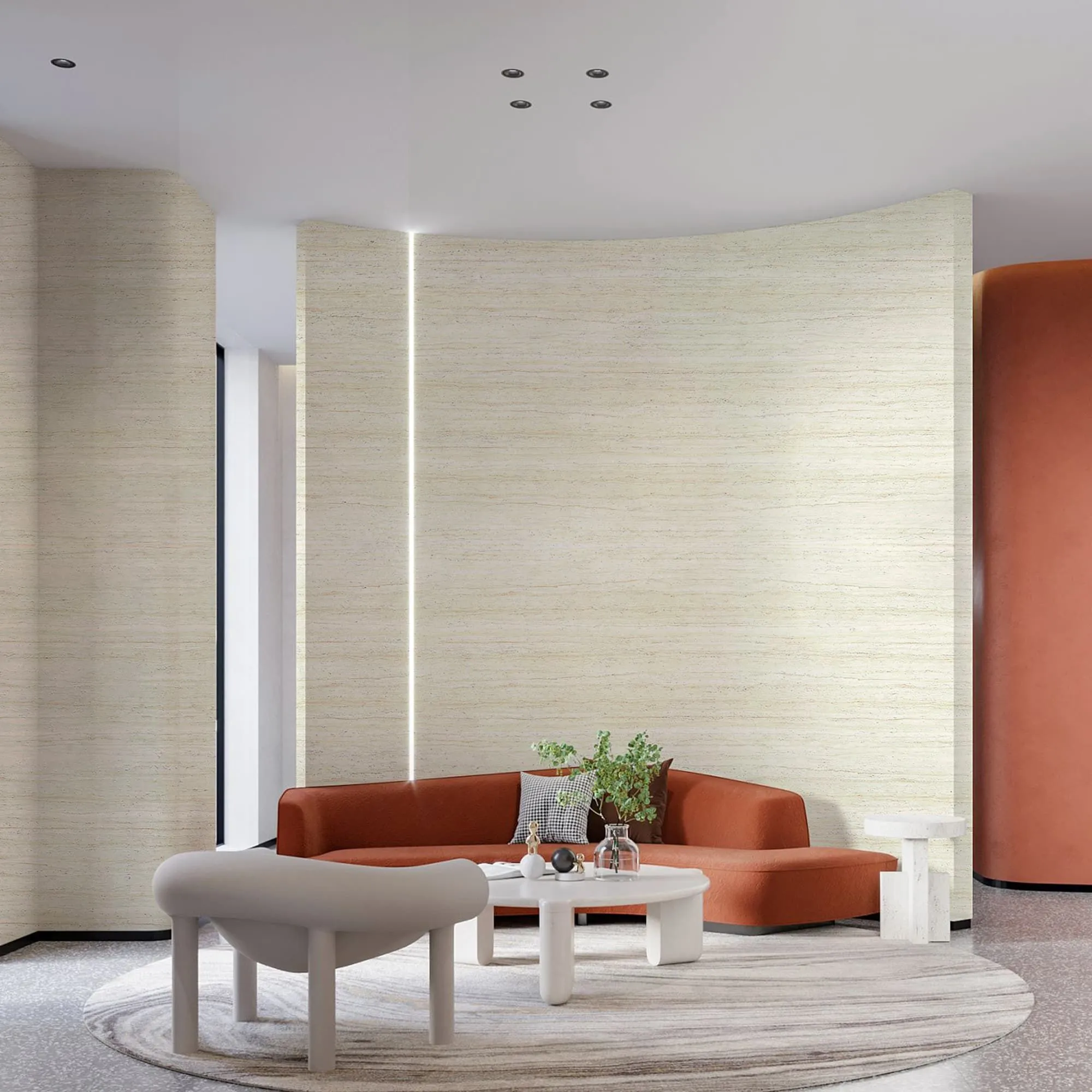
Let's step away from the specs and talk about how MCM engineering boards are transforming real buildings—and the people who use them. Take the "Aether Tower" in Seattle, a 45-story mixed-use building that opened in 2024. The architects wanted the facade to reflect the city's connection to water and sky, so they chose MCM boards in travertine (starry blue) and lunar peak silvery . The blue panels, arranged in a wave-like pattern, evoke Puget Sound, while the silvery accents mimic the mist that often rolls in from the coast. Tenants rave about how the building feels "calming" despite its height, and passersby love how the facade changes with the light—deep blue at dawn, sparkling silver at noon, and a soft, starry glow at dusk. It's a reminder that buildings don't just house people; they shape moods, too.
Then there's the "Heritage Lofts" in Boston, a renovation of a 1920s brick high-rise into luxury apartments. The developers wanted to preserve the building's historic charm but update it for modern living. They used foamed aluminium alloy board (vintage silver) for the new penthouse addition, cladding it in panels that match the patina of the original brickwork. The contrast between old and new is striking but harmonious—proof that MCM boards can honor the past while embracing the future. Residents love the penthouses' large windows and metallic facades, which offer panoramic views of the city without sacrificing privacy. And because the MCM panels are lightweight, the addition didn't require reinforcing the building's structure—a huge cost-saver that let the developers invest in other amenities like a rooftop garden.
In Singapore, where space is at a premium and sustainability is a national priority, the "EcoSky" tower is a showcase for MCM's green credentials. The 50-story building uses MCM flexible stone for its curved balconies, which not only reduce wind resistance (lowering energy use for heating and cooling) but also collect rainwater for irrigation. The stone panels are paired with solar panels on the roof, making EcoSky one of the most energy-efficient high-rises in the city. What's most impressive, though, is how the flexible stone has held up to Singapore's tropical climate—four years after completion, the facade still looks brand-new, with no signs of mold, fading, or cracking. It's a testament to MCM's ability to thrive in even the harshest environments.
As cities grow taller and more crowded, the demand for building materials that are strong, light, and beautiful will only increase. MCM engineering boards aren't just a trend—they're a response to that demand. They let us build higher without compromising on design, stronger without sacrificing sustainability, and more creatively than ever before. Architects are already pushing the boundaries of what's possible: imagine a high-rise clad in MCM panels that change color with the temperature, or that mimic the texture of woven bamboo (hello, bamboo mat board !). The technology is evolving, too—new formulations are making MCM boards even more fire-resistant, soundproof, and energy-efficient. It's an exciting time to be in construction.
But perhaps the biggest reason MCM boards will remain a staple in high-rise construction is simple: they put people first. They create buildings that feel less like cold, concrete monoliths and more like communities—places where you can look up at the facade and see something that reflects your own sense of style, or step inside and feel instantly at home. In a world that often feels rushed and disconnected, that's a powerful thing. So the next time you're walking past a gleaming high-rise, take a closer look at the facade. Chances are, you're looking at MCM engineering boards—and the future of building up, together.
Whether it's the starry blue of travertine catching your eye, the vintage silver of foamed aluminium making you smile, or the subtle texture of fair-faced concrete grounding you, MCM boards are more than just materials. They're the thread that weaves strength, beauty, and humanity into the skyline. And in a world that needs more of all three, that's a legacy worth building.
Recommend Products












