
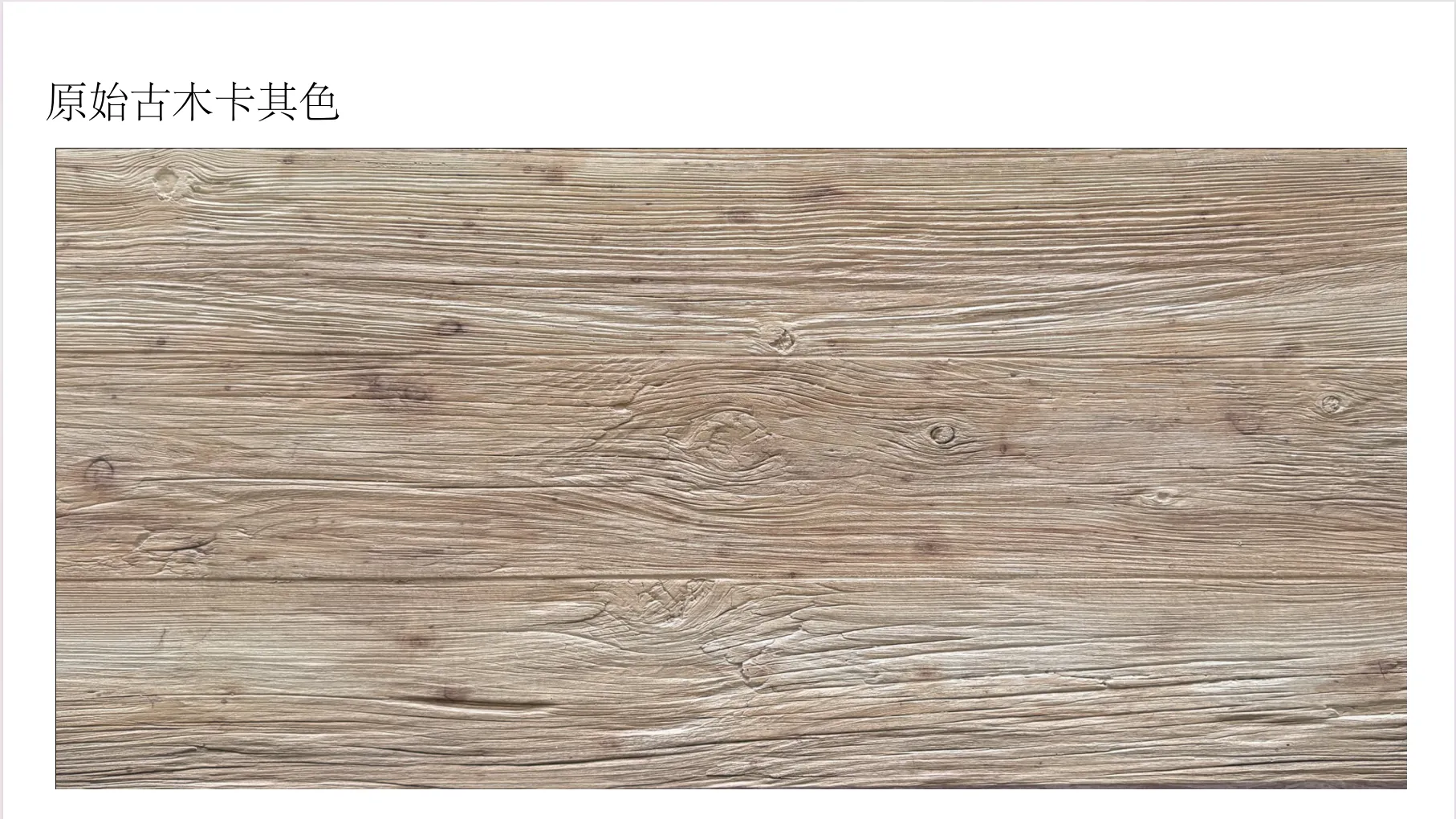
There's something almost magical about wood in architecture. Walk into a room with wooden walls, and you can almost feel the stories they hold—the slow growth of a tree, the craftsmanship of those who shaped it, the warmth that only natural materials bring. For centuries, wood has been more than just a building material; it's a symbol of comfort, history, and connection to the earth. But here's the catch: wood is stubbornly rigid. Try to bend it into a gentle curve, a sweeping arch, or a rounded niche, and it resists—cracking, warping, or simply refusing to conform. For designers and architects dreaming of fluid, organic spaces, this rigidity has long been a frustrating barrier. That is, until MCM flexible stone stepped onto the scene, offering a way to wrap the timeless beauty of wood around the curves we've always wanted.
Let's say you're an architect tasked with designing a boutique hotel lobby. The client wants a focal wall that curves gracefully from the floor to the ceiling, evoking the softness of a wave. They imagine it clad in wood—something with depth, like the weathered planks of an old barn or the smooth grain of teak. You sketch it out, and it looks stunning on paper. But then reality hits: real wood panels can't bend that way. Solid wood is prone to splitting under tension, and even engineered wood products have limits. You could use veneers, but they're thin, fragile, and often lack the texture that makes wood feel alive. So you compromise—opt for a flat wall, or a less dramatic curve—and the design loses some of its soul. Sound familiar? This is the story of countless projects where the beauty of wood has been boxed into straight lines, simply because nature (and traditional materials) said "no" to curves.
MCM flexible stone isn't just another building material—it's a design revolution. Short for "Modified Composite Material," MCM is a blend of natural minerals, polymers, and recycled materials, engineered to be lightweight, durable, and—most importantly—flexible. But what truly sets it apart is its ability to mimic the look and feel of natural materials with uncanny accuracy. And when it comes to wood, it's a master of disguise. Whether you're craving the rustic charm of wood grain board , the woven texture of bamboo mat board , or the smooth finish of polished teak, MCM flexible stone captures every knot, grain, and imperfection that makes wood so beloved. The difference? This "wood" bends. It wraps. It flows. Suddenly, that curved hotel lobby wall isn't just a dream—it's a buildable reality.
To understand why MCM flexible stone feels so authentic, you have to look closely at the details. Take wood grain board , for example. Run your hand over it, and you'll feel the subtle rise and fall of the grain—the same way you would with real oak or maple. The color variations are intentional: a lighter streak here, a darker knot there, just like a tree grown in the wild. Manufacturers don't just print a wood pattern on a flat surface; they use advanced molding techniques to replicate the three-dimensional texture of wood, so it catches light the same way, casts shadows the same way, and even ages gracefully over time (without the warping or rotting, of course).
Then there's bamboo mat board —a personal favorite for spaces that lean into tropical or (Eastern) design. Imagine the look of a handwoven bamboo mat, the kind you'd find in a Bali beach hut, but scaled up for a wall or ceiling. MCM captures the crisscross pattern of the bamboo strips, the slight gaps between them, even the way the material softens with age. It's warm, tactile, and instantly transportive—perfect for a spa, a yoga studio, or a home that wants to bring the outdoors in, even on a curved surface.
What's remarkable is that MCM doesn't just copy wood's appearance; it honors its essence. Wood is more than a texture—it's a feeling. It's the coziness of a cabin in the woods, the elegance of a mid-century modern home, the nostalgia of a childhood treehouse. MCM flexible stone doesn't just look like wood; it feels like wood, in all the ways that matter.
So, how flexible are we talking? MCM flexible stone can typically bend to a radius as small as 30cm (about 12 inches) without cracking or losing its shape. That means it can handle everything from gentle archways to tight spirals, from rounded columns to undulating facades. Unlike real wood, which requires complex (and often expensive) steam-bending or lamination to curve, MCM panels are easy to work with: cut them to size with standard tools, apply a simple adhesive, and press them into place. No special equipment, no risky bending processes, just smooth, seamless curves.
This flexibility opens up a world of design possibilities. Think about a residential project: a homeowner wants a curved accent wall in their living room, shaped like a half-moon, to soften the sharp angles of the space. With MCM wood grain board, that wall becomes a focal point—warm, organic, and completely unique. Or consider a restaurant with a curved bar front: instead of cold stone or generic tiles, imagine it clad in bamboo mat board, instantly making the space feel inviting and intimate. Even exterior applications benefit: curved building facades, which were once limited to concrete or metal, can now wear the look of weathered wood, blending modern architecture with natural warmth.
Still not convinced? Let's break down how MCM flexible stone (specifically, its wood-inspired variants) stacks up against the materials designers have traditionally turned to for wood-like aesthetics:
| Feature | Real Wood | Traditional Stone (e.g., Marble, Granite) | MCM Flexible Stone (Wood Grain/Bamboo Mat) |
|---|---|---|---|
| Flexibility | Very low. Prone to cracking when bent; requires expensive steam-bending for minimal curves. | Extremely low. Heavy and brittle; cannot bend without breaking. | High. Can bend to radii as small as 30cm; ideal for curved walls, columns, and arches. |
| Durability | Vulnerable to moisture, pests, rot, and UV damage; needs regular sealing. | Durable but heavy; can chip or crack under impact; stains easily. | Exceptional. Resistant to water, mold, pests, and fading; no sealing required. |
| Maintenance | High. Sanding, staining, and sealing every 1–3 years; susceptible to scratches. | Moderate. Occasional cleaning with mild detergent; may need professional polishing. | Minimal. Wipe clean with a damp cloth; scratch-resistant and colorfast. |
| Eco-Friendliness | Depends on sourcing; often involves deforestation or unsustainable harvesting. | High carbon footprint due to quarrying, transportation, and processing. | Low. Made with recycled materials and natural minerals; lightweight design reduces transportation emissions. |
| Cost (Long-Term) | High. Initial material costs + ongoing maintenance expenses. | Very high. Expensive materials + heavy installation costs (needs structural support). | Moderate. Lower initial cost than stone; no maintenance fees; lightweight = cheaper installation. |
While wood-inspired designs are a standout feature, MCM flexible stone's versatility doesn't stop there. The MCM big slab board series , for example, offers larger panels (often up to 1200x2400mm) that are perfect for creating seamless surfaces—curved or flat. Imagine a commercial space with a curved ceiling clad in MCM big slabs mimicking travertine (a classic stone with a porous, organic texture). The lack of visible seams makes the space feel larger, more cohesive, and infinitely more elegant. And because the slabs are lightweight, installers don't need to reinforce the ceiling structure, saving time and money.
For those who want to mix textures, MCM flexible stone plays well with others. Pair wood grain board with bamboo mat board for a layered, natural look, or contrast it with sleek fair-faced concrete panels for a modern-industrial vibe. The options are nearly endless, and because MCM is available in such a wide range of finishes—from the rough-hewn charm of rough granite stone to the smooth sheen of polish concrete —it's easy to create a space that feels truly custom.
At the end of the day, MCM flexible stone is more than a material—it's a tool for creativity. It frees designers from the limitations of traditional wood and stone, allowing them to turn bold, curved visions into reality. It lets homeowners infuse their spaces with the warmth of wood without worrying about upkeep. And it does all this while being kind to the planet, durable enough to last decades, and affordable enough to fit a range of budgets.
So the next time you find yourself sketching a curved wall, a rounded ceiling, or a spiral staircase, and you think, "I wish this could be wood," remember: with MCM flexible stone, it can be. Wood's beauty, unchained from rigidity. Curves, no longer just a dream. That's the power of MCM flexible stone—and it's changing the way we build, one bend at a time.
Because great design shouldn't have to choose between beauty and flexibility. With MCM, you can have both.
Recommend Products












