
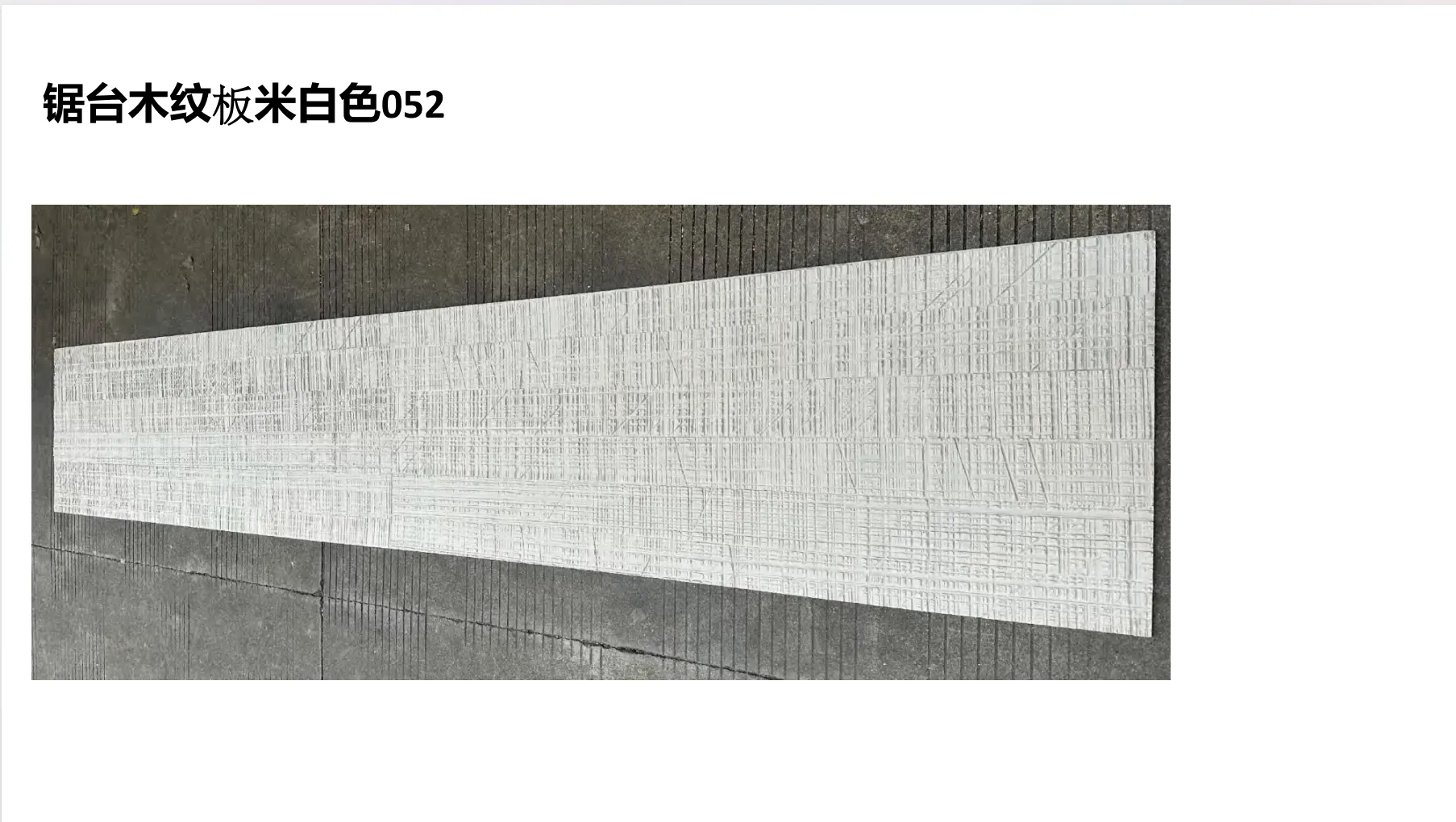
Picture this: a designer stands in front of a blueprint, frustration creasing their brow. They've dreamed up a curved feature wall that wraps around a lobby, a fluid transition between indoor and outdoor spaces that feels more like art than architecture. But there's a problem: the materials they've always relied on—thick slabs of stone, rigid planks of sawing wood board—just won't bend. Wood warps in humidity, stone cracks under pressure, and suddenly that dream wall feels like a pipe dream. Sound familiar? For too long, the design world has been boxed in by rigidity. Enter MCM Flexible Stone: a material that doesn't just break the mold—it bends it, twists it, and reimagines what's possible.
Let's start with the basics. MCM stands for Modified Composite Material, but don't let the technical name fool you—this stuff is anything but boring. At its core, MCM Flexible Stone is a game-changer: a lightweight, ultra-thin panel made by bonding natural stone aggregates, minerals, and a high-performance polymer matrix. The result? A material that's as tough as traditional stone but as flexible as a yoga instructor. Think of it as stone with a personality—one that's willing to curve, contour, and conform to the wildest design ideas without sacrificing durability.
Unlike sawing wood boards, which are limited by the grain and natural brittleness of timber, MCM panels are engineered for adaptability. They come in sheets as thin as 3-5mm, weighing a fraction of solid stone or wood, yet they're resistant to moisture, fire, and the wear and tear of daily life. And here's the kicker: they look exactly like the real thing. Whether you're craving the rustic charm of a sawing wood board, the celestial sparkle of travertine (starry blue), or the warm glow of lunar peak golden, MCM mimics these textures and hues so faithfully, you'd swear you're touching the real deal—until you watch it bend around a corner.
Don't get me wrong—sawing wood boards have their place. There's a timeless appeal to the grain of oak or the warmth of pine, and they've been a staple in construction for centuries. But let's talk about their dirty little secrets. Wood is a living material, which sounds poetic until it warps in humidity, swells in rain, or shrinks in dry air. Ever walked into an old house and noticed the floorboards creaking or a window frame that no longer closes properly? That's wood's rigidity fighting back against the elements. And sustainability? While responsibly sourced wood exists, deforestation and the energy-heavy process of treating wood to resist rot (hello, chemicals) leave a lot to be desired.
Then there's the design limitation. Sawing wood boards are flat, straight, and stubbornly unyielding. Want to create a wave-like ceiling or a curved headboard? You'd need to layer thin strips, glue them, clamp them, and pray they don't crack—a labor-intensive process that's as risky as it is time-consuming. MCM Flexible Stone, on the other hand, laughs in the face of straight lines. Its flexibility means you can install it on curved walls, rounded columns, or even sloped ceilings with minimal effort. No more wrestling with warped planks or chipping stone—just a smooth, seamless finish that looks like it was grown, not built.
Fun fact: A standard MCM panel can bend up to a 30-degree radius without breaking. Try that with a sawing wood board or a slab of marble—spoiler: you'll end up with splinters (or a very expensive mess).
If MCM's flexibility is its superpower, its aesthetics are its charm. This isn't just a "one-size-fits-all" material—it's a playground of textures and colors, designed to cater to every mood, theme, and vision. Let's dive into a few standout stars from the MCM family:
Take travertine (starry blue) , for example. Imagine a feature wall in a boutique hotel lobby, where the panels catch the light and reveal tiny, iridescent flecks that mimic a night sky. It's not just a wall anymore—it's a conversation starter, a moment of wonder. Unlike traditional travertine, which is heavy and prone to cracking, MCM's version is light enough to install on a suspended ceiling or a curved staircase, turning even the most utilitarian spaces into works of art.
Then there's lunar peak golden —a finish that feels like bringing a piece of the sun indoors. Warm, rich, and slightly metallic, it's perfect for adding depth to a minimalist kitchen backsplash or a cozy reading nook. Pair it with soft lighting, and suddenly your space feels like a cabin in the mountains at sunset, minus the hassle of maintaining real gold leaf or worrying about wood stains.
For the industrial-chic lovers, there's foamed aluminium alloy board (vintage silver) . Sleek, modern, and with a subtle sheen that nods to retro machinery, it's ideal for commercial spaces like coffee shops or coworking studios. Unlike solid aluminium, which is heavy and hard to shape, MCM's foamed alloy panels are lightweight and flexible, making them easy to install on accent walls or even furniture pieces. And yes—they're just as durable as the real thing, resisting scratches and fingerprints like a pro.
And let's not forget the classics, like sawing wood board texture. MCM's take on wood grain is so realistic, you'll find yourself running your hand over it, half-expecting splinters. But here's the upgrade: no warping, no termites, no need to sand or seal every few years. It's the best of both worlds—timeless wood aesthetics with 21st-century resilience.
You might be wondering: How do they make stone (or wood, or metal) bend? It all comes down to the magic of modified composite materials. MCM panels start with a base of natural aggregates—think crushed stone, marble dust, or wood fibers—mixed with a polymer resin that acts like a flexible glue. This blend is then compressed and cured under controlled conditions, creating a panel that's strong on a molecular level but still has enough give to flex without snapping.
Compare that to sawing wood boards, which rely on the natural strength of tree fibers. While wood is strong in one direction (with the grain), it's weak against pressure from the side, making it prone to splitting. MCM, on the other hand, is engineered to be strong in all directions, thanks to its composite structure. It's like the difference between a single thread (weak on its own) and a woven rope (strong because the fibers work together).
Let's get practical. MCM isn't just for "statement walls"—it's a workhorse that can be used in any space, indoors or out. Here are just a few ways designers are putting it to work:
The best part? MCM is easy to install. Unlike traditional stone, which requires heavy machinery and expert masons, MCM panels can be cut with standard tools, glued or nailed into place, and finished in a fraction of the time. For busy contractors and DIY enthusiasts alike, that means faster projects, lower labor costs, and fewer headaches.
Still not convinced MCM Flexible Stone is a upgrade? Let's put it head-to-head with some common materials, including our old friend, sawing wood board:
| Material | Flexibility | Durability | Maintenance | Aesthetic Range | Sustainability |
|---|---|---|---|---|---|
| MCM Flexible Stone | High (bends up to 30° radius) | Water, fire, and scratch-resistant | Low (wipe clean with soap and water) | Extensive: travertine, lunar peak, foamed aluminium, wood grain, and more | High (recyclable, low waste manufacturing, reduces quarrying) |
| Sawing Wood Board | Low (prone to splitting when bent) | Prone to warping, rot, and pests | High (needs sanding, sealing, and refinishing) | Limited to natural wood grains and stains | Variable (depends on sourcing; often requires chemical treatments) |
| Natural Travertine | Very Low (brittle, cracks under pressure) | Durable but porous (stains easily) | High (needs regular sealing) | Natural earth tones, limited finishes | Low (quarrying causes environmental damage) |
| Foamed Aluminium Alloy (Solid) | Low (rigid, hard to shape) | Durable but heavy | Medium (prone to fingerprints, needs polishing) | Metallic finishes only | Medium (recyclable but energy-intensive to produce) |
In a world where "sustainability" isn't just a buzzword but a necessity, MCM Flexible Stone checks all the boxes. Let's break it down:
First, MCM reduces the need for quarrying natural stone or cutting down trees. By using recycled stone aggregates and polymer resins, it minimizes waste and lowers the carbon footprint associated with extracting raw materials. For example, producing a square meter of MCM travertine uses 70% less energy than mining and processing solid travertine—good news for the planet (and your conscience).
Second, MCM's lightweight nature means less fuel is used during transportation. A truckload of MCM panels can cover 10x more area than a truckload of solid stone, cutting down on emissions and transportation costs. And since it's easy to install, fewer construction vehicles are needed on-site, further reducing environmental impact.
Finally, MCM is recyclable. At the end of its life (which, by the way, is decades long), panels can be broken down and repurposed into new materials, closing the loop on waste. Compare that to sawing wood boards, which often end up in landfills once they warp or rot, and it's clear: MCM isn't just flexible—it's future-proof.
As designers, architects, and homeowners, we're no longer satisfied with "good enough." We want spaces that inspire, materials that adapt, and solutions that don't compromise on beauty or sustainability. MCM Flexible Stone isn't just a material—it's a movement. It's about breaking free from the rigidity of the past and embracing a future where the only limit is your imagination.
So the next time you're staring at a blueprint, don't let "can't" be the first word that comes to mind. Think of travertine (starry blue) curving like a river, lunar peak golden glowing like a sunset, or foamed aluminium alloy (vintage silver) adding edge to a modern space. Think of MCM Flexible Stone, and all the possibilities that bend with it.
Because in the end, design isn't about building walls—it's about breaking them down. And with MCM, the sky (or the starry blue ceiling) is the limit.
Recommend Products












