
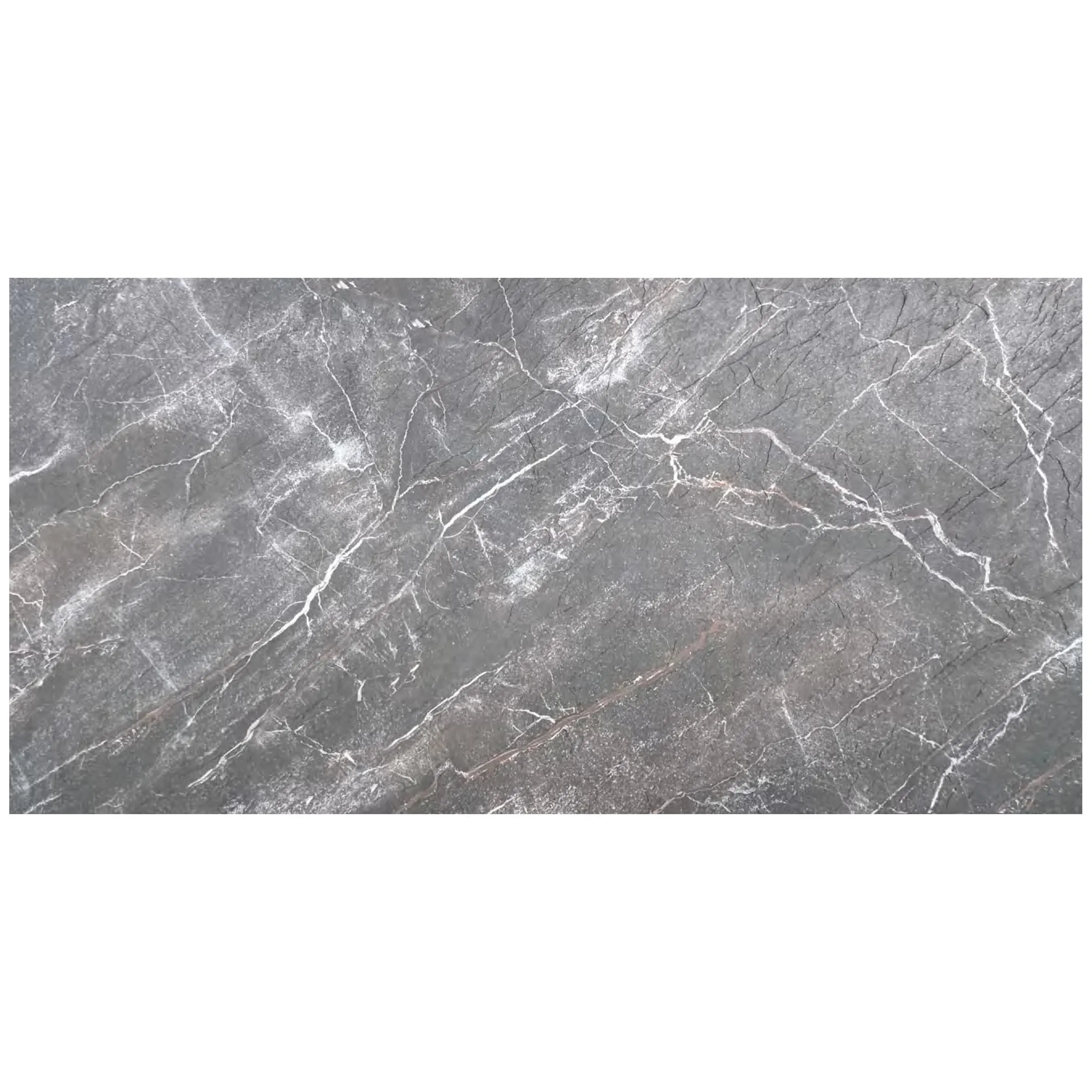
Picture this: you're standing in a boutique hotel lobby, and your eye is drawn upward to a sweeping arch that seems to flow like liquid stone. The material looks like classic slate—rich, textured, with deep blacks and subtle gold veins—but how did they get it to bend that way? For decades, designers and architects have faced a frustrating paradox: stone is timeless, durable, and undeniably luxurious, but its rigidity makes it a nightmare to work with on curved or arched surfaces. Traditional natural stone slabs are heavy, brittle, and unforgiving; even the slightest curve can lead to cracks, uneven seams, or a installation process that drags on for weeks.
Take, for example, a historic theater renovation I consulted on a few years back. The client dreamed of restoring the building's original curved proscenium arch with a material that matched the grandeur of the 1920s architecture. We tried traditional slate first—sourcing thin-cut pieces, reinforcing them with metal brackets, and crossing our fingers. By the third day, three slabs had cracked during installation, and the project was already over budget. That's when I realized: the problem wasn't the vision. It was the material.
Curved surfaces aren't just aesthetic flourishes; they're architectural storytelling tools. They soften harsh lines, guide the eye, and create a sense of movement in a space. But for too long, the cost (both financial and creative) of using stone on these surfaces has been too high. Enter MCM Flexible Stone—a material that's rewriting the rules of what stone can do. And among its standout offerings? Slate Portoro, a finish that marries the timeless elegance of traditional slate with the flexibility to hug curves like a second skin.
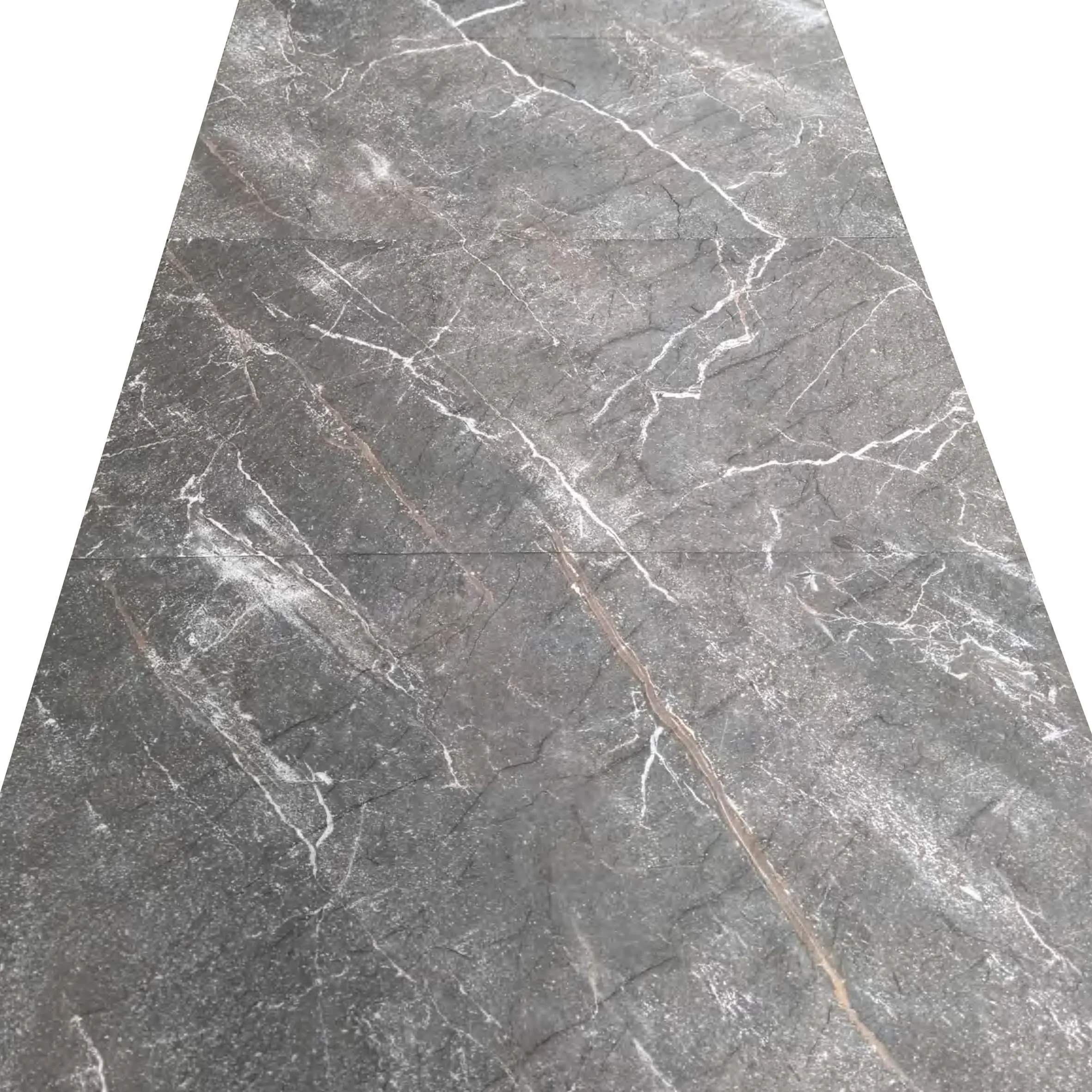
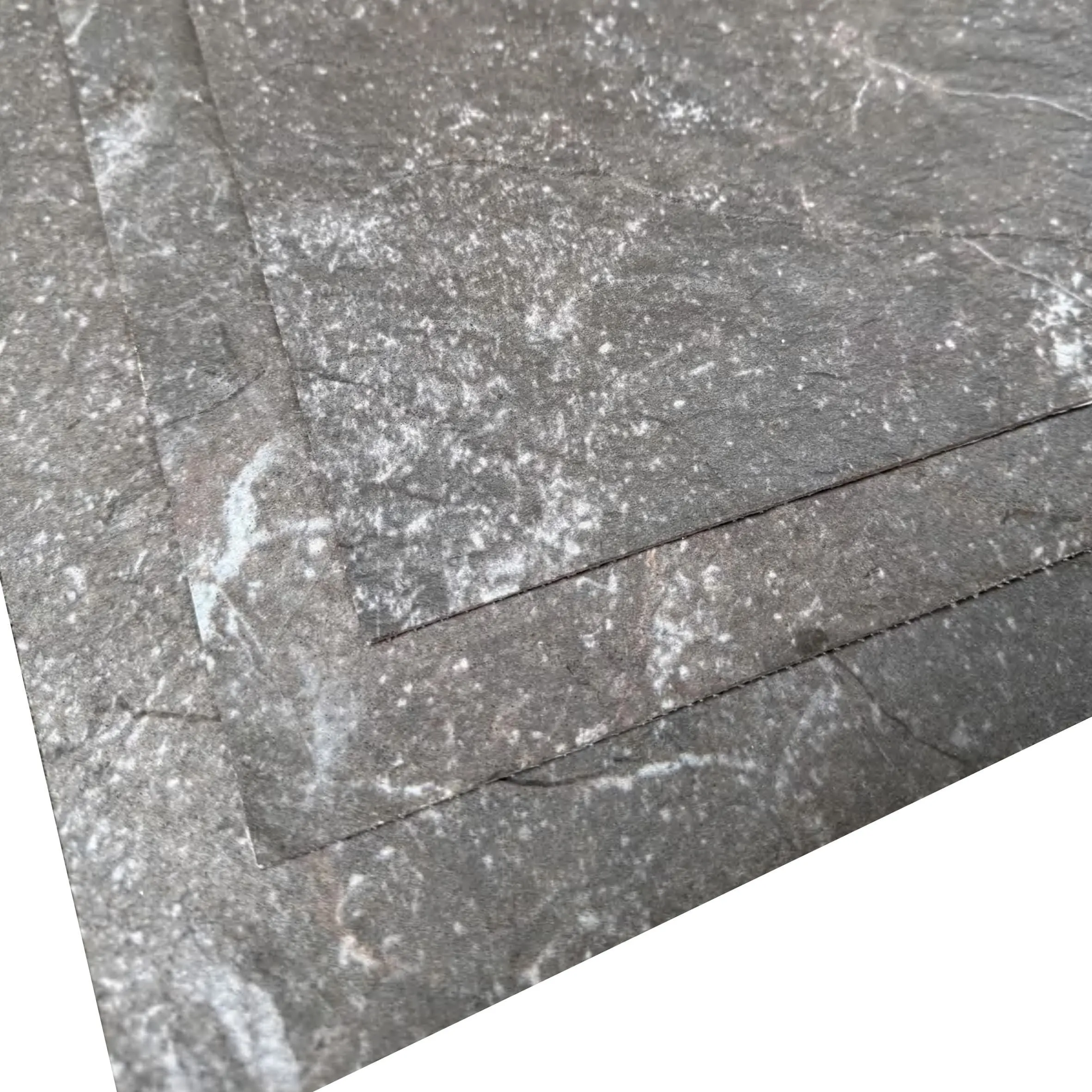
Before we dive into Slate Portoro, let's unpack what makes MCM Flexible Stone different. MCM stands for Modified Composite Material, a blend of natural stone aggregates, fiberglass mesh, and a polymer binder that's engineered to be thin, lightweight, and—most importantly—flexible. Think of it as stone reimagined: all the visual depth and texture of natural stone, but with the bendability of a thick vinyl sheet. At just 3-5mm thick and weighing in at 6-8 kg per square meter, it's a fraction of the weight of traditional stone (which can hit 20+ kg/sqm), making it easier to handle, transport, and install—especially on tricky surfaces like arches, domes, or rounded walls.
But flexibility isn't the only win. MCM panels are also surprisingly durable. They're resistant to UV rays, moisture, and temperature fluctuations, meaning they hold up indoors and out. And because they're made with natural stone particles, they don't skimp on aesthetics. Run your hand over an MCM panel, and you'll feel the same granular texture as you would with quarried stone. It's a material that doesn't just look the part—it feels authentic, too.
So, why does this matter for curved surfaces? Simple: traditional stone fights curves. MCM them. It bends without breaking, adheres smoothly to rounded substrates, and eliminates the need for clunky support structures. And when it comes to a finish that demands attention on curves, Slate Portoro is in a league of its own.
Slate Portoro is a nod to the iconic Portoro marble, known for its dramatic black background and striking gold veining—a pattern that's been gracing palaces, museums, and luxury spaces for centuries. But where traditional Portoro marble is dense and unyielding, MCM's Slate Portoro takes that classic look and gives it flexibility. Imagine the depth of a stormy night sky, streaked with threads of liquid gold—that's the effect of Slate Portoro. The black base is rich and saturated, with subtle variations in tone that add warmth, while the gold veins are irregular and organic, never feeling too uniform or artificial.
What sets Slate Portoro apart on curved surfaces is how the veining flows. On a flat wall, those gold streaks make a bold statement, but on an arch? They become dynamic, guiding the eye upward and creating the illusion of movement. I worked on a restaurant project last year where we used Slate Portoro on a series of curved banquette backs. From across the room, the veining looked like it was rippling, turning a simple seating area into a focal point. One patron even asked if the stone was "painted"—until they touched it and realized it was the real deal (or as real as MCM gets, which is pretty darn close).
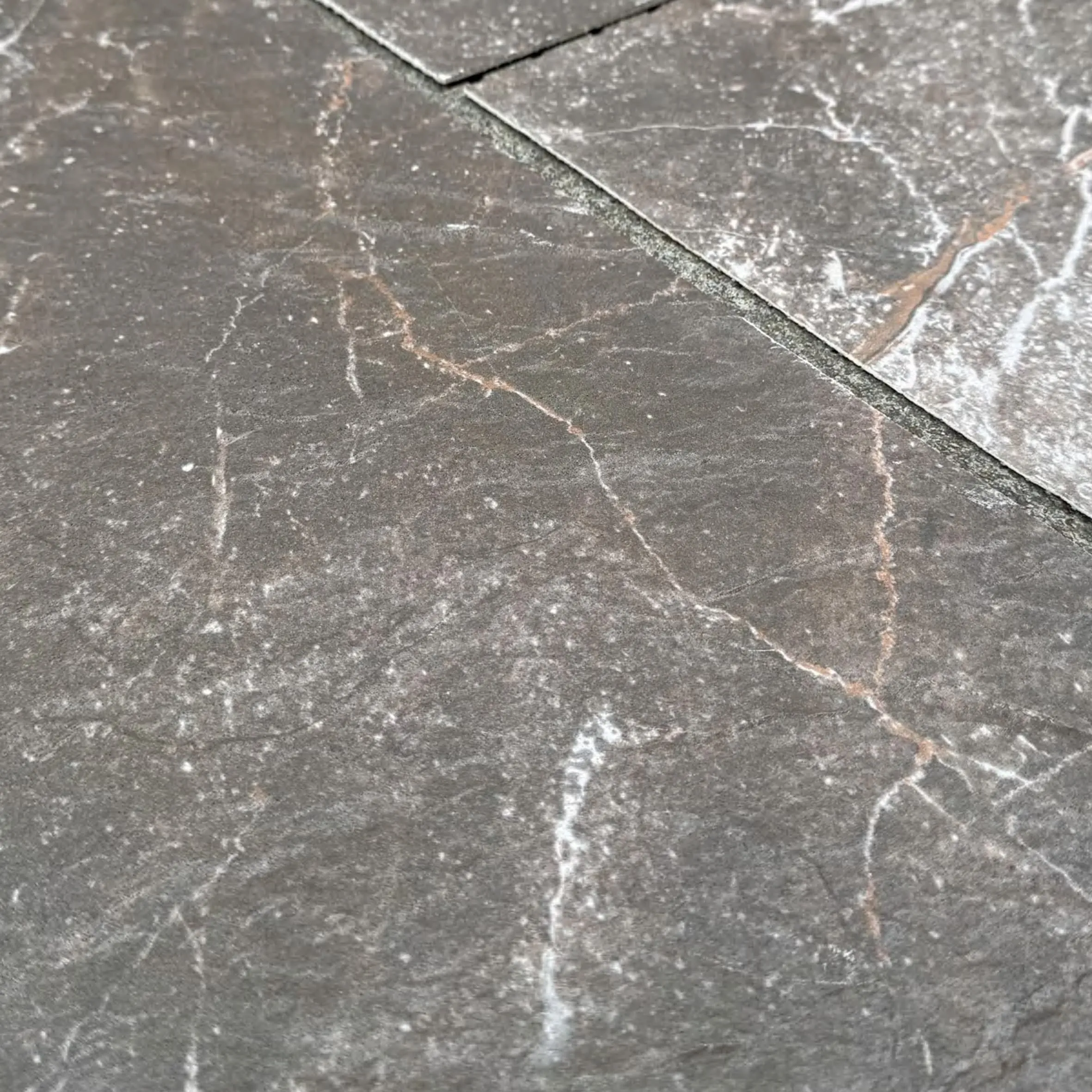
But it's not just about looks. Slate Portoro's texture is another secret weapon. Unlike polished marble, which can feel cold and sterile, Slate Portoro has a honed finish—matte, with just enough grip to feel tactile without being rough. This makes it ideal for high-traffic curved areas, like a hotel lobby arch that guests might brush against or a residential fireplace surround where little hands (or paws) might wander. It's elegant, but it's also practical—no need to panic over every fingerprint or scuff.
Okay, so Slate Portoro looks great and bends—now, how do you actually install it on a curved surface? Let's walk through the process step by step, because while MCM is user-friendly, there are a few tricks to ensuring that arch or curve looks seamless.
Curved surfaces are rarely perfect, so start by prepping the substrate. Whether you're working with drywall, concrete, or wood, the surface needs to be smooth, clean, and free of debris. Fill any cracks or dents with a lightweight filler, then sand it down until it's flush. For arches, I recommend using a level to check for uneven spots—even a 1mm bump can create a visible seam in the finished installation. Pro tip: wipe the surface with a damp cloth to remove dust before moving on; any particles left behind can weaken the adhesive bond.
MCM panels come in standard sizes (often 1200x2400mm), but you'll likely need to trim them to fit your curve. The good news? MCM cuts cleanly with a standard circular saw or jigsaw fitted with a diamond blade (the same tool you'd use for tile). When measuring for an arch, trace the curve onto a piece of cardboard first to create a template—this ensures you get the angle just right. I like to leave a 2-3mm gap at the edges to account for any last-minute adjustments; you can always trim more, but you can't add material back.
For curved installations, I swear by a high-quality, flexible construction adhesive (look for one rated for exterior use, even if it's an indoor project—it's stronger). Apply the adhesive in a "snake" pattern across the back of the Slate Portoro panel, leaving about 5mm gaps between the lines. This ensures even coverage without oozing out the sides when you press the panel onto the curve. For arches, start at the bottom center and work your way up, pressing firmly and wiggling the panel slightly to help the adhesive spread. Use painter's tape to hold the panel in place while the adhesive sets (usually 24 hours, but check the product label).
Even with careful cutting, you'll have seams between panels. For Slate Portoro, use a color-matched grout (I prefer a dark gray or black to blend with the base color) and a rubber float to press it into the gaps. Wipe away excess grout with a damp sponge, taking care not to drag it across the panel's surface (it can stain if left too long). For exposed edges (like the top of an arch), use MCM's edge trim in a matching finish—it's a small detail that makes the installation look professional.
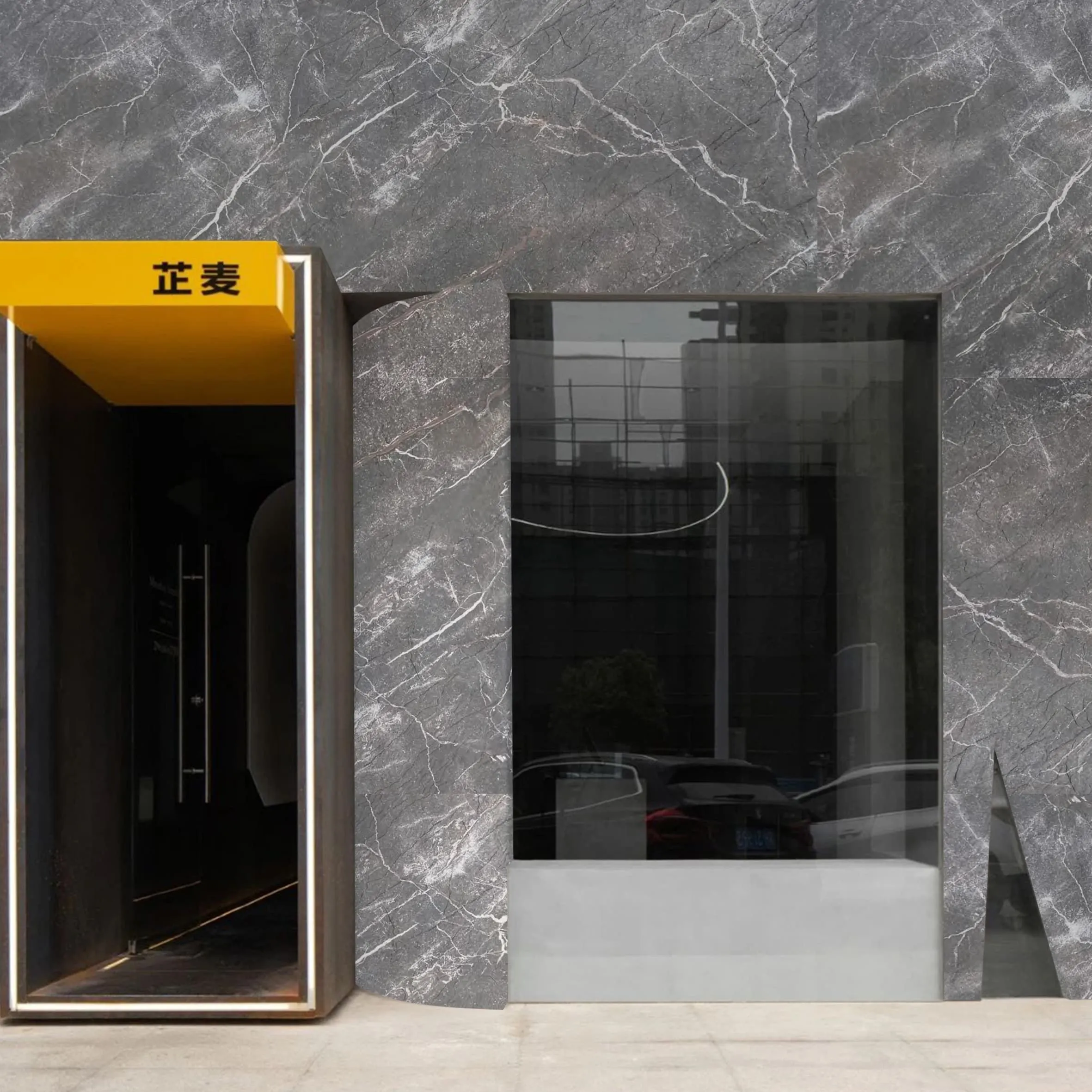
Let's ground this in real-world examples. One of my favorite projects featuring Slate Portoro on curves was a historic bank conversion in Chicago. The building, a 1920s neoclassical structure, had a series of small, rounded niches along its main hallway—originally designed to hold teller windows, but now empty and outdated. The client wanted to transform them into display alcoves for local art, but the curved back walls were too narrow for traditional stone.
Enter Slate Portoro. We clad each niche's curved back wall with MCM panels, and the result was striking. The black and gold veining played off the building's original brass fixtures, and the flexibility of the panels meant we could wrap them around the niche's 90-degree curve without any visible seams. Visitors now stop to take photos of the alcoves—proof that even small curved surfaces can become design highlights with the right material.
Another standout project was a coastal home in Malibu, where the architect wanted a curved fireplace surround that mimicked the shape of the ocean waves outside. Traditional stone would have required custom-cutting each piece to fit the curve, a process that would have taken weeks and cost a fortune. With Slate Portoro, we installed the entire surround in a single day. The homeowner later told me her favorite part was watching the afternoon light hit the gold veins—they seemed to "dance" as the sun moved, making the whole room feel alive.
And let's not forget exteriors. A winery in Napa Valley used Slate Portoro on the curved entrance arch of its tasting room, pairing it with warm wood beams and large glass windows. The contrast between the cool stone and the organic wood created a welcoming vibe, and because MCM is UV-resistant, the color hasn't faded even after three years of California sun. The general contractor later joked that he'd "never fight with stone again"—high praise from someone who's installed his fair share of traditional slabs.
Slate Portoro is bold, so it plays well with materials that either complement its drama or tone it down. Here are a few pairings I've loved in projects:
Fair-faced concrete—raw, textured, and neutral—acts as the perfect backdrop for Slate Portoro's gold veining. I used this combo in a restaurant bar where the front counter curved gently, with Slate Portoro cladding the front and fair-faced concrete for the countertop. The contrast between the smooth concrete and the granular stone added depth, while the neutral concrete kept the space from feeling too dark.
MCM's Wood Grain Board series, with its rich, organic patterns, balances Slate Portoro's formality. In a boutique clothing store, we installed Slate Portoro on a curved feature wall behind the cash register and lined the adjacent walls with Wood Grain Board in a light oak finish. The result? A space that felt both luxurious and approachable—customers lingered longer, and sales staff reported more positive comments about the store's "vibe."
For a bold, modern look, try pairing Slate Portoro with Travertine (Starry Blue), another MCM finish with a deep blue base and subtle white "star" flecks. I used this in a hotel lobby where the main arch was Slate Portoro, and the lower half of the walls were clad in Starry Blue Travertine. The blue and black played off each other like night and sky, and the gold veins in Slate Portoro echoed the white stars in the Travertine—proof that contrasting colors can feel cohesive with the right texture balance.
While Slate Portoro is a star on its own, it's part of MCM's larger Big Slab Board Series—a line of panels designed to minimize seams and maximize impact. These slabs come in sizes up to 1200x2400mm, which is a game-changer for curved surfaces. Think about it: the fewer seams you have, the more fluid the curve looks. On a traditional stone arch, you might need 8-10 small slabs to cover the surface; with MCM Big Slab Board Series, you might only need 2-3 panels. That means less cutting, less grouting, and a finished look that feels more like a single, continuous piece of stone.
I recently used the Big Slab Board Series for a curved ceiling in a hotel ballroom. The client wanted the ceiling to feel like a "floating cloud" of stone, and with 2400mm-long Slate Portoro panels, we achieved just that. The panels bent gently to follow the ceiling's curve, and the minimal seams made it look like the entire ceiling was carved from one piece. It was a showstopper—and the installers finished in half the time they'd estimated for traditional stone.
Another perk of the Big Slab Board Series? Consistency. Because the panels are factory-made, the color and veining are more uniform than you'd get with natural stone. That's especially important on curved surfaces, where mismatched veining can break the illusion of a smooth, flowing design. With Slate Portoro from the Big Slab line, you know each panel will complement the next—no surprises halfway through installation.
| Attribute | Traditional Slate/Stone | MCM Flexible Slate Portoro |
|---|---|---|
| Thickness | 15-20mm (rigid) | 3-5mm (flexible) |
| Weight per sqm | 20-25 kg | 6-8 kg |
| Minimum Bend Radius | Not possible (brittle) | Up to 50mm (can bend around tight curves) |
| Installation Time (per sqm) | 2-3 hours (requires custom cutting, support structures) | 30-45 minutes (easy to cut, no special supports) |
| Durability | High (but prone to cracking on curves) | High (resistant to cracks, moisture, and UV rays) |
| Cost (Material + Labor) | $$$ (expensive stone + high labor costs) | $$ (mid-range material + lower labor costs) |
Curved surfaces in design are more than trends—they're expressions of creativity, a way to make spaces feel human and alive. For too long, stone has been left out of that conversation, dismissed as "too rigid" or "too difficult." But with MCM Flexible Stone, and finishes like Slate Portoro, that's no longer the case. This isn't just a material upgrade; it's a shift in how we think about stone. It's proof that you can have both flexibility and luxury, both practicality and beauty.
Whether you're designing a boutique hotel arch, a residential fireplace, or a commercial exterior, Slate Portoro offers the best of both worlds: the timeless elegance of traditional stone, with the bendability to turn curves into design highlights. And with the support of MCM's Big Slab Board Series, installation is simpler, faster, and more affordable than you might think.
So, the next time you're staring at a curved surface and wondering, "Can stone really do that?" remember: with MCM Flexible Stone, the answer is a resounding yes. Slate Portoro isn't just a material—it's a invitation to dream bigger, design bolder, and let curves shine like they were always meant to.
Recommend Products












