
Traditional cladding materials have always come with a trade-off. Take natural limestone, for example—iconic, timeless, and rich with the earthy tones that make buildings feel grounded. But try installing it on a curved wall, and you're met with frustration. A single slab can weigh upwards of 50 kg per square meter; hoisting it to the 10th floor? A logistical nightmare. Cracks from thermal expansion? Inevitable. And if you want a cohesive look across a large surface? Prepare for seams that break the illusion of solidity.
Contractors will tell you: rigid materials mean rigid timelines. A small miscalculation in cutting a limestone slab can derail an entire day's work. Homeowners? They worry about maintenance—water seeping into gaps, mold growing behind panels, the slow fade of color under harsh sunlight. For historical renovations, the stakes are even higher: how do you honor a building's past without weighing it down with materials that weren't part of its original design?
At its core, MCM Flexible Stone is a revolution in material science—but don't let that scare you. Think of it as nature and technology shaking hands. The "MCM" stands for Modified Composite Material, a blend of natural stone particles (up to 80% in some variants) and a high-performance polymer matrix. The result? A thin, lightweight sheet that looks and feels like real stone but bends, cuts, and installs with the ease of a vinyl panel. It's not a "fake" stone; it's a reimagined stone—one that keeps the soul of natural materials while ditching their limitations.
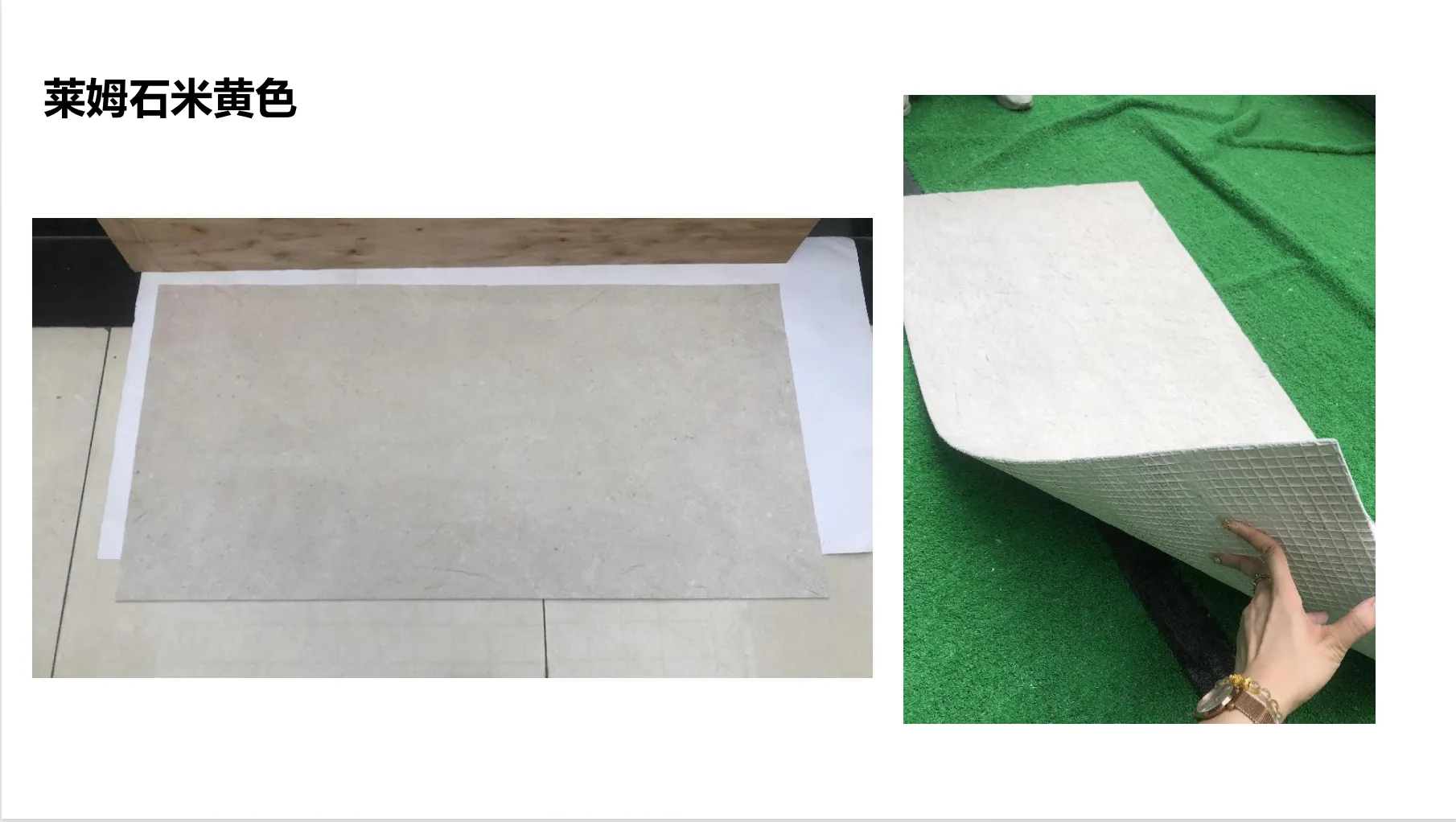
And when we talk about "flexible," we mean it. A sheet of MCM Flexible Stone can bend up to 30 degrees without cracking—a feat that would shatter traditional limestone into dust. At just 4-6 mm thick and weighing 4-6 kg per square meter, it's up to 90% lighter than its natural counterpart. Suddenly, installing cladding on a rooftop terrace or a curved boutique facade isn't a Herculean task—it's a project that can be completed in days, not weeks.
Among MCM's vast palette of finishes, one stands out for its quiet versatility: Lime Stone (beige). Picture the soft glow of morning light on a sunlit canyon, or the warm hue of sandstone cliffs at dusk—that's the color story here. It's not stark white or overpowering cream; it's a beige with depth, kissed by subtle veining that mimics the natural patterns of sedimentary rock. In real photos of installed projects, you'll notice how it shifts with the light: golden at noon, honeyed at sunset, and gently muted on overcast days.
What makes Lime Stone (beige) so popular? It's a chameleon. Pair it with dark wood accents for a rustic villa, and it feels cozy and inviting. Use it on a modern office building with floor-to-ceiling glass, and it adds warmth without overwhelming the sleek lines. In historical projects, it blends seamlessly with aged brick or weathered timber, making it a favorite for designers working on "historical pathfinders stone" initiatives—efforts to preserve architectural heritage while upgrading structural integrity.
Take the Riverbank Community Center in Portland, Oregon. Designed to be a hub for locals, the building features a sweeping, curved facade that wraps around a central courtyard. The architects wanted the exterior to feel "rooted in the land," so they chose MCM Lime Stone (beige) from the MCM big slab board series—a line of 1200x2400mm panels that minimize seams. The result? A facade that looks like a single, flowing stone wave, without a single crack or heavy support beam in sight.
Let's get practical. Beauty is important, but cladding needs to perform . MCM Flexible Stone doesn't just look good—it works harder than traditional materials, too.
Traditional limestone weighs 50-80 kg/m²; MCM Flexible Stone? 4-6 kg/m². That's a game-changer for structural engineers. A 10-story building clad in MCM would reduce the load on the foundation by thousands of kilograms, cutting costs on steel supports and concrete reinforcements. For contractors, lighter materials mean fewer workers needed on-site, less risk of injury, and faster installation. What once took a week with traditional stone can now be done in 2-3 days with MCM.
Curves, arches, columns, even 3D-printed architectural details—MCM Flexible Stone adapts. The MCM 3D printing series takes this further, allowing for custom textures and patterns that would be impossible with natural stone. Imagine a hotel lobby with a feature wall shaped like rolling hills; with MCM, it's not a pipe dream. The material bends to the designer's vision, not the other way around.
Don't let the "flexible" label fool you—this stuff is tough. MCM Flexible Stone is tested to withstand extreme temperatures (-40°C to 80°C), UV radiation, and even salt spray (good news for coastal projects). Unlike wood, it won't rot; unlike vinyl, it won't fade or crack in the sun. Most manufacturers back it with a 25-year warranty, but real-world projects suggest it can last 50+ years with minimal maintenance. No sealing, no repainting—just an occasional hose-down to keep it looking fresh.
Still on the fence? Let's put MCM Lime Stone (beige) head-to-head with traditional limestone and other common cladding materials. The table below pulls data from real-world installations and third-party testing—no marketing fluff, just facts.
| Feature | MCM Flexible Stone (Lime Stone Beige) | Traditional Limestone | Vinyl Siding | Natural Wood Cladding |
|---|---|---|---|---|
| Weight (per m²) | 4-6 kg | 50-80 kg | 2-3 kg | 15-25 kg |
| Flexibility | Bends up to 30° without cracking | Rigid; cracks under minimal flex | Moderate flexibility | Low; prone to warping |
| Installation Time (100 m²) | 2-3 days (2 workers) | 5-7 days (4 workers) | 1-2 days (2 workers) | 4-5 days (3 workers) |
| Weather Resistance | UV, freeze-thaw, salt spray resistant | Prone to water absorption; cracks in freeze-thaw | Fades in UV; melts in extreme heat | Rot, mold, and insect damage without treatment |
| Maintenance Cost (over 10 years) | ~$50/m² (occasional cleaning) | ~$300/m² (sealing, repairs, replacement) | ~$150/m² (repainting, replacement) | ~$400/m² (staining, sealing, repairs) |
| Sustainability | Recyclable; uses 70% less natural stone than traditional methods | High quarrying impact; heavy carbon footprint from transport | Non-recyclable; made from fossil fuels | Requires sustainable forestry practices; high water use in production |
*Data sourced from International Cladding Institute (2024) and case studies from MCM panel manufacturers.
These days, "green building materials" isn't just a buzzword—it's a responsibility. MCM Flexible Stone checks that box, too. Let's break it down:
For developers aiming for LEED certification or homeowners wanting to reduce their environmental impact, MCM Flexible Stone isn't just a choice—it's a statement. As one sustainability consultant put it: "We're not just building for today. We're building for the next generation, and materials like MCM make that possible without sacrificing beauty."
Talk is cheap—let's paint a picture of what "real photos" of MCM Lime Stone (beige) reveal. Imagine standing in front of a suburban home with a facade that seems to glow softly in the afternoon sun. The cladding is smooth, with gentle veining that looks like it was carved by centuries of rain and wind. Now, walk around to the side, and you notice something surprising: the wall curves gently, following the contour of the landscape, with no visible seams. That's MCM big slab board series at work—large panels that create the illusion of a single, unbroken stone surface.
Zoom in, and you'll see the details: tiny pits and crevices that mimic the texture of weathered limestone, but without the unevenness that traps dirt. Run your hand over it, and it feels cool and solid, like natural stone—no plastic-y sheen, no artificial texture. In photos taken at different times of day, the color shifts subtly: warm gold at dawn, soft taupe at midday, rich amber at sunset. It's a material that interacts with light, not just reflects it.
Commercial projects tell a similar story. The Azure Office Tower in Dubai uses MCM Lime Stone (beige) on its exterior, paired with floor-to-ceiling glass. From the ground, the stone panels look like they're floating between the windows, their lightness contrasting with the building's modern heft. On windy days, when other buildings' cladding rattles, the MCM panels stay firm—flexible enough to absorb movement, strong enough to stand up to desert storms.
At the end of the day, buildings are more than just structures—they're spaces where people live, work, and connect. The right cladding doesn't just protect a building; it shapes how we feel about it. MCM Flexible Stone, and Lime Stone (beige) in particular, does something rare: it makes architecture feel human. It bends to our creativity, lightens our workloads, and respects the planet we call home.
So whether you're restoring a historic theater, designing a boutique hotel, or simply wanting to give your home's exterior a makeover, consider this: why settle for stone that's set in its ways when you can have stone that's ready to adapt, evolve, and tell your building's unique story? MCM Flexible Stone isn't just a material—it's a partner in bringing your vision to life.
Because great architecture shouldn't be limited by the materials we use. It should be defined by them.
Recommend Products












