
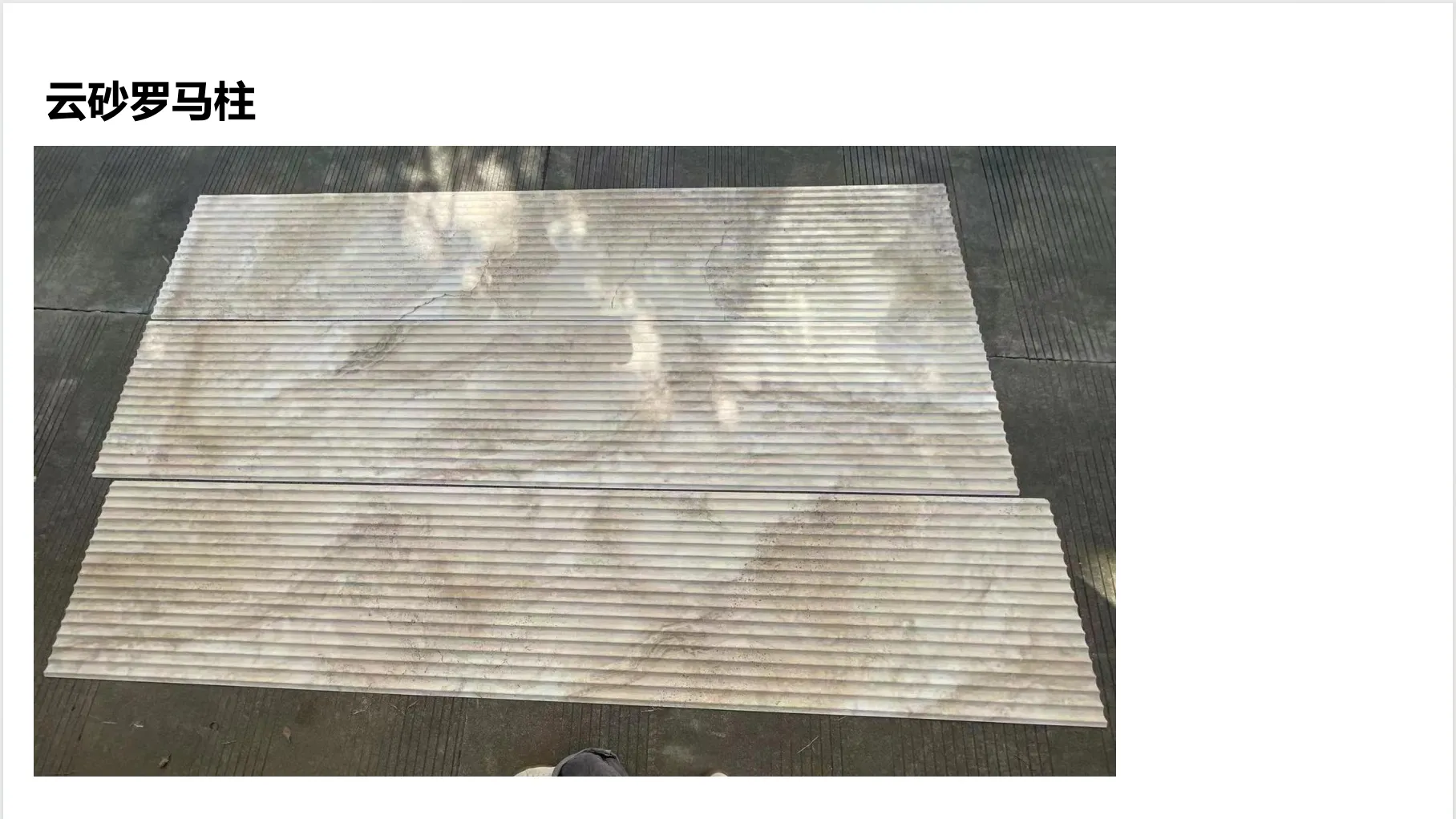
Picture this: You're standing in the lobby of a boutique hotel, sunlight streaming through floor-to-ceiling windows. Your gaze drifts upward, drawn to a set of towering pillars—their surfaces ripple with the soft texture of stone, yet they curve gently, as if sculpted by wind rather than chiseled by tools. You reach out, half-expecting cold, heavy marble, but instead feel a surprisingly lightweight material that bends ever so slightly under your touch. "What is this?" you wonder. The answer, more often than not these days, is MCM flexible stone—a material that's quietly revolutionizing how we think about architecture, one bendable pillar, wall, and surface at a time.
For decades, natural stone has been the gold standard for luxury and durability, but its rigidity limited design possibilities. Architects dreamed of curved facades, spiral columns, and organic shapes, only to be met with the harsh reality of stone's weight and inflexibility. Enter MCM (Modified Composite Material) flexible stone: a blend of natural minerals, high-performance polymers, and cutting-edge engineering that retains the beauty of stone while adding a game-changing trait—flexibility. Today, we're diving into one of its most captivating applications: marble pillars. And to make the journey even richer, we're leaning on real photos—those unfiltered, up-close snapshots that turn abstract product names into tangible inspiration.
Let's start with the basics: MCM flexible stone isn't your average wall covering. It's a, lightweight sheet (typically 3-6mm thick) that mimics the look and texture of natural stone—travertine, marble, granite, you name it—without the bulk. Traditional marble pillars, for example, require heavy slabs, structural support, and often compromise on design flexibility. MCM changes that. Its flexibility comes from a unique composition: a base layer of reinforced fiberglass or non-woven fabric, coated with a mineral-rich composite that's colored and textured to replicate stone. The result? A material that can bend up to 90 degrees (depending on the series) without cracking, making it perfect for curved pillars, spiral staircases, or any design that demands fluidity.
But here's where it gets personal for designers and homeowners: MCM flexible stone doesn't just look like stone—it feels like it. Run your hand over a piece of travertine (starry green) , and you'll feel the characteristic pitted surface of travertine, dotted with tiny "stars" of green that catch the light. Touch a lunar peak silvery panel, and the cool, metallic sheen evokes the surface of the moon. These details aren't just aesthetic—they're emotional. They turn a pillar from a structural element into a storyteller, setting the mood of a space whether it's a cozy café or a grand corporate lobby.
Pro Tip: Real photos are your secret weapon here. A product description might say "starry green," but a real photo shows you how the green pigment interacts with light—whether it's a soft sage in morning glow or a deeper emerald at dusk. Many MCM collections, like the MCM project board series and 3D printing series , include high-resolution real photos that capture texture, color variation, and scale, helping you avoid "that's not what I imagined!" moments during installation.
Now, let's talk about the fun part: applications. MCM flexible stone marble pillars aren't just for show—they're for solving design problems and bringing bold ideas to life. Here are a few scenarios where they shine:
Walk into a modern restaurant, and you'll likely notice a shift: sharp corners are out, soft curves are in. Curved pillars, in particular, create flow, guiding the eye and making spaces feel more inviting. Traditional stone would require custom-cutting thick slabs, which is costly and limits the radius of the curve. MCM flexible stone, though, wraps around curved surfaces like a second skin. Take the wave panel series, for example: with its gentle, undulating texture, it's designed for curves. Imagine a set of these panels wrapped around a cylindrical pillar in travertine (vintage gold) —the warm, golden tones paired with the wave texture would turn a plain column into a focal point that feels both elegant and approachable.
Real photos of such installations are eye-opening. One project in Barcelona used marble stream stone MCM panels on curved pillars in a hotel lobby. The photos show how the stone's natural veining follows the curve, creating a seamless, almost liquid effect. Without flexibility, that veining would have been broken, ruining the illusion of a single, flowing stone.
Spiral staircases are architectural showstoppers, but their central pillars are often an afterthought—until now. MCM flexible stone lets designers clad these pillars in materials that complement the stairs, whether it's wood grain board for a rustic vibe or polish concrete for industrial edge. One residential project in Tokyo used bamboo mat board MCM panels on a spiral staircase pillar, and the real photos tell the story: the bamboo texture, with its subtle grooves and warm tones, contrasts beautifully with the sleek metal stairs, creating a balance of natural and modern.
Ever walked into a café that feels like a mountain lodge, or a boutique that transports you to a beach in Bali? Themed spaces rely on texture to set the mood, and MCM flexible stone pillars are perfect for this. Take the gobi panel , inspired by the desert's windswept landscapes. Clad a pillar in this, and suddenly your space feels vast and rugged. Pair it with historical pathfinders stone (think weathered, time-worn texture), and you've got a pillar that looks like it's been standing for centuries—ideal for heritage-themed hotels or museums.
Real photos here are crucial. A travertine (starry red) pillar might sound bold on paper, but a real photo shows how the "stars" (tiny, reflective particles) catch the light, turning a pillar into a constellation. It's the difference between imagining a red stone and seeing how it transforms a dimly lit hallway into a dramatic, starry passage.
With so many MCM series and finishes to choose from, it can be overwhelming. Let's break down a few fan favorites for marble pillars, using real photos as our guide:
Travertine is a classic for a reason—its porous, honeycomb texture adds warmth and character. MCM's travertine series takes this up a notch with unique variations like travertine (starry green) , starry red , and starry blue . These aren't your grandma's travertine: the "starry" effect comes from iridescent particles mixed into the composite, making the stone sparkle subtly under light. Real photos of travertine (starry green) pillars in a wedding venue show just how magical this can be—soft green tones with flecks of silver and gold, turning a simple pillar into a romantic backdrop for photos.
For a more muted look, there's travertine (vintage silver) or vintage black . These have a weathered, aged finish that pairs beautifully with industrial or minimalist designs. A real photo of a vintage black travertine pillar in a tech startup office shows how the dark, moody tone contrasts with white walls and sleek furniture, creating a space that feels both edgy and sophisticated.
If you want pillars that feel futuristic yet grounded, the lunar peak series is for you. Available in silvery , golden , and black , these panels mimic the cratered, metallic surface of the moon. Imagine a lobby with lunar peak golden pillars—their warm, brassy sheen catches the light, making the space feel opulent without being over-the-top. Real photos of these pillars in a luxury retail store show how the texture isn't just flat; it has depth, with tiny indentations that make it look like you could reach out and touch the moon's surface.
Rustic, weathered, and full of character—the rust series (think rust square line stone , rust mosaic stone , and rust board granite ) is perfect for spaces that want to tell a story of resilience. These panels replicate the look of aged metal or weathered iron, with rich reds, oranges, and browns. A real photo of a rust square line stone pillar in a brewery shows how the bold, linear pattern adds visual interest, while the rusty hue complements wooden tables and exposed brick, creating a cozy, industrial vibe.
Let's be honest: reading a list of product names like " dolomitic travertine (dark grey) " or " slate portoro " can feel like decoding a foreign language. That's where real photos come in. They bridge the gap between abstract terms and real-world application. A real photo of slate portoro (a deep black slate with gold veins) on a pillar doesn't just show color—it shows how the veins catch the light at different angles, how the texture feels up close, and how it pairs with other materials like wood or metal.
Designers will tell you: the biggest risk in any project is choosing a material based on a swatch or a stock image, only to find it looks completely different in the space. MCM manufacturers know this, which is why many now offer extensive libraries of real photos—close-ups of texture, full installations in different lighting, even "before and after" shots of spaces transformed by their panels. For example, a real photo of fair-faced concrete MCM pillars in a minimalist home shows how the material's raw, unpolished look contrasts with soft textiles and warm lighting, proving that "concrete" doesn't have to mean cold.
| Series | Key Features | Ideal For | Standout Finish |
|---|---|---|---|
| MCM Project Board Series | Durable, versatile, wide range of textures | Commercial lobbies, high-traffic areas | Historical Pathfinders Stone (weathered, heritage look) |
| MCM 3D Printing Series | Customizable 3D textures, intricate patterns | Statement pillars, art installations | 3D Art Concrete Board (geometric, modern patterns) |
| Foamed Aluminium Alloy Series | Lightweight, metallic sheen, corrosion-resistant | Contemporary, high-tech spaces | Foamed Aluminium Alloy Board (Vintage Gold) (warm, luxe finish) |
| Rammed Earth Board Series | Earthy, organic texture, gradient color options | Eco-friendly homes, wellness centers | Rammed Earth Board (Matcha Green) (soft, natural hue) |
| Travertine Series | Classic travertine texture, starry/metallic variations | Wedding venues, luxury hotels | Travertine (Starry Orange) (vibrant, warm with sparkle) |
Beyond design flexibility, MCM flexible stone has another trick up its sleeve: sustainability. Natural stone mining is resource-intensive, often requiring heavy machinery and leaving large ecological footprints. MCM, on the other hand, uses recycled minerals and reduces waste by up to 90% compared to traditional stone cutting. Its lightweight nature also reduces transportation emissions and structural load, making buildings more energy-efficient. For architects and homeowners who care about the planet, this is a big deal. A foamed aluminium alloy board (vintage silver) pillar isn't just a design choice—it's a choice to minimize environmental impact without sacrificing style.
At the end of the day, architecture isn't just about function—it's about emotion. It's about how a space makes you feel when you walk in, how a pillar can turn a blank wall into a conversation starter. MCM flexible stone marble pillars do exactly that: they take the timeless beauty of stone and add the freedom to dream. Whether you're drawn to the starry sparkle of travertine (starry blue) , the industrial edge of rust board granite , or the lunar magic of lunar peak black , there's a finish that aligns with your vision.
And remember: real photos are your compass. They'll guide you from "I like that color" to "This is the one." So dive into those galleries, zoom in on the textures, imagine how the light will hit your pillars at different times of day. Because with MCM flexible stone, the only limit is your imagination—and now, thanks to bendable design, even that is limitless.
So, what story will your pillars tell? The journey starts with a single photo—and a whole lot of possibility.
Recommend Products












