
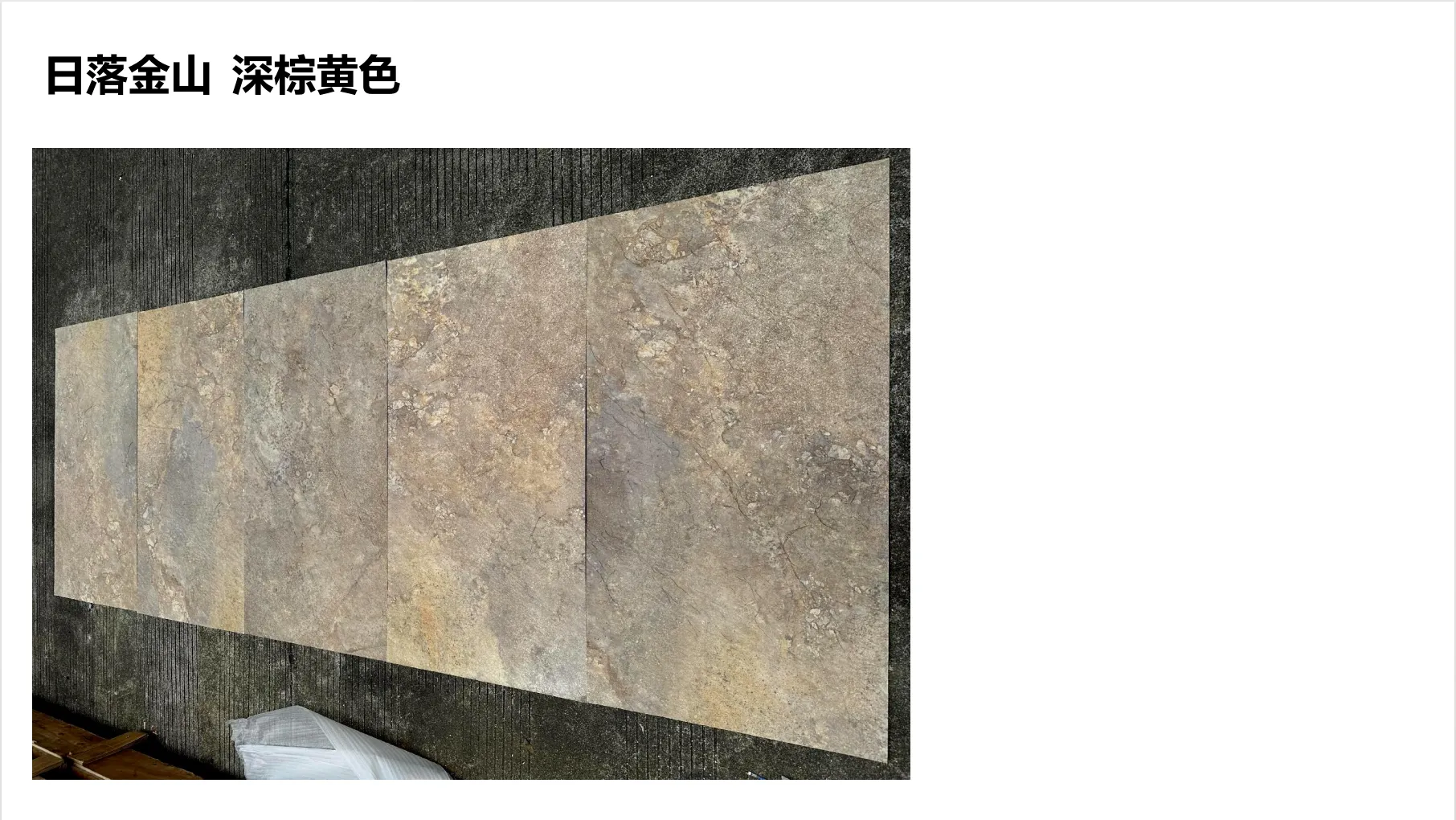
Walk into any busy airport terminal, shopping mall, or hotel lobby, and you'll quickly realize: high-traffic spaces demand more than just good looks. They need materials that can withstand the chaos of daily life—scuff marks from rolling suitcases, spills from hurried coffee runs, the constant shuffle of feet—all while maintaining their aesthetic appeal. For architects, designers, and facility managers, choosing the right surface material here isn't just a design decision; it's a long-term investment in durability, maintenance, and user experience. Two popular contenders often rise to the top: MCM flexible stone and traditional ceramic tiles. But how do they really stack up? And what does real-world performance look like, especially when beauty matters as much as brawn? Let's dive in—with a little help from Golden Sunset real photos that bring these materials to life in the spaces where they work hardest.
First things first: Let's demystify MCM flexible stone . MCM stands for Modified Composite Material, and it's exactly what it sounds like—a clever blend of natural minerals (think marble, granite, or travertine particles) and high-performance polymers. The result? A material that mimics the look and feel of natural stone but with a few game-changing upgrades. Unlike rigid slabs of marble or granite, MCM flexible stone is thin (usually 3-5mm thick), lightweight (around 4-6 kg per square meter), and—you guessed it—flexible. It can bend slightly without cracking, making it ideal for curved surfaces or installations where traditional stone would be too brittle.
But MCM isn't just a one-trick pony. The MCM big slab board series takes this versatility a step further, offering large-format panels (some up to 1200x2400mm) that minimize grout lines and create seamless, visually striking surfaces. Imagine a hotel lobby floor that looks like a single expanse of golden stone, no messy seams to trap dirt or break up the design—that's the magic of big slab MCM. And because it's lightweight, installation is a breeze compared to heavy natural stone or ceramic tiles. Contractors can handle panels more easily, reducing labor time and costs, and it's even suitable for wall or ceiling applications where weight is a concern.
What really sets MCM flexible stone apart, though, is its durability. The polymer binding agents make it resistant to scratches, stains, and impacts—key for high-traffic areas. Spill coffee? Wipe it up with a damp cloth. Drag a metal chair across it? No visible scuff. It's also UV-resistant, so colors won't fade even in sunlit spaces, and water-resistant, making it suitable for humid environments like indoor pools or spa areas. And yes, it's eco-friendly too: many MCM products use recycled materials and require less energy to produce than fired ceramic tiles or quarried natural stone.
Ceramic tiles have been a staple in construction for decades, and for good reason. Made from clay or porcelain, fired at high temperatures to create a hard, dense surface, they're known for being water-resistant, easy to clean, and widely available in countless colors and patterns. Walk into any hardware store, and you'll find shelves lined with ceramic options—from glossy white subway tiles to rustic terracotta to sleek, modern porcelain that mimics wood or stone. They're affordable upfront, which makes them a go-to for budget-conscious projects, and their rigidity means they feel solid underfoot, a trait many people associate with "quality."
But let's talk about the downsides, especially in high-traffic areas. Ceramic tiles are heavy—often 15-20 kg per square meter—so they require a sturdy subfloor and can be tricky to install on walls or ceilings without extra structural support. Their rigidity is a double-edged sword too: while it makes them hard, it also makes them brittle. drop a heavy object, and there's a good chance a tile will crack or chip. And those grout lines? They're not just aesthetically divisive; they're magnets for dirt, mold, and mildew. In busy spaces, keeping grout clean is a constant battle—even with sealants, over time, they discolor, making the entire surface look dingy long before the tiles themselves wear out.
Another thing to consider: design limitations. Ceramic tiles are typically sold in smaller sizes (300x300mm, 600x600mm), so creating a seamless look requires meticulous alignment, and the more tiles you use, the more grout lines you end up with. While some designers embrace the grid pattern, others find it restrictive, especially when aiming for a luxurious, high-end vibe. And while modern printing techniques let ceramic mimic stone or wood, the texture often feels flat compared to the real thing—or to MCM flexible stone, which uses real mineral particles for a more authentic tactile experience.
To really see how these materials compare, let's break it down. The table below pits MCM flexible stone against ceramic tiles across key factors that matter in high-traffic areas:
| Feature | MCM Flexible Stone | Ceramic Tiles |
|---|---|---|
| Durability | Flexible, impact-resistant; resists scratches and chips even with heavy use. | Rigid and hard, but prone to cracking/chipping under impact (e.g., dropped objects). |
| Weight | Lightweight (4-6 kg/m²); easy to install on walls/ceilings. | Heavy (15-20 kg/m²); requires sturdy subfloors and structural support. |
| Installation | Quick and easy; large slabs reduce labor time. Can bend around curves. | Time-consuming; requires precise alignment. Grout application adds steps. |
| Maintenance | Minimal: Wipe clean with water; no grout lines to trap dirt. | Grout lines need regular sealing and cleaning to prevent staining/mildew. |
| Design Options | Wide range of colors/textures; MCM big slab board series for seamless looks. | Many patterns, but smaller sizes and grout lines limit seamless designs. |
| Cost | Higher upfront cost, but lower long-term maintenance and labor. | Lower upfront cost, but higher maintenance and potential replacement costs. |
| Eco-Friendliness | Often uses recycled materials; low-energy production. | High firing temperatures consume more energy; clay mining impacts ecosystems. |
The takeaway? Ceramic tiles have their place—they're affordable and familiar—but MCM flexible stone shines in high-traffic areas where durability, design flexibility, and long-term value matter most. But don't just take our word for it. Let's look at real-world examples, courtesy of Golden Sunset real photos that showcase MCM in action.
Words can only say so much—sometimes you need to see a material in action to truly appreciate it. That's where Golden Sunset real photos come in. Golden Sunset is one of MCM flexible stone's most popular finishes: a warm, amber-tinged golden hue with subtle veining that mimics the look of sunlit travertine. It's bright enough to make spaces feel open and inviting but rich enough to add depth and sophistication. Let's walk through two projects where Golden Sunset MCM transformed high-traffic areas.
The food court at City Center Mall sees upwards of 10,000 visitors daily—strollers, teenagers, families with messy kids, food vendors wheeling heavy carts. Before renovation, the floor was covered in ceramic tiles that had seen better days: chipped edges, stained grout lines, and a dull, faded pattern that made the space feel outdated. The mall management team wanted something durable, easy to clean, and visually uplifting. Enter Golden Sunset MCM flexible stone from the MCM big slab board series .
Today, the food court floor is a seamless expanse of Golden Sunset panels. The large 1200x2400mm slabs eliminated 80% of the grout lines, making spills (and there are many) a breeze to wipe up. According to Maria, the mall's facilities manager: "We used to spend hours scrubbing grout with harsh chemicals. Now, a quick mop with mild detergent keeps the floor looking brand new. And the color? It's like bringing sunlight indoors—even on rainy days, the space feels warm and cheerful." Golden Sunset real photos of the space show exactly that: a bright, open area where the stone's golden tones complement the food court's wooden furniture and colorful signage, with nary a scratch or stain in sight, even six months post-installation.
The Skyline Hotel wanted to upgrade its lobby to compete with newer, luxury properties in the area. The focal point? A curved feature wall behind the reception desk that would make a statement. Traditional stone was too heavy and rigid to bend around the curve; ceramic tiles would have required dozens of small, mismatched pieces. The design team opted for Golden Sunset MCM flexible stone, which could be curved to follow the wall's gentle arc.
The result, as seen in Golden Sunset real photos , is stunning: a sweeping golden wall that catches the light from the lobby's floor-to-ceiling windows, creating a dynamic, almost sculptural effect. The material's flexibility allowed for a seamless curve without visible seams, and its lightweight nature meant no extra structural support was needed. "Guests often comment on the wall—it's become a backdrop for Instagram photos," says James, the hotel's design director. "But what really sold us is how it's held up. We've had luggage carts, delivery trucks, even a wedding cake trolley bump into it, and there's not a mark. It's both beautiful and bulletproof."
While MCM flexible stone and ceramic tiles often take center stage, high-traffic spaces rarely rely on a single material. Mixing textures and finishes can add visual interest while addressing specific functional needs. For example, pairing Golden Sunset MCM with fair-faced concrete creates a modern, industrial-chic vibe that's both tough and trendy. Fair-faced concrete—also known as "exposed concrete"—has a raw, tactile finish that contrasts beautifully with the smooth warmth of Golden Sunset. It's incredibly durable (think sidewalks and bridges) and requires minimal maintenance, making it perfect for accent walls or seating areas in high-traffic lobbies.
Another standout complementary material is foamed aluminium alloy board (vintage gold) . Lightweight and corrosion-resistant, this metal panel adds a touch of glamour with its metallic sheen. Used sparingly—say, as trim around Golden Sunset MCM walls or as a backsplash in a restaurant—it elevates the design without overwhelming it. The vintage gold finish pairs particularly well with Golden Sunset's amber tones, creating a cohesive, luxurious look that feels both timeless and modern.
The key here is balance. MCM flexible stone provides the main canvas with its durability and beauty; materials like fair-faced concrete and foamed aluminium add texture and contrast. Together, they create spaces that are not only built to last but also feel intentional and inviting—no small feat in high-traffic environments.
At the end of the day, both MCM flexible stone and ceramic tiles have their merits. Ceramic tiles are affordable and familiar, making them a solid choice for low-traffic areas or tight budgets. But when it comes to high-traffic spaces—where durability, maintenance, and design flexibility are non-negotiable—MCM flexible stone pulls ahead. Its lightweight, flexible nature makes installation easier and more versatile; its resistance to scratches, stains, and impacts ensures long-term performance; and its wide range of finishes (including showstoppers like Golden Sunset) means it can adapt to any design vision.
Golden Sunset real photos tell the story best: spaces that are not just functional, but beautiful—where the material enhances the user experience rather than just enduring it. Whether you're designing a mall food court, a hotel lobby, or a busy office corridor, MCM flexible stone offers the kind of performance and aesthetic appeal that turns high-traffic areas from "just functional" to "truly memorable."
So, the next time you're faced with choosing a surface material for a space that works as hard as the people in it, remember: sometimes, the best innovations are the ones that blend the beauty of the past (natural stone) with the practicality of the future (engineered composites). And if you need proof? Just look at the Golden Sunset real photos —they don't lie.
Recommend Products












