
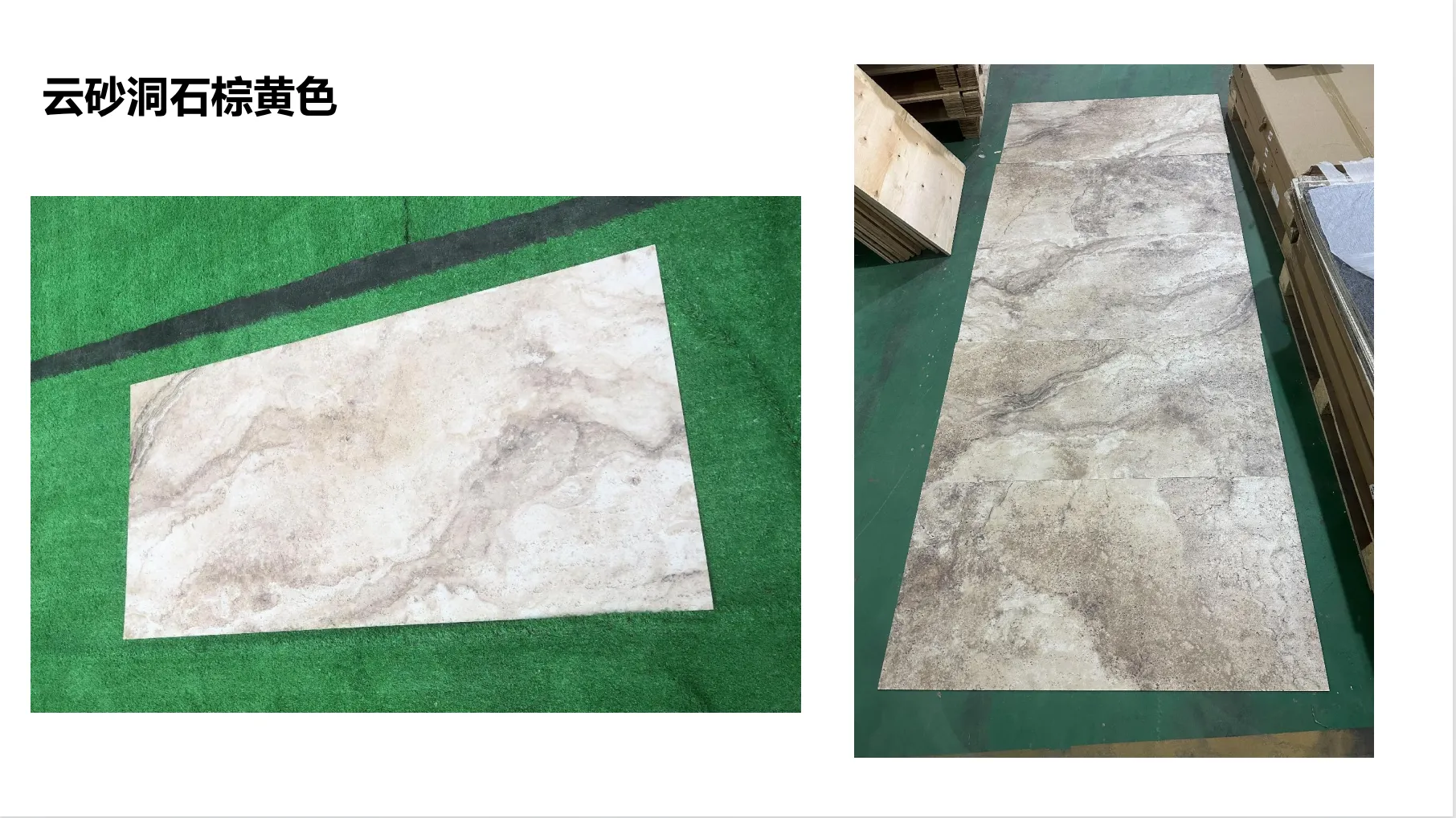
There's something timeless about the look of natural stone. The way light plays off its surface, the subtle variations in texture, the earthy tones that ground a space—these are the qualities that make stone a favorite in interior and exterior design. But traditional stone? It's heavy, hard to install, and often comes with a steep price tag. That's where MCM Flexible Stone steps in, and today, we're diving deep into one of its most stunning variants: dark grey dolomitic travertine . Picture this: the rugged elegance of travertine, with the soft, muted depth of dark grey, made flexible enough to bend around corners, lightweight enough for DIY installation, and durable enough to stand up to daily life. It's not just a building material—it's a design game-changer.
MCM (Modified Composite Material) Flexible Stone isn't new, but its popularity has skyrocketed in recent years, and for good reason. Unlike rigid slabs of rough granite stone (dark grey) or clunky concrete, MCM panels are thin, lightweight, and surprisingly strong. They mimic the look and feel of natural stone so closely that even seasoned designers do a double-take. And when it comes to dark grey dolomitic travertine? It's a texture that balances modern minimalism with organic warmth. Think of it as the perfect middle ground between the industrial edge of fair-faced concrete and the classic luxury of marble. Whether you're revamping a bathroom backsplash, cladding an accent wall, or upgrading your outdoor patio, this material brings a level of sophistication that's hard to match—without the headache of traditional stone installation.
In this guide, we're going to walk you through everything you need to know to install MCM Flexible Stone with dark grey dolomitic travertine texture. We'll cover preparation, tools, step-by-step installation, maintenance, and even share pro tips to ensure your project goes smoothly. Whether you're a seasoned DIYer or a first-timer nervous about picking up a trowel, this isn't just a manual—it's your partner in bringing that "high-end designer look" to life in your own space. Let's get started.
Before we jump into installation, let's talk about why this specific texture deserves a spot in your home. Dark grey dolomitic travertine isn't just a color—it's a mood. Its deep, neutral tone acts as a versatile backdrop, letting other elements in your space (think vibrant artwork, warm wood furniture, or bold textiles) shine. Unlike stark black stone, which can feel cold, dark grey dolomitic travertine has subtle undertones—hints of taupe, charcoal, and even soft blue in some lighting—that add depth without overwhelming. It's the kind of texture that looks just as good in a sleek, modern kitchen as it does in a cozy, rustic living room.
But looks aside, MCM Flexible Stone has practical perks too. Let's compare it to traditional options: Rough granite stone (dark grey) is durable, but a single slab can weigh over 100 pounds—installing it often requires a team of professionals and specialized equipment. Fair-faced concrete is trendy, but it's porous, prone to staining, and needs regular sealing. MCM panels? They weigh just 3-5 pounds per square foot, so you can carry them solo. They're water-resistant, scratch-resistant, and pre-finished, meaning no messy sealing or polishing after installation. Plus, they're flexible—we're talking bendable enough to wrap around columns, archways, or curved walls. Try doing that with a granite slab!
Another bonus? Sustainability. MCM Flexible Stone is made from recycled materials and natural minerals, so it's gentler on the planet than quarried stone. And since it's lightweight, transporting it uses less fuel, reducing your project's carbon footprint. For eco-conscious homeowners, that's a big win. So, whether you're drawn to its aesthetic, its practicality, or its green credentials, dark grey dolomitic travertine MCM checks all the boxes.
Installing MCM Flexible Stone is doable for most DIYers, but like any project, success starts with preparation. Rushing this step is the number one mistake we see—and trust us, we've seen it all. (Last year, a friend skipped checking their subfloor and ended up with panels that cracked six months later. Don't be that friend.) Let's break down the prep work into three key parts: subfloor inspection, measuring and planning, and gathering tools and materials.
MCM panels are flexible, but they need a solid, smooth base to adhere to. Whether you're installing them on walls, floors, or ceilings (yes, ceilings!), the substrate must be:
Pro Tip: If your subfloor has minor dips (less than 1/8 inch), you can use a self-leveling compound to smooth it out. For larger issues, consult a professional—better to fix it now than redo the whole project later.
You've heard the saying, and it's true: measuring correctly is critical. Start by sketching a rough diagram of the area you're covering (walls, floors, etc.). Note any obstacles: windows, doors, outlets, or fixtures that will require cuts. Then, measure the length and width of each section, multiply to get the square footage, and add 10-15% extra to account for cuts, waste, and mistakes. (Trust us, that extra 15% will save you from a panic run to the store mid-project.)
Next, plan your layout. For walls, it's usually best to start at the bottom and work up, centering the panels so the edges (which may need trimming) are hidden in less visible areas (like behind furniture). For floors, start from the center of the room and work outward to ensure symmetry. If your dark grey dolomitic travertine panels have a pattern or directional texture, lay them out on the floor first to check how they align—you don't want a mismatched seam right in the middle of the wall!
Note: MCM panels should be acclimated to the room's temperature and humidity for 48 hours before installation. Unpack them, lay them flat, and let them sit—this prevents warping after installation.
Having the right tools on hand makes installation a breeze. Here's a list of essentials, organized by category:
| Category | Tools/Materials | Purpose |
|---|---|---|
| Measuring & Marking | Tape measure, pencil, straightedge, level (4-foot and laser), chalk line | To measure the area, mark cuts, and ensure panels are straight |
| Cutting | Utility knife, jigsaw with a fine-tooth blade, miter saw (for straight cuts), snips (for small cuts) | To trim panels to size; a utility knife works for straight cuts on thin MCM |
| Adhesion | MCM-compatible adhesive (check manufacturer specs), notched trowel (1/8-inch or 1/4-inch), adhesive spreader | To bond panels to the substrate; the trowel size depends on panel thickness |
| Installation | Rubber mallet, spacers (1/16-inch), painter's tape, clean rags, sponge | To tap panels into place, maintain even gaps, and clean up excess adhesive |
| Finishing | Grout (if using), grout float, caulk (matching dark grey), sealant (optional) | To fill gaps, seal edges, and protect the surface (grout is often optional for MCM panels) |
Pro tip: Stick to the adhesive recommended by the MCM manufacturer. Generic construction adhesive might not bond well, and some can even damage the panels' finish. When in doubt, ask the supplier—they're usually happy to help.
Now that you're prepped, it's time to install! Take a deep breath—this is the fun part. We'll break it down into six simple steps, with plenty of tips to keep you on track.
Before applying any adhesive, lay out your dark grey dolomitic travertine panels on the substrate (or on the floor, if wall-mounting). This "dry fit" helps you visualize the layout, check for pattern alignment, and identify which panels need cutting. Start with the largest, most visible area first—this is where you want the best-looking panels. If you're working around outlets or fixtures, mark the positions on the panels with a pencil (use a light touch—you can erase later!).
During dry fit, use spacers to maintain consistent gaps between panels (usually 1/16-inch). These gaps allow for expansion and contraction with temperature changes, preventing cracks. If a panel is too long or wide, mark the cut line with a straightedge and pencil—double-check the measurement before cutting!
Cutting MCM panels is easier than you might think, thanks to their flexibility. For straight cuts: score the panel with a utility knife along the marked line (press firmly!), then bend the panel away from the score line—it should snap cleanly. For curves, notches, or holes (like for outlets), use a jigsaw with a fine-tooth blade (18-24 teeth per inch). Go slow to avoid chipping the edges.
If you're cutting multiple panels to the same size, use a miter saw with a clamp to keep them steady. Always wear safety glasses and a dust mask—even though MCM dust is less harmful than stone dust, it's still not something you want to breathe in.
Now, let's get sticky. Start with a small section (about 2-3 panels at a time) to avoid adhesive drying out. Use a notched trowel to apply adhesive to the substrate, holding the trowel at a 45-degree angle. The goal is a uniform layer—too little, and the panel won't stick; too much, and adhesive will squeeze out the edges (which is messy but fixable). For dark grey dolomitic travertine panels (which are typically 3-5mm thick), a 1/8-inch notched trowel works well.
Some installers prefer applying adhesive directly to the back of the panel (called "back-buttering") in addition to the substrate. This is a good idea for larger panels or uneven substrates—it ensures full contact. Just be sure to spread the adhesive evenly to avoid air bubbles.
Carefully lift a panel and align it with your layout lines. Gently press it into place, starting from the center and working outward to push out air bubbles. Use a rubber mallet to tap the panel firmly—this ensures the adhesive bonds to both the panel and substrate. Check with a level to make sure it's straight, and adjust if needed (you have about 10-15 minutes before the adhesive sets, depending on the type).
Add spacers along the edges to maintain gaps, then repeat with the next panel. If adhesive oozes out between panels, wipe it off immediately with a damp rag—once it dries, it's hard to remove without damaging the finish.
Pro Tip: For vertical wall installation, start at the bottom and work up. This way, the weight of the upper panels doesn't push down on the lower ones, causing them to shift.
Unlike traditional tile, MCM Flexible Stone often doesn't require grout—many homeowners prefer the seamless look. But if you want to highlight the panel edges or fill larger gaps, grout is an option. Use a sanded grout that matches the dark grey tone of your dolomitic travertine (or go slightly lighter for contrast). Apply grout with a rubber float, pressing it into the gaps at a 45-degree angle, then wipe off excess with a damp sponge. Let it dry for 24 hours before sealing (if needed).
Once all panels are installed, remove the spacers and clean any remaining adhesive or grout residue with a damp cloth. Let the adhesive cure fully—check the manufacturer's instructions, but most take 24-48 hours. Avoid walking on floor installations or hanging items on wall panels during this time. If you used grout, apply a grout sealer after 72 hours to prevent staining.
One of the best things about MCM Flexible Stone is how low-maintenance it is—especially compared to natural stone or fair-faced concrete . With a little care, your dark grey dolomitic travertine panels will look great for years to come. Here's what you need to know:
For everyday dirt and dust, a soft broom or microfiber cloth works wonders. For spills (coffee, wine, oil—we've seen it all), wipe immediately with a damp cloth and mild soap (dish soap or pH-neutral stone cleaner). Avoid harsh chemicals like bleach, ammonia, or abrasive cleaners—they can strip the finish or discolor the panels.
MCM Flexible Stone is resistant to stains and scratches, but it's not indestructible. Avoid dragging heavy furniture across floor panels (use felt pads!), and don't use sharp tools directly on the surface. If you do get a scratch, try buffing it gently with a soft cloth and a tiny bit of mineral oil—often, it will blend right in.
Sealing? Unlike natural travertine (which is porous and needs frequent sealing), MCM panels have a protective top layer that resists moisture. Most manufacturers recommend sealing only if the panels are exposed to extreme conditions (like outdoor rain or high humidity). If you do seal, use a water-based sealer designed for composite materials, and apply it with a sponge in thin coats.
Dark grey dolomitic travertine MCM is suitable for outdoor use (patios, exterior walls, etc.), but it does need a little extra care. Sweep regularly to remove leaves and debris, and rinse with a hose (low pressure!) to wash away dirt. In cold climates, avoid using salt or ice melt directly on the panels—opt for sand instead to prevent slipping. The panels are frost-resistant, but standing water can still freeze and cause damage over time, so ensure proper drainage.
Even with careful planning, hiccups happen. Here are the most common problems we've encountered with MCM Flexible Stone installation, and how to solve them:
Cause: Not enough adhesive, or adhesive that dried before the panel was placed. Solution: Lift the edge gently, apply fresh adhesive to the substrate and the back of the panel, then press firmly and weigh it down (use a heavy book or clamp) for 24 hours.
Cause: Trapped air during installation. Solution: If the bubble is small, press it with your finger to push out air. For larger bubbles, make a small slit in the panel with a utility knife, inject adhesive with a syringe, then press and weigh down.
Cause: Rough cutting or handling. Solution: Smooth the chip with fine-grit sandpaper (220-grit), then apply a small amount of clear nail polish or touch-up paint (match the dark grey tone) to blend it in.
Installing MCM Flexible Stone with dark grey dolomitic travertine texture isn't just a home improvement project—it's an investment in beauty and functionality. By now, you should feel confident tackling this project, whether you're a DIY pro or a first-timer. Remember: preparation is key, take your time, and don't be afraid to ask for help if you need it (we all do!).
When you step back and admire your finished wall, floor, or patio, you'll see why MCM Flexible Stone is revolutionizing design. It's the perfect blend of natural stone's timeless appeal and modern convenience—lightweight, flexible, durable, and stunningly beautiful. And dark grey dolomitic travertine? It's a texture that grows with your style, complementing everything from bold decor to minimalist spaces.
So go ahead—grab your tools, measure twice, and get ready to transform your space. You've got this, and the end result will be worth every minute. Here's to your new, stone-inspired oasis!
Recommend Products












