
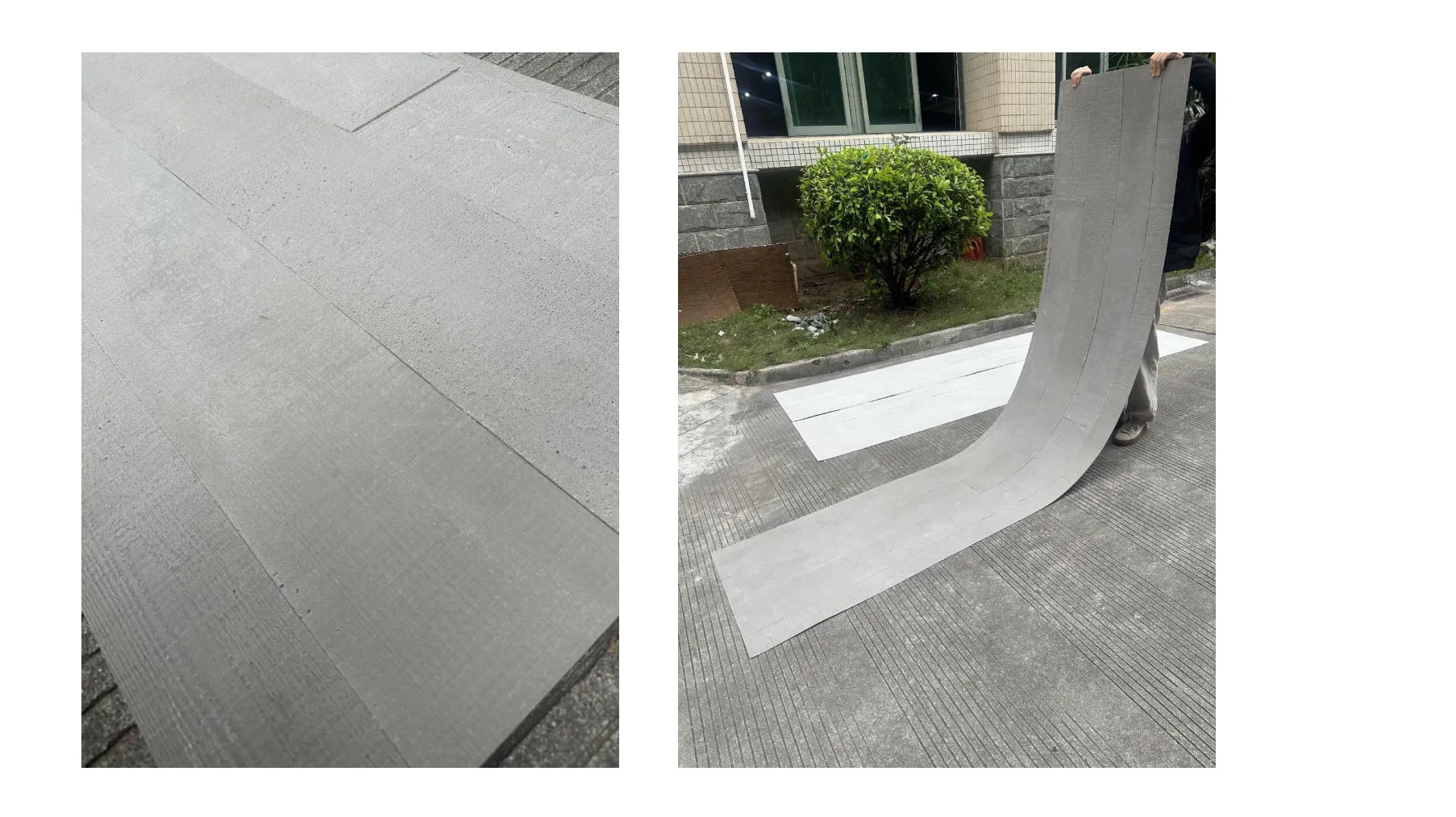
There's something inherently magical about a curved wall. Unlike sharp, angular edges that command attention, curves whisper—inviting you to lean in, trace their gentle arc with your eyes, and lose yourself in the flow of space. They soften a room, turning a plain wall into a storyteller, a silent architect of mood and movement. But bringing these organic forms to life has long been a challenge for designers and homeowners alike. Traditional materials, rigid and unforgiving, often resist the bend, leaving curves feeling forced or fragile. Enter MCM (Modified Composite Material) solutions—a game-changer that's turning curved wall dreams into tangible, breathtaking realities. Today, we're diving into the world of MCM materials, exploring how they're redefining curved wall design, and celebrating the unique beauty of options like MCM flexible stone, wood concrete board, travertine (starry blue), lunar peak silvery, and fair-faced concrete. Whether you're renovating a cozy home nook or crafting a statement-making commercial space, these materials aren't just building blocks—they're tools for creating spaces that feel alive.
Before we delve into the materials, let's pause to appreciate why curved walls matter. Think about the last time you stepped into a room with a curved feature wall. Did you feel an unconscious urge to walk around it, to see what lay beyond the bend? That's the power of curves—they spark curiosity. In a world dominated by straight lines and sharp corners, curves feel human. They mimic the softness of nature: the curve of a river, the arch of a tree branch, the slope of a hill. In homes, they turn a sterile living room into a sanctuary, wrapping around you like a hug. In commercial spaces, they guide foot traffic, encouraging customers to explore, to linger, to connect with the brand. And in hospitality settings? They set the stage for luxury, making guests feel pampered and transported.
But here's the catch: curves demand flexibility. A material that can bend without breaking, that maintains its integrity and beauty even when shaped into an arc. For decades, designers relied on heavy stone slabs (difficult to maneuver and prone to cracking), or lightweight wallpapers (lacking texture and durability). MCM materials changed the game. Engineered to be lightweight, flexible, and remarkably strong, they're designed for the curves we crave. They're also surprisingly versatile—offering the look of natural stone, wood, metal, or concrete, without the hassle of their traditional counterparts. Let's meet the stars of the show.
MCM isn't just a buzzword—it's a revolution in material science. These composites blend natural minerals, polymers, and fibers to create sheets that are thin (often just a few millimeters thick), lightweight (easy to transport and install), and incredibly flexible. Imagine holding a sheet of MCM flexible stone in your hands: it bends like a thick piece of cardboard, yet when mounted, it looks and feels like solid stone. That's the magic. And it's not just about flexibility—MCM materials are also durable, weather-resistant, and eco-friendly, often made from recycled or sustainable components. For curved walls, this means endless possibilities: tight radii in a home office niche, sweeping arcs in a hotel lobby, or gentle bends in a retail storefront. Let's take a closer look at five standout options that are stealing the spotlight in curved wall design.
If curved walls had a MVP, it would be MCM flexible stone. Picture this: a living room where the back wall sweeps gently from floor to ceiling, its surface mimicking the rough-hewn texture of natural stone, yet smooth to the touch. That's MCM flexible stone in action. What makes it special? Its ability to conform to almost any curve, from subtle bends to dramatic arches, without losing the authentic look of stone. Unlike natural stone, which is heavy and brittle, MCM flexible stone is lightweight (up to 80% lighter than traditional slabs), making installation a breeze—no need for reinforced framing or heavy machinery. And the options? Endless. From the earthy warmth of sandstone to the sleek elegance of marble, MCM flexible stone captures the essence of natural materials while adding a level of practicality that's hard to beat.
Take, for example, a recent project in a Brooklyn townhouse. The homeowner wanted a curved accent wall in their primary bedroom, a space to display art and create a cozy reading nook. Traditional stone was out of the question—the floor couldn't support the weight, and the budget was tight. Enter MCM flexible stone in a soft travertine finish. The installers bent the sheets around a 3-foot radius curve, and when it was done, the wall looked like it had been carved from a single block of stone. "It's my favorite part of the room," the homeowner gushed. "When the morning light hits it, the texture comes alive, and it feels like I'm waking up in a mountain retreat."
For those who crave the warmth of wood but need the durability of concrete, wood concrete board is a revelation. Imagine running your hand over a curved wall and feeling the familiar grain of oak or walnut, but with the cool, solid heft of concrete. That's the beauty of this MCM hybrid—it marries the best of both worlds. Wood concrete board is made by blending wood fibers with cement, creating a material that's not only flexible (perfect for curves) but also resistant to moisture, fire, and pests. Unlike real wood, it won't warp, crack, or fade, even in high-humidity spaces like bathrooms or kitchens.
One of the most striking applications we've seen was in a coastal restaurant in Malibu. The designers wanted a curved wall separating the dining area from the bar, a barrier that felt organic and inviting. They chose wood concrete board with a reclaimed teak finish, bending it into a gentle S-shape that mirrored the ocean waves outside. "Guests often comment on how the wall 'feels' like a beachside driftwood structure, but it's tough enough to handle spills and the salty air," the restaurant manager shared. "It's become a backdrop for countless Instagram photos—people love how the wood grain catches the candlelight at night."
What's more, wood concrete board is surprisingly versatile in color and texture. Want a light, airy look? Opt for a ash or birch finish. Craving drama? Go for a dark walnut or ebony. And because it's MCM, it bends smoothly around curves, retaining the natural flow of the wood grain without breaking the pattern—a detail that makes the wall feel intentional, not manufactured.
Travertine has long been a favorite in design circles, prized for its porous, honeycomb texture and warm earth tones. But travertine (starry blue) takes this classic material to a celestial level. Imagine a curved wall that, in daylight, shimmers with soft blue-gray hues, its surface pitted with tiny, naturally occurring holes that look like craters. But as the sun sets and artificial light takes over? Those holes catch the light, twinkling like distant stars—hence the "starry" name. It's a material that transforms with the day, never looking the same twice.
Starry blue travertine is particularly stunning in curved walls because its organic texture plays beautifully with the smoothness of the arc. The contrast between the rough, pitted surface and the soft curve creates visual interest, drawing the eye without overwhelming the space. We recently saw this in a boutique hotel lobby in Sedona, where the designers used a 20-foot curved wall of starry blue travertine as the focal point. Flanked by floor-to-ceiling windows overlooking the red rocks, the wall acts as a bridge between the desert landscape outside and the modern interior within. "Guests often sit on the nearby couches just to watch how the light changes the wall," the hotel designer noted. "At dawn, it's a soft lavender-blue; at noon, it's bright and crisp; at dusk, it glows like the night sky. It's not just a wall—it's a piece of art."
And because it's an MCM material, starry blue travertine is far lighter and more flexible than natural travertine slabs. Installers can shape it into tight curves (we've seen it used in circular shower niches!) without worrying about cracking, making it a favorite for both large-scale commercial projects and small residential accents.
For a look that's equal parts futuristic and timeless, lunar peak silvery delivers. This MCM material captures the otherworldly sheen of moonlight on metal, with a soft, brushed finish that feels both industrial and elegant. Imagine a curved wall in a high-end tech office, its silvery surface reflecting the glow of pendant lights, creating a sense of movement and energy. Or picture it in a minimalist home, where its cool tone balances warm wood floors and soft textiles, adding a touch of edge without feeling cold.
Lunar peak silvery is all about contrast. Its metallic luster plays beautifully against matte surfaces—pair it with wood concrete board, and you've got a wall that feels both warm and modern. One of our favorite projects was a home theater in Chicago, where the designer wrapped the back wall in lunar peak silvery, curving it to enhance acoustics and create a immersive experience. "The material absorbs sound surprisingly well, and the curve makes you feel like you're in a private cinema," the homeowner said. "But the best part? When the movie starts and the lights dim, the wall takes on a silvery glow, like we're watching the film under the moon."
What sets lunar peak silvery apart is its versatility in finish. Some versions have a subtle hammered texture, adding depth, while others are smooth as a mirror. And because it's MCM, it's resistant to fingerprints and scratches—perfect for high-traffic areas. Whether you're going for a sci-fi inspired commercial space or a sleek, modern home, this material bends to your vision (literally) and adds a touch of celestial magic.
Last but never least, we have fair-faced concrete—a material that proves "raw" doesn't have to mean "rough." Fair-faced concrete (also known as "exposed concrete") is poured and finished to showcase its natural texture, with visible aggregates and subtle variations in color that tell the story of its creation. When shaped into a curve, it becomes a study in understated luxury—industrial yet sophisticated, bold yet serene.
Imagine a curved wall in a minimalist apartment, its gray surface marked by the faint lines of the formwork, catching the light to reveal tiny flecks of stone and sand. It's a wall that doesn't demand attention, but commands respect—a quiet reminder of the beauty in simplicity. We saw this in a Tokyo apartment renovation, where the designer used fair-faced concrete for a curved wall separating the living area from the bedroom. "The client wanted a space that felt calm, almost meditative," the designer explained. "Fair-faced concrete was the perfect choice. Its neutral tone doesn't compete with the art on the walls, and the curve softens the industrial edge, making the space feel warm and inviting."
As an MCM material, fair-faced concrete is lighter and more flexible than traditional poured concrete, making it feasible for curved walls in both new builds and renovations. It's also surprisingly customizable—you can add pigments to create warm beiges or cool grays, or vary the aggregate size to change the texture. And because it's durable and low-maintenance, it's ideal for busy households or commercial spaces where beauty can't come at the cost of practicality.
| Material Name | Aesthetic Appeal | Key Features | Best For | Installation Tip |
|---|---|---|---|---|
| MCM Flexible Stone | Natural stone look (marble, sandstone, etc.) with varied textures | 80% lighter than traditional stone; highly flexible; moisture-resistant | Residential accent walls, hotel lobbies, retail backdrops | Use a flexible adhesive to ensure the material bonds securely to curved substrates |
| Wood Concrete Board | Warm wood grain with the solidity of concrete; available in light to dark tones | Moisture/fire/pest-resistant; wood fibers add natural texture | Restaurants, bathrooms, coastal homes, home offices | Seal the surface after installation to enhance durability in high-humidity areas |
| Travertine (Starry Blue) | Blue-gray base with "starry" pits that shimmer in light; porous, organic texture | Lightweight; flexible; unique visual transformation from day to night | Boutique hotels, luxury homes, art galleries, feature walls | Use backlighting to highlight the "starry" pits and enhance the celestial effect |
| Lunar Peak Silvery | Metallic, brushed finish with a moonlit sheen; industrial yet elegant | Fingerprint/scratch-resistant; available in smooth or hammered textures | Tech offices, home theaters, modern living rooms, commercial lobbies | Pair with warm lighting to soften the cool tone and add depth |
| Fair-Faced Concrete | Raw, minimalist look with visible aggregates and formwork lines | Durable; low-maintenance; customizable with pigments/aggregates | Minimalist homes, art studios, industrial-chic restaurants | Ensure the substrate is smooth and even to maintain the concrete's clean lines |
Now that we've explored the materials, let's imagine how they might fit into different spaces. Curved walls aren't one-size-fits-all—their impact depends on the setting, the purpose, and the story you want to tell. Here are a few scenarios where MCM materials shine:
In homes, curved walls often serve as "hug zones"—spaces designed for relaxation and connection. Picture a master bedroom with a curved MCM flexible stone wall behind the bed, its soft beige tone and subtle texture creating a serene backdrop. Add recessed lighting along the curve, and you've got a nightlight that gently illuminates the space without harshness. Or consider a home office with a wood concrete board curved wall, where the warm wood grain and solid feel help reduce stress, making long workdays feel a little cozier. For families, a curved fair-faced concrete wall in the playroom could double as a chalkboard, its smooth surface perfect for little artists to express themselves—durable enough to withstand crayons and erasers, yet stylish enough to transition with the kids as they grow.
In commercial spaces, curved walls are strategic. They guide customers, highlight products, and reinforce brand identity. A boutique clothing store might use a travertine (starry blue) curved wall to showcase their evening wear collection—the starry texture adding a touch of glamour that aligns with the brand's luxury vibe. A tech startup could opt for lunar peak silvery in their lobby, its futuristic sheen signaling innovation and forward-thinking. And in a co-working space? A wood concrete board curved wall could separate quiet zones from collaborative areas, the natural texture fostering creativity while the curve keeps the space feeling open and connected.
Hotels, restaurants, and resorts live and die by ambiance, and curved walls are their secret weapon. Imagine checking into a boutique hotel where the reception desk is wrapped in a curved MCM flexible stone wall in a rich, earthy tone—immediately making you feel grounded and welcome. In the restaurant, a fair-faced concrete curved wall divides the dining area from the kitchen, its raw texture adding industrial chic while the curve keeps the space from feeling closed off. And in the spa? A wood concrete board curved wall around the relaxation pool, its warm finish and smooth curve enhancing the sense of tranquility, making you forget you're even in a hotel.
Ready to embrace curves? Here are a few tips to ensure your curved wall is not just beautiful, but functional and harmonious:
Curved walls are more than a trend—they're a return to the organic, a celebration of softness in a rigid world. And with MCM materials like MCM flexible stone, wood concrete board, travertine (starry blue), lunar peak silvery, and fair-faced concrete, they're more accessible than ever. These materials don't just bend—they adapt, transform, and elevate, turning ordinary walls into extraordinary experiences. Whether you're drawn to the natural warmth of wood, the celestial magic of starry stone, or the raw elegance of concrete, there's an MCM solution waiting to bring your curved wall vision to life.
So the next time you're planning a space, ask yourself: What would a curve do here? Would it soften the room? Guide a journey? Spark joy? With MCM materials, the answer is almost always yes. Because in the end, great design isn't just about how a space looks—it's about how it feels. And curves, when paired with the right materials, feel like home.
Recommend Products












