
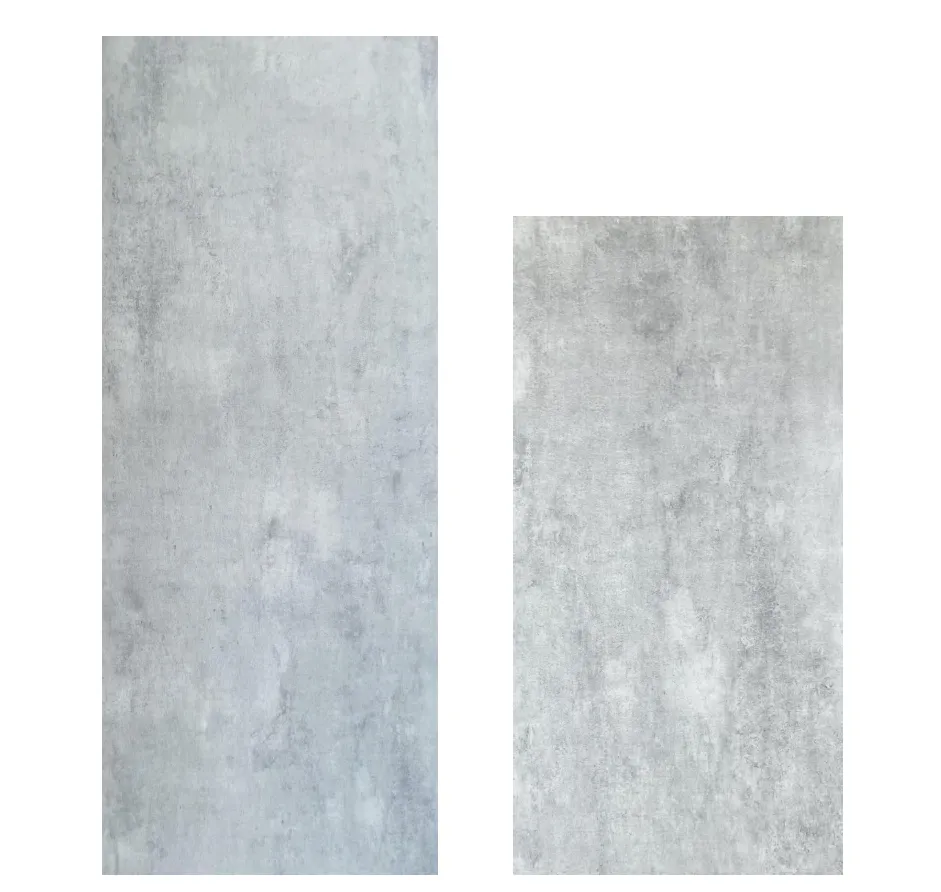
Blending innovation, aesthetics, and eco-consciousness to redefine modern building design
Walk through any city today, and you'll notice a quiet revolution unfolding in architecture. Glass skyscrapers now stand beside repurposed warehouses, and public plazas prioritize native plants over manicured lawns. This isn't just a trend—it's a collective awakening. As we grapple with climate change and resource scarcity, architects, builders, and homeowners alike are asking a critical question: How can we create spaces that inspire without costing the Earth? The answer, increasingly, lies in materials that marry performance with purpose. Enter MCM Marble Concrete Board—a material that doesn't just build structures, but builds a bridge between human creativity and environmental responsibility.
At first glance, it's easy to mistake MCM Marble Concrete Board for natural stone or polished concrete. Its surfaces can mimic the porous elegance of travertine, the raw texture of fair-faced concrete, or even the metallic sheen of lunar peak silvery. But look closer, and you'll find a material engineered for the future. Born from the MCM project board series, it's part of a new generation of modified composite materials designed to challenge the status quo of construction. What makes it stand out? It's not just about what it looks like—it's about what it represents: a commitment to sustainability that doesn't compromise on beauty or durability.
Let's start with the basics. MCM Marble Concrete Board is a composite material crafted from a blend of marble aggregates, recycled concrete, and a polymer binder. Unlike traditional stone, which is quarried from the earth, or concrete, which relies heavily on cement (a major carbon emitter), MCM's production process prioritizes resource efficiency. Think of it as a masterclass in material science: by combining natural marble dust (a byproduct of quarrying, often discarded) with recycled concrete and a minimal amount of binding agents, manufacturers reduce waste while creating a product that's both strong and versatile.
The result? A board that's surprisingly lightweight—up to 70% lighter than natural stone—yet dense enough to resist impacts, scratches, and the wear and tear of daily life. Its flexibility is another win: unlike brittle natural stone, MCM Marble Concrete Board can bend slightly without cracking, making it easier to transport, install, and adapt to curved or irregular surfaces. Whether you're cladding a high-rise or designing a cozy home interior, this flexibility opens up a world of design possibilities.
In construction, sustainability often feels like a checklist: recycled materials? Check. Energy-efficient production? Maybe. But MCM Marble Concrete Board goes beyond the basics, embedding eco-consciousness into every step of its lifecycle. Let's break it down:
1. Reduced Environmental Footprint: Quarrying natural stone—like the travertine or granite used in traditional construction—requires heavy machinery, disrupts ecosystems, and generates massive carbon emissions from transportation. MCM, by contrast, uses up to 40% recycled content, including marble waste and post-consumer concrete. This not only diverts waste from landfills but also cuts down on the energy needed to extract and process raw materials. Studies show that MCM production emits up to 35% less CO2 than manufacturing traditional concrete panels, making it a clear choice for green building projects.
2. Energy-Efficient Production: The MCM 3D printing series, which includes marble concrete board, leverages advanced manufacturing techniques to minimize energy use. 3D printing allows for precise material placement, reducing excess waste, while low-temperature curing processes cut down on fossil fuel consumption. Compare that to firing bricks or curing traditional concrete, which often relies on high-heat kilns or long drying times, and the difference is stark.
3. Longevity = Less Waste: The most sustainable material is one that lasts. MCM Marble Concrete Board's durability means buildings clad in it require less frequent replacement or repair. Its resistance to moisture, mold, and UV rays ensures that exteriors stay vibrant for decades, while its non-porous surface (a result of that polymer binder) prevents staining and reduces the need for harsh chemical cleaners. In short, it's a material designed to outlive trends—and reduce the cycle of demolition and reconstruction that plagues the industry.
It's no wonder that MCM Marble Concrete Board is becoming a staple in green building certifications like LEED and BREEAM. When architects specify it, they're not just choosing a material—they're choosing to lower a project's carbon footprint, conserve natural resources, and create spaces that align with global sustainability goals. For clients and communities, that translates to buildings they can feel proud of: structures that don't just serve a purpose, but contribute to a healthier planet.
Let's talk about the fun part: how it looks. Sustainability is crucial, but if a material doesn't inspire, it won't get used. MCM Marble Concrete Board understands this, offering a palette of finishes that cater to every design sensibility. Whether you're aiming for a sleek, modern look or a rustic, earthy vibe, there's a style to match.
For lovers of natural stone, there's the travertine series—think travertine (starry blue) with its subtle, galaxy-like flecks, or travertine (vintage gold), which warms up a space with hints of amber. If industrial chic is more your speed, fair-faced concrete or charcoal burnt wood board finishes add texture and edge. Want something metallic? Lunar peak golden or foamed aluminium alloy board (vintage silver) bring a touch of glamour, perfect for accent walls or statement facades. And for those who crave the organic, there's the bamboo mat board finish, which mimics the gentle weave of natural bamboo, or the stream limestone (claybank), with its soft, river-worn texture.
What's most impressive is how these finishes hold up over time. Unlike painted surfaces that fade or natural stone that etches, MCM's colors are integral to the material. The pigments are mixed into the composite during production, so they won't chip, peel, or lose their vibrancy—even after years of sun, rain, or foot traffic. Imagine a restaurant with a travertine (starry red) accent wall that still looks as bold on its 10th anniversary as it did on opening day, or a office lobby with linear travertine (claybank) flooring that maintains its warm, earthy tone through countless meetings and footprints.
But MCM doesn't just copy existing materials—it reimagines them. Take the ripple board (grey) finish, for example. It mimics the surface of water frozen in motion, adding depth and movement to a wall. Or the gradient color rammed earth board, which blends soft hues of matcha green and khaki, evoking the organic beauty of desert landscapes. These aren't just finishes—they're storytelling tools, allowing designers to create spaces that feel unique and alive.
Designers aren't the only ones singing MCM's praises. Builders and contractors appreciate its practicality, which translates to smoother projects and happier clients. Let's start with installation: because MCM Marble Concrete Board is lightweight, it requires less structural support than natural stone. That means lower construction costs, as walls and foundations don't need to be reinforced to bear heavy loads. It also cuts down on installation time—what might take a team of workers days to install with natural stone can often be done in hours with MCM, thanks to its interlocking systems and easy-to-cut panels.
Maintenance is another big plus. Unlike natural travertine, which needs regular sealing to prevent staining, or wood, which requires painting or staining every few years, MCM Marble Concrete Board is virtually maintenance-free. A quick wipe with a damp cloth is usually enough to keep it clean, and its resistance to mold and mildew makes it ideal for humid environments like bathrooms or outdoor patios. For commercial spaces, this translates to lower long-term costs—no more budgeting for costly stone sealants or frequent repairs.
Durability is where MCM truly shines. It's fire-resistant, making it a safe choice for public buildings. It's also moisture-resistant, so it won't warp or rot in wet climates. Even in harsh conditions—think coastal areas with salt spray or industrial zones with air pollutants—MCM holds its own, outperforming materials like wood or traditional concrete. One project in a coastal town used MCM boulder slab (vintage black) for exterior cladding; after five years of exposure to saltwater and wind, the panels still look brand new, with no signs of corrosion or fading.
To really understand MCM Marble Concrete Board's value, let's compare it to common alternatives. The table below breaks down how it measures up to natural travertine, traditional concrete, and fair-faced concrete in key areas:
| Material | Sustainability | Durability | Aesthetics | Installation Cost |
|---|---|---|---|---|
| MCM Marble Concrete Board | High (40% recycled content, low CO2 emissions) | Excellent (impact-resistant, moisture-proof, UV-stable) | Versatile (mimics stone, concrete, wood, metal; custom finishes) | Low (lightweight, easy installation) |
| Natural Travertine | Low (quarrying disrupts ecosystems, high transportation emissions) | Good (prone to etching, requires sealing) | Timeless (unique veining, natural texture) | High (heavy, requires skilled labor) |
| Traditional Concrete | Low (high cement use, high carbon footprint) | Good (prone to cracking, heavy) | Basic (limited finishes, often needs painting) | Medium (heavy, requires formwork) |
| Fair-Faced Concrete | Low (same cement issues as traditional concrete) | Good (porous, may stain without sealing) | Industrial (raw, minimalist look) | High (requires precise formwork, skilled labor) |
The takeaway? MCM Marble Concrete Board isn't just a sustainable alternative—it's often a better alternative, period. It offers the beauty of natural materials without the environmental cost, the durability of concrete without the weight, and the design flexibility of custom finishes without the premium price tag.
Still not convinced? Let's look at how MCM Marble Concrete Board is transforming real spaces. Take the GreenPlex Tower in downtown Portland, a 12-story office building designed to be net-zero energy. The architects wanted a facade that would reflect the building's eco-friendly mission while standing out in the city skyline. They chose MCM Marble Concrete Board with a lunar peak silvery finish, which shimmers in the sun by day and glows softly under LED lights at night. The lightweight panels reduced the building's structural load by 25%, cutting construction costs and allowing for larger windows (which boost natural light and reduce energy use). Today, GreenPlex is LEED Platinum certified, and its facade is often cited as a highlight by tenants and visitors alike.
Closer to home, consider the renovation of a 1920s bungalow in Austin, Texas. The homeowners wanted to preserve the home's historic charm while updating it for modern living. They used MCM's historical pathfinders stone finish for the exterior, which mimics the weathered limestone of the original structure but requires no maintenance. Inside, they opted for wood grain board panels in the living room, creating a warm, cabin-like feel without cutting down a single tree. The result? A home that honors the past while embracing a sustainable future—and a monthly energy bill that's 30% lower than before the renovation.
Even public spaces are getting in on the action. The City Park Pavilion in Denver, Colorado, features MCM's gobi panel finish for its outdoor walls. The finish, which mimics the texture of desert sandstone, blends seamlessly with the surrounding landscape, while the material's weather resistance ensures it will withstand Colorado's harsh winters and hot summers. Kids climb on its walls, families picnic nearby, and the pavilion has become a community hub—proof that sustainable materials can bring people together.
As we look ahead, it's clear that materials like MCM Marble Concrete Board aren't just trends—they're necessities. The construction industry is responsible for nearly 40% of global carbon emissions, and demand for sustainable solutions is only growing. MCM isn't just keeping up with this demand; it's setting the bar. Its success has spurred innovation in other MCM series, from the flexible stone options to the 3D printing series, all designed to push the boundaries of what's possible in sustainable construction.
But perhaps the most exciting thing about MCM Marble Concrete Board is what it represents for the future of design. For too long, sustainability and beauty were seen as opposites—you could have one, but not the other. MCM proves that's a false choice. It shows us that we can build spaces that take our breath away and breathe easier, that honor tradition and embrace innovation, that serve people and protect the planet.
So the next time you walk through a building—whether it's an office, a home, or a public square—take a moment to look at the walls. If they're clad in MCM Marble Concrete Board, you're not just looking at a material. You're looking at a promise: a promise that the structures we build today can leave a legacy of care, not consumption. And in a world that needs more promises kept, that's a legacy worth building.
Recommend Products












