
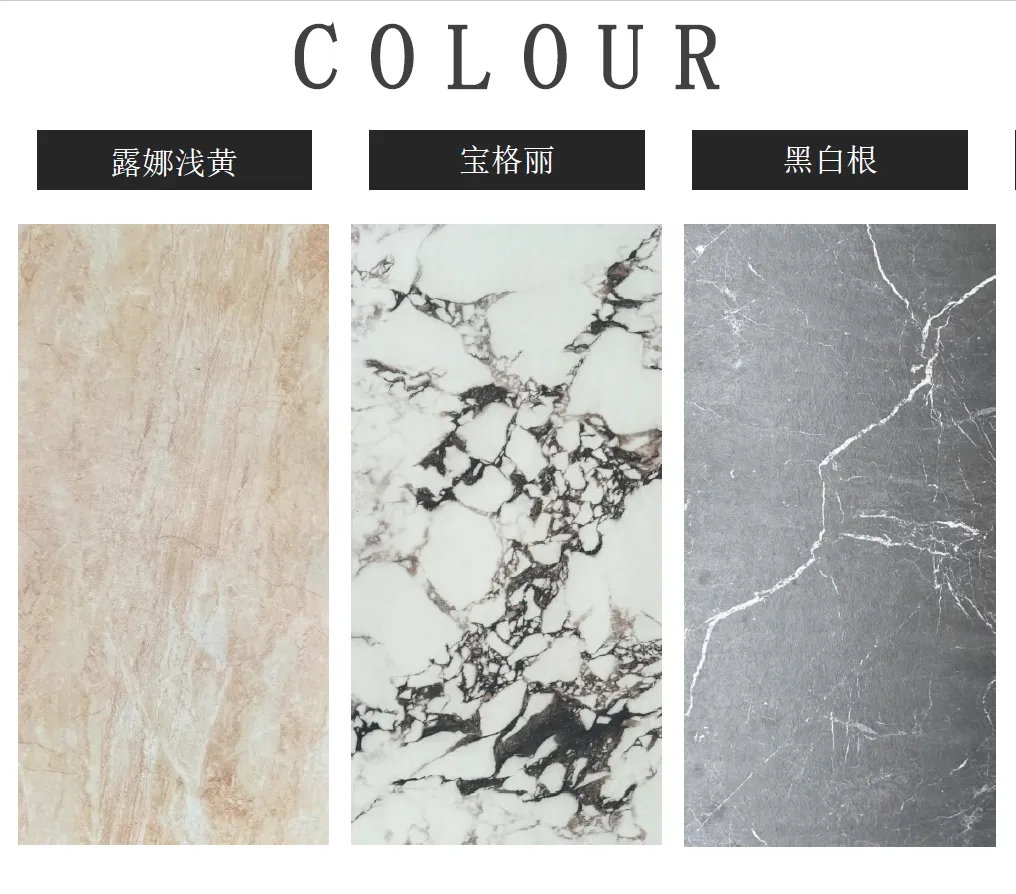
Walk into any thoughtfully designed space—a cozy café with sunlit corners, a sleek office lobby that feels both grand and welcoming, or a home where every wall seems to tell a story—and you'll notice something quiet but powerful: the materials. They don't just fill the room; they shape how we feel in it. Cool marble might evoke calm, rough stone could ground us, and soft textures might invite us to linger. In the world of modern design, one material has been quietly redefining this dynamic: the MCM Marble Series. More than just a collection of surfaces, it's a bridge between nature's timeless beauty and human ingenuity—flexible, durable, and brimming with character. Let's dive into what makes these materials tick, from the science that gives them life to the endless ways they transform our spaces.
First things first: MCM stands for Modified Composite Material, a term that sounds technical but boils down to something surprisingly relatable. Imagine taking the best parts of natural stone—its depth, its unique patterns, its ability to age gracefully—and blending them with modern engineering to fix its biggest flaws: heaviness, fragility, and the struggle to fit into unconventional spaces. That's MCM in a nutshell. And the Marble Series? It's the line where this innovation meets the classic allure of marble, travertine, and stone, reimagined for today's designers and homeowners.
At its core, the MCM Marble Series is about possibility. Traditional marble, for all its beauty, is a diva—it's heavy, prone to cracking, and nearly impossible to bend around a curved wall or a custom-built niche. MCM changes that. These panels are lightweight, flexible, and designed to mimic the look and feel of natural stone so closely that even experts do a double-take. But they're also smarter: resistant to moisture, easy to install, and customizable in ways natural stone never could be. Whether you're dreaming of a starry night-inspired accent wall or a seamless outdoor patio that withstands rain and sun, there's an MCM marble product built for it.
Let's get a little geeky (but in a good way). The magic of MCM starts with its composition. Unlike solid natural stone, MCM panels are made of multiple layers, each with a job to do. The top layer is where the "marble magic" happens—it's a thin but tough layer of modified stone particles, pigments, and binders that capture the texture, color, and depth of natural materials like travertine or lunar peak stone. Underneath that is a reinforcing layer, often made of fiberglass or a lightweight composite, which adds strength without adding weight. Finally, a backing layer ensures the panel stays stable and easy to install, whether you're gluing it to drywall or mounting it on an outdoor facade.
But the real star here is flexibility. Traditional marble is rigid; even a small bend can cause it to crack. MCM panels, though, can flex up to 90 degrees (depending on the product) without breaking. That means they can wrap around columns, follow the curve of a staircase, or fit into tight corners that would leave natural stone installers scratching their heads. Think of it like comparing a rigid canvas to a roll of high-quality wallpaper—suddenly, the walls themselves become a canvas for creativity.
Durability is another win. Natural stone is porous, which means it stains easily (hello, red wine spills) and can be damaged by freeze-thaw cycles outdoors. MCM panels, on the other hand, are engineered to repel moisture, resist UV rays, and stand up to scratches and impacts. They're also lighter—about 70% lighter than natural marble—making installation faster, safer, and cheaper (no need for reinforced walls or heavy lifting equipment). For designers and homeowners, that translates to more freedom: use that bold travertine (starry green) in the shower, or line your outdoor pool deck with lunar peak silvery without worrying about water damage.
The MCM Marble Series isn't a one-size-fits-all affair—it's a family of materials, each with its own personality. Let's shine a light on a few standouts that have designers buzzing:
| Product Name | Texture & Color | Core Features | Ideal Applications |
|---|---|---|---|
| MCM Flexible Stone | Varied; mimics natural stone grains, from smooth to slightly rough | Ultra-flexible (bends up to 90°), lightweight, moisture-resistant | Curved walls, columns, furniture wraps, bathroom backsplashes |
| Travertine (Starry Green) | Soft green base with subtle "starry" flecks of silver and gold; matte finish | Calming color palette, heat-resistant, fade-proof outdoors | Restaurant accent walls, bedroom headboards, outdoor patios |
| Wave Panel | Undulating surface; neutral tones (white, grey) with shadow-casting ridges | 3D texture adds depth, sound-dampening properties, lightweight | Home theaters, office lobbies, hotel reception areas |
| Lunar Peak Silvery | Metallic silver base with faint "crater-like" indentations; sleek, modern finish | Reflective surface, scratch-resistant, easy to clean | Kitchen countertops, high-traffic hallways, modern living rooms |
| Fair-Faced Concrete | Raw, industrial look; light to medium grey with subtle aggregate visible | Minimalist aesthetic, fire-resistant, pairs with wood/metal accents | Loft apartments, coffee shops, outdoor fire pits |
Take travertine (starry green) , for example. Travertine is a natural stone known for its porous, almost honeycomb-like texture, but MCM's version dials up the drama with those "starry" flecks—tiny, iridescent particles that catch the light and make the surface feel alive. It's not just green; it's a gradient, shifting from soft sage in low light to a deeper emerald when the sun hits it. Designers love it for spaces where they want to evoke nature without going full "forest"—think a yoga studio where the walls feel like a quiet meadow, or a café where customers sip lattes under a ceiling that looks like a clear, starry night (hence the name).
Then there's the wave panel , a study in texture. Unlike flat surfaces, these panels have gentle, rolling ridges that play with light and shadow throughout the day. In a home theater, they don't just look cool—they help absorb sound, making movie nights feel more immersive. In an office lobby, they add movement, turning a static wall into something that feels like it's breathing. And because they're MCM, they're lightweight enough to install on ceilings, too—imagine a bedroom ceiling covered in wave panels, where the morning light turns it into a rippling sea of calm.
And let's not sleep on lunar peak silvery . If travertine (starry green) is the earthy poet of the series, lunar peak silvery is the modern minimalist. Its metallic sheen and subtle crater-like texture evoke the moon's surface—cool, sleek, and just a little otherworldly. It's a favorite for kitchens, where its scratch-resistant surface stands up to pots and pans, and its reflective quality makes small spaces feel bigger. Pair it with warm wood cabinets, and suddenly you've got a kitchen that feels both cutting-edge and cozy.
Curious how a pile of raw materials becomes that stunning travertine (starry green) panel on your wall? The process is a mix of art and precision. It starts with selecting high-quality stone aggregates—think crushed marble, travertine, or limestone—that will form the base of the panel's appearance. These aggregates are then mixed with polymers, resins, and pigments (like the green and starry flecks for our favorite travertine) to create a paste-like material. This paste is spread onto a reinforcing mesh (usually fiberglass) and pressed under high heat and pressure to bond the layers together. The result? A thin, dense panel that's strong enough to stand up to daily life but flexible enough to bend.
What's cool is how customizable this process is. Want more "starry" flecks in your travertine? Adjust the pigment mix. Need a wave panel with sharper ridges? Tweak the mold. Unlike natural stone, which is at the mercy of geological luck, MCM panels can be tailored to fit a designer's exact vision. And because they're made in controlled factory settings, there's less waste—no more discarding entire slabs because of a random crack or uneven color. It's eco-friendly, too: many MCM manufacturers use recycled stone aggregates, and the panels themselves are 100% recyclable at the end of their life.
Enough about the "how"—let's talk about the "where." MCM marble products aren't just for show; they're workhorses, built to thrive in all kinds of spaces. Here are a few places they're making the biggest impact:
Homeowners are falling for MCM because it lets them have the look of luxury without the luxury price tag or hassle. Take bathrooms, for example: traditional marble backsplashes are stunning but absorb water, leading to mold and stains. MCM flexible stone , though, is moisture-resistant, so it's perfect for shower walls or around the tub. One homeowner I spoke to recently installed travertine (starry green) in their master bathroom, pairing it with brass fixtures and potted ferns. "It feels like a spa," they said, "but I don't panic if the kids splash water everywhere."
Kitchens are another sweet spot. Lunar peak silvery countertops are a hit here—they're heat-resistant (no more worrying about hot pans), scratch-proof (hello, enthusiastic chopping), and their sleek surface wipes clean in seconds. And because MCM is lightweight, you can install it over existing countertops in some cases, saving time and demo costs. Imagine upgrading your kitchen from outdated laminate to a lunar peak silvery surface in a weekend—no dust, no massive renovation bills, just instant modernity.
In commercial spaces, first impressions matter. That's why hotels, restaurants, and offices are turning to MCM marble products to tell their brand's story. A boutique hotel in downtown Portland, for instance, used wave panels in their lobby, painting them a soft cream and backlighting them with warm LED strips. The result? A wall that looks like it's glowing, welcoming guests before they even check in. "People take photos of it all the time," the hotel manager noted. "It's become part of our identity."
Restaurants, too, are getting creative. A vegan café in Brooklyn opted for travertine (starry green) on their main accent wall, pairing it with wooden tables and hanging plants. "We wanted a space that felt connected to nature, even in the city," the owner explained. "The green stone brings in that calm, earthy vibe, and since it's MCM, we didn't have to worry about food splatters or humidity from the kitchen." The wall has become a backdrop for countless Instagram posts, turning customers into brand ambassadors.
Here's where MCM really flexes its muscles (pun intended): outdoors. Traditional stone is heavy and porous, making it a nightmare for patios, pool decks, or exterior cladding—it cracks in freeze-thaw cycles, fades in the sun, and soaks up rain like a sponge. MCM panels? They laugh at the elements. Fair-faced concrete MCM panels, for example, are a popular choice for outdoor fire pits or garden walls. Their industrial-chic look holds up to rain, snow, and UV rays, and they don't require sealing every year like natural concrete. One landscaper I know used them to build a retaining wall in a client's backyard, topping it with built-in planters. "It looks like it's been there for decades," the client said, "but it went up in a day and hasn't budged, even through two harsh winters."
Pool decks are another outdoor win. Travertine (starry green) MCM panels stay cool underfoot, even in direct sun—no more burning toes on hot stone! And because they're slip-resistant (thanks to their textured finish), they're safer for wet feet. A family in Arizona replaced their old, cracked concrete pool deck with starry green panels last summer. "We spend so much more time outside now," they told me. "The green color makes the whole yard feel cooler, and we don't stress about the kids running around barefoot."
Let's be clear: natural marble is beautiful. It's been used for centuries in temples, palaces, and homes, and it will always have a place in design history. But when it comes to modern life—with our busy schedules, tight budgets, and love for unique, curved spaces—MCM marble products have some clear advantages. Let's break it down:
Traditional marble slabs can weigh 100+ pounds per square foot. That means you need a team of strong installers, reinforced floors, and sometimes even structural changes to your home. MCM panels? They weigh in at just 3–5 pounds per square foot. One person can carry a stack of panels, and installation often involves little more than adhesive and a level. It's faster, cheaper, and less disruptive—no more days of jackhammering or dust filling your home.
Ever tried to wrap natural marble around a curved staircase? Spoiler: It's not happening. MCM panels, though, bend and flex, letting designers create shapes that were once impossible. Want a rounded kitchen island with a seamless countertop? Done. Dream of a bathroom with a curved accent wall that feels like a cocoon? Easy. It's design without limits, and that's a game-changer.
Natural stone is porous, which means it stains, etches, and scratches easily. A spilled glass of red wine on a marble countertop can leave a permanent mark; a stray chair leg can chip a travertine floor. MCM panels, with their polymer binders and non-porous surface, resist stains, scratches, and moisture. Wipe up that wine in 10 minutes, and it's like nothing happened. And they don't fade in the sun, either—your travertine (starry green) wall will look just as vibrant in 10 years as it did on day one.
Mining natural stone is resource-intensive, and transporting heavy slabs burns a lot of fuel. MCM panels use recycled aggregates and require less energy to produce and ship. Plus, because they're made to order, there's less waste—no more cutting down massive slabs to fit a small space. And let's talk cost: MCM panels are often 30–50% cheaper than natural stone, making luxury design accessible to more people. You don't have to choose between beauty and budget anymore.
So you're sold—now how do you use MCM marble products to make your space shine? Here are a few tips from designers who've been there:
And remember: MCM is all about flexibility, so don't be afraid to experiment. One designer I know used leftover wave panels to cover a plain bookshelf, turning it into a sculptural piece of art. Another cut travertine (starry green) panels into hexagons and arranged them in a honeycomb pattern on a dining room wall. The only rule? If it makes you smile when you walk in, you've done it right.
As we look ahead, one thing is clear: design is becoming more personal, more sustainable, and more adaptable. People want spaces that reflect their unique personalities, stand up to their busy lives, and don't harm the planet. The MCM Marble Series checks all those boxes. It's a material that respects tradition—drawing on the beauty of natural stone—while embracing progress, offering flexibility and durability that natural stone can't match.
And it's only getting better. Manufacturers are constantly experimenting with new textures (think more "starry" patterns, or panels that mimic weathered wood), new colors (pastel travertines? Maybe soon!), and even new functionalities (panels with built-in LED lights, or self-cleaning coatings). The future of MCM isn't just about looking good—it's about working smarter, too.
At the end of the day, though, the best thing about the MCM Marble Series is how it makes us feel. A home with travertine (starry green) walls feels like a retreat. An office with wave panels feels innovative and alive. An outdoor patio with lunar peak silvery panels feels like an extension of the sky. These materials don't just fill space—they create atmosphere . And in a world that often feels chaotic, that's a gift.
So whether you're building a new home, renovating a tired room, or just daydreaming about your next design project, consider the MCM Marble Series. It's not just a surface—it's a story waiting to be told. And who knows? Your space might just become the one that makes someone else stop and think, "Wow, what a material."
Recommend Products












