
Embarking on a construction or renovation project is exciting—whether you're designing a sleek commercial space, revamping your home's exterior, or adding a unique touch to a hospitality venue. But let's be real: one of the biggest stressors? Sticking to a budget. That's where the MCM Marble Series comes in. Known for its blend of durability, design versatility, and modern appeal, MCM (Modified Composite Material) marble has become a go-to for architects, designers, and homeowners alike. But with so many options—from flexible stone panels to bold big slabs—figuring out how much to allocate can feel overwhelming. In this guide, we'll break down the costs of the MCM Marble Series, explore what influences pricing, and share tips to help you budget like a pro. Let's dive in.
First, let's get clear on what MCM marble is—and why it's worth considering. Unlike natural marble, which is heavy, porous, and prone to cracking, MCM marble is a engineered composite material. It's made by bonding natural stone aggregates (like marble dust or travertine fragments) with polymers, creating a product that's lighter, more flexible, and easier to install. Think of it as "marble reimagined": it the luxurious look of natural stone but adds practical perks like water resistance, impact durability, and even bendability (hello, curved walls!).
But here's the kicker: MCM marble isn't just a pretty face. It's also sustainable. Many MCM products use recycled materials, and its lightweight nature reduces transportation emissions. Plus, since it's less porous than natural stone, it requires less sealing and maintenance over time—saving you money in the long run. All of this makes it a smart choice for projects where both aesthetics and practicality matter. But as with any building material, costs can vary widely based on what you choose. Let's break down the key factors that influence pricing.
Before we jump into specific products, it's important to understand the "why" behind the price tags. Here are the main factors that will shape your MCM marble budget:
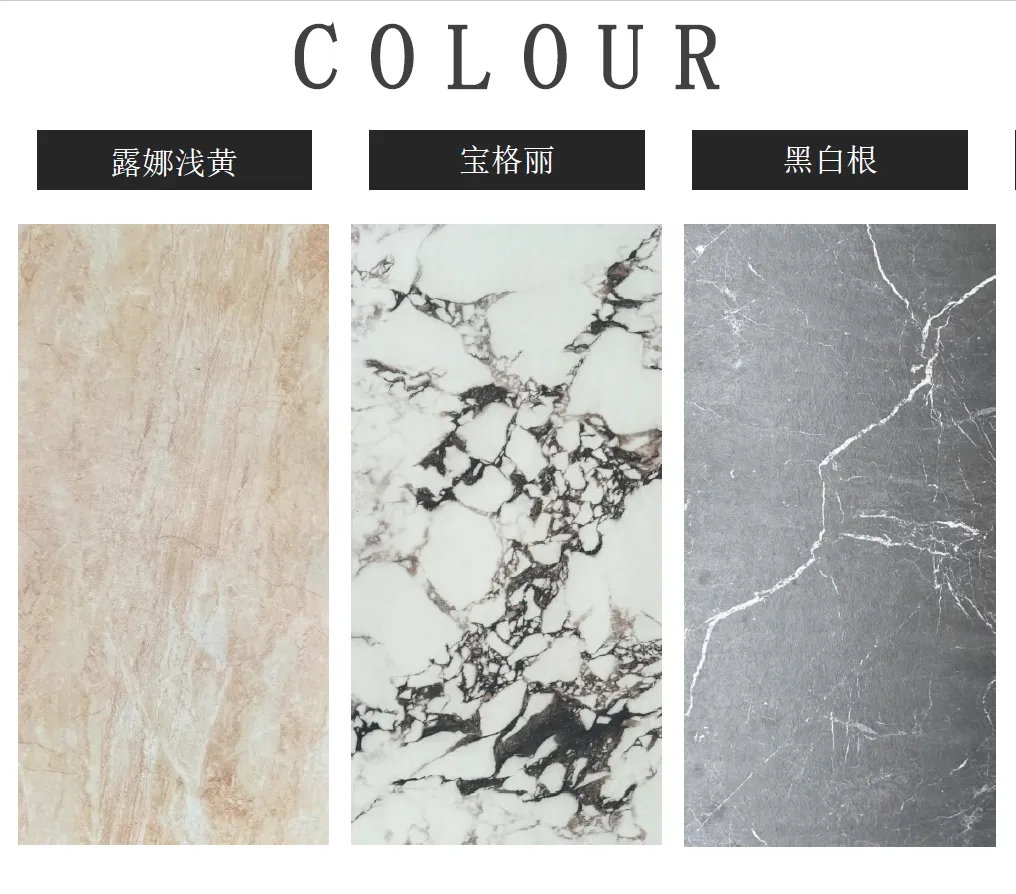
Not all MCM marble is created equal. Basic finishes like fair-faced concrete or simple wood grain boards will cost less than specialty options with unique patterns or colors. For example, travertine with a "starry" pattern (like travertine (starry green) ) or metallic-infused panels (think lunar peak silvery ) often come with a premium. Why? These designs require more intricate manufacturing processes, from custom color mixing to specialized texturing. If your project needs a one-of-a-kind look, expect to allocate more for these statement pieces.
Size matters—especially when it comes to MCM big slab board series . Larger panels (think 1200x2400mm or bigger) are showstoppers for feature walls or commercial lobbies, but they're pricier than smaller, standard-sized panels. Why? Larger slabs require more precise manufacturing to avoid warping, and they're heavier to transport (though still lighter than natural marble!). Thickness plays a role too: thicker panels (12mm+) are sturdier for high-traffic areas like floors, while thinner (6-8mm) options work well for walls or ceilings. Thicker = more material = higher cost.
Polished, matte, rough-hewn, or textured? The finish you choose can add 10-30% to the cost of MCM marble. A high-gloss polish, for example, requires extra processing to achieve that mirror-like shine, while a rustic, "rough granite" texture might involve specialized stamping or etching. If you're torn between finishes, ask: does the texture serve a functional purpose (like slip resistance for floors) or is it purely aesthetic? Prioritizing function can help you avoid overspending on unnecessary finishes.
Want your MCM panels cut into a specific shape (like semicircle boards or wave panels)? Or maybe you need a custom color to match your brand's palette? Customization is where costs can creep up. Most manufacturers charge extra for non-standard sizes, unique edge profiles, or bespoke colors. For example, MCM flexible stone is inherently customizable (it can bend to fit curved surfaces), but if you need it in a rare hue, you might pay a premium for minimum order quantities or color matching fees.
Buying in bulk can save you big. Most suppliers offer tiered pricing: the more square meters you order, the lower the per-unit cost. For example, ordering 500 sqm of fair-faced concrete panels might get you a 15% discount compared to buying 50 sqm. If your project is large (like a commercial building facade), plan ahead and order all materials at once to lock in these savings. Smaller projects (like a home backsplash) might not qualify for bulk discounts, but you can still ask suppliers if they have "open stock" or leftover panels from larger orders—these are often sold at a discount.
Don't forget labor! While MCM marble is lighter and easier to install than natural stone (which cuts down on labor time), installation costs still add up. Factors like panel size (big slabs need more workers to handle), surface prep (uneven walls require extra smoothing), and location (high-rise exteriors vs. ground-floor interiors) all affect the bill. On average, installation costs for MCM marble range from $20–$50 per sqm, depending on complexity. Pro tip: Hire installers experienced with MCM—they'll work faster and reduce the risk of mistakes (which can cost you more to fix later).
Now that we know what drives costs, let's look at some of the most popular MCM Marble Series products and their typical price ranges. This will give you a baseline for what to expect.
| Product Name | Material Type | Average Cost (per sqm)* | Key Features | Best For |
|---|---|---|---|---|
| MCM Flexible Stone | Composite (stone + polymer) | $45–$80 | Bendable (up to 90°), water-resistant, lightweight | Curved walls, furniture accents, column cladding |
| MCM Big Slab Board Series | Composite (large-format panels) | $70–$120 | Large sizes (up to 3000x1500mm), seamless look, high impact resistance | Commercial lobbies, feature walls, exterior facades |
| Travertine (Starry Green) | Travertine composite with star-like veining | $85–$140 | Unique green base with metallic "star" flecks, low porosity | High-end residential interiors, hotel lobbies, backsplashes |
| Lunar Peak Silvery | Metallic composite | $65–$100 | Silver-toned with subtle texture, reflective finish | Modern commercial spaces, accent walls, bar fronts |
| Fair-Faced Concrete | Concrete composite | $35–$60 | Industrial look, matte finish, fire-resistant | Warehouse conversions, minimalist homes, outdoor patios |
*Prices are approximate and vary by supplier, location, and order size. Always get a detailed quote for your specific project.
Let's take a closer look at a few of these products to understand why their costs vary—and whether they're worth the investment.
At $45–$80 per sqm, MCM flexible stone sits in the mid-range for MCM products. Its price tag reflects its unique selling point: flexibility. Unlike rigid panels, it can bend up to 90 degrees, making it perfect for curved walls, archways, or even furniture (think a curved headboard or a rounded kitchen island). The cost increases with thickness—thinner panels (6mm) are cheaper but better for low-impact areas, while thicker (10mm) options cost more but hold up in high-traffic zones like retail storefronts.
Is it worth it? If your project has curved surfaces, yes. Natural stone can't bend, so you'd either have to use smaller, unsightly tiles or pay for custom-cut pieces (which are far pricier). MCM flexible stone lets you achieve a seamless, flowing look without breaking the bank.
Starting at $70 per sqm, the MCM big slab board series is one of the pricier options—but for good reason. These panels are massive: standard sizes are 2400x1200mm, with some suppliers offering up to 3000x1500mm. That means fewer grout lines, a more polished aesthetic, and a "wow factor" that small panels just can't match. The cost increases with size and finish: a 3000x1500mm polished big slab might hit $120 per sqm, while a matte finish in a smaller 2400x1200mm size could be $70–$90.
Best for: Commercial spaces where first impressions matter—think hotel lobbies, office receptions, or luxury retail facades. For residential projects, they work well in large open-concept rooms (like a living room with a feature wall). Just remember: bigger slabs require more careful handling, so factor in slightly higher installation costs ($35–$50 per sqm vs. $20–$40 for smaller panels).
At $85–$140 per sqm, travertine (starry green) is one of the priciest MCM options—but its unique look makes it a favorite among designers. What sets it apart? Its "starry" pattern: tiny metallic flecks (usually silver or gold) embedded in a rich green base, mimicking a night sky. The cost depends on the density of the flecks (more flecks = higher price) and the shade of green (deep emerald is pricier than pale sage). Custom color matching (e.g., a starry blue or red) can push costs above $150 per sqm.
Best for: High-end residential or commercial projects where aesthetics are top priority. A restaurant owner might use it for a feature wall to create an intimate, upscale vibe; a homeowner could install it as a backsplash to add personality to a kitchen. Just note: because it's a specialty product, lead times can be longer (4–6 weeks vs. 2–3 for standard MCM panels), so plan accordingly.
For a sleek, modern look without the premium price, lunar peak silvery is a solid choice at $65–$100 per sqm. This metallic composite panel has a cool silver tone with a subtle, almost iridescent texture that catches light beautifully. It's cheaper than starry travertine because its finish is easier to replicate at scale—no custom fleck patterns here. The cost varies by finish: a brushed metallic look is cheaper ($65–$80), while a high-gloss polished finish (which shows off the silver's shine) costs more ($80–$100).
Best for: Modern offices, tech company headquarters, or contemporary homes. It pairs well with other industrial materials like steel or glass, and its neutral color means it won't clash with existing decor. Pro tip: Use it in areas with plenty of natural light—the silvery finish will reflect sunlight, making spaces feel brighter and larger.
At $35–$60 per sqm, fair-faced concrete is the budget-friendly workhorse of the MCM series. It mimics the raw, unfinished look of poured concrete but with none of the heaviness or cracking issues of the real thing. The low cost comes from its simple composition: concrete aggregates mixed with polymers, no fancy additives or finishes. Prices go up slightly for textured versions (like "rough concrete" with visible aggregate) or colored concrete (beige or gray tones), but even then, it's hard to beat for affordability.
Best for: Industrial-style homes, warehouse conversions, or outdoor spaces like patios or pool decks. It's durable, slip-resistant, and requires almost no maintenance (just a quick hose-down now and then). If you love the concrete look but hate the price of natural concrete (which can cost $80–$120 per sqm installed), this is your best bet.
Now that you know what to expect cost-wise, let's talk about how to actually budget for your project. These tips will help you avoid overspending and ensure you get the most bang for your buck.
Before you get quotes, map out exactly what you need. Ask: How many sqm do I need? Which areas will use MCM marble (walls, floors, exteriors)? Do I need custom sizes or finishes? The more specific you are, the more accurate your quotes will be. For example, saying "I need MCM panels for my kitchen backsplash" is vague—instead, say "I need 15 sqm of travertine (starry green) panels, 6mm thick, with a matte finish, for a 3m x 5m backsplash." Suppliers will thank you, and you'll avoid surprise costs later.
Don't settle for the first quote you get. Reach out to 3–5 MCM suppliers and ask for detailed breakdowns: material cost per sqm, delivery fees, customization charges, and any minimum order requirements. Be sure to compare the same product (e.g., "MCM big slab board series, 2400x1200mm, polished finish") across suppliers—some might offer lower material costs but hike up delivery fees. Also, ask about warranties: a slightly higher price might be worth it if it includes a 10-year warranty vs. a 5-year one.
You don't need to use the priciest MCM products everywhere. Allocate your budget to areas that guests or customers will notice most: a restaurant's main dining room, a home's entryway, or a store's facade. For less visible areas (like a utility room or a bathroom closet), use budget-friendly options like fair-faced concrete. This way, you get the "wow" factor where it counts without overspending on spaces that don't matter as much.
Budgeting blunders often happen when people forget hidden costs. These can include: surface prep (e.g., repairing drywall before installing panels: $10–$20 per sqm), sealant (though MCM needs less than natural stone, some finishes still require it: $5–$10 per sqm), and waste (suppliers recommend ordering 10–15% extra to account for cuts and mistakes: $5–$15 per sqm). Add these to your total budget to avoid being caught off guard.
MCM marble might cost more upfront than basic ceramic tiles, but it pays off over time. For example, natural marble needs to be sealed every 1–2 years ($200–$500 per treatment), while MCM only needs sealing every 5–7 years (if at all). Its durability also means you won't need to replace panels as often—MCM can last 20+ years with proper care, vs. 10–15 years for natural stone. When budgeting, factor in these long-term savings: a slightly higher upfront cost could mean lower expenses down the line.
You might be wondering: Why not just use natural marble, concrete, or ceramic tiles instead? Let's compare costs to see if MCM marble is a smart investment.
Natural marble costs $80–$150 per sqm (material only), which is similar to mid-to-high-end MCM products like travertine (starry green). But here's the catch: natural marble is heavy (20–30kg per sqm vs. MCM's 8–12kg), so installation costs are higher ($50–$80 per sqm vs. MCM's $20–$50). It's also porous, so you'll need to seal it regularly ($200–$500 every 1–2 years) and worry about stains. MCM marble, on the other hand, is non-porous, lightweight, and low-maintenance. Over 10 years, the total cost of natural marble (material + installation + maintenance) could be 30–50% higher than MCM. For most projects, MCM offers better value.
Ceramic tiles are cheaper upfront ($20–$40 per sqm), but they lack MCM's design flexibility. Tiles have grout lines (which collect dirt), and they're brittle—prone to cracking if dropped or hit. MCM panels, with their larger sizes and seamless look, create a more modern, high-end aesthetic. If you're going for a luxury vibe, the extra $25–$40 per sqm for MCM is worth it. For budget projects with no design frills, ceramic might be better—but you'll sacrifice durability and style.
Traditional poured concrete costs $60–$100 per sqm installed, similar to MCM fair-faced concrete. But poured concrete is heavy, takes days to cure, and can crack if not properly reinforced. MCM fair-faced concrete panels are lighter, install in hours (not days), and won't crack. They also come in more finishes (matte, textured, colored) than traditional concrete. If you want the industrial look without the hassle, MCM is the way to go.
The MCM Marble Series offers something for every budget—whether you're splurging on starry travertine for a luxury hotel or sticking to fair-faced concrete for a industrial-chic home. The key is to prioritize what matters most: design, durability, or cost. By understanding the factors that influence pricing, comparing products, and planning for hidden costs, you can create a budget that works for your project and delivers the look you want.
Remember: MCM marble isn't just a material—it's an investment. Its blend of style, practicality, and sustainability means it will not only elevate your space today but also stand the test of time. So take your time, do your research, and don't be afraid to ask suppliers questions. With a little planning, you'll be enjoying your stunning MCM marble project—without breaking the bank.
Recommend Products












