
Redefining Spaces with Flexibility, Beauty, and Innovation
Walk into any contemporary building today, and you'll notice something different about the walls, floors, and facades. They're no longer just functional—they're intentional. Architects and designers are ditching generic concrete and plain tiles in favor of materials that tell a story, evoke emotion, and adapt to the unique needs of each space. This shift is where MCM (Modified Composite Material) Marble Series enters the picture, changing the game for modern construction.
For decades, natural stone like marble and granite dominated high-end design, prized for their beauty but weighed down by limitations: they're heavy, prone to cracking, and expensive to quarry and transport. Traditional ceramics, while durable, often lack the depth and uniqueness that make a space memorable. Then came MCM—a hybrid material engineered to combine the best of both worlds: the aesthetic appeal of natural stone, the durability of composites, and a flexibility that opens up endless design possibilities.
At its core, MCM is a lightweight, high-performance material made by bonding natural mineral aggregates with a polymer matrix. This innovative composition gives it properties that traditional materials can't match: it bends without breaking, resists weathering, and comes in formats that range from intricate mosaics to massive slabs. And within the MCM family, the Marble Series stands out as a testament to how far building materials have come—blending artistry with engineering to transform spaces from ordinary to extraordinary.
To understand why MCM Marble Series has become a favorite among architects, designers, and builders, let's break down its standout features. These aren't just technical specs—they're the reasons projects that use MCM feel more alive, more adaptable, and more sustainable than those relying on older materials.
One of the most talked-about features of MCM is its flexibility, a trait embodied in MCM flexible stone . Unlike natural stone, which is rigid and brittle, MCM flexible stone can bend up to 30 degrees without cracking. This might not sound like a big deal until you consider the design possibilities: curved walls, rounded columns, or even undulating facades that mimic natural landscapes. Imagine a hotel lobby with a sweeping, wave-like accent wall—achieving that with traditional marble would require custom-cutting dozens of heavy slabs and risking breakage during installation. With MCM flexible stone, it's a breeze. Installers can roll the material onto curved surfaces, reducing waste and labor time while creating seamless, organic shapes.
Gone are the days of small, repetitive tiles that create a busy, fragmented look. Today's designers crave clean lines and expansive surfaces, and MCM big slab board series delivers exactly that. These slabs come in sizes up to 1200x2400mm—large enough to cover entire walls or floors with minimal grout lines. The result? A sleek, modern aesthetic that feels spacious and cohesive. For commercial projects like shopping malls or airport terminals, where first impressions matter, big slab boards reduce visual clutter and make spaces feel more open. Even in residential settings, a kitchen backsplash or living room feature wall clad in a single MCM big slab becomes the focal point, turning an ordinary room into a showcase of design.
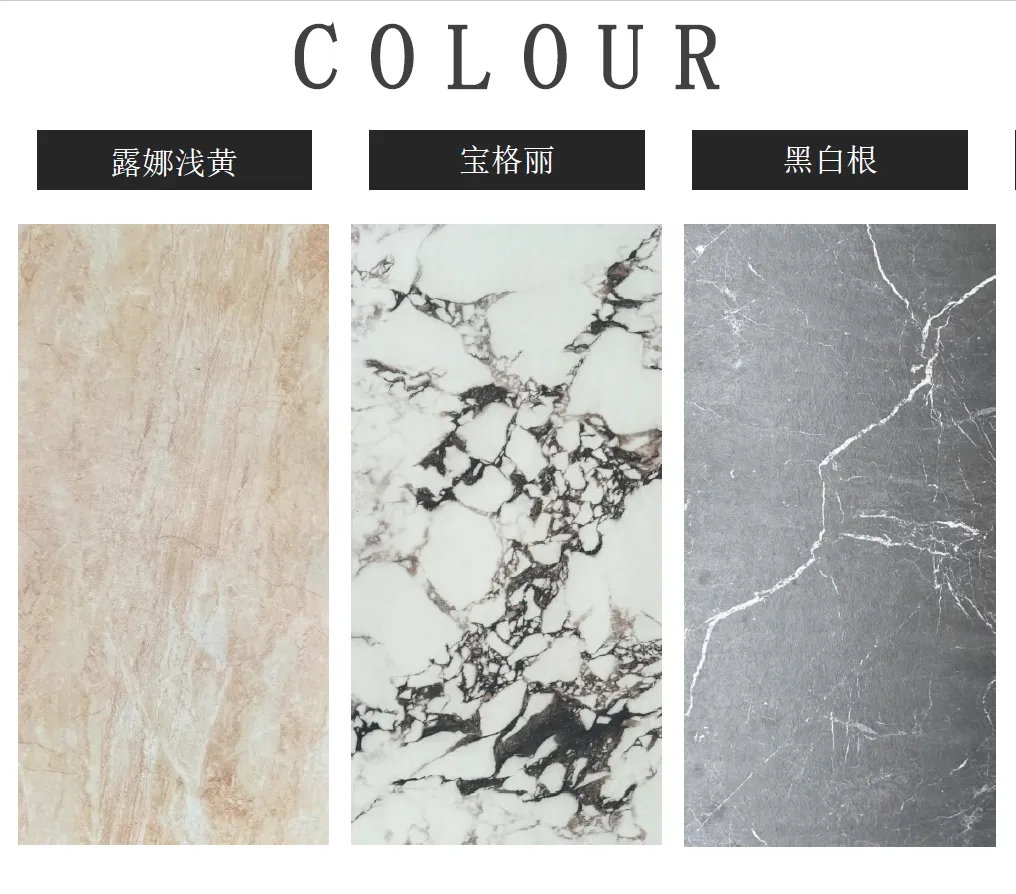
MCM Marble Series isn't just about performance—it's about beauty. The series includes some of the most visually striking designs in modern construction, and two standouts are travertine (starry green) and lunar peak silvery . Travertine (starry green) is a showstopper: its base of deep, earthy green is swirled with lighter veins, and tiny, iridescent flecks catch the light like stars in a night sky. It's the kind of material that transforms a restaurant wall into a conversation piece or a hotel spa into a serene retreat. Lunar peak silvery, on the other hand, leans into modern minimalism. Its cool, metallic finish mimics the moon's surface—smooth in some areas, textured in others—adding a futuristic edge to offices, tech hubs, or luxury retail spaces. What's remarkable is that these designs aren't just printed on top; they're embedded into the material, ensuring the color and texture won't fade or wear off over time.
Here's a paradox that makes MCM a hit with builders: it's incredibly lightweight (weighing just 3-5 kg per square meter) but surprisingly durable. Traditional marble or granite can weigh 20-30 kg per square meter, requiring reinforced structures and heavy machinery to install. MCM, by contrast, is easy to handle—two people can carry a big slab without straining, cutting down on installation time and labor costs. But don't let its lightness fool you: MCM is scratch-resistant, water-resistant, and can withstand extreme temperatures, making it ideal for both interior and exterior use. A restaurant with MCM travertine (starry green) walls won't have to worry about wine spills staining the surface, and a building clad in lunar peak silvery MCM panels can stand up to rain, snow, and UV rays without fading.
In an era where sustainability is non-negotiable, MCM Marble Series checks the boxes. Unlike natural stone, which requires mining and often leads to habitat destruction, MCM uses recycled mineral aggregates and low-VOC binders, reducing its environmental footprint. Its lightweight nature also cuts down on transportation emissions—trucks can carry more MCM panels per trip than traditional stone, lowering carbon output. Plus, MCM is 100% recyclable at the end of its lifespan, diverting waste from landfills. For developers aiming for green building certifications like LEED or BREEAM, MCM isn't just a design choice—it's a sustainability statement.
Still on the fence about whether MCM is right for your project? Let's put it head-to-head with traditional building materials. The table below compares MCM Marble Series to natural stone, ceramic tiles, and fair-faced concrete (a common alternative for industrial-chic designs) across key metrics:
| Metric | MCM Marble Series | Natural Stone (Marble/Granite) | Ceramic Tiles | Fair-Faced Concrete |
|---|---|---|---|---|
| Weight (per sqm) | 3-5 kg | 20-30 kg | 15-20 kg | 25-35 kg |
| Installation Time | Fast (lightweight, flexible) | Slow (heavy, requires reinforcement) | Moderate (small tiles, grouting) | Slow (pouring, curing time) |
| Design Options | Unlimited (textures, colors, finishes) | Limited (natural variation) | Moderate (printed designs) | Minimal (plain, industrial look) |
| Durability | High (scratch, water, UV-resistant) | High (but brittle, prone to chipping) | Moderate (can crack under impact) | High (but porous, stains easily) |
| Sustainability | Eco-friendly (recycled materials, low emissions) | Low (mining, high transportation impact) | Moderate (energy-intensive production) | Low (high carbon footprint in production) |
*Data based on industry standards and MCM product specifications.
MCM Marble Series isn't just a theoretical upgrade—it's transforming real projects around the world. Let's dive into a few examples of how designers and builders are putting its features to work.
In downtown Chicago, a new boutique hotel wanted to stand out in a crowded market. The design team chose travertine (starry green) for the lobby's feature wall, pairing its deep green base with warm gold accents in the furniture. The result? A space that feels luxurious yet approachable, with the starry flecks in the MCM panels catching the light from overhead chandeliers and creating a cozy, inviting atmosphere. "Guests often stop to take photos of the wall—it's become a signature part of our brand," says the hotel's interior designer. "And because MCM is so durable, we don't have to worry about scuffs or stains from luggage or foot traffic."
A tech company in Seattle needed a facade that reflected its innovative brand while withstanding the city's rainy climate. They opted for lunar peak silvery MCM big slabs, installing them vertically across the building's exterior. The silvery finish shimmers in the overcast light, giving the structure a futuristic, otherworldly look, while the material's water resistance ensures it stays looking new even during months of rain. "Traditional metal panels would have rusted or faded, but MCM has held up perfectly," notes the project's architect. "And because the slabs are large, the facade has a clean, unbroken line that makes the building feel taller and more imposing."
For a homeowner in Los Angeles with a love for organic design, the kitchen was the heart of the project. They wanted a backsplash that curved around the cooktop, creating a seamless transition from countertop to wall. MCM flexible stone made this possible: the installer bent the material to follow the curve, eliminating the need for unsightly seams. The homeowner chose a warm beige travertine pattern, which complements the wooden cabinets and adds texture without overwhelming the space. "I get compliments on the kitchen every time I host," they say. "People can't believe it's not real stone—and I love that it's easier to clean than marble!"
As technology advances, MCM Marble Series continues to evolve. Manufacturers are experimenting with new textures, like 3D-printed patterns that mimic the look of hand-carved stone, and integrating smart features, such as panels that absorb sound or regulate temperature. There's also a push to expand color palettes, with new shades inspired by global landscapes—think desert-inspired terracottas or oceanic blues. "The goal is to make MCM not just a material, but a tool for storytelling," says a product developer at a leading MCM manufacturer. "We want designers to look at a space and think, 'What story do I want to tell?'—and then have MCM help them tell it."
Another area of growth is sustainability. Companies are exploring bio-based binders made from agricultural waste, further reducing MCM's carbon footprint, and developing panels that generate small amounts of energy from sunlight, turning building facades into mini power plants. These innovations aren't just about being "green"—they're about making MCM a material that contributes to a building's functionality, not just its beauty.
In a world where buildings are more than just shelters—they're expressions of culture, innovation, and identity—MCM Marble Series offers something traditional materials can't: the freedom to create without compromise. Its flexibility lets designers dream bigger, its durability gives builders peace of mind, and its sustainability aligns with the planet's needs. Whether it's the starry allure of travertine (starry green), the modern edge of lunar peak silvery, or the practicality of MCM big slab boards, this series isn't just changing how we build—it's changing how we experience space.
So the next time you walk into a building that takes your breath away, take a closer look at the walls. Chances are, you're not just looking at stone or concrete—you're looking at MCM, a material that's redefining what's possible in modern construction. And as technology and design continue to evolve, one thing is clear: MCM Marble Series isn't just a trend. It's the future.
Recommend Products












