Texture & Depth: More Than Meets the Eye
When it comes to texture, both materials bring unique character, but the
MCM Marble Series
takes versatility to another level. Let's start with
travertine
—a staple in the MCM lineup. Natural travertine is known for its pitted, honeycomb-like surface, but MCM elevates this with options like
travertine (starry blue)
, where tiny, iridescent flecks mimic a night sky embedded in stone. Run your hand over it, and you'll feel depth without the roughness of raw stone—smooth enough for high-traffic areas, yet tactile enough to add warmth.
Then there's the
lunar peak
sub-series, which includes
lunar peak silvery
,
lunar peak golden
, and
lunar peak black
. These aren't just colors—they're textures inspired by moonlit landscapes.
Lunar peak silvery
shimmers with a subtle metallic sheen, like frost on stone, while
lunar peak black
has a matte, velvety finish that absorbs light, creating drama in any room.
Cement tiles, by contrast, lean into simplicity. Their texture is often uniform—think fine-grained or slightly gritty, depending on the finish.
Fair-faced concrete
tiles, for example, embrace the "unfinished" look, with visible aggregate and subtle variations that feel industrial and honest. They're great for creating a cohesive, minimalist backdrop, but they lack the layered depth of MCM's marble textures. If you crave a surface that tells a story through touch, MCM has the edge here.
Color Palettes: From Earth Tones to Cosmic Hues
Color is where design dreams take flight, and both materials offer range—but again, their approaches differ. The
MCM Marble Series
is a rainbow of possibilities, blending natural stone inspiration with bold, contemporary shades. Beyond the classic whites and beiges, you'll find
travertine (starry red)
,
travertine (starry orange)
, and even
travertine (starry green)
—colors that feel playful yet sophisticated, perfect for accent walls or statement floors.
The
marble series
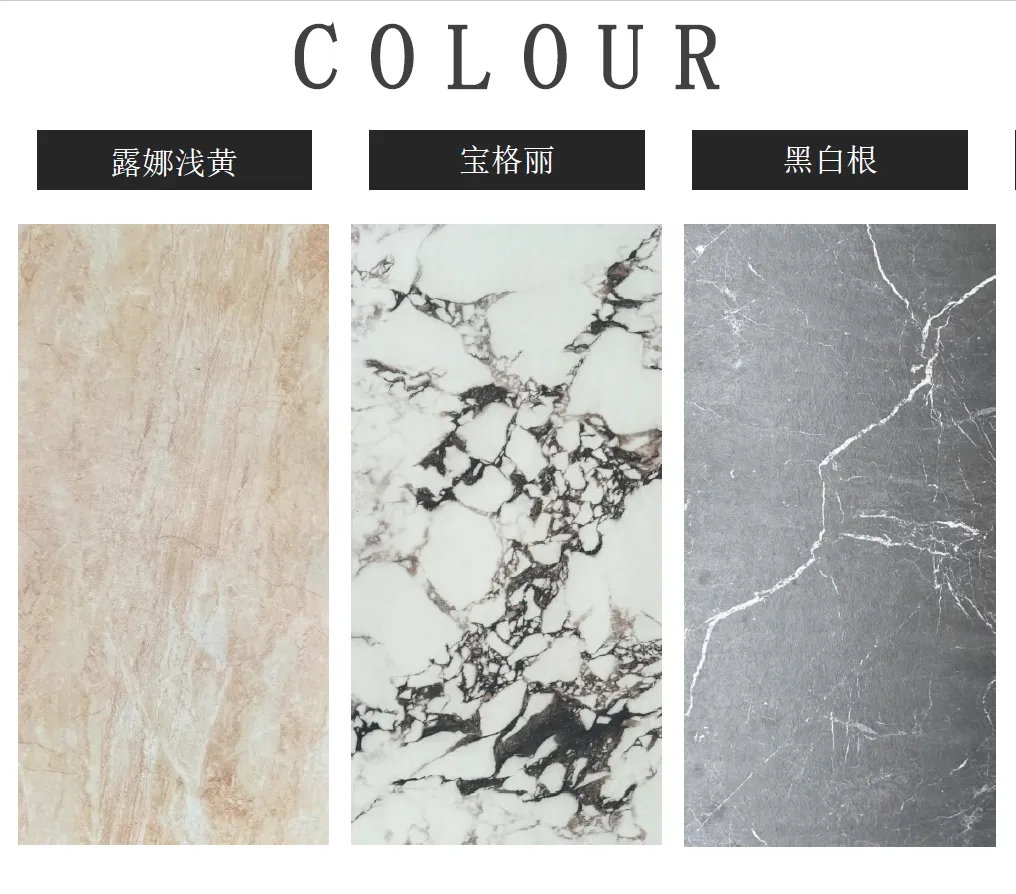
also includes neutrals with a twist, like
marble interstellar gray
—a cool, smoky shade with subtle veining that mimics distant galaxies. For warmth, there's
golden travertine (white golden)
, which pairs creamy beige with hints of gold, evoking sunlit Mediterranean villas. Whether you want to create a serene spa-like bathroom or a vibrant restaurant interior, MCM's color range adapts to your vision.
Cement tiles, while not lacking in color, tend to stick to earthier, more muted tones. Think
rusty red
,
gold sand
, and
cloud-dragon
(a soft gray with marbled swirls). These hues work beautifully for industrial, bohemian, or rustic spaces—imagine a café with
rusty red
cement tiles on the floor, paired with reclaimed wood tables. But if you're after bold, unexpected colors, cement tiles can feel limiting. They're at their best when complementing a neutral palette, not leading it.
Form & Function: Bending, Shaping, and Adapting
Here's where the
MCM flexible stone
technology truly shines. Traditional marble is heavy and brittle—great for flat floors and walls, but a nightmare for curves, arches, or uneven surfaces. MCM changes the game with its
flexible stone
construction. Made from a composite of marble powder and polymer resins, it's lightweight (up to 70% lighter than natural marble) and can bend up to 30 degrees without cracking. This means you can install it on stair risers, curved walls, or even ceiling domes—spaces where cement tiles (or natural marble) would fail.
Imagine a boutique hotel lobby with a curved reception desk clad in
travertine (starry blue)
—the stone flows seamlessly, creating a focal point that feels organic and grand. Or a residential bathroom with a rounded shower niche wrapped in
lunar peak silvery
—no seams, no gaps, just smooth, continuous beauty. MCM's flexibility turns design "what-ifs" into "why nots."
Cement tiles, by comparison, are rigid and heavy. They're designed for flat surfaces, and while they can be cut to size, their brittleness makes them risky for anything beyond straight lines. Installing them on a sloped ceiling or curved wall? Possible, but labor-intensive and prone to cracking over time. They're reliable workhorses for floors and backsplashes, but they won't help you push the boundaries of form.
Application Versatility: Indoors, Outdoors, and Everything In Between
Design flexibility isn't just about how a material looks—it's about where it can go. The
MCM Marble Series
thrives in diverse environments, thanks to its durability and weather resistance. Take
travertine
MCM panels: they're UV-resistant, so they won't fade in sunlight, making them ideal for outdoor patios or pool surrounds.
Lunar peak black
works equally well in a cozy living room (paired with warm wood tones) or an outdoor kitchen (paired with stainless steel appliances), standing up to rain, snow, and temperature swings.
Indoors, the possibilities are endless.
Marble interstellar gray
adds sophistication to a home office, while
travertine (starry orange)
injects energy into a kids' playroom. Even high-moisture areas like bathrooms benefit from MCM's resistance to mold and mildew—no more worrying about water damage in shower stalls.
Cement tiles are also durable, but they have limitations outdoors. While they can handle rain and sun, their porosity makes them prone to staining if not sealed regularly. A
fair-faced concrete
tile patio might look stunning at first, but a spilled glass of red wine could leave a permanent mark if not cleaned immediately. Indoors, they're champions—think kitchen floors, entryways, or feature walls—but their outdoor versatility pales in comparison to MCM's all-weather resilience.