
Let's start with a scenario we've all lived (or at least imagined): You walk into a home design showroom, and there it is—the marble slab of your dreams. Its veining is like a watercolor painting, its surface smooth as silk, and you can already picture it gracing your kitchen countertops or bathroom walls. But then the salesperson mentions the price tag, and your heart sinks. Then they add, "Oh, and you'll need to seal it every six months, and try not to spill anything acidic… or let anyone walk on it with shoes… or have kids… or pets." Suddenly, that "dream" marble feels more like a high-maintenance relationship than a design choice. Enter the MCM Marble Series—a modern alternative that's been turning heads in the design world. But is it just a trendy knockoff, or does it actually hold its own against the real deal? Let's dive in.
Before we pit it against traditional marble, let's get clear on what MCM Marble Series actually is. MCM stands for Modified Composite Material—a fancy term for an engineered material that blends natural stone elements (think crushed marble, travertine, or limestone) with modern polymers and resins. The result? A material that's designed to mimic the look and feel of natural marble but with a few key upgrades. It's like if traditional marble went to the gym, got a tech upgrade, and came back with a better attitude.
One of the standout features here is MCM flexible stone —a subset of the MCM family that lives up to its name. Unlike rigid natural marble, which cracks under pressure or when bent, MCM flexible stone can bend and flex without breaking. Imagine installing it on a curved wall or a rounded countertop edge—something traditional marble would struggle with without chipping or cracking. That flexibility alone opens up a world of design possibilities we'll talk about later.
Let's get real: Traditional marble is stunning, but it's not exactly known for being tough. Natural marble is porous, which means it soaks up liquids like a sponge. Spill a glass of red wine, and unless you wipe it up in 30 seconds flat, you're left with a stain that'll haunt you. It's also prone to scratches—drag a chair across a marble floor, and you might as well have carved your initials into it. And let's not forget about etching: lemon juice, vinegar, even some cleaning products can eat away at the surface, leaving dull spots that ruin that signature shine.
MCM Marble Series, on the other hand, is built to withstand the chaos of real life. Because it's engineered with those polymers and resins, it's non-porous, so liquids bead up instead of seeping in. I once visited a friend's kitchen where they'd installed MCM marble countertops. Their toddler had spilled orange juice (the ultimate marble enemy) and forgotten about it for hours. When they finally noticed, they just wiped it up with a cloth—no stain, no damage, no panic. That's the kind of durability that makes MCM a game-changer for busy households.
UV resistance is another win. Traditional marble can fade or discolor when exposed to direct sunlight over time—bad news if you want to use it for outdoor patios or exterior walls. MCM holds its color and texture even under harsh sun, making it a solid choice for both indoor and outdoor spaces. Scratches? They're still possible, but far less likely. MCM's surface is harder and more scratch-resistant than natural marble, so your floors or countertops can handle daily wear and tear without looking like they've been through a war.
Traditional marble is heavy—like, "needs a team of people to carry one slab" heavy. That weight limits where it can go. You'll mostly see it on floors, countertops, or small accent walls. Try installing it on a high-rise building's exterior, and you're looking at structural issues, not to mention sky-high installation costs. It's also limited by size: natural marble slabs max out at around 8 feet, so larger installations mean visible seams that break up the design.
MCM Marble Series? It's the opposite of a one-trick pony. Thanks to its lightweight design (it's up to 70% lighter than natural marble), it can be used just about anywhere. Want to clad an entire building's facade? No problem. The MCM big slab board series offers slabs up to 12 feet long, so you can create seamless walls or countertops without those annoying seams. I recently saw a boutique hotel in the city that used MCM big slabs for their lobby walls, and from a distance, you'd swear it was a single slab of marble—it looked that smooth.
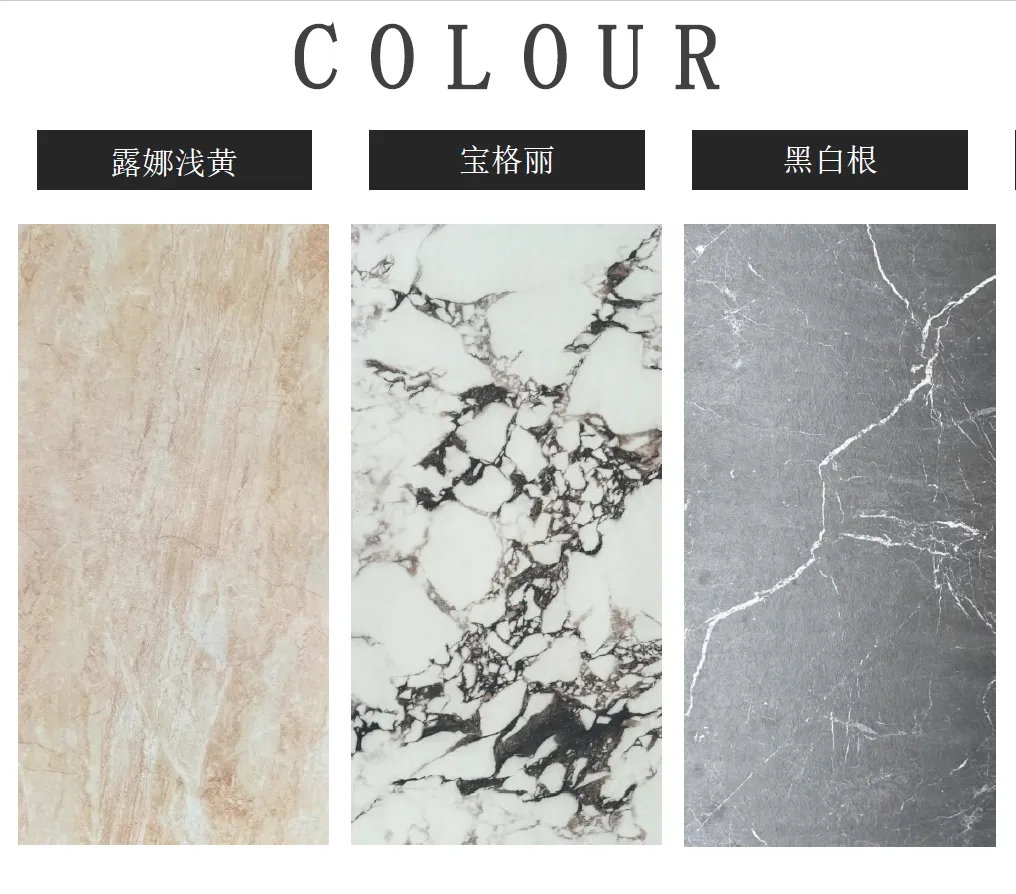
And let's talk about design flexibility. MCM comes in a mind-boggling range of colors and patterns, including unique options like travertine (starry green) —a stunning blend of deep greens with flecks that look like stars twinkling in a forest. Traditional marble has limited color options (think white, beige, gray), but MCM lets you get creative. Want a bold red for a statement wall? Or a subtle "lunar peak silvery" for a modern, space-age vibe? It's all there. Plus, because it's flexible, you can use it on curved surfaces, furniture, or even ceilings. Imagine a bathroom with a curved MCM marble shower wall—no more sharp edges, just smooth, flowing elegance.
In a world where "sustainable" isn't just a buzzword but a necessity, traditional marble mining leaves a lot to be desired. Quarrying natural marble involves heavy machinery, deforestation, and massive amounts of waste—for every ton of usable marble, tons more rock are discarded. It's also energy-intensive to transport, given its weight, which adds to its carbon footprint. For eco-conscious designers and homeowners, this can be a dealbreaker.
MCM Marble Series, by contrast, is designed with sustainability in mind. Since it's made with recycled stone particles and polymers, it reduces the need for fresh quarrying. The manufacturing process uses less energy than mining and cutting natural marble, and because it's lightweight, transporting it generates fewer emissions. Some MCM products even use up to 30% recycled materials, making them a greener choice for anyone looking to reduce their environmental impact.
Take foamed aluminium alloy board (vintage silver) , another MCM variant. It's made with recycled aluminum, which requires 95% less energy to produce than new aluminum. Pair that with MCM marble's long lifespan (it lasts decades without needing replacement), and you've got a material that's kind to both your space and the planet.
Let's cut to the chase: Traditional marble is expensive. We're talking $100–$200 per square foot for high-quality slabs, and that's before installation. Because it's heavy, you'll need specialized labor to move and install it—think crane rentals, reinforced structures, and skilled stonemasons. And then there's the ongoing maintenance: sealing every 6–12 months, professional cleaning, and repairs if it cracks or stains. Over time, those costs add up, turning that "dream" marble into a financial drain.
MCM Marble Series, on the other hand, is a budget-friendly alternative. It typically costs 30–50% less than natural marble per square foot, and installation is a breeze. Because it's lightweight, you don't need cranes or reinforced walls—two people can carry a slab, and it can be installed with basic tools. That means lower labor costs, and faster installation times (we're talking days instead of weeks). And maintenance? Minimal. No sealing required, no special cleaners—just a quick wipe with soap and water, and it looks as good as new. For busy families or commercial spaces (like restaurants or offices) that can't afford downtime, this is a huge win.
| Feature | Traditional Marble | MCM Marble Series |
|---|---|---|
| Durability | Porous, stains easily, scratches, etches with acid | Non-porous, stain/scratch/UV resistant, flexible |
| Installation | Heavy, requires specialized labor, slow (weeks) | Lightweight, easy to install, fast (days) |
| Cost | High ($100–$200/sq ft + installation) | 30–50% cheaper ($40–$80/sq ft + lower labor) |
| Design Options | Limited colors/patterns, rigid, small slab sizes | Wide range (e.g., travertine starry green), flexible, large slabs |
| Sustainability | Resource-heavy mining, high waste, high transport emissions | Recycled materials, low energy use, lightweight (lower emissions) |
Here's the elephant in the room: If MCM is engineered, does it sacrifice the "authenticity" of natural marble? Let's be honest—there's something romantic about natural marble's imperfections, the way no two slabs are exactly alike. But here's the thing: MCM is designed to mimic that natural beauty, not replace it. The best MCM marble products use high-definition printing and texturing to replicate the veining, color variations, and even the subtle "grain" of natural marble. Run your hand over it, and you'll feel the same cool, smooth surface. Stand back, and you'd be hard-pressed to tell the difference.
In fact, some designers argue MCM offers more consistency than natural marble. With traditional marble, you might order a slab that looks perfect in the showroom, only to have it delivered with unexpected veins or discoloration. MCM, on the other hand, is produced in batches, so you get uniform color and pattern across all your slabs. That's a lifesaver for large projects where consistency matters—like a hotel lobby or a commercial office.
Let's be clear: Traditional marble isn't going anywhere. It's a timeless classic, and for spaces where budget is no object and maintenance is a non-issue (think luxury penthouses or historic buildings), it still reigns supreme. But for most of us—homeowners, small business owners, or designers working on tight timelines and budgets—MCM Marble Series is a revelation.
It offers the beauty of marble without the fragility, the versatility without the weight, and the sustainability without the guilt. Whether you're drawn to the flexibility of MCM flexible stone , the seamless look of the MCM big slab board series , or the unique aesthetic of travertine (starry green) , MCM proves that modern design doesn't have to choose between form and function.
At the end of the day, the "best" material depends on your needs. But if you're looking for a marble-like finish that can keep up with your life—spills, kids, pets, and all—MCM Marble Series might just be the upgrade you didn't know you needed. After all, design should enhance your space, not stress you out. And with MCM, you can have both beauty and peace of mind. Now, go forth and design something amazing.
Recommend Products












