
Choosing the right material for your walls, floors, or exterior cladding is like picking a partner for a long journey—it needs to look good *and* keep up with the ride. Whether you're sprucing up a home kitchen, designing a bustling café, or planning a commercial building's facade, the materials you pick will shape the space's personality for years to come. Today, we're putting two heavyweights head-to-head: the MCM Marble Series, a blend of natural inspiration and engineered toughness, and Vinyl Panels, a budget-friendly staple in quick renovations. Let's break down how they stack up in the two areas that matter most: durability (will it last?) and aesthetics (does it make you stop and say "wow?").
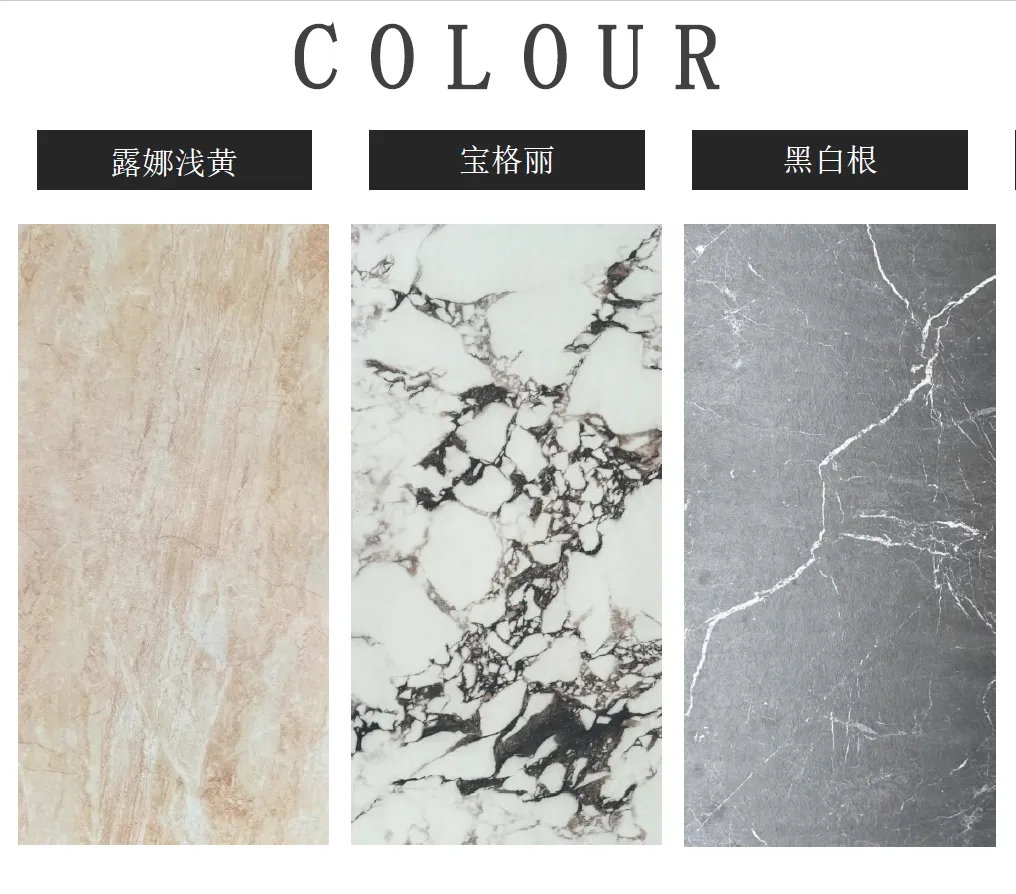
Before we dive in, let's get clear on the contenders. The MCM Marble Series isn't just your average stone panel—it's a lineup of modified composite materials designed to mimic the beauty of natural stone, concrete, and metal, but with a modern twist. Think of it as nature's best looks, supercharged by science. Highlights include MCM flexible stone (lightweight yet surprisingly strong), travertine (beige) (warm, porous, and full of character), and fair-faced concrete (raw, industrial, and effortlessly cool). These materials are built for both indoor and outdoor use, promising the best of durability and design.
Vinyl Panels, on the other hand, are the familiar workhorses of affordable design. Made mostly of PVC (polyvinyl chloride) with a printed layer on top, they're lightweight, easy to install, and come in a rainbow of colors and patterns. They're popular for quick makeovers—think rental apartments, budget-friendly offices, or temporary event spaces—where cost and speed often top the priority list.
Now, let's pit them against each other in the two big categories: durability and aesthetics.
Durability isn't just about "not breaking"—it's about how a material holds up against the daily grind: spills, scratches, sunlight, moisture, and the slow march of time. Let's see how our contenders fare.
Outdoor spaces or high-moisture areas (like bathrooms or kitchens) are the ultimate durability test. Here's where MCM's engineering shines. Take MCM flexible stone : it's made by compressing natural mineral powders with high-performance polymers, creating a panel that's both rigid and flexible. That flexibility means it can handle temperature swings without cracking—no more worrying about winter freezes or summer heat warping your walls. And unlike natural stone, which can be porous and prone to water damage, MCM panels are treated to resist moisture, making them a solid pick for showers, pool areas, or exterior cladding.
UV resistance? MCM's got that too. Many options, like travertine (beige) or fair-faced concrete, are designed to stand up to harsh sunlight without fading. Leave them out in the sun for years, and they'll retain their color—no chalky, washed-out look here.
Vinyl panels, sadly, don't quite measure up. PVC is sensitive to extreme temperatures: too cold, and it can become brittle and crack; too hot (like direct sunlight on an exterior wall), and it might warp or bubble. Moisture is another enemy—even "waterproof" vinyl can trap moisture behind the panels if installed improperly, leading to mold or mildew. And that printed design layer? Sunlight can fade it over time, turning a vibrant "marble" print into a dull, patchy shadow of its former self.
Indoors, the enemy is often closer to home: kids with toy trucks, pets with claws, moving furniture, or even the occasional dropped pot. Let's talk scratch resistance.
MCM panels are tough cookies. The composite material is dense and hard, so a stray key or a sliding chair is unlikely to leave a mark. Even fair-faced concrete , which has a raw, textured surface, holds up surprisingly well—its roughness actually hides minor scuffs. This makes MCM a favorite for high-traffic areas like hallways, retail stores, or restaurant floors.
Vinyl panels, while easy to clean, are softer by nature. A sharp object (like a kitchen knife or a pet's nail) can easily scratch through the thin printed layer, revealing the plain PVC underneath. And once that layer is damaged, there's no fixing it—you'll either have to live with the blemish or replace the entire panel.
Durability boils down to lifespan: how many years can you expect your material to look good and function well? MCM panels are built for the long haul. Most manufacturers back them with 15–20 year warranties, but in real-world use, they often last longer. The secret is that they don't just "survive"—they age gracefully. Travertine (beige) might develop a subtle patina over time, adding character, while fair-faced concrete only looks better as it weathers, gaining that sought-after "lived-in" industrial vibe.
Vinyl panels, by contrast, are more of a "quick fix." With proper care, they might last 5–10 years in low-traffic areas (like a bedroom wall). But in high-traffic spots? You could be looking at replacing them every 3–5 years. The printed layer fades, the edges lift, and that "new" look quickly turns to "tired."
Durability keeps your space functional, but aesthetics make it *yours*. Let's talk about design versatility, texture, and that intangible "feel" that makes a material special.
Here's where MCM truly shines: texture. Natural materials like stone and concrete have a tactile quality you can't replicate with a print. Run your hand over travertine (beige) from the MCM series, and you'll feel its signature pitting—small, irregular holes that give it depth and warmth. It's not just a "look"—it's a sensory experience, like running your fingers over a weathered stone wall.
Fair-faced concrete is another texture star. Unlike smooth, polished concrete, fair-faced concrete leaves the surface raw, with visible aggregates (tiny stones or sand) and subtle imperfections. It's industrial yet organic, adding a layer of complexity to modern spaces. Even MCM's flexible stone has a dimensional quality—you can see the layers, the way light plays off its surface, making it feel "real."
Vinyl panels, for all their pattern options, often feel flat. The designs are printed on a smooth PVC base, so up close, they lack the depth of real texture. That "marble" print might look convincing from across the room, but get within arm's reach, and you'll notice it's just a picture—no cool, raised veins or rough-hewn edges. It's like comparing a poster of a mountain to standing at the mountain's base.
Both MCM and vinyl offer color options, but the *quality* of those colors is worlds apart. MCM draws inspiration from nature, so its hues feel grounded and varied. Travertine (beige) isn't a single "beige"—it has warm undertones, hints of cream, and subtle variations from panel to panel, like a sunset in stone. Fair-faced concrete comes in soft grays and earthy tones, with natural variations that keep it from feeling monotonous.
MCM also plays with modern trends. Want an industrial loft vibe? Fair-faced concrete. A cozy, rustic kitchen? Travertine (beige). A sleek, contemporary office? MCM flexible stone in a bold color. The options feel endless, but they all share that "natural" core.
Vinyl panels, on the other hand, rely on digital printing. You can find vinyl that mimics marble, wood, or even brick, but the colors are often oversaturated or too uniform. There's no natural variation—every "stone" looks identical, which can make a space feel artificial. And because the color is just a top layer, it lacks the depth of MCM's pigments, which are mixed into the material itself.
The best materials don't just last—they get better with age. MCM panels develop character over time. A scratch on travertine (beige) might blend into its natural pitting; fair-faced concrete might pick up subtle stains that add to its industrial charm. It's the difference between a well-loved leather jacket and a frayed t-shirt—one looks intentional, the other looks neglected.
Vinyl panels age less gracefully. Fading, peeling edges, and scratched prints make them look "worn out," not "well-loved." There's no character in a vinyl panel that's started to bubble—just a reminder that it's time for a replacement.
| Feature | MCM Marble Series (e.g., Flexible Stone, Travertine Beige, Fair-Faced Concrete) | Vinyl Panels |
|---|---|---|
| Material Base | Modified composite (natural minerals + polymers) | PVC (polyvinyl chloride) with printed design layer |
| Moisture Resistance | High—resists water, mold, and mildew | Low to moderate—prone to warping if moisture trapped |
| UV Resistance | High—retains color even in direct sunlight | Low—printed layer fades over time |
| Scratch Resistance | High—dense material resists daily wear | Low—surface layer scratches easily |
| Texture | Natural, tactile—varied (pitting, aggregates, roughness) | Smooth, flat—printed texture only (no depth) |
| Color Variation | Subtle, natural variations (mimics real stone/concrete) | Uniform, printed colors (no natural depth) |
| Lifespan | 20+ years (with proper care) | 5–10 years (shorter in high-traffic areas) |
| Maintenance | Minimal—occasional cleaning with mild soap | Easy to clean, but scratches/peeling can't be repaired |
| Cost (Upfront) | Higher (invests in longevity) | Lower (budget-friendly short-term) |
| Aging Style | Develops character (patina, subtle wear) | Looks worn out (fading, peeling, warping) |
At the end of the day, the choice between MCM Marble Series and Vinyl Panels comes down to your priorities. If you're designing a space to last—whether it's a forever home, a busy commercial area, or an outdoor oasis—MCM is the clear winner. Its durability, natural texture, and ability to age with grace make it a long-term investment that pays off in both function and beauty. Materials like MCM flexible stone , travertine (beige) , and fair-faced concrete don't just decorate a space—they elevate it, turning walls and floors into conversation pieces.
Vinyl panels have their place: they're great for quick, temporary makeovers or tight budgets where longevity isn't the goal. But if you want a material that will still make you smile 10 years from now—one that can handle life's messes and still look good doing it—MCM is worth the upfront cost.
After all, the best design choices aren't just about what looks good today—they're about what looks *and* works tomorrow, next year, and beyond. And when it comes to balancing durability and aesthetics, MCM Marble Series doesn't just compete—it outshines.
Recommend Products












