
How surfaces become stories, and buildings become emotions
Walk into any space that lingers in your memory—a café where you once laughed until your cheeks hurt, a library where you lost yourself in a book, a home where you felt truly "seen"—and you'll realize something: great architecture isn't just about walls and roofs. It's about how a room breathes . How light dances on a countertop, how a wall feels cool to the touch on a hot day, how a texture catches your eye and makes you pause, if only for a second. This is the magic of materials—and MCM's collections, from the warm glow of Golden Sunset to the quiet strength of fair-faced concrete, are rewriting the rules of how we build stories, not just structures.
Today, we're diving into the heart of this material revolution. We'll wander through spaces where MCM materials aren't just "used"—they're felt . We'll meet the textures that turn ordinary rooms into extraordinary experiences, and the colors that paint moods as vivid as a sunset over the horizon. Let's start with the one that feels like a hug from the sky: the Golden Sunset real photos series.
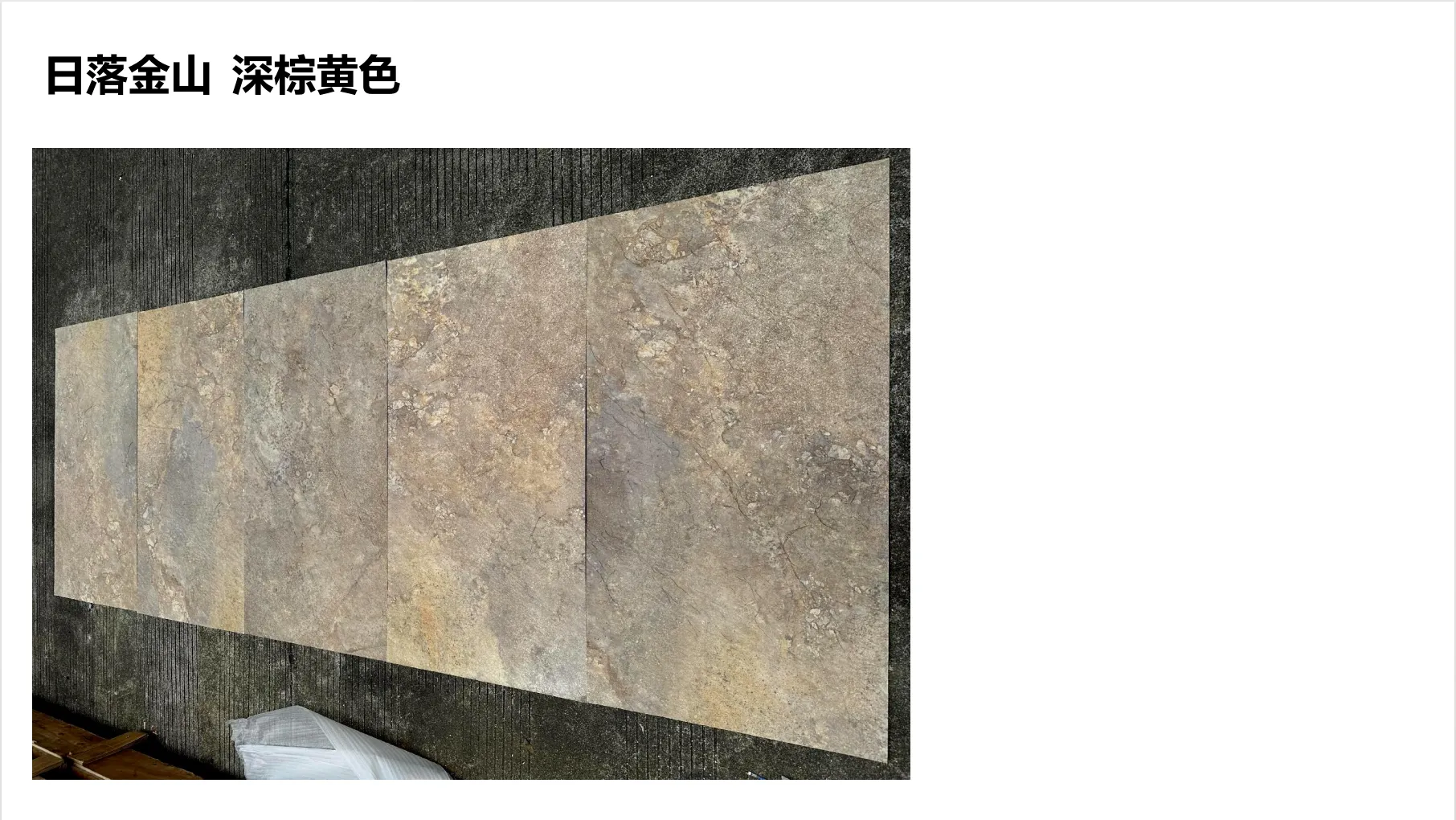
Picture this: a community center in a quiet suburb, its exterior bathed in the soft, amber light of late afternoon. From the street, it doesn't scream for attention—it glows .,,:MCM"Golden Sunset".,,.
"I wanted it to feel like coming home," says Elena, the architect behind the center. "Not a cold, institutional home, but the kind where you walk in and think, 'This was made for people.'" She runs a hand over the surface of the Golden Sunset panel, and her fingers catch gently on the subtle ridges—a deliberate choice. "Concrete can feel harsh, glass too sterile. But this? It's like touching a memory of summer evenings. Kids press their palms against it; elders trace the patterns with their fingertips. It's not just a wall anymore. It's a conversation starter."
In the center's main hall, the Golden Sunset panels wrap around a curved wall, leading visitors toward a sunlit atrium. When morning light streams through the skylights, the panels take on a honeyed hue; as dusk falls, they deepen into burnt sienna, mirroring the sky outside. "We had a resident tell us she sits here every evening just to watch the color change," Elena smiles. "That's the power of material storytelling. It's not about being perfect—it's about being present ."
A few miles from the community center, a boutique hotel stands tucked between old oak trees. Its facade is a study in contrast: sharp, modern lines softened by a material that seems to flow like fabric. This is MCM flexible stone, and it's redefining what "stone" can be.
"We wanted the building to feel rooted in the landscape, but not heavy," explains Raj, the hotel's designer. "Traditional stone is beautiful, but it's rigid. You're limited by weight, by size. MCM flexible stone? It's like stone with a heartbeat." He gestures to a corner where the material bends gracefully around a window frame, creating a seamless curve that would be nearly impossible with natural stone. "It's thin—thinner than a textbook—but strong enough to withstand rain, wind, even the occasional storm. And the texture? Run your hand along it."
Doing as he suggests, the surface is unexpectedly warm, with a matte finish that doesn't glare in the sun. It's rough enough to feel authentic, smooth enough to invite touch. "We used it in the lobby, too," Raj adds, leading the way inside. The reception desk is clad in the same flexible stone, its neutral beige tone offset by brass fixtures. "Guests often comment on how 'calming' the space feels. I think it's because the stone doesn't shout. It hugs the room. It's strong, but it's also kind."
What makes MCM flexible stone truly special, though, is its versatility. In a nearby yoga studio, it's used as flooring—cool under bare feet, non-slip even when damp. In a rooftop bar, it wraps around a fire pit, retaining heat without cracking. "It adapts to the space, not the other way around," Raj says. "And that's a game-changer for designers. We're no longer confined by 'what stone can do.' Now, we ask, 'What do we want it to do?'"
If Golden Sunset is the warmth of day, the Lunar Peak series is the quiet poetry of night. In a minimalist home perched on a hillside, Lunar Peak silvery panels clad the exterior, their cool, metallic sheen catching the moonlight like frost on grass. "I wanted the house to disappear into the landscape by day and glow by night," says Mia, the homeowner and an amateur astronomer. "Lunar Peak silvery does exactly that. During the day, it mirrors the sky—pale blue, then soft gray as clouds roll in. At night? It's like the moon itself is part of the house."
Inside, the Lunar Peak golden panels line the walls of her home office, a small room with floor-to-ceiling windows overlooking a valley. The golden hue reflects the sunlight streaming in, turning the space into a cocoon of warmth. "I work late hours, and this room never feels dark," Mia says, tapping a panel. "It's not a harsh gold—more like the light of a harvest moon. It keeps me calm, even when deadlines loom."
Downstairs, the guest bathroom features Lunar Peak black, its deep, matte finish contrasting with white marble countertops and brass fixtures. "It's dramatic, but not intimidating," Mia explains. "Guests say it feels like stepping into a luxury spa. The black absorbs light in a way that makes the room feel intimate, like a secret."
What unites the Lunar Peak series—silvery, golden, black—is its relationship with light. Unlike flat, uniform surfaces, these panels have a subtle, layered texture that plays with shadows. "It's not just about color," Mia says. "It's about movement. When the sun moves across the sky, the house 'changes'—it's never the same twice. That's the beauty of it. It's alive."
In the heart of the city, a tiny bookstore called "Starry Nights" has become a local legend—not just for its rare book collection, but for its walls. Behind the checkout counter, a wall of Travertine (Starry Blue) panels shimmers, as if someone scattered stardust across the stone. "I wanted this place to feel like a night under the stars, even in the middle of downtown," says Lila, the owner. "When I saw the Starry Blue travertine, I knew it was perfect. Each 'star' is a small, iridescent fleck that catches the light—no two panels are the same."
Customers often pause to trace the patterns with their eyes, or snap photos to share on social media. "A little girl came in last week and told me it was 'magic,'" Lila laughs. "Her mom said she's been asking to 'visit the star wall' every day since. That's the thing about materials like this—they spark joy in unexpected ways. They turn a simple bookstore into a place of wonder."
The Starry Blue panels aren't just beautiful—they're durable, too. "We get coffee spills, kids leaning against the wall, backpacks scraping—you name it," Lila says. "But the surface holds up. It's sealed, so stains wipe right off, and the texture doesn't scratch easily. It's like having a piece of art that's also a workhorse."
Not all stars shine brightly. Some, like fair-faced concrete, glow with a quiet, understated light. In a renovated warehouse turned art gallery, fair-faced concrete walls form the backdrop for bold paintings and sculptures, their raw, unpolished texture letting the art take center stage. "Concrete gets a bad rap for being cold," says Theo, the gallery curator. "But fair-faced concrete? It's honest. It shows its seams, its small imperfections—and that's what makes it perfect. Art is about emotion, and so is this material. It doesn't compete with the pieces; it elevates them."
He leads the way to a corner where a minimalist sculpture—a single bronze sphere—sits on a fair-faced concrete pedestal. "See how the concrete's texture contrasts with the smooth metal? It's a dialogue. The concrete grounds the sculpture, gives it weight. Without it, the sphere might feel, disconnected."
In the gallery's café, fair-faced concrete countertops pair with warm wood chairs and soft pendant lights, creating a space that feels industrial yet cozy. "We wanted to balance the roughness of the concrete with softness elsewhere," Theo explains. "The result? People stay longer. They sip their coffee, run their fingers over the counter, and relax. It's the kind of space where you can be yourself—no pretense, just authenticity. And that's what fair-faced concrete is all about: being unapologetically real."
Great architecture isn't about one star material—it's about how materials sing together . Take the boutique hotel we visited earlier: Golden Sunset panels on the exterior, MCM flexible stone in the lobby, Lunar Peak golden in the dining room, and fair-faced concrete in the spa. "It's like a orchestra," Raj, the designer, says. "Each instrument has its role, but together, they create something greater than the sum of their parts."
To illustrate this, let's look at how these materials harmonize in a single space: a family home in the suburbs, designed by Elena (the architect from the community center).
| Material | Space | Texture & Vibe | The Story It Tells |
|---|---|---|---|
| Golden Sunset | Kitchen Backsplash | Warm, honeyed ridges; soft to the touch | "This is where we gather. The golden glow makes even rushed breakfasts feel special." |
| MCM Flexible Stone (Beige) | Family Room Floors | Smooth yet grippy; warm underfoot | "Kids play here, dogs nap here—it's tough enough for chaos, soft enough for comfort." |
| Lunar Peak Silvery | Master Bedroom Accent Wall | Cool, metallic sheen; subtle texture | "It's our retreat. The silvery tone calms us down after long days." |
| Fair-Faced Concrete | Home Office Desk | Raw, matte finish; visible aggregate | "It's sturdy, no-nonsense—perfect for getting work done, but still feels 'handmade.'" |
"The family told me they wanted a home that 'grows with them,'" Elena says. "These materials do that. Golden Sunset will age gracefully, the flexible stone will stand up to years of foot traffic, Lunar Peak will always feel fresh, and fair-faced concrete? It'll only get more character with time. That's the beauty of MCM materials—they're not just for today. They're for the stories yet to be told."
At the end of the day, architecture is about people. It's about the parent who runs a hand over a warm Golden Sunset wall and smiles, remembering summer barbecues. It's about the traveler who feels instantly at home in a hotel lobby clad in MCM flexible stone. It's about the child who points at a Starry Blue travertine panel and whispers, "Look, Mommy—stars!"
MCM materials don't just build structures. They build moments. They turn houses into homes, offices into sanctuaries, public spaces into communities. They remind us that the best buildings aren't just seen —they're lived in , felt, and loved.
So the next time you walk into a space that takes your breath away, pause. Look closer. Touch the walls. Listen to the way the light plays on the surfaces. Chances are, you're not just experiencing architecture—you're experiencing the magic of materials that care. And in a world that often feels rushed and cold, that's a gift worth celebrating.
Recommend Products












