
Walk into any contemporary space today—whether it's a sunlit home, a sleek office lobby, or a bustling café—and you'll likely be struck by one thing: the walls, floors, and surfaces that don't just serve a purpose, but tell a story. They feel less like "materials" and more like silent collaborators in crafting mood, warmth, and identity. That's the revolution MCM (Modified Cementitious Material) has sparked in architecture and design. More than just a building product, MCM is a bridge between nature's raw beauty and human ingenuity—offering the texture of quarried stone, the warmth of wood, and the durability of modern engineering, all wrapped into one.
In this deep dive, we're exploring some of the most captivating stars of the MCM universe: from the versatile MCM flexible stone that bends to the architect's wildest visions, to the commanding presence of the MCM big slab board series that redefines grandeur. But today, our spotlight shines brightest on a pair of materials that have been turning heads in design circles: rock cut stone (dark grey) and rock cut stone (beige) —two variants that prove natural aesthetics and modern functionality can coexist beautifully. We'll also take a detour into the celestial allure of travertine (starry green) , a unique option that adds a touch of the extraordinary to any space.
Before we dive into specific stones, let's take a moment to appreciate the "why" behind MCM. Traditional building materials—think natural stone, heavy concrete, or even wood—often come with trade-offs. Natural stone is stunning but weighty, making it hard to install on high-rise facades or curved surfaces. Wood warms a space but struggles with moisture and pests. Concrete is durable but can feel cold and industrial. MCM changes the game by blending cement with polymers, fibers, and natural aggregates, resulting in a material that's lightweight (up to 70% lighter than natural stone), flexible (it can bend without cracking), and incredibly durable (resistant to weather, fire, and fading). It's like nature's best qualities, reimagined for the demands of modern life.
If MCM materials were a band, MCM flexible stone would be the lead vocalist—versatile, dynamic, and impossible to ignore. Unlike rigid traditional stone panels, this material bends and curves, adapting to the most unconventional architectural shapes. Imagine a curved accent wall in a boutique hotel, or a spiral staircase wrapped in stone-like texture—MCM flexible stone makes these dreams achievable without sacrificing the authentic look and feel of natural materials.
What truly sets it apart, though, is its texture. Run your hand over a panel, and you'll feel the subtle grooves and ridges, mimicking the weathered surface of stone that's stood the test of time. It's not a flat, artificial print—it's a tactile experience, one that invites touch and connection. Designers love it for residential spaces, where it adds warmth to living rooms or depth to bedroom accent walls. In commercial settings, it transforms sterile office lobbies into welcoming environments, proving that "practical" doesn't have to mean "personality-free."
For spaces that demand grandeur—think luxury hotels, corporate headquarters, or cultural centers—the MCM big slab board series is the go-to choice. These large-format panels (often measuring up to 1200x2400mm) minimize grout lines, creating a seamless, expansive look that feels both modern and timeless. It's the architectural equivalent of a blank canvas, where the material itself becomes the artwork.
Within this series, one standout category is rock cut stone —a line that pays homage to the rugged beauty of stone quarried straight from the earth. Unlike polished stone, which can feel cold and formal, rock cut stone celebrates imperfection: the rough-hewn edges, the natural variation in color, the subtle pits and crevices that tell a story of geological time. It's stone as it was meant to be—unapologetically natural, yet refined enough for the most discerning designs.
Let's start with rock cut stone (dark grey) —a material that proves dark colors don't have to feel heavy or gloomy. This variant leans into deep, moody tones, with hints of charcoal and slate that shift with the light. In a sunlit room, it takes on a soft, velvety quality; under warm artificial light, it glows with subtle depth. It's the kind of color that anchors a space, making bold accents (like vibrant art or warm wood furniture) pop without overwhelming.
Designers often pair dark grey rock cut stone with lighter elements to create balance. Picture a minimalist kitchen with dark grey rock cut stone backsplashes, paired with white cabinetry and brass hardware—the contrast is striking, yet the stone's texture keeps the space from feeling too stark. In commercial settings, it's a favorite for reception areas, where it projects professionalism and modernity without feeling cold. One designer I spoke to described it as "the little black dress of building materials—always appropriate, always elegant."
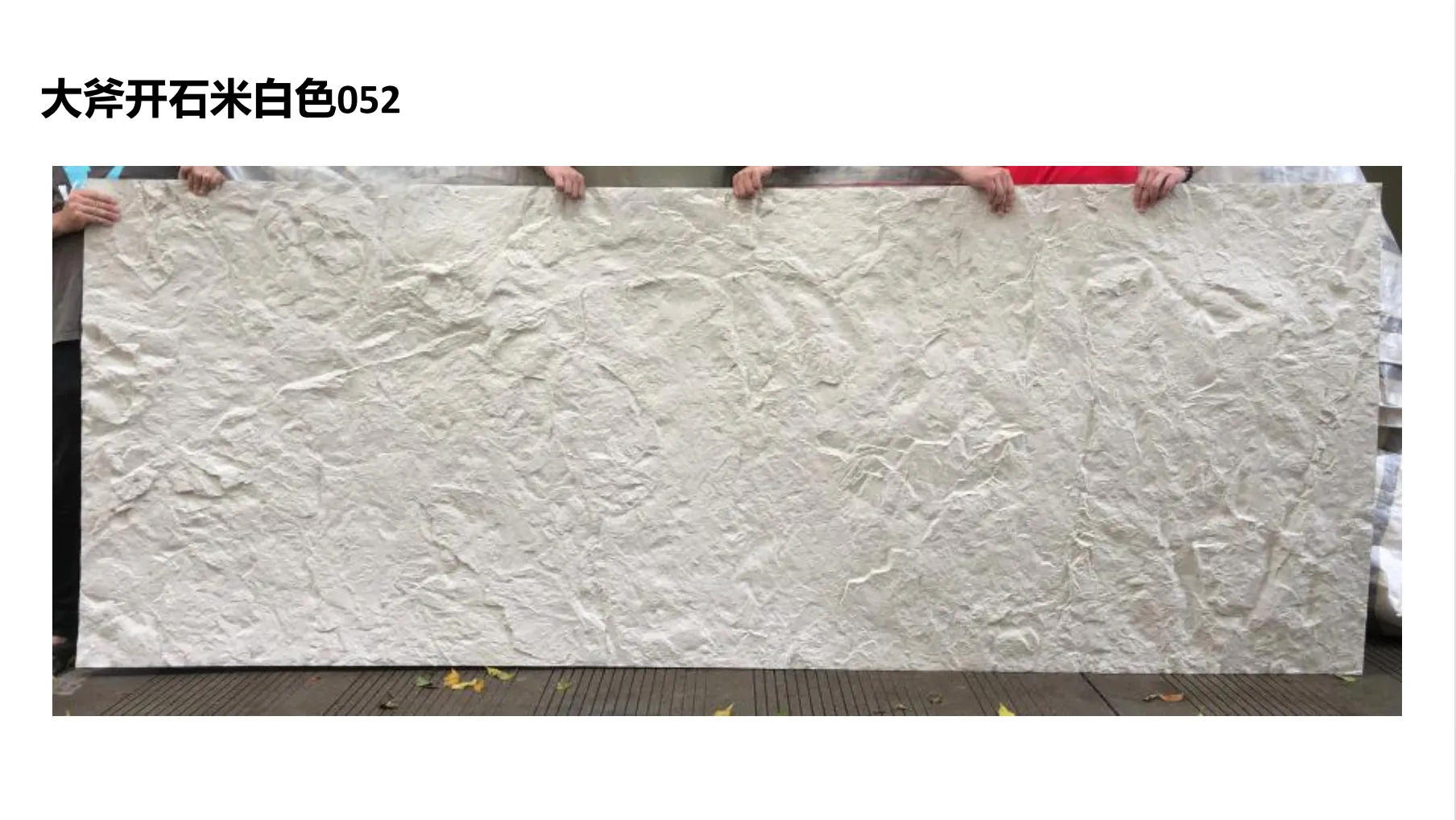
If dark grey rock cut stone is the sophisticate, rock cut stone (beige) is the warm, welcoming friend. This variant leans into soft, earthy tones—think sand, taupe, and warm cream—with subtle variations that mimic the natural patina of sandstone. It's the kind of material that makes a space feel lived-in, even before the first piece of furniture arrives. Run your hand over it, and you'll notice the gentle, sandy texture—a reminder of sun-baked deserts and coastal cliffs.
Beige rock cut stone shines in residential spaces, where comfort is key. Imagine a bedroom with beige rock cut stone walls, paired with soft linen bedding and a jute rug—the space feels like a cozy retreat, far from the chaos of the outside world. In dining rooms, it adds warmth to gatherings, making even casual meals feel special. It's also surprisingly versatile: pair it with rich greens for a nature-inspired look, or with soft pastels for a more whimsical vibe. As one homeowner put it, "It's not just a wall—it's a hug."
| Material | Color Profile | Texture | Best For |
|---|---|---|---|
| Rock Cut Stone (Dark Grey) | Charcoal, slate, with subtle light/dark variations | Rough-hewn, with natural pits and crevices | Modern kitchens, commercial lobbies, accent walls |
| Rock Cut Stone (Beige) | Sand, taupe, warm cream with earthy undertones | Sandy, weathered, with gentle ridges | Bedrooms, dining rooms, cozy residential spaces |
| Travertine (Starry Green) | Deep emerald, teal, with metallic "star" flecks | Smooth with subtle pitting; "stars" add sparkle | Statement walls, luxury hotels, artistic spaces |
If rock cut stone is the workhorse of the MCM big slab series, travertine (starry green) is the showstopper. Travertine itself is a classic—known for its porous, fossil-like texture and warm, earthy tones—but the "starry green" variant takes it to a whole new level. Imagine deep emerald and teal hues, swirled with hints of jade and forest green, and dotted with tiny metallic flecks that catch the light like distant stars. It's stone that feels almost magical—as if someone captured a night sky and embedded it into the walls.
This material isn't for the faint of heart, but when used thoughtfully, it transforms spaces into experiences. One luxury hotel in Bali used starry green travertine for its spa walls, pairing it with soft candlelight and natural wood to create a serene, otherworldly atmosphere. In residential design, it's often used as a focal point—a single accent wall in a living room or a backsplash in a bathroom—where it becomes a conversation starter. "It's not just a material," one interior designer told me. "It's a mood. People walk into a room with starry green travertine and immediately feel transported—calm, curious, and a little bit enchanted."
Of course, beauty alone isn't enough—MCM materials deliver on functionality, too. Rock cut stone (both dark grey and beige) and travertine (starry green) are part of the MCM family, which means they inherit all the benefits that make these materials a favorite among architects and builders:
At the end of the day, MCM materials—whether it's flexible stone, big slab rock cut stone, or starry green travertine—are about more than just building. They're about creating spaces that feel human —spaces that adapt to our lives, reflect our personalities, and evoke emotion. Dark grey rock cut stone for the minimalist who craves sophistication; beige rock cut stone for the family that values warmth and comfort; starry green travertine for the dreamer who wants a touch of magic in everyday life.
What I love most about MCM is how it bridges the gap between nature and innovation. It honors the beauty of natural stone, wood, and earth, but reimagines it for a world that needs materials to be lighter, stronger, and more sustainable. It's proof that we don't have to choose between aesthetics and functionality—that with a little creativity, we can have both.
So, whether you're designing a new home, renovating a commercial space, or simply daydreaming about your next project, consider MCM materials. Let the texture of rock cut stone ground you, the flexibility of MCM flexible stone inspire you, and the celestial beauty of starry green travertine remind you that architecture, at its best, is art you can live in.
In the end, the best materials aren't just seen—they're felt. And MCM? It's felt in every warm, textured, unforgettable space it helps create.
Recommend Products












