
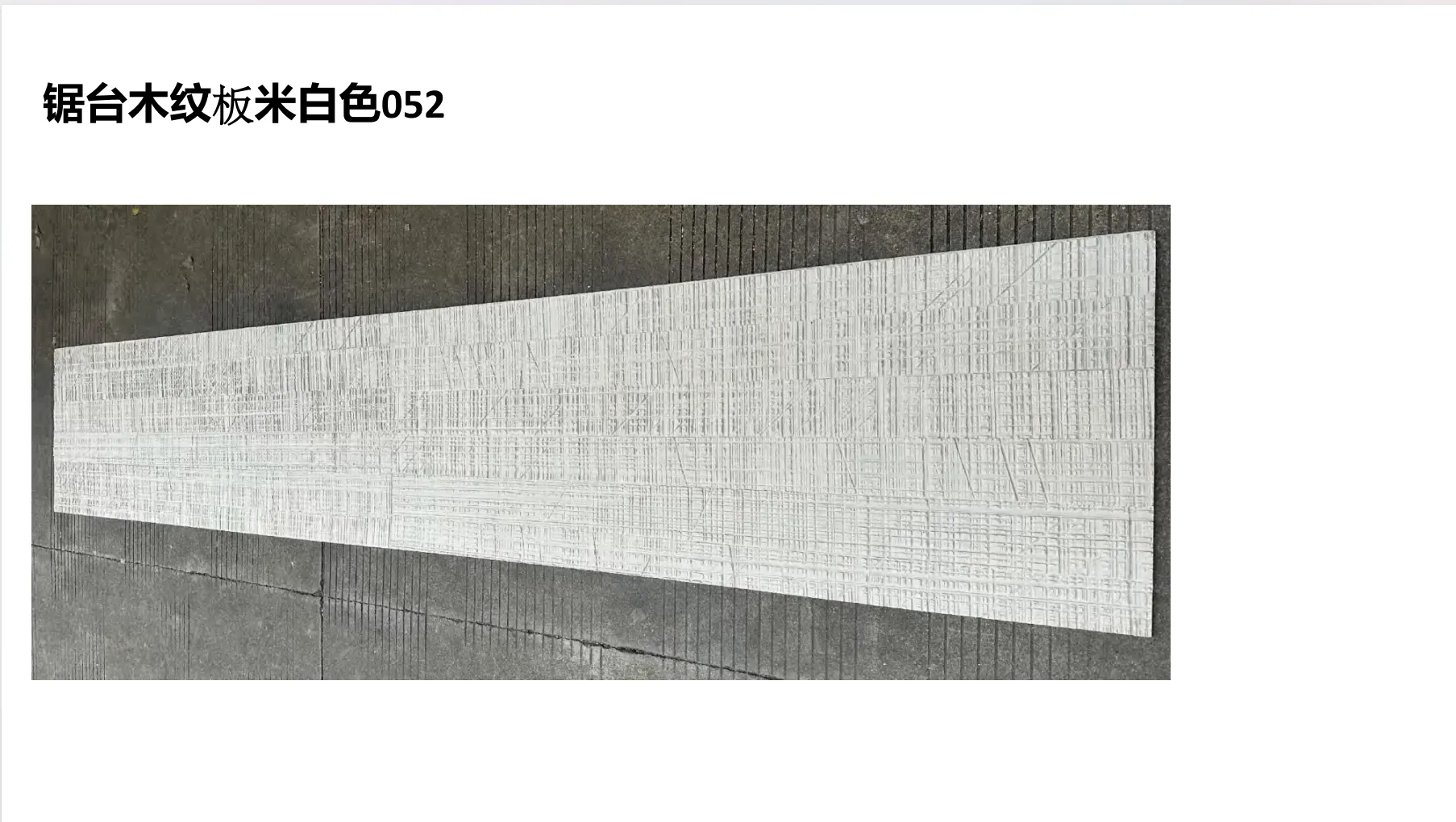
Let's start with a scenario we've all lived through, whether you're an architect burning the midnight oil on a hotel renovation or a contractor juggling three sub-suppliers for a retail space. You're staring at a project timeline that's already tight, and the material sourcing list is a mile long: wood boards for the accent wall, stone slabs for the lobby floor, metal panels for the exterior facade. You pick up the phone to order the wood boards first—only to hear the supplier say, "Sawing and treating will take 10 days, maybe two weeks if the lumber yard is backed up." Then, the stone supplier mentions their travertine shipment is delayed at the port. The metal fabricator? They're out of the vintage silver finish you specified. By noon, you're staring at your screen, wondering if "streamlining" is just a buzzword, and if you'll ever get to actually build something instead of chasing deliveries.
This is the reality of traditional material sourcing—especially when you're dealing with specialty items like custom-sawn wood boards, which demand time, coordination, and a whole lot of patience. But what if there was a way to cut through the chaos? Enter MCM's one-stop solutions: a system built not just to supply materials, but to simplify the entire process. Today, we're diving into how MCM transforms project workflows, why "one-stop" isn't just a convenience but a game-changer, and how materials like MCM flexible stone , foamed aluminium alloy board (vintage silver) , and even travertine (starry green) are redefining what's possible—without the headaches of traditional sourcing.
Let's talk about sawing wood boards for a minute. It sounds straightforward: you need a specific grain, a certain thickness, maybe a weathered finish for that rustic café vibe. So you contact a local mill, send over the specs, and wait. But here's what no one tells you: the mill might sub-contract the sawing to another shop, which sub-contracts the treatment, and suddenly your "10-day" timeline becomes three weeks. Then, when the boards finally arrive, half of them have warped in transit, or the stain color is off by two shades. Now you're back to square one—except now your drywallers are idling, and the client is asking why the project is "behind already."
But the real cost isn't just the delayed timeline. It's the mental bandwidth. When you're managing five suppliers for five materials, you're not just tracking delivery dates—you're mediating between the wood supplier who blames the stone supplier for "taking up the loading dock," or explaining to the client why the accent wall can't go up until the fair-faced concrete panels (which you ordered after the wood boards) arrive. Traditional sourcing turns you into a middleman, not a maker. And worst of all, it limits your design (ambition). If the wood boards are delayed, you might have to scrap that custom pattern you spent hours perfecting. If the stone supplier only has beige travertine in stock, you wave goodbye to the travertine (starry green) accent wall that would've made the space unforgettable.
1. Time: The Silent Project Killer – When you source materials piecemeal, every supplier adds their own lead time. Sawing wood boards takes 10 days, stone cutting adds another week, metal fabrication tacks on five more days. Before you know it, what should've been a 30-day material phase stretches to 45… then 60. And that's if nothing goes wrong. Delays compound, and suddenly your "on-time" project is now "we'll need an extension."
2. Consistency: When "Close Enough" Isn't Enough – Wood boards from two different batches might have slightly different hues. Stone slabs from separate quarries can vary in veining. Even metal panels from the same supplier can have color mismatches between runs. For a high-end project—say, a boutique hotel where every detail matters—this inconsistency is a disaster. You end up with an accent wall that looks like a patchwork quilt, not a cohesive design.
3. Coordination Overload – Let's do the math: 5 materials = 5 suppliers = 5 points of contact, 5 invoices, 5 delivery schedules, 5 quality checks. If you're managing a team, that's 5 times the emails, 5 times the phone calls, and 5 times the chance of miscommunication. One supplier misses a delivery, and suddenly your entire installation sequence is thrown off. It's not just stressful—it's inefficient.
MCM's one-stop model flips the script. Instead of chasing 10 suppliers for 10 materials, you work with a single partner who handles everything from design consultation to delivery. But this isn't just about convenience—it's about integration. MCM's materials are engineered to work together, both aesthetically and logistically, which means fewer surprises and more time to focus on what you do best: creating spaces that matter.
Let's break down how this works, using three materials that showcase MCM's range: MCM flexible stone , foamed aluminium alloy board (vintage silver) , and travertine (starry green) . These aren't just products—they're tools designed to make your life easier, your designs bolder, and your projects smoother.
Traditional natural stone is stunning, but it's heavy, fragile, and a nightmare to install. A standard marble slab can weigh 200+ pounds, requiring specialized equipment and a crew of four to maneuver. Then there's the cutting: even a small mistake can ruin a slab, turning a $500 material into a $500 loss. MCM flexible stone changes all that. Made from a composite of natural stone particles and a flexible backing, it's thin (as little as 3mm), lightweight (5-8kg per square meter), and bendable —meaning it can wrap around curves, cover uneven surfaces, and install in a fraction of the time.
Take a recent project we partnered on: a restaurant with a curved bar front that the client wanted clad in stone. Traditional stone would've required custom-cutting each piece, with gaps and grout lines breaking up the curve. MCM flexible stone? The installers rolled it out like wallpaper, trimmed it on-site, and had the entire bar finished in a day. No heavy lifting, no wasted material, no delays. And because it's pre-finished, there was no waiting for sealing or polishing. That's the power of a material designed with the installer in mind.
Metal panels are a staple in contemporary design, but finding the right finish—especially something with character, like that "vintage silver" patina—can feel like hunting for a needle in a haystack. Traditional metal suppliers often limit you to standard colors, or charge exorbitant fees for custom finishes. MCM's foamed aluminium alloy boards, though, are a different beast. The vintage silver finish isn't just a coating; it's integral to the material, created through a controlled oxidation process that ensures consistency across every panel. And because it's foamed aluminium, it's 70% lighter than solid metal, making installation a one-person job instead of a crew effort.
A luxury retail client recently used these panels for their storefront, pairing them with fair-faced concrete for a raw, industrial-chic look. The best part? They ordered both materials through MCM's one-stop portal, so the panels and concrete arrived on the same truck, on the same day. No more "stone here, metal there" scheduling. The contractor told us later, "It was the first time I didn't have to coordinate two deliveries for a facade. We unloaded, installed, and moved on. Felt like cheating."
Travertine is beloved for its porous, organic texture, but traditional travertine comes with a catch: natural variation. You might order 10 slabs, and end up with 5 that are cream, 3 that are beige, and 2 that have a weird greenish tint. Not ideal if you're going for a cohesive look. MCM's travertine (starry green) solves this by blending natural travertine particles with a custom pigment, creating a consistent base color flecked with metallic "stars" (tiny reflective particles) for depth. The result? A stone that looks like it was plucked from a forest floor at dusk—uniform, vibrant, and exactly what you specified.
An architect we worked with used this travertine for a hotel lobby feature wall, paired with MCM's MCM big slab board series (1200x2400mm slabs, no grout lines) for the floor. The client wanted "a space that feels like stepping into a secret garden," and with the starry green travertine shimmering under warm lighting, that's exactly what they got. And because both materials came from MCM, the color tones were pre-matched—no last-minute panic when the floor slabs looked "too yellow" next to the wall stone. It just… worked.
Still on the fence? Let's put it all in black and white. Below is a breakdown of how MCM's one-stop approach stacks up against traditional sourcing—using sawing wood boards as a stand-in for the "old way" of doing things. These aren't just hypothetical benefits; they're based on data from real projects, where MCM stepped in to turn chaos into clarity.
| Aspect | Traditional Sourcing (Sawing Wood Boards + Multiple Suppliers) | MCM One-Stop Solutions |
|---|---|---|
| Lead Time | 4-6 weeks (sawing, treating, coordinating with stone/metal suppliers) | 2-3 weeks (all materials sourced, fabricated, and delivered in parallel) |
| Coordination Effort | 5+ suppliers, 10+ emails/calls per week, on-site inspections for each delivery | 1 dedicated account manager, 1 delivery schedule, 1 quality check |
| Material Consistency | High variation (wood grain, stone veining, metal finish can differ batch-to-batch) | Factory-controlled consistency (colors, textures, and finishes pre-matched across materials) |
| Installation Time | 3-5 days for wood boards alone (cutting, fitting, sealing); longer for stone/metal | 1-2 days for equivalent area (lightweight materials, pre-cut to size, easy-to-install backing) |
| Waste Reduction | 15-20% material waste (mis-cuts, warped boards, color mismatches) | 3-5% waste (precision fabrication, minimal on-site trimming) |
| Design Flexibility | Limited by supplier capabilities (e.g., "We can't saw that thickness" or "No, we don't have starry green travertine") | Customizable finishes, sizes, and textures (e.g., vintage silver aluminium, 3D-printed stone patterns, curved flexible stone) |
Take the example of a 10,000 sq ft office renovation in Dubai, where the contractor initially planned to source wood boards, marble, and metal panels from three different suppliers. The timeline for materials alone was 6 weeks, with a 20% contingency budget for waste and delays. After switching to MCM, they received all materials in 3 weeks, reduced installation time by 40%, and cut waste to 4%—saving over $30,000 and finishing the project a full month early. The client? They're now using MCM for their next three projects. As the contractor put it, "I used to hate sourcing. Now? I barely think about it. MCM just delivers."
Let's not overlook the elephant in the room: sustainability. Traditional sourcing—especially for wood boards—often involves unclear origins (is that lumber FSC-certified?), high carbon footprints (shipping from multiple locations), and excess waste (scrapping mis-cut boards). MCM's one-stop model, by contrast, is built on efficiency. Materials like foamed aluminium alloy board use 50% less raw material than solid aluminium. MCM flexible stone incorporates recycled stone dust, diverting waste from landfills. And because all materials ship from a single facility, carbon emissions from transportation are cut by up to 35% compared to shipping from multiple suppliers.
A recent university campus project chose MCM for their student center specifically for this reason. They wanted to hit LEED Gold certification, and with MCM's low-VOC finishes, recycled content, and reduced shipping emissions, they exceeded their sustainability goals—without compromising on design. The exterior, clad in fair-faced concrete (a material known for its durability and minimal maintenance), now stands as a testament to how "green" and "gorgeous" don't have to be opposites.
At the end of the day, what MCM's one-stop solutions give you is something far more valuable than just materials: control. Control over your timeline, so you're not at the mercy of a sawmill's schedule. Control over your design, so you can use travertine (starry green) or vintage silver aluminium without settling for "close enough." Control over your sanity, so you can stop managing suppliers and start creating.
Imagine walking into a project meeting and saying, "The materials will be here in two weeks, they'll all match, and installation will take half the time we budgeted." That's not a fantasy—that's the MCM difference. It's not about replacing wood boards or stone slabs; it's about replacing the stress, the delays, and the "what-ifs" with a process that works for you.
So the next time you're staring at that mile-long sourcing list, remember: you don't have to do it alone. MCM's one-stop solutions are more than a service—they're a partner in bringing your vision to life. And in a world where time is your most precious resource, that's the kind of partnership that turns "impossible" timelines into "we finished early."
Now, go build something amazing. We'll handle the rest.
Recommend Products












