
Where Strength Meets Beauty in Modern Construction
Architecture is more than just walls and roofs—it's the language of spaces, telling stories of functionality, culture, and human ingenuity. In heavy-duty engineering, where structures endure decades of weather, foot traffic, and time itself, the choice of materials becomes a make-or-break decision. Enter MCM (Modified Composite Material) products: a revolution in construction that marries industrial-grade durability with artistic flair. Today, we dive into real-world engineering cases where the MCM project board series , marble pillar real photos , flexible stone , and other innovations aren't just materials—they're the backbone of iconic structures.
From skyscrapers that pierce the sky to cultural hubs that anchor communities, these materials are rewriting the rules of what heavy-duty construction can achieve. Let's walk through the challenges, triumphs, and stunning results of projects that rely on MCM's most robust offerings.
Heavy-duty engineering demands materials that laugh in the face of stress—extreme temperatures, moisture, impact, and the slow creep of aging. MCM's lineup doesn't just meet these demands; it elevates them with design flexibility that turns functional structures into landmarks. Let's spotlight the key players in our engineering cases:
| Material | Core Strengths | Engineering Edge | Typical Applications |
|---|---|---|---|
| MCM Project Board Series | Lightweight yet high-impact resistant; fire-retardant; customizable textures | Reduces structural load by 30% vs. traditional stone; quick installation cuts labor time | Facade cladding, ceiling panels, interior partitions in high-rise buildings |
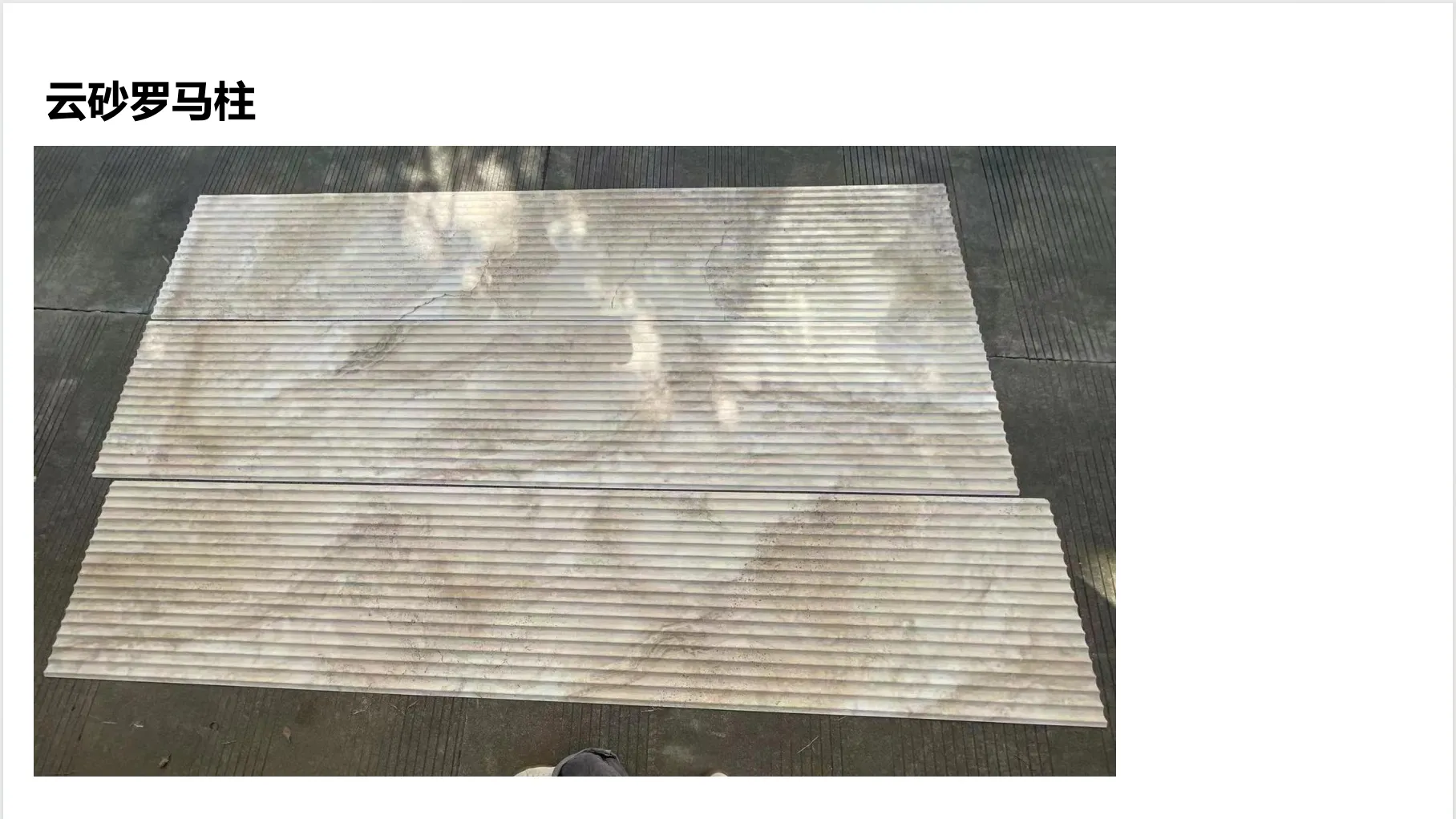
| Marble Pillar (Real Photos) | Natural veining; UV-resistant coating; load-bearing capacity up to 1000kg/sq.m | Replicates luxury marble without the weight; precast for precision fitting | Lobby columns, museum entrances, heritage restoration projects |
| Flexible Stone | Bendable up to 90°; water-resistant; scratch-proof surface | Conforms to curved surfaces (arches, domes) without cracking; low maintenance | Curved facades, tunnel interiors, decorative walls in transit hubs |
| Fair-Faced Concrete | Raw, industrial aesthetic; high compressive strength; thermal insulation | Eliminates need for secondary cladding; ages gracefully with a patina | Cultural centers, art galleries, outdoor amphitheaters |
| Epoch Stone | Stain-resistant; frost-proof; mimics ancient stone textures | Withstands extreme climates (-40°C to 70°C); minimal color fading over time | Historic district renovations, outdoor plazas, coastal buildings |
Nestled along the banks of the historic Li River, the Riverfront Cultural Center was tasked with honoring local heritage while serving as a 21st-century venue for art exhibitions and performances. The challenge? Creating a structure that could withstand annual monsoon rains, high humidity, and the weight of large art installations—all while mirroring the region's iconic limestone karst landscapes.
The design team turned to MCM flexible stone for the building's sweeping curved facade. "We needed a material that could follow the organic, wave-like of the karsts without compromising on durability," explains lead architect Zhang Wei. "Flexible stone was the only option that let us achieve those 12-meter-tall curved sections without visible seams or risk of cracking in wet weather." The stone's water-resistant properties also meant the facade requires just annual pressure washing to maintain its matte, earthy finish.
Inside, marble pillars (featured in real photos throughout the lobby) serve as both structural supports and artistic focal points. "Traditional marble would have added 20 tons to the building's load," notes structural engineer Maria Gonzalez. "MCM's precast marble pillars look identical to the real thing but weigh half as much, allowing us to span larger open spaces without extra steel reinforcement." The pillars, which feature custom veining inspired by local river stones, have become a spot for visitors, with many mistaking them for genuine marble until told otherwise.
The center's outdoor amphitheater, exposed to direct sunlight and seasonal temperature swings, uses epoch stone for its seating tiers. "We tested 10 materials, and epoch stone was the only one that didn't fade or develop hairline cracks after 18 months of weathering," says project manager Ahmed Patel. "It still looks as rich and textured as the day it was installed."
In a bustling metropolis where millions commute daily, the MetroHub Transit Center needed to balance durability (it handles 200,000 passengers weekly) with quick construction (a tight 18-month timeline) and a design that reduces traveler stress. Enter MCM's project board series and fair-faced concrete , which became the project's unsung heroes.
The center's ceiling, a sprawling 8,000 sq.m expanse above the main concourse, posed a unique challenge: it needed to be lightweight to reduce structural load, sound-absorbent to cut noise levels, and fire-retardant for safety. The MCM project board series checked all three boxes. "Traditional gypsum boards would have required double layers and extra framing," says construction lead James Chen. "MCM's project boards are 50% lighter and come with built-in fire resistance (Class A rating), so we installed them in half the time. Plus, the textured finish diffuses sound—passengers now say the concourse feels 'calmer' than other stations, even during rush hour."
The exterior plaza, which sees constant foot traffic and occasional vehicle use, features fair-faced concrete panels with a custom aggregate mix. "We wanted that raw, industrial look but with enough grip to prevent slips in rain," explains landscape architect Priya Kumar. "MCM's fair-faced concrete let us expose the aggregate (local river gravel) during finishing, creating a non-slip surface that also tells a story of the region's geology. And unlike polished concrete, it doesn't show scuff marks from shoes or bike tires—we've had zero complaints in two years."
Perhaps most impressively, the entire project came in under budget, thanks in part to the project board series 's quick installation. "We saved 120 labor days by using MCM's interlocking panels," Chen adds. "That alone covered the material cost premium, and the low-maintenance savings will keep paying off for decades."
For GreenHorizon, a LEED Platinum-certified mixed-use complex, sustainability wasn't an afterthought—it was the core mission. The 42-story tower needed materials that reduced embodied carbon, minimized waste, and performed for 50+ years. MCM project board series and flexible stone emerged as the stars of the eco-friendly design.
The tower's double-skin facade uses MCM project boards with a recycled stone aggregate core. "Traditional facade materials have a carbon footprint 3x higher," says sustainability consultant Elena Rodriguez. "MCM's boards are made with 40% recycled content, and their lightweight nature cut transportation emissions by 25% since we could ship more panels per truck." The boards also feature a reflective coating that reduces heat gain, lowering the building's AC usage by 18% annually.
The complex's sky garden, a 1,000 sq.m oasis on the 20th floor, uses flexible stone for its curved planters and winding pathways. "We needed a material that could handle soil moisture, plant roots, and foot traffic, all while bending around the garden's organic shapes," says garden designer Takashi Mori. "Flexible stone was the only option that didn't leach chemicals into the soil or degrade when in constant contact with water. Two years later, those planters still look brand new, even with daily watering."
Perhaps the most surprising win? Waste reduction. "MCM's precision cutting meant we had less than 3% material waste on the facade, compared to the industry average of 15% for natural stone," Rodriguez notes. "That's 12 tons of debris kept out of landfills—proof that heavy-duty engineering can be gentle on the planet."
Heavy-duty projects aren't just about building big—they're about building smart, anticipating problems before they arise. Here's how MCM materials address the most common engineering headaches:
Coastal projects battle salt corrosion; desert builds face UV radiation; cold climates fight freeze-thaw cycles. MCM's flexible stone and epoch stone undergo 1,000-hour salt spray tests and 5,000-hour UV exposure tests to ensure they stand up to decades of punishment.
Every extra kilogram adds strain to foundations and frames. MCM project boards weigh 12kg/sq.m vs. natural stone's 35kg/sq.m, reducing load without sacrificing strength—a game-changer for retrofits and high-rises.
Traditional stone requires skilled masons and slow, on-site cutting. MCM's interlocking systems and pre-cut panels let crews install 40 sq.m/day vs. 15 sq.m with natural stone, slashing project timelines.
Engineers often have to choose between "strong but ugly" and "beautiful but fragile." MCM's marble pillars, flexible stone, and project boards offer 100+ textures and colors, proving strength and style can coexist.
As cities grow taller, climates grow more unpredictable, and architects dream bigger, MCM is already working on the next generation of heavy-duty materials. "We're testing self-healing flexible stone that can repair small cracks when exposed to sunlight," hints R&D director Dr. Lisa Wong. "Imagine a facade that fixes itself—no more costly repairs after storms."
The MCM project board series is also evolving, with plans to integrate solar-reflective pigments that generate small amounts of electricity—turning building exteriors into mini power plants. "Heavy-duty engineering is no longer just about surviving the future," Wong adds. "It's about shaping it, one innovative material at a time."
Recommend Products












