
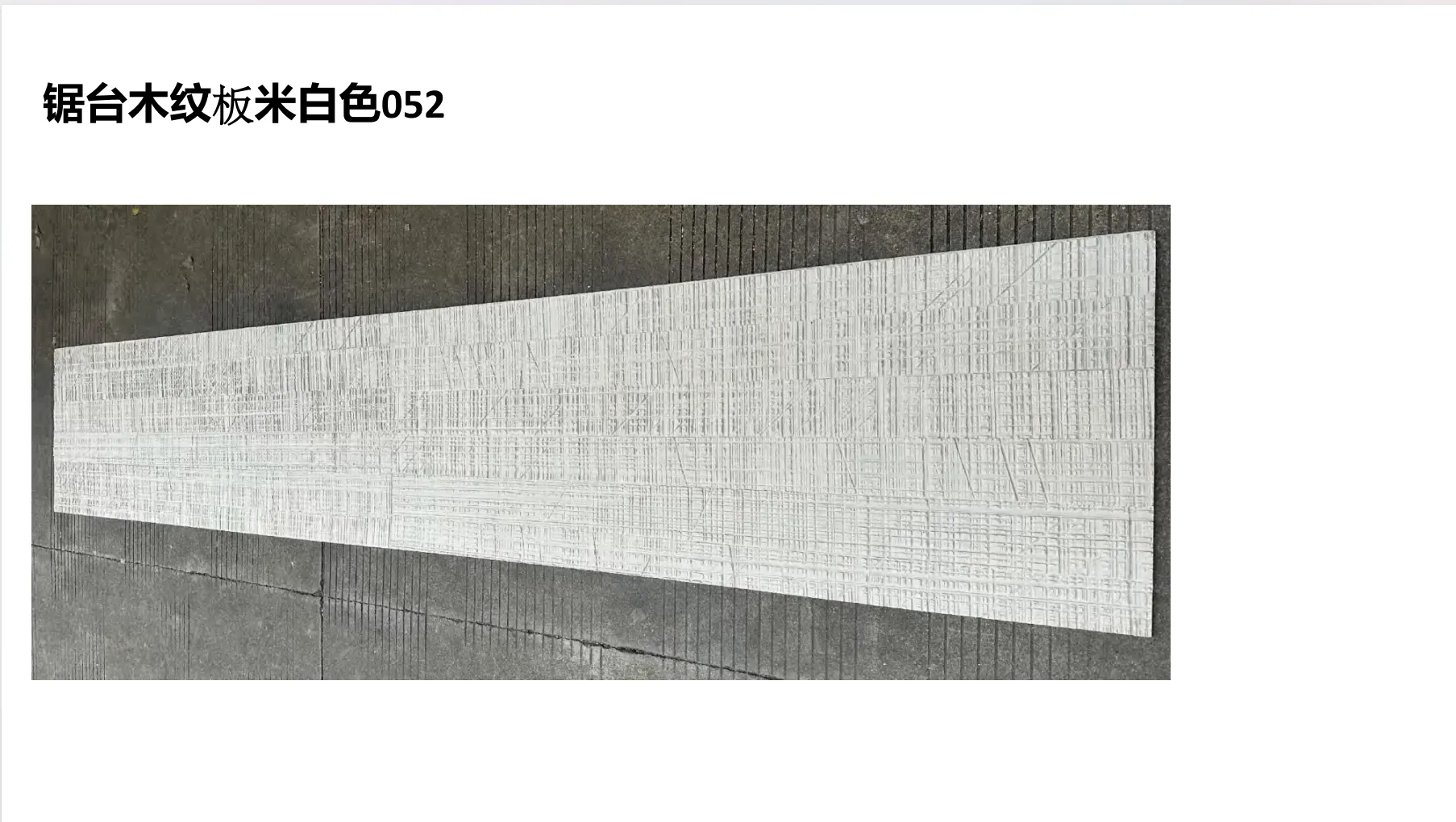
It's 7 AM on a Tuesday, and Maria, the project manager for a boutique hotel renovation in downtown Portland, is staring at her laptop screen with a sinking feeling. The email from the supplier is blunt: the shipment of sawing wood boards—critical for the lobby's accent walls—will be delayed by two weeks. Again. This is the third delay in as many months, and her client's patience is wearing thin. "We're already three weeks behind schedule," she mutters, running a hand through her hair. "If we don't find a better material, this project is going to tank."
Maria's frustration is familiar to anyone who's worked with traditional sawing wood boards. These materials, once the go-to for adding warmth and texture to interiors, come with a litany of headaches: they're heavy and cumbersome to transport, require specialized tools to cut without splintering, and warp or rot if exposed to even a hint of moisture. worse, sourcing high-quality wood often means waiting on unpredictable supply chains—seasonal harvests, shipping delays, or sudden price spikes that can derail a budget overnight. For contractors and project managers, "wood board delays" have become a euphemism for missed deadlines, overworked crews, and unhappy clients.
But what if there was a material that offered the aesthetic appeal of wood—warmth, texture, versatility—without the logistical nightmares? Enter the MCM Project Board series: a line of modified composite materials designed to solve exactly this problem. From lightweight flexible panels to stone-like finishes that mimic natural materials, MCM is redefining how we build, one on-time project at a time. Let's dive into why this innovation is leaving sawing wood boards in the dust—and how it could transform your next job.
To understand why MCM Project Board is a game-changer, let's first unpack why sawing wood boards cause so many delays. It starts with the material itself. Natural wood is a living, breathing substance—even after it's been cut and dried, it reacts to its environment. In humid climates, it swells; in dry air, it shrinks. This movement leads to gaps, cracks, or warped planks that require rework. For Maria's hotel project, the lobby's south-facing wall gets direct sunlight for six hours a day—perfect for warping wood boards, which would have meant replacing panels mid-project. "We would've been stuck sanding and resealing every few months," she says. "That's not just a delay—that's a maintenance nightmare."
Installation is another bottleneck. Sawing wood boards are heavy—often 30-40 pounds per plank—meaning crews need extra hands to maneuver them into place. Cutting them requires precision: a single wrong angle can ruin a $50 board, and splinters mean extra sanding time. Compare that to MCM panels, which weigh as little as 3 pounds per square foot. "Our crew could carry a stack of MCM flexible stone panels up a flight of stairs without breaking a sweat," says Jake, a contractor who switched to MCM for a restaurant renovation in Chicago. "With wood, we needed a forklift just to get the planks to the job site. Installation time? Cut in half."
Then there's the supply chain. Sourcing sustainably harvested wood often means waiting for trees to mature (which can take decades) or dealing with international shipping delays. In 2023, for example, a shortage of Douglas fir in the Pacific Northwest caused wood board prices to spike by 40%, leaving contractors like Jake scrambling. "We had to pivot to a lower-grade wood, which looked cheap, or delay the project," he recalls. "MCM materials, on the other hand, are manufactured in controlled facilities, so supply is consistent. No more crossing fingers for a shipment."
| Metric | Sawing Wood Boards | MCM Project Board |
|---|---|---|
| Weight (per sq. ft.) | 8-12 lbs. | 2-4 lbs. |
| Installation Time (200 sq. ft.) | 4-6 hours (4 workers) | 1-2 hours (2 workers) |
| Durability (Warp/Scratch Resistance) | Low (prone to warping, scratches) | High (resistant to moisture, impact) |
| Maintenance Needs | Frequent (sealing, sanding, staining) | Minimal (occasional cleaning with water) |
| Supply Chain Reliability | Unpredictable (seasonal, shipping delays) | Consistent (manufactured on-demand) |
At its core, MCM (Modified Composite Material) is a blend of natural minerals, polymers, and fibers engineered to be lightweight, durable, and infinitely customizable. Unlike wood, it doesn't shrink, swell, or rot. Unlike traditional stone, it's flexible enough to bend around corners or curve over arches. And because it's manufactured in sheets, it eliminates the waste and inconsistency of natural materials. Let's take a closer look at some standout products in the MCM lineup that are making sawing wood boards obsolete.
If you're craving the look of natural stone—say, the soft veining of travertine or the rugged texture of slate—but don't want to deal with heavy slabs or fragile tiles, MCM flexible stone is your answer. Take travertine (beige), a popular choice for residential kitchens and hotel lobbies. Natural travertine is porous and prone to staining, requiring regular sealing. MCM's version? It's water-resistant, scratch-proof, and comes in large, lightweight panels that install like wallpaper (but sturdier). "We used travertine (beige) MCM panels for a coffee shop's backsplash," says Lisa, a designer in Austin. "The client wanted that 'organic, earthy' vibe, but we didn't have time to source and install real stone. MCM went up in a day, and it still looks brand-new a year later—even with milk spills and coffee splatters."
What sets MCM flexible stone apart is its flexibility. Imagine installing a curved accent wall in a boutique store—with wood, you'd need to steam and bend planks, risking cracks. With MCM flexible stone, you can wrap it around a 12-inch radius without breaking a sweat. Jake, the Chicago contractor, used it for a yoga studio's circular meditation room: "The walls curve gently, and the MCM panels followed every inch perfectly. No gaps, no cracks, no delays. The client thought we'd spent weeks on it—we did it in a weekend."
For projects that lean into industrial or minimalist design, fair-faced concrete is a star. Its raw, unpolished finish adds edge to restaurants, offices, and lofts—but traditional concrete is heavy, hard to work with, and prone to cracking. MCM's fair-faced concrete panels, by contrast, are lightweight and pre-finished, so you skip the messy pouring, curing, and sealing. "We used fair-faced concrete MCM panels for a tech startup's office," says Mike, a contractor in San Francisco. "They wanted that 'warehouse vibe,' but the building's floors couldn't support real concrete. MCM panels weighed next to nothing, and we installed them over drywall. The IT team even mounted TVs directly onto the panels—no studs needed. Wood would've bowed under the weight; concrete would've cracked. MCM? It didn't budge."
We get it—sometimes you just want the look of wood. The good news? MCM's wood grain board captures every knot, grain, and texture of oak, walnut, or pine, but in a material that's impervious to moisture and pests. Unlike sawing wood boards, which fade in sunlight, MCM wood grain board is UV-resistant, so that rich walnut hue stays vibrant for years. "A client wanted a 'rustic cabin' feel for their lake house," says Maria, the Portland project manager. "We used MCM wood grain board for the ceiling and accent walls. It looks exactly like reclaimed barnwood, but it's waterproof—perfect for a house by the lake. No more worrying about mold or termites. And the best part? We installed it in two days instead of two weeks."
Don't just take our word for it—contractors and project managers across the country are swapping sawing wood boards for MCM and seeing results. Take the renovation of The Edison, a historic theater in Los Angeles. The team needed to restore the lobby's 1920s-era accent walls, originally clad in oak planks that had rotted beyond repair. Sourcing new oak would've taken 12 weeks (and cost a fortune). Instead, they used MCM wood grain board in a warm chestnut finish. "The panels matched the original wood's texture so closely, even the historical preservation board couldn't tell the difference," says the project architect. "We finished the lobby three weeks early and under budget. MCM didn't just save us time—it saved the project."
Or consider the case of a fast-casual restaurant chain expanding to 10 new locations. The franchisee needed consistent, on-brand accent walls for each location, but wood board delays threatened to push openings back by months. They switched to MCM flexible stone in travertine (beige), and suddenly, every location's walls were installed in a day. "We went from opening one store a month to three," says the franchise operations manager. "MCM turned our supply chain from a liability into a competitive advantage."
At the end of the day, MCM Project Board isn't just about avoiding delays—it's about building better. Better projects, better client relationships, and better bottom lines. When you cut installation time in half, your crew can take on more jobs. When you eliminate callbacks for warped wood or stained stone, your reputation as a reliable contractor grows. And when you offer clients durable, low-maintenance materials that look great for years, you become their go-to for future work.
Maria, in Portland, sums it up best: "After the hotel lobby debacle with wood boards, I vowed never to rely on them again. The MCM Project Board not only got us back on schedule—it made the finished space better. The fair-faced concrete walls in the lobby have become a talking point; guests think we spent a fortune on custom concrete. Little do they know, we saved time, money, and my sanity. That's the power of MCM: it doesn't just fix delays—it transforms what's possible."
Sawing wood boards had their moment, but in a world where time is money and reliability is everything, they're no longer the best tool for the job. MCM Project Board—with its lightweight durability, endless design options, and consistent supply—offers a better way forward. Whether you're building a boutique hotel, a cozy home, or a sprawling office complex, it's the material that keeps projects on track, clients happy, and crews efficient.
So the next time you're staring down a delay notification for sawing wood boards, remember: there's an alternative. MCM Project Board isn't just a product—it's a promise: on time, on budget, and on brand. Your next project deserves nothing less.
Recommend Products












