
There's a quiet magic in the way a city transforms at sunset. The sky bleeds from blue to tangerine, and suddenly, every building—once just a structure of steel and glass—becomes a character in a fleeting, beautiful story. I've stood on countless street corners, camera in hand, watching as the setting sun turns skyscrapers into giants draped in gold. But not all buildings wear that light the same way. Some seem to fade, their exteriors flat and unresponsive. Others? They glow. They dance. They make you stop and think, "How did they do that?" More often than not, the answer lies in the materials that clothe them—and these days, the name that keeps coming up is the MCM Project Board Series.
High-rise exteriors have a tough job. They need to protect against rain, wind, and time. They need to be efficient, sustainable, and cost-effective. But in a world where cities are competing to be more than just functional—where they want to be memorable —they also need to be beautiful. Not the cold, clinical beauty of modern minimalism, but a warmth that feels alive, especially when the sun dips low. That's the sweet spot the MCM Project Board Series has mastered: blending the science of engineering with the soul of artistry.
I recently visited a new development downtown—a 38-story tower that's been turning heads since its completion. What struck me wasn't just its height, but how it looked at 6:30 PM. The sunset hit its west-facing facade, and instead of just reflecting light, the building seemed to hold it. The panels shimmered with a soft, golden hue, like someone had sprinkled stardust over the concrete. Later, I learned the exterior was clad in MCM's Lunar Peak Golden and Travertine (Starry Orange) panels—materials designed not just to withstand the elements, but to interact with light. That's the difference, I realized. MCM isn't selling "cladding"; they're selling a way for buildings to participate in the daily drama of dawn and dusk.
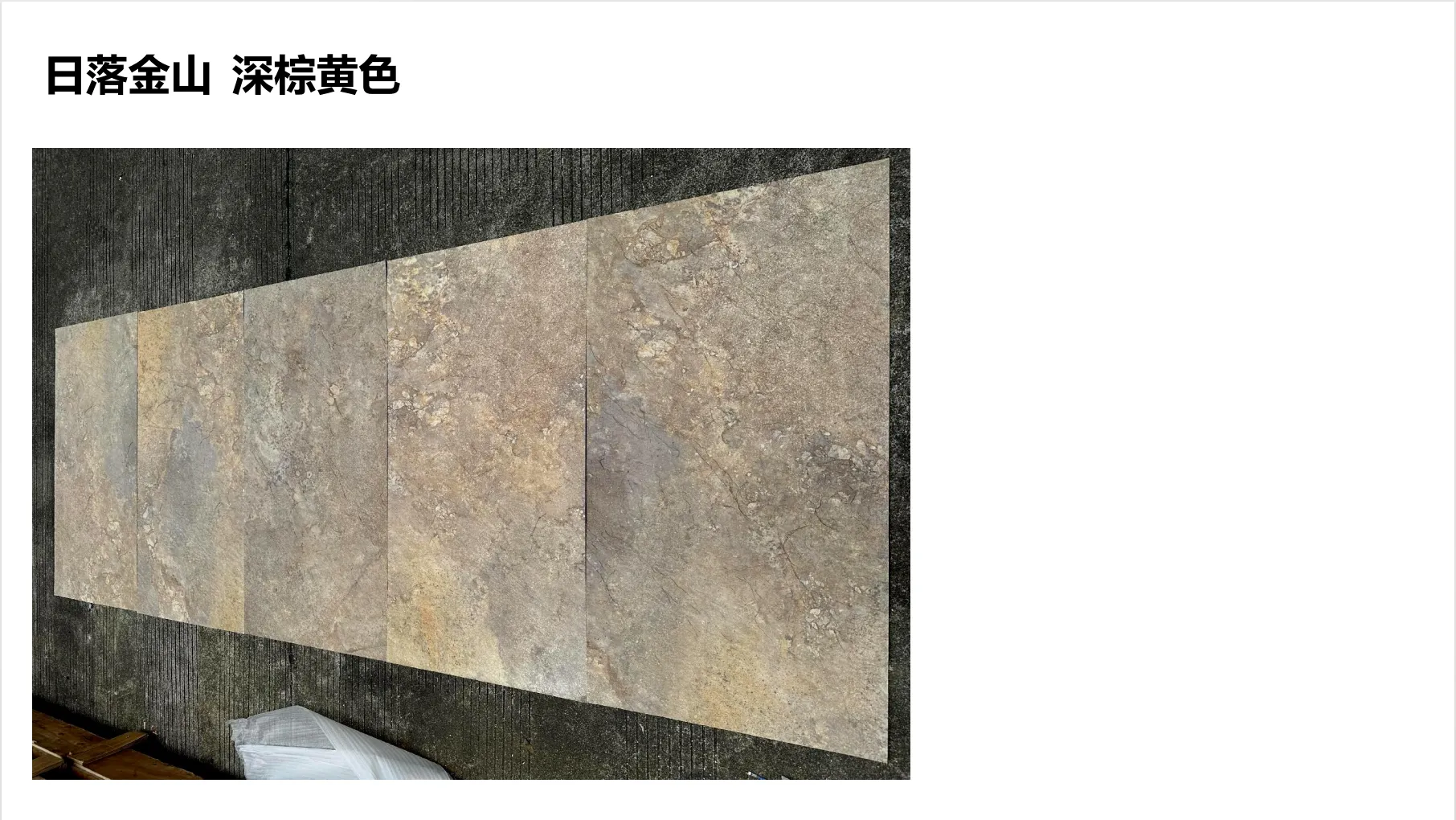
Let's talk about Lunar Peak Golden first. Traditional metal cladding can feel harsh, like armor plating on a building. But Lunar Peak Golden is different. It's a modified composite material that mimics the look of aged brass—rich, warm, and slightly weathered—without the upkeep. When the sun hits it at a low angle, the panels don't just reflect; they scatter light in tiny, golden flecks, as if the surface itself is made of crushed amber. I touched it once (don't tell the security guard), and it's surprisingly lightweight, which means less stress on the building's structure. Architects love it because it's versatile—works on everything from sleek modern towers to more organic, curved designs. And unlike real brass, it won't tarnish into a dull green over time. It stays that warm, sunset-ready gold, year after year.
Then there's Travertine (Starry Orange)—a nod to the classic stone, but with a playful twist. Natural travertine is beloved for its porous, earthy texture, but MCM took it further. They embedded tiny, iridescent particles into the composite, so when light hits the surface, it sparkles like orange starlight. Picture this: a sunset with hues of peach and coral, and the building's exterior seems to have captured bits of that sky and trapped them in stone. It's whimsical without being kitschy. I saw this used on a boutique hotel in the arts district, and guests were literally taking selfies with the wall at golden hour. One concierge told me, "We didn't realize it would become a tourist spot, but people stop to take photos every evening. They call it the 'Sunset Wall.'"
Not every sunset is all gold and orange, though. Some evenings skew cooler—pinks, purples, and soft blues. That's where Travertine (Starry Blue) shines. It's the same concept as its orange cousin, but with particles that catch cooler light, turning the stone a deep, oceanic blue with hints of silver. I saw it paired with Lunar Peak Golden on a mixed-use building once, and the contrast was stunning: warm gold on the lower floors, cool blue above, like the building was a gradient of the sky itself. The architect explained it was intentional—"We wanted the building to feel like it's part of the sunset, not just a bystander." Mission accomplished.
Of course, a building can't live on aesthetics alone. What I love about the MCM Project Board Series is that the beauty isn't skin-deep. Take Fair-Faced Concrete, for example—a staple in their lineup. It looks raw and industrial, with subtle variations in texture that feel almost handcrafted. But beneath that rugged exterior is a material that's fire-resistant, water-proof, and virtually maintenance-free. I visited a 10-year-old office building clad in it, and it looked as good as the day it was built. No cracks, no fading, just that same quiet, confident texture that somehow makes even a corporate tower feel approachable.
Then there's the practical side: installation. Traditional stone cladding is heavy, requiring thick, expensive support structures. MCM panels are lightweight because they're made with a foam core sandwiched between composite layers. That means faster installation, lower labor costs, and less strain on the building. One contractor I spoke to said, "We used to spend weeks hanging natural travertine. With MCM's Travertine (Starry Orange), we did the same square footage in half the time." For developers, that's a game-changer. Beauty *and* efficiency? It's the kind of win-win that makes you wonder why more companies aren't doing this.
| Material | Light Interaction | Key Benefit | Best For |
|---|---|---|---|
| Lunar Peak Golden | Warm, golden light scattering | Aged brass look without tarnishing | Modern towers, warm-toned facades |
| Travertine (Starry Orange) | Orange iridescent flecks in sunlight | Nature-inspired texture with sparkle | Boutique hotels, cultural centers |
| Fair-Faced Concrete | Soft, diffused light reflection | Low maintenance, industrial chic | Offices, residential buildings |
| Travertine (Starry Blue) | Cool blue-silver sparkle at dusk | Contrasts warm tones beautifully | Mixed-use developments, coastal buildings |
At the end of the day, though, what really sticks with me isn't the specs or the installation times. It's the way these buildings make people feel. I was at a park near that downtown tower with the Lunar Peak Golden facade, and I watched a little girl pointing up at it, saying, "Mommy, the building is on fire!" Her mom laughed and corrected her, but I knew what she meant. The golden glow *did* look like flames—warm, alive, full of energy. That's the power of good design: it sparks imagination.
I think about that when I see the MCM Project Board Series in action. They're not just materials; they're storytellers. A building clad in Travertine (Starry Orange) becomes a beacon of warmth in a cold city. One with Lunar Peak Golden feels like a bridge between old and new—timeless yet modern. Even Fair-Faced Concrete, with its raw honesty, tells a story of resilience and authenticity. In a world where so much of urban architecture feels generic, MCM is helping buildings have voices.
So the next time you're out at sunset, take a look around. Notice which buildings seem to glow, which ones fade, which ones make you pause. Chances are, the ones that stand out—the ones that feel like they're part of the sunset—are wearing something special. Maybe it's Lunar Peak Golden, catching the last light. Maybe it's Travertine (Starry Blue), humming with cool, quiet color. Whatever it is, it's probably from the MCM Project Board Series. Because in the end, architecture isn't just about shelter. It's about creating moments—moments when a building stops being a structure and becomes part of the beauty of the world around us. And isn't that what we all want? To be part of something beautiful, even if we're just a 40-story tower in the middle of a city? I think so.
Recommend Products












