
Why modern builders are swapping tradition for innovation in material choices
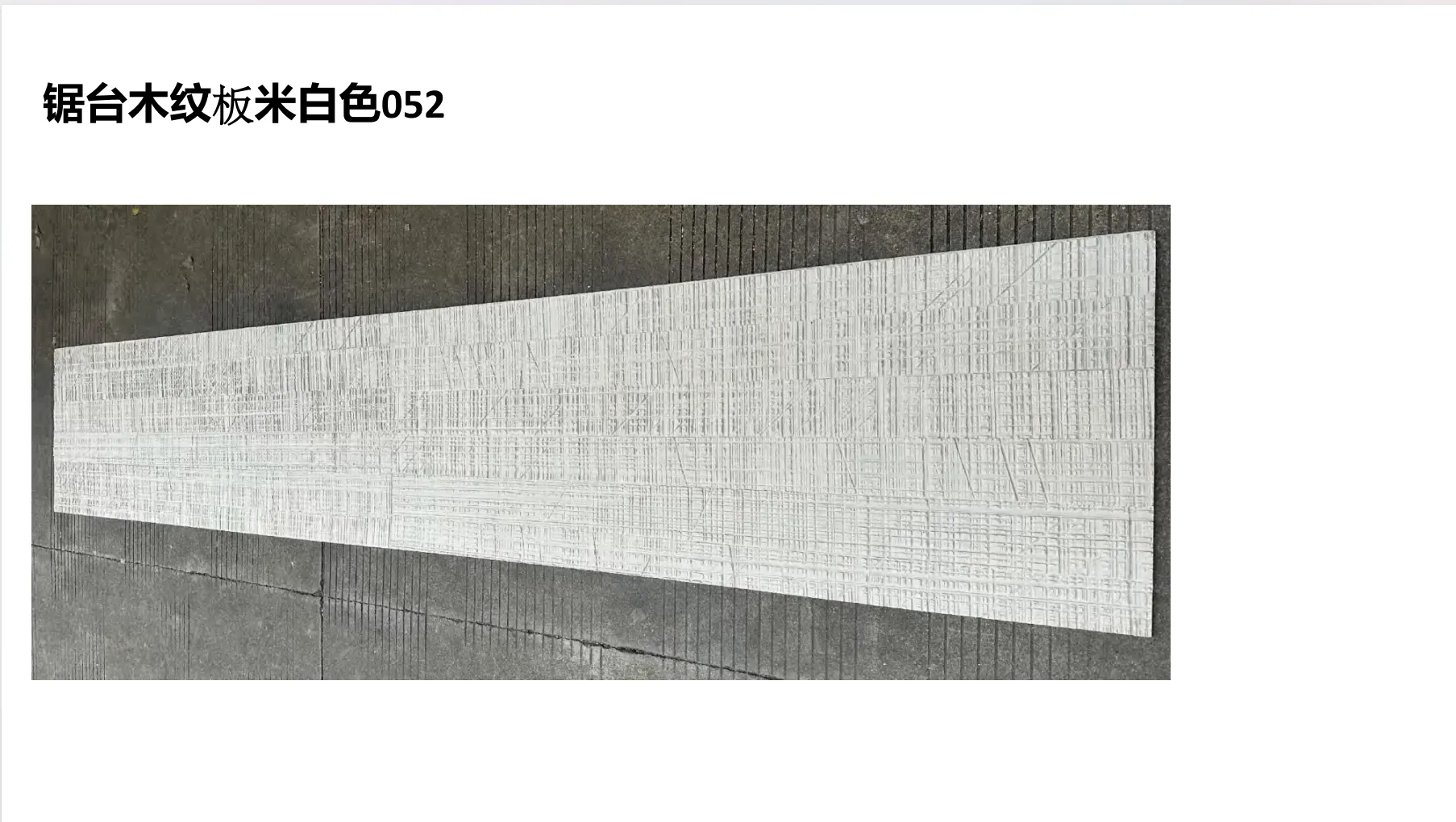
Let's start with a scenario we've all heard (or lived through): A project manager staring at a blueprint for a sprawling commercial complex, coffee in hand, (okay, maybe not literally, but you get the vibe). The clock is ticking, the budget is tight, and the client wants "something that looks timeless but won't fall apart in five years." Sound familiar? When it comes to large-scale projects—think shopping malls, office parks, or even community hubs—choosing the right cladding material can feel like solving a puzzle with a dozen missing pieces. And for decades, one material has dominated that puzzle: sawing wood board. But lately, a new player has been turning heads: the MCM Project Board Series. Today, we're diving into why this modern marvel might just be the answer to your large-scale project prayers.
Before we pit MCM against wood, let's talk about the elephant in the room: what makes a material "ideal" for big builds? It's not just about looking good (though that helps). Project managers, architects, and contractors are juggling a dozen priorities, and the material has to check all these boxes:
Now, let's see how our two contenders stack up.
Let's be clear: sawing wood board has earned its place in construction history. There's something undeniably warm and inviting about natural wood—those grains, that earthy scent, the way it softens a space. It's why we've used it for centuries, from cozy cabins to grand barns. But when we scale up—when we're talking about covering 50,000 square feet of a hospital exterior or a campus center—wood starts to show its cracks (literally and figuratively).
Take moisture, for example. Wood loves water—and not in a good way. In humid climates, it swells; in dry ones, it shrinks. Over time, that back-and-forth leads to warping, cracking, and even rot. Imagine a coastal mall with wood cladding: the salt air would eat away at it in years, not decades. Then there's fire resistance. Wood is flammable—period. For large projects like schools or hospitals, that's a safety risk that's hard to overlook, even with fire-retardant treatments (which add cost and need reapplication).
Maintenance is another headache. Staining, sealing, painting—wood demands regular TLC to stay looking decent. For a small home, that's manageable. For a 10-story office building? That's a maintenance crew spending weekends on ladders, and a budget line item that never goes away. And let's talk scale: sawing wood boards typically come in smaller planks, which means more seams, more installation time, and a higher chance of inconsistencies in color or grain across the project. When you're trying to create a cohesive look for a large facade, those mismatched planks can turn a "timeless" design into a "tired" one.
Don't just take my word for it. A few years back, a local community center here in [fictional town] opted for sawing wood board on their outdoor pavilion. It looked stunning—for about 18 months. Then came a particularly rainy season, and by the end of it, the boards had warped so badly that some were pulling away from the framing. The repair bill? Over $20,000, and they had to close the pavilion for weeks. "We loved the look, but we didn't think about how much upkeep it would need," the project manager told me later. "In hindsight, we should've considered something more… resilient."
If sawing wood board is the classic novel you love but know has plot holes, the MCM Project Board Series is the sleek, modern thriller that fixes all the flaws. MCM—short for Modified Composite Material—isn't just a single product; it's a family of engineered materials that blend natural minerals (like stone, clay, or sand) with high-performance polymers. The result? A material that's tough as nails but flexible as a yoga instructor, lightweight enough for easy installation but durable enough to outlast most buildings.
Let's break it down with a few of its standout stars—because not all MCM boards are created equal, and that's a good thing. They're designed to fit different project needs, like a toolbox with the perfect wrench for every job.
Ever tried to curve a stone slab? Spoiler: It doesn't work. Natural stone is rigid, which limits where you can use it. But MCM Flexible Stone? It's a game-changer. Imagine a facade with gentle, sweeping curves—like the hull of a ship or the arch of a museum entrance. Traditional materials would require custom cutting, tons of seams, and a prayer that they don't crack. MCM Flexible Stone, though? It can bend up to 90 degrees without snapping, thanks to its composite structure. That means architects can finally stop designing around "straight lines only" and start building the organic, flowing shapes they've sketched in their notebooks.
And it's not just about looks. That flexibility makes installation a breeze, even on tricky surfaces. A crew can carry large sheets of MCM Flexible Stone up scaffolding without worrying about it shattering, and cut it on-site with standard tools. No special equipment, no extra labor—just smooth, efficient progress.
Here's a little secret contractors hate: seams. Every seam is a potential weak spot, a place where water can seep in, or dirt can collect, or the material can start to peel. And with traditional wood boards (or even standard stone panels), you end up with a lot of seams because the planks are small. Enter the MCM Big Slab Board Series. These bad boys come in massive dimensions—think 4 feet by 8 feet, or even larger. That means fewer panels to install, fewer seams to seal, and a facade that looks clean, cohesive, and professional.
Let's do the math: If you're covering a 10,000-square-foot wall with 2x4-foot wood planks, you need 1,250 planks. With MCM Big Slab Boards (say, 4x8-foot sheets), you need just 313 sheets. That's less time carrying materials, less time aligning edges, and less time caulking seams. For a large-scale project, that translates to weeks shaved off the timeline—and when deadlines are tight, weeks are gold.
Not every project calls for stone. Some need the sleek, industrial vibe of metal—think tech offices, modern art galleries, or urban lofts. That's where Foamed Aluminium Alloy Board (vintage silver) comes in. Part of the MCM family, this material takes aluminum alloy, foams it to reduce weight, and coats it with a vintage silver finish that looks like aged metal (but without the rust, pitting, or maintenance). It's lightweight (about 1/5 the weight of solid aluminum), fire-resistant (a must for commercial buildings), and impervious to moisture, salt, and even graffiti (just power-wash it off).
I visited a tech campus last year that used Foamed Aluminium Alloy Board (vintage silver) on their outdoor amphitheater. The sun hits it all day, and it still looks as crisp as the day it was installed. No fading, no warping, just that cool, matte silver that ties the whole modern aesthetic together. And because it's MCM, it was installed in half the time it would've taken with solid metal panels—saving the project both time and money.
Words are great, but sometimes you need a side-by-side. Let's put MCM Project Board Series and Sawing Wood Board head-to-head on the factors that matter most for large-scale projects:
| Factor | Sawing Wood Board | MCM Project Board Series |
|---|---|---|
| Durability | Prone to warping, rot, and insect damage; fire risk; fades in sunlight. | Resistant to moisture, pests, fire, and UV rays; rated to last 50+ years with minimal wear. |
| Cost Over Time | Lower upfront cost, but high maintenance (staining, sealing, repairs); needs replacement every 10–15 years. | Higher upfront cost, but near-zero maintenance; lasts 3–5x longer than wood, saving money long-term. |
| Installation Speed | Slow; small planks mean more seams and cuts; heavy and fragile, requiring careful handling. | Fast; large slabs (MCM Big Slab Board) reduce seams; lightweight and flexible, making transport and cutting easy. |
| Sustainability | Dependent on logging practices; often requires chemical treatments (fire retardants, pesticides). | Made with recycled minerals and polymers; low carbon footprint; 100% recyclable at end of life. |
| Design Options | Limited to natural wood grains and stains; rigid, no curved applications. | Endless: stone, metal, wood, and custom finishes (e.g., Foamed Aluminium Alloy Board vintage silver); flexible for curves and unique shapes. |
| Maintenance | Annual sealing/staining; repairs for cracks/warping; frequent cleaning to prevent mold. | Hose down occasionally; no sealing, painting, or repairs needed. |
See the pattern? MCM isn't just better in one or two areas—it's better across the board , especially when you factor in the long-term demands of a large-scale project. Wood might seem cheaper on day one, but by year 10, that "cheap" choice has cost you twice as much in repairs and replacements. MCM? It's an investment that pays off in peace of mind.
Still on the fence? Let's talk about real-world wins. These aren't hypothetical—they're projects that faced the same pressures as yours: tight deadlines, big budgets, and high stakes. And they chose MCM Project Board Series.
The Riverfront Mall, a 300,000-square-foot shopping center in [fictional city], was racing to open before the holiday season. Their original plan? Sawing wood board for the exterior facade. But when the project manager crunched the numbers—factoring in the time to install 20,000+ wood planks, the risk of delays from weather, and the maintenance costs down the line—they pivoted to MCM Big Slab Board Series.
The result? A crew of 5 installed 10,000 square feet of MCM Big Slab Board in a week—something that would've taken 2 weeks with wood. The large slabs meant fewer seams, so the facade looks smooth and uniform, even from a distance. And because MCM is weather-resistant, they didn't have to stop work during rainstorms. The mall opened on time, and three years later, the facade still looks brand-new. "We saved over $120,000 in labor and avoided a delay penalty," the project manager told me. "Best decision we made."
Building near the ocean is tough on materials. Saltwater spray eats through metal, wood rots in the humidity, and even stone can degrade over time. The Coastal Community Center, a beachfront facility in [fictional coastal town], needed a cladding material that could handle the elements while matching the modern, beachy vibe of the area.
They chose Foamed Aluminium Alloy Board (vintage silver). The vintage silver finish gives the center a sleek, nautical look—like driftwood polished by the waves—without the upkeep of real wood. And since it's MCM, it's impervious to saltwater and humidity. Two hurricane seasons later, the facade hasn't rusted, faded, or peeled. "We were worried about maintenance—especially with the salt air," the architect said. "But with MCM, we just hose it down once a year, and it looks perfect. No sanding, no painting, no stress."
Construction isn't just about building structures anymore—it's about building legacies . Clients want projects that will still be standing, looking good, and serving their communities in 50 years. They want materials that align with their values: sustainability, safety, and innovation. Sawing wood board, for all its charm, can't keep up with that vision. It's rooted in a time when buildings were smaller, lifespans were shorter, and "maintenance" was just part of the job.
MCM Project Board Series, though? It's built for the future. It's green (recycled materials, low emissions), it's smart (durable, low-maintenance), and it's adaptable (designs limited only by imagination). As more projects go big—think eco-friendly campuses, mixed-use developments, and smart cities—MCM will keep proving itself as the material that doesn't just meet expectations, but exceeds them.
At the end of the day, choosing between MCM Project Board Series and sawing wood board isn't just about materials—it's about priorities. If your project is small, temporary, or you're willing to trade long-term peace of mind for short-term cost savings, wood might work. But for large-scale projects—where durability, speed, and sustainability are non-negotiable—MCM is the clear winner.
It's the material that lets you build bigger, better, and bolder—without the stress, the delays, or the regret. So the next time you're staring at that blueprint, coffee in hand, wondering how to make your large-scale project a success, remember: MCM Project Board Series isn't just a choice. It's the choice that turns "what if" into "we did it."
Recommend Products












