
Bridging Timeless Warmth with Modern Innovation
There's something inherently comforting about the look and feel of ancient wood. It's more than just a material—it's a storyteller. Weathered planks that have stood the test of time, their grains deepened by sun and rain, their surfaces softened by decades of touch, carry the weight of history in every knot and crevice. From the timber beams of medieval cottages to the hand-carved facades of traditional Asian temples, ancient wood has long been the backbone of spaces that feel alive with memory. It speaks of craftsmanship, of patience, of a connection to the natural world that modern, mass-produced materials often struggle to replicate.
Yet, for all its beauty, ancient wood comes with a set of challenges that make it impractical for today's architectural demands. Authentic reclaimed wood is scarce and costly, often requiring extensive restoration to meet safety standards. It's prone to warping, rotting, and insect damage, demanding constant maintenance that eats into budgets and sustainability goals. And for designers aiming to evoke that same rustic, timeworn charm in new builds or large-scale projects, the logistics of sourcing enough genuine ancient wood can feel like chasing a ghost.
This is where the MCM Project Board Series steps in—not as a replacement for ancient wood, but as a bridge between its timeless aesthetic and the practical needs of modern construction. More than just a collection of building materials, the series is a love letter to the warmth and character of aged timber, reimagined through cutting-edge technology and sustainable design. It's about capturing the soul of ancient wood without sacrificing durability, accessibility, or environmental responsibility. Let's dive into how MCM is streamlining the process of bringing ancient wood-themed constructions to life, one innovative board at a time.
At its core, the MCM Project Board Series is designed to solve a fundamental tension in architecture: the desire to honor the past while building for the future. For designers, contractors, and homeowners drawn to the rich, earthy tones of ancient wood, the series offers a curated selection of materials that mimic the look and texture of aged timber with uncanny precision—right down to the subtle cracks, the variation in grain, and the soft patina that only time can create. But unlike real wood, these boards are engineered to withstand the elements, resist wear and tear, and reduce the environmental footprint of construction projects.
What sets the MCM Project Board Series apart is its commitment to authenticity of feeling . It's not just about replicating the visual appearance of ancient wood; it's about capturing the emotional response it evokes. Run your hand over a wood concrete board from the series, and you'll feel the slight roughness of a weathered beam. Stand back and admire a wall clad in wood grain board, and you'll swear you're looking at planks that have been seasoned by decades of sunlight. This attention to detail—this focus on the human experience of the material—is what makes MCM more than a supplier; it's a partner in crafting spaces that feel deeply, meaningfully connected to history.
In the following sections, we'll explore three standout products from the series that are revolutionizing ancient wood-themed constructions: wood concrete board , wood grain board , and sawing wood board . We'll also touch on how MCM flexible stone complements these wood-inspired materials, adding depth and versatility to design palettes. Along the way, we'll uncover how each product addresses the challenges of traditional wood, from durability to sustainability, and why they've become go-to choices for projects ranging from boutique hotels to residential retreats.
If there's one product in the MCM lineup that embodies the "best of both worlds" philosophy, it's the wood concrete board . Imagine a material that pairs the industrial strength of concrete with the organic warmth of ancient wood—a material that can withstand harsh weather, heavy foot traffic, and the passage of time, all while looking like it was hewn from a century-old forest. That's wood concrete board in a nutshell.
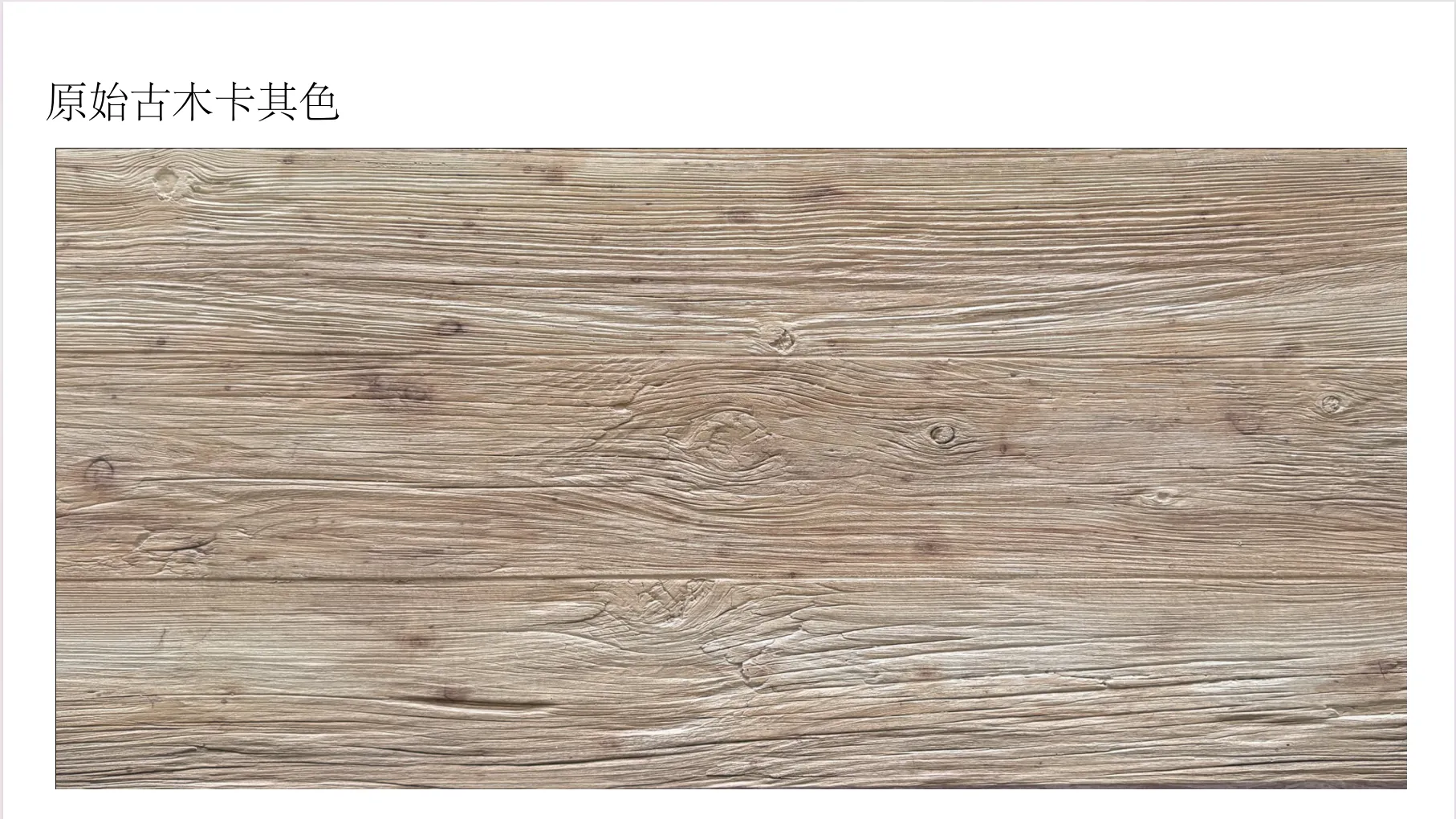
Visually, wood concrete board is a masterpiece of mimicry. MCM's engineers have spent years studying the patterns of ancient wood—how the grain swells and shrinks with moisture, how knots form and darken over time, how sunlight bleaches some areas while leaving others rich and deep. Using advanced 3D printing and surface treatment techniques, they've translated these observations into a texture that's so lifelike, even close inspection can leave you second-guessing. Whether you opt for the light grey variant, which evokes sun-bleached driftwood, or the dark grey option, reminiscent of oak beams in a medieval tavern, each board tells a story of age and character.
But the magic of wood concrete board isn't just skin-deep. Underneath that wood-like surface lies a core of high-performance concrete, reinforced with fiber to enhance flexibility and prevent cracking. This means the boards are fire-resistant, water-resistant, and impervious to pests—qualities that make them ideal for both interior and exterior applications. A restaurant owner in Portland, Oregon, recently used wood concrete board for their outdoor patio walls, and reported that even after a winter of heavy rain and snow, the boards looked as fresh as the day they were installed. "We wanted that cozy, cabin-like feel without worrying about rot or termites," they said. "MCM delivered that—and then some."
Sustainability is another feather in wood concrete board's cap. Unlike traditional concrete, which has a high carbon footprint, MCM's formulation uses recycled materials and low-emission binders, reducing its environmental impact. And because it's designed to last for decades with minimal maintenance, it cuts down on the need for frequent replacements—a win for both your budget and the planet.
Applications for wood concrete board are virtually limitless. Use it for accent walls in a living room to add rustic charm, or clad an entire exterior facade to give a modern home the look of a weathered barn. It works beautifully as flooring in high-traffic areas like hallways or commercial lobbies, where its durability shines. Even furniture designers have gotten creative, using the boards to craft coffee tables and shelving units that blend industrial edge with natural warmth. In every case, wood concrete board doesn't just look like ancient wood—it feels like it belongs in a space that's meant to be lived in, loved, and passed down.
If wood concrete board is about blending strength and warmth, wood grain board is all about celebrating the artistry of nature's most iconic pattern: wood grain. There's a reason wood grain has fascinated artists, designers, and craftspeople for centuries—it's a pattern that's simultaneously chaotic and ordered, unique to every tree, and full of subtle variations that draw the eye and calm the mind. MCM's wood grain board takes this natural beauty and elevates it, creating a material that's not just a copy of ancient wood, but a tribute to it.
What makes wood grain board so special is its attention to detail. MCM's design team didn't just scan a single piece of wood and replicate it; they studied hundreds of samples of ancient timber—oak, pine, walnut, teak—to identify the nuances that make each species unique. The result is a range of boards that mimic everything from the tight, swirling grain of old-growth oak to the wide, lazy curves of reclaimed pine. Some boards feature the faint scars of old nails, others the subtle discoloration of sap pockets—small touches that add layers of authenticity.
Take, for example, the light grey wood grain board . With its pale, almost silvery base and delicate, wispy grain lines, it calls to mind driftwood that's been polished by the ocean for years—smooth, soft, and full of quiet character. It's perfect for spaces where you want to evoke a sense of calm, like a spa retreat or a bedroom. On the other end of the spectrum, the dark grey variant boasts bold, deep grain that resembles the heartwood of a centuries-old tree, making it ideal for statement walls in a study or a restaurant lounge, where it adds drama and gravitas.
Beyond its stunning aesthetics, wood grain board is a practical choice for modern construction. It's lightweight, making installation faster and easier than traditional wood planks, and it's resistant to fading, even when exposed to direct sunlight. This means that a wall clad in wood grain board today will look just as vibrant in 10 years as it does on day one—a far cry from real wood, which can dull and discolor over time. It's also easy to clean; a quick wipe with a damp cloth is all it takes to keep it looking fresh, making it a favorite for busy households and commercial spaces alike.
Perhaps the most compelling aspect of wood grain board, though, is its versatility. It can be cut into any shape or size, allowing for creative installations like herringbone patterns, geometric accents, or even custom murals. A boutique hotel in Kyoto recently used wood grain board to create a feature wall in their lobby, arranging the boards in a wave-like pattern that mimics the flow of a river—an homage to both traditional Japanese design and the natural world. The result? A space that feels both timeless and contemporary, where guests can't help but reach out and touch the "wood" to see if it's real.
There's a certain romance to the idea of hand-sawn wood—the kind of planks you might find in a 19th-century barn, with rough edges, uneven surfaces, and the marks of a craftsman's tools still visible. This is the aesthetic that sawing wood board from MCM captures so brilliantly. It's not about perfection; it's about the beauty of imperfection—the slight warps, the tool marks, the variations in thickness that tell a story of human hands at work. In a world of sleek, uniform surfaces, sawing wood board brings a welcome dose of rustic charm and authenticity.
At first glance, sawing wood board looks like it was pulled straight from a abandoned sawmill. The surface is intentionally rough, with deep grooves that mimic the path of a hand saw, and edges that are slightly irregular, as if they were cut on the fly. Some boards even feature "cracks" and "splits" that add to the aged look, though these are purely cosmetic—underneath, the board is solid and strong. It's a masterclass in controlled chaos, where every "flaw" is carefully designed to evoke the feeling of wood that's been worked, weathered, and loved.
But don't let its rough-and-tumble appearance fool you—sawing wood board is as tough as they come. MCM constructs it using a composite of high-density fiberboard and natural minerals, giving it the strength to stand up to heavy use. Unlike real hand-sawn wood, which can splinter or splinter, sawing wood board is smooth to the touch (despite its textured surface) and won't snag clothing or skin. This makes it a safe choice for family homes, where parents don't have to worry about little ones getting hurt on sharp edges.
One of the most popular uses for sawing wood board is in accent walls and ceilings, where its texture adds depth and dimension to a space. Imagine walking into a cabin-style home, where the ceiling is clad in sawing wood board, each "plank" varying slightly in color and texture, creating a warm, cozy canopy overhead. The light filters through, casting shadows that dance along the grooves, and suddenly the room feels like a retreat from the modern world. It's a feeling that's hard to replicate with smooth, uniform materials—and one that sawing wood board delivers effortlessly.
It's also a favorite for exterior applications, like porch ceilings or garden sheds, where its weather-resistant properties shine. A bed and breakfast in Vermont used sawing wood board to clad the exterior of their guest cabins, giving them the look of old-fashioned log cabins without the maintenance headaches of real logs. "Guests often comment on how 'authentic' the cabins feel," the owner notes. "They can't believe it's not real wood—until we tell them it won't rot, warp, or need staining every year. That's when they really get excited."
While wood concrete board, wood grain board, and sawing wood board take center stage in ancient wood-themed constructions, no design is complete without complementary materials to add contrast and depth. That's where MCM flexible stone comes in. Think of it as the supporting actor that makes the lead shine brighter—a versatile, durable material that pairs beautifully with wood-inspired boards, adding texture, color, and a touch of natural stone elegance to any project.
MCM flexible stone is exactly what it sounds like: a thin, lightweight stone veneer that's flexible enough to bend around curves and corners, making it easy to install in places where traditional stone would be impossible. It's available in a wide range of styles, from smooth, polished surfaces to rough, natural textures, but for ancient wood-themed projects, the most popular options are those that evoke the earthy, weathered stones you might find alongside ancient wood structures—think river rocks, fieldstones, or aged limestone.
Take, for example, the lime stone (beige) variant. With its soft, warm hue and subtle veining, it pairs beautifully with wood grain board, creating a look that's reminiscent of a sunlit courtyard in the south of France—wood beams overhead, stone walls below, and the scent of lavender in the air. Or consider travertine (starry green) , with its deep, moody color and pitted surface, which adds a touch of drama when used alongside dark grey wood concrete board, like a forest floor where stone and wood meet in harmony.
One of the most clever ways designers are using MCM flexible stone with wood-themed boards is in accent features. A restaurant in Boulder, Colorado, for instance, used wood grain board for their main walls and then added a wainscot of lime stone (beige) flexible stone halfway up, creating a classic "wood and stone" look that feels both rustic and refined. The stone adds a cool, grounding element to the warm wood, balancing the space and making it feel more inviting. "It's all about contrast," the designer explains. "The wood brings the warmth, the stone brings the stability. Together, they create something really special."
Flexible stone is also a practical choice for areas prone to moisture, like bathrooms or kitchens, where wood might struggle. Imagine a bathroom with a wood concrete board vanity and a shower wall clad in travertine (starry blue) flexible stone—the wood adds warmth to the space, while the stone stands up to steam and water, ensuring the design stays beautiful for years. It's a combination that marries form and function, proving that you don't have to sacrifice style for practicality.
With so many options, it can be helpful to see how wood concrete board, wood grain board, and sawing wood board stack up against each other. Here's a quick comparison to help you choose the right one for your project:
| Product | Aesthetic | Best For | Key Benefits |
|---|---|---|---|
| Wood Concrete Board | Industrial-meets-rustic; combines concrete strength with wood warmth | Exterior facades, high-traffic interiors, outdoor patios | Fire-resistant, water-resistant, low maintenance |
| Wood Grain Board | Intricate, lifelike grain patterns; smooth to the touch | Accent walls, ceilings, furniture, light commercial spaces | Lightweight, fade-resistant, highly customizable |
| Sawing Wood Board | Rough, hand-sawn texture; "imperfect" charm | Cabin-style interiors, porch ceilings, garden sheds | Tough, splinter-free, weather-resistant |
To truly understand the impact of the MCM Project Board Series, let's step into the shoes of a designer working on a project close to many hearts: a restoration of a historic inn in the English countryside. The inn, built in the 1700s, had fallen into disrepair, and the owners wanted to bring it back to life while preserving its ancient wood charm. But with a limited budget and a need to meet modern safety codes, using real reclaimed wood was out of the question.
Enter the MCM Project Board Series. The designer chose wood concrete board for the exterior facade, selecting the dark grey variant to mimic the inn's original oak beams. For the lobby, they used wood grain board in a light grey finish on the walls, paired with sawing wood board on the ceiling to evoke the look of hand-sawn planks. To add contrast, they installed lime stone (beige) flexible stone around the fireplace, creating a focal point that tied the space together.
The result? A space that feels like it's been frozen in time, with all the warmth and character of the original inn, but with the durability and safety of modern materials. Guests rave about the "authentic" atmosphere, and the owners are thrilled with how little maintenance the materials require. "We wanted to honor the past," the owner says, "but we also needed to build for the future. MCM let us do both."
Ancient wood has a magic that's hard to put into words—it's a magic that connects us to the past, to nature, and to the craftsmanship of those who came before. But in a world where practicality, sustainability, and accessibility matter more than ever, we need materials that can capture that magic without the limitations of the real thing. The MCM Project Board Series does exactly that.
From the strength and warmth of wood concrete board to the intricate beauty of wood grain board, from the rustic charm of sawing wood board to the versatility of MCM flexible stone, these materials are more than just building products—they're tools for storytelling. They allow designers, contractors, and homeowners to craft spaces that feel deeply personal, that honor tradition while embracing innovation, and that will stand the test of time.
So whether you're restoring a historic landmark, building a new home, or designing a commercial space that needs to feel like a retreat, consider the MCM Project Board Series. It's not just about streamlining construction—it's about creating spaces that will be loved, cherished, and passed down for generations. And in the end, isn't that what ancient wood is all about?
Recommend Products












