
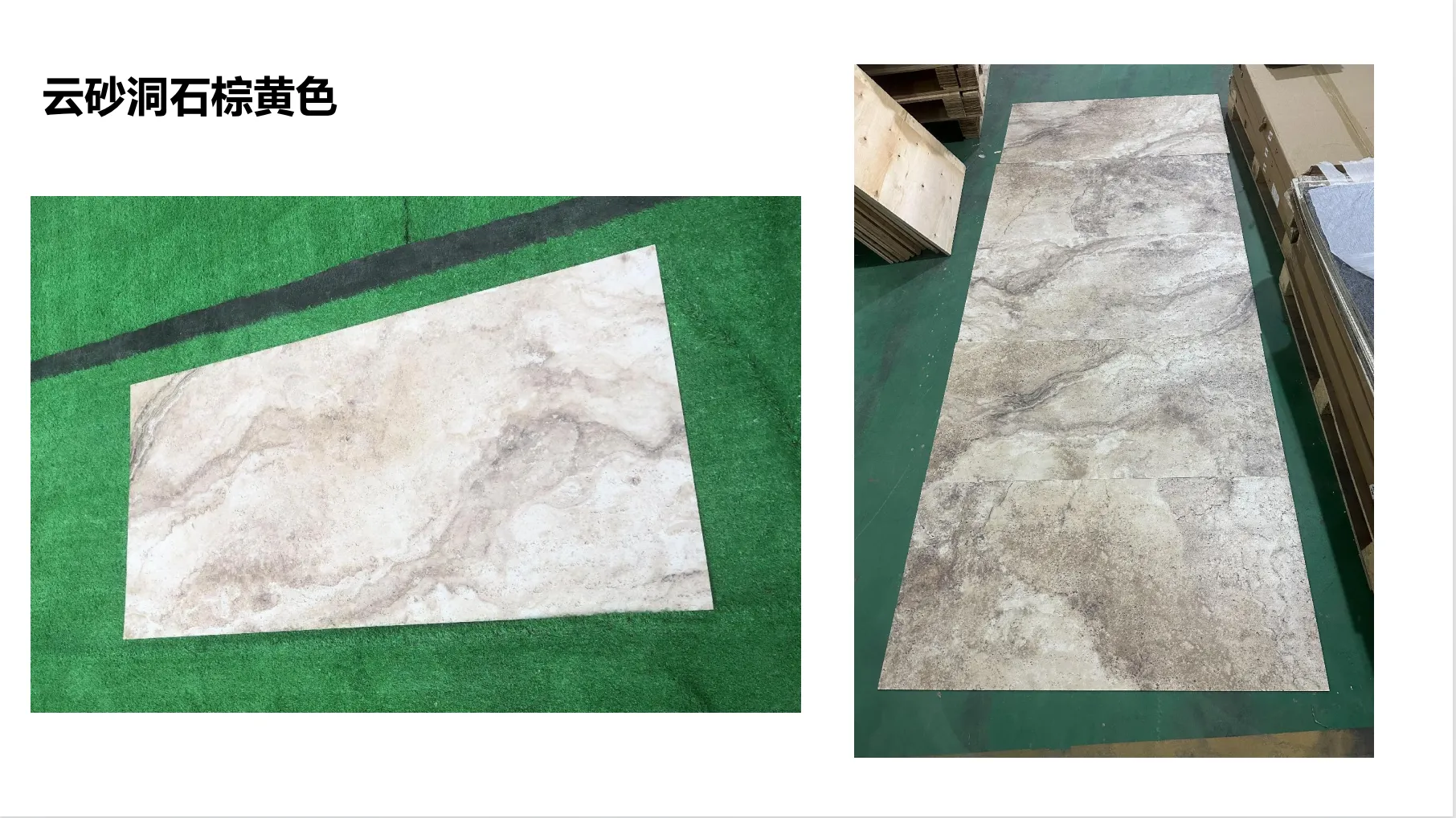
In the high-stakes world of fast-track construction, every decision carries weight—literally and figuratively. When deadlines loom, budgets tighten, and clients demand both speed and quality, choosing the right cladding material can make or break a project. Two options often rise to the top: the innovative MCM Project Board Series and the timeless Dolomitic Travertine (dark grey) . Both bring unique strengths to the table, but when time is your most precious commodity, which one pulls ahead? Let's dive in.
Fast-track construction isn't just about working faster—it's about working smarter. With compressed timelines, delays cascade: a day lost on cladding installation can push back electrical work, which delays finishing, and suddenly, that "two-month" project stretches to three. Material selection becomes a strategic decision, impacting labor costs, logistics, and even structural planning. Enter our two contenders: MCM Project Boards, a modern composite solution, and Dolomitic Travertine, a classic natural stone. Let's break down how each performs when the clock is ticking.
First, let's get to know MCM. Short for Modified Composite Material, MCM is a game-changer in the construction world. The MCM Project Board Series takes this technology a step further, blending natural stone aesthetics with engineered efficiency. Think of it as stone's lightweight, low-maintenance cousin—designed for projects where time and practicality can't be compromised.
One of MCM's biggest advantages? Weight. Traditional stone cladding can weigh 30-50 kg per square meter, but lightweight flexible stone sheets (a core component of MCM systems) tip the scales at just 4-6 kg/m². That's a fraction of the heft, and it translates to major logistical wins. No need for heavy-duty cranes or reinforced structural supports—these panels can be carried by two workers, maneuvered into tight spaces, and installed with minimal equipment. On a recent mid-rise office project in Dubai, the team reported cutting material transport time by 60% simply because they could fit 10x more MCM panels per truck compared to natural stone.
Flexibility is another feather in MCM's cap. Flexible stone cladding panels bend slightly, conforming to curved surfaces or uneven walls without cracking. This adaptability eliminates the need for custom cutting on-site—a common time-drain with rigid materials. Imagine cladding a rounded lobby wall: with MCM, it's a matter of snapping panels into place. With natural stone? Days of measuring, cutting, and potentially ruining expensive slabs if the curve isn't perfect.
MCM panels are prefabricated in controlled factory settings, meaning every piece is consistent in size, color, and finish. No more sorting through batches of stone to match veining or shade—what you see in the sample is exactly what arrives on-site. This uniformity cuts down on installation time dramatically. Most MCM systems use a simple interlocking or adhesive-backed design, allowing a small crew to cover large areas quickly. On a retail mall renovation in Singapore, a team of 4 installers clad 200 m² of exterior wall in just 3 days using MCM Project Boards. With traditional stone, the same area would have taken 10+ days and twice the labor.
And because there's no wet cutting or on-site fabrication, cleanup is a breeze. No clouds of stone dust, no piles of discarded offcuts—just a clean worksite and faster transition to the next phase. For fast-track projects, where every hour counts, this efficiency is gold.
Now, let's turn to Dolomitic Travertine, a natural stone prized for its rich, earthy tones and organic texture. Dolomitic Travertine (dark grey) , in particular, is a favorite for high-end projects, offering a sleek, sophisticated look that engineered materials still struggle to replicate perfectly. But beauty, as they say, can be time-consuming.
Dolomitic Travertine is dense—typically 25-30 kg/m². That weight isn't just a numbers game; it impacts every step of the process. From quarry to site, transporting these slabs requires specialized trucks and equipment. Once on-site, you'll need cranes to hoist them to upper floors, and structural engineers to ensure walls can bear the load. On a luxury hotel project in Milan, the team had to delay cladding work by a week because the crane scheduled to lift travertine slabs broke down—costing them $50,000 in lost labor and extended rental fees.
Rigidity is another challenge. Unlike MCM's flexible panels, travertine is unforgiving. Each slab must be cut to exact measurements on-site, often with water-cooled saws that slow down progress. And because natural stone is inherently variable, even slabs from the same quarry can have slight differences in thickness or veining. This means installers spend extra time sorting, trimming, and adjusting to ensure a seamless finish—time that adds up quickly on a tight schedule.
Installing Dolomitic Travertine isn't a job for rookies. It requires skilled masons who can handle the stone without chipping it, mix mortar to the right consistency, and align slabs with millimetric precision. These specialists are in high demand, and their time comes at a premium. On average, a team of experienced masons can install 10-15 m² of travertine per day. Compare that to MCM, where a semi-skilled crew can cover 30-40 m²/day—more than double the output.
Then there's curing time. Mortar needs hours (sometimes days) to set before grouting can begin, and grout itself takes time to cure. In fast-track construction, waiting for materials to "dry" is a luxury few can afford. MCM, by contrast, uses adhesive systems that set in minutes or mechanical fasteners that require no curing—meaning you can move from panel installation to finishing touches in the same day.
To really see how these materials stack up, let's put them side by side. Below is a breakdown of key factors that matter most in fast-track construction:
| Factor | MCM Project Board Series | Dolomitic Travertine (Dark Grey) |
|---|---|---|
| Weight (kg/m²) | 4-6 kg/m² (lightweight) | 25-30 kg/m² (heavy) |
| Installation Speed | 30-40 m²/day per crew | 10-15 m²/day per crew |
| Labor Skill Required | Semi-skilled (minimal training) | Highly skilled masons |
| Curing/Wait Time | None (adhesive/fasteners set instantly) | 24-48 hours (mortar/grout curing) |
| Waste Rate | 2-3% (prefabricated, minimal cutting) | 10-15% (on-site cutting, breakage risk) |
| Structural Requirements | Minimal (no reinforcement needed) | Reinforced walls, crane access |
Fast-track projects aren't just about finishing quickly—they're about building to last. So how do these materials hold up over time?
MCM is engineered for resilience. Its composite structure resists moisture, UV rays, and impact—critical for exterior cladding. Unlike natural stone, it doesn't absorb water (so no cracking in freezing temperatures) and doesn't fade in harsh sunlight. Maintenance? A quick power wash once a year is usually enough. On a retail center in Arizona, MCM panels installed 5 years ago still look brand-new, despite 110°F summers and monsoon rains.
Dolomitic Travertine, while durable, is porous by nature. It needs regular sealing (every 1-2 years) to prevent staining, and its surface can etch if exposed to acidic substances like rainwater or cleaning chemicals. In high-traffic areas, it may show wear faster than MCM. For example, a hotel lobby in Paris with travertine floors required resurfacing after just 3 years due to foot traffic—costing $20,000 and disrupting operations.
Let's talk numbers. MCM panels typically cost $30-50 per square meter (material only), while Dolomitic Travertine runs $80-120/m². At first glance, travertine seems pricier, but the real gap emerges when you factor in labor and logistics. MCM's installation labor costs are roughly $20-30/m², compared to $50-70/m² for travertine (thanks to skilled masons and slower installation). Add in crane rentals, structural reinforcements, and waste disposal, and travertine's total cost can be 2-3x that of MCM for the same project area.
For fast-track projects, where delays cost $1,000-5,000 per day, MCM's speed alone can offset any upfront material savings. A 10,000 m² commercial project using MCM might finish 4 weeks ahead of schedule compared to travertine—saving $140,000-$700,000 in delay penalties and extended overhead.
Let's look at a case study. In 2023, a developer in Riyadh broke ground on a 15-story office tower with a tight 10-month deadline. The original plan called for natural stone cladding, but after crunching the numbers, the team switched to the MCM Project Board Series with flexible stone cladding panels . The results? Cladding work finished in 6 weeks instead of the projected 12, freeing up the schedule for interior fit-out. The project was delivered 3 weeks early, and the developer saved over $500,000 in labor and delay costs. "We thought we'd have to compromise on aesthetics," said the project manager, "but the MCM panels look so much like natural stone that even our architects were impressed."
Does this mean Dolomitic Travertine has no place in fast-track projects? Not necessarily. For luxury builds where natural stone's unique beauty is non-negotiable—think high-end hotels, museums, or historic restorations—travertine may still be worth the investment. But in these cases, careful planning is key: ordering pre-cut slabs, securing extra material to account for waste, and building buffer time into the schedule for delays.
In the race to meet fast-track deadlines, the MCM Project Board Series emerges as the clear winner. Its lightweight design, quick installation, low maintenance, and cost efficiency make it a practical choice for projects where time is critical. Lightweight flexible stone sheets and flexible stone cladding panels eliminate the logistical headaches of traditional stone, while still delivering the aesthetic appeal clients crave.
Dolomitic Travertine (dark grey) remains a stunning option for projects with flexible timelines and a focus on natural luxury. But for most fast-track builds—where every day, dollar, and labor hour counts—MCM isn't just a material choice; it's a strategic advantage. After all, in construction, the fastest way to the finish line is often the smartest.
*Note: All case studies and statistics are based on industry averages and real-world project data compiled from construction management reports (2022-2024).
Recommend Products












