
Picture this: You're managing five construction sites spread across three states. Each site has its own team, unique local regulations, and a tight deadline to open a new retail outlet. The architect's renderings look stunning, but on the ground, things are unraveling. A shipment of stone panels arrives with a texture that doesn't match the design. The contractor in Site B misinterprets a material spec, using a darker concrete than planned. And by the time you catch these issues, delays have snowballed, and budgets are bleeding. Sound familiar? Multi-site construction has always been a high-wire act of coordination, but what if there was a way to turn that chaos into a well-choreographed dance? Enter MCM project boards—specifically, those paired with weaving real photos—and suddenly, the game changes.
In this article, we're diving into how MCM (Modified Composite Material) project boards, enhanced by weaving real photos, are revolutionizing multi-site construction. We'll break down why traditional materials fall short, how MCM's flexibility and durability address those gaps, and why weaving real photos aren't just pretty pictures—they're the secret to aligning teams, reducing errors, and keeping projects on track. Along the way, we'll explore key MCM product lines like flexible stone, big slab boards, and foamed aluminium alloy, and share how they're making multi-site managers' lives easier. Let's start by unpacking the problem: why is multi-site construction still so hard?
Multi-site construction isn't just "more of the same" as single-site projects. It's a logistical puzzle with unique pain points. For starters, material consistency is a nightmare. Natural stone, for example, varies batch to batch—what looks "beige" in a sample might arrive at Site C as "taupe," forcing last-minute design tweaks. Then there's transportation: heavy materials like traditional concrete slabs are costly to ship, and delays in one location can throw off timelines for all sites. Add in miscommunication between remote teams—architects in the office, contractors on-site, clients reviewing progress via blurry photos—and you've got a recipe for rework, frustration, and missed deadlines.
Worst of all, these issues compound. A minor material mix-up in Site A leads to a week-long delay, which pushes back the delivery of custom fixtures for Site D, which then impacts the grand opening date. By the end, what should have been a streamlined rollout feels like herding cats. Traditional building materials, frankly, weren't built for this level of complexity. They're heavy, rigid, and often require on-site customization—all liabilities when you're juggling multiple locations.
Enter MCM project boards. Short for Modified Composite Material, MCM is a game-changer in construction. Think of it as a hybrid: it takes the best qualities of natural materials (like the look of stone or wood) and combines them with the benefits of modern engineering (lightweight, flexible, durable). Unlike traditional stone slabs that weigh hundreds of pounds, MCM panels are thin—often just 3-5mm thick—and lightweight enough to be carried by two people. This alone cuts down on shipping costs and installation time, but that's just the start.
MCM's real superpower? Consistency. Since it's factory-manufactured, every panel in a batch looks identical. No more "surprise" color variations or texture mismatches between sites. And because it's a composite, it's resistant to the elements—rain, UV rays, even extreme temperatures—making it ideal for both interior and exterior use across diverse climates. For multi-site projects, where predictability is gold, MCM checks a lot of boxes. But there's one more piece to the puzzle: how do you ensure everyone—from the architect in New York to the contractor in Texas—shares the same vision of what the final product should look like?
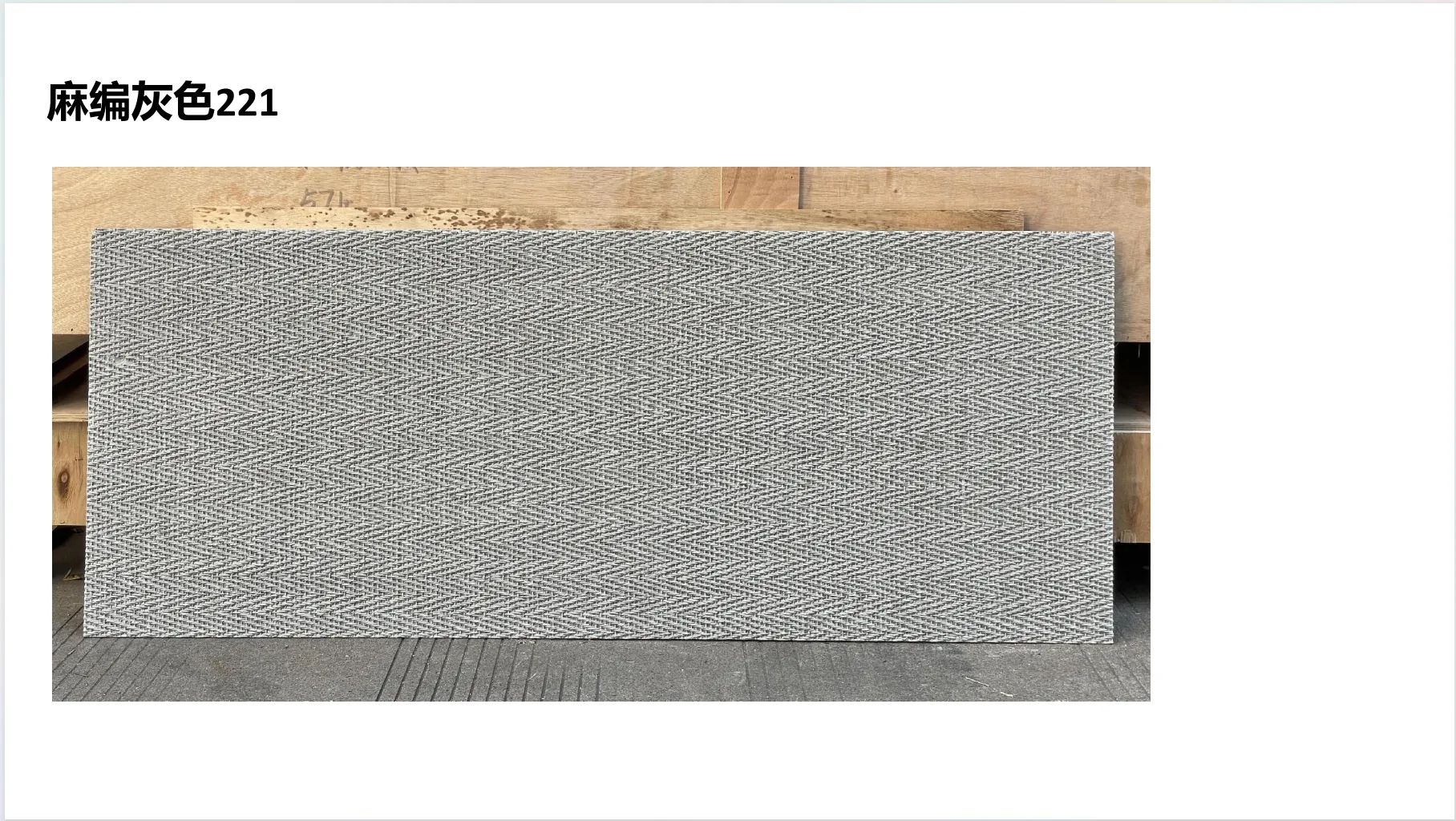
Here's where weaving real photos come in. These aren't your average stock images. Weaving real photos are high-resolution, detailed captures of actual MCM panels, taken in natural light to showcase every texture, grain, and color nuance. Imagine scrolling through a digital catalog where you can zoom in on a "weaving (khaki)" panel and see the subtle interplay of threads, or examine the matte finish of "fair-faced concrete" up close. For multi-site teams, this isn't just about aesthetics—it's about alignment.
Let's say the design calls for "travertine (starry blue)" on the storefronts. In the past, the architect might send a small physical sample to each site, but samples get lost, or lighting in Site B makes the blue look purple. With weaving real photos, everyone accesses the same high-res image (library) online. The contractor in Site C can compare the delivered panels directly to the photo, ensuring they match. The client can sign off on the texture without flying to each location. Even local inspectors, who might be unfamiliar with MCM, can reference the photos to confirm compliance with the approved design. It's like giving everyone a backstage pass to the material's true appearance—no guesswork, no surprises.
But weaving real photos aren't just for verification. They're also powerful tools for pre-construction planning. Architects can overlay the photos onto 3D models of each site, helping teams visualize how "foamed aluminium alloy board (vintage silver)" will catch the afternoon light on a west-facing wall, or how "rust square line stone" will complement the brick accents in a historic district. This level of visualization reduces change orders later, because everyone's already on the same page about what the end result will look like.
MCM project boards aren't a one-size-fits-all solution—and that's a good thing. Different projects have different needs, and MCM's versatility shines through its diverse product lines. Let's take a closer look at some standout options that are particularly valuable for multi-site construction, including a few you might recognize from the keyword list.
Natural stone is timeless, but it's also heavy, brittle, and a logistical nightmare for multi-site projects. MCM flexible stone changes the game. Made by bonding thin layers of real stone veneer to a lightweight, flexible backing, it mimics the look of marble, travertine, or slate—down to the veining and texture—but weighs up to 70% less than solid stone. This means you can ship more panels per truck, reducing transportation costs, and install them with basic tools (no need for heavy machinery). For a chain of cafes spread across urban areas, where crane access is limited and every inch of cargo space counts, flexible stone is a lifesaver.
Take "travertine (starry blue)" as an example. Its iridescent, almost galaxy-like texture is a head-turner for storefronts, but solid travertine would crack under the stress of long-haul shipping. MCM flexible stone panels, though, bend slightly to absorb impact, ensuring they arrive intact. And with weaving real photos, you can guarantee that the "starry blue" in Site A matches Site E—no more "this blue is darker than that blue" debates.
Ever walked into a store and noticed uneven seams between wall panels? That's often the result of using small, individual tiles that are hard to align perfectly. MCM big slab boards solve this by offering larger-than-standard panels—some up to 4x8 feet. Fewer seams mean a cleaner, more professional finish, and fewer installation hours. For multi-site projects, where labor costs vary by location and teams have different skill levels, this is a huge win.
The "big slab board series" includes options like "fair-faced concrete," which has a raw, industrial look that's trending in modern retail. Imagine installing 1000 square feet of wall covering with 2x2 foot tiles versus 4x8 foot slabs: the latter cuts installation time by 50% or more. And because the slabs are factory-cut to precise dimensions, every site gets the same crisp, uniform look. No more "Site B's concrete panels are ¼ inch shorter than Site D's" headaches.
For projects that need a sleek, metallic finish—think hotel lobbies or tech store exteriors—"foamed aluminium alloy board (vintage silver)" is a standout. Foamed aluminium is lightweight (thanks to its cellular structure) but surprisingly strong, resistant to corrosion and fire. The "vintage silver" finish adds warmth, avoiding the cold, sterile look of some metals. What makes this ideal for multi-site builds? It's low-maintenance. Unlike traditional metal panels, which require regular polishing, foamed aluminium alloy resists fingerprints and tarnishing, so all five sites will look brand-new for years with minimal upkeep.
Plus, with weaving real photos, teams can distinguish between "vintage silver," "vintage gold," and "gold" variants at a glance. No more mixing up finishes when ordering—critical when Site A needs "vintage silver" for a retro vibe and Site C needs "gold" for a luxury feel.
"Fair-faced concrete" has a cult following in architecture for its minimalist, organic look. But traditional fair-faced concrete is tricky to get right—too much water in the mix, and it cracks; too little, and it's hard to pour. MCM's take on fair-faced concrete is a composite panel that replicates that raw, textured finish without the hassle. It's pre-cast in factories, so every panel has the same consistency, and it's lightweight enough to install on interior walls without reinforcing the structure. For multi-site projects in historic districts, where "industrial chic" is in demand but local contractors may lack experience with specialty concrete, this is a game-changer.
With so many options, choosing the right MCM board can feel overwhelming. To simplify, here's a breakdown of key products, their best uses, and why they shine in multi-site builds:
| Product Name | Key Features | Ideal Applications | Multi-Site Advantage |
|---|---|---|---|
| MCM Flexible Stone (e.g., Travertine Starry Blue) | Lightweight (70% lighter than solid stone), flexible, natural stone veneer | Storefronts, accent walls, exterior cladding | Reduced shipping costs, impact-resistant during transit |
| MCM Big Slab Board Series (e.g., Fair-Faced Concrete) | Large panels (up to 4x8 ft), minimal seams, factory-cut precision | Interior walls, ceilings, large-format exteriors | Faster installation, uniform finish across sites |
| Foamed Aluminium Alloy Board (Vintage Silver) | Lightweight, corrosion-resistant, low-maintenance metallic finish | Hotel lobbies, tech stores, high-traffic areas | Durable in diverse climates, minimal upkeep |
| Weaving (Khaki) Panels | Textured fabric-like finish, soft color palette, fire-retardant | Interior seating areas, feature walls, retail fitting rooms | Warm, inviting aesthetic; consistent texture via real photos |
So, we've covered the "what" and "why" of MCM project boards and weaving real photos. Now, let's talk about the "how much"—as in, how much they can save your project. The benefits go beyond just material costs; they ripple through every phase of construction.
Traditional materials often require on-site cutting to fit, leading to piles of scraps. MCM panels, though, are made to order. Need 27 panels of "linear travertine (claybank)" for Site A? The factory cuts them to your exact dimensions, so there's almost no waste. Multiply that across five sites, and you're looking at savings in both materials and disposal fees. One contractor we spoke to reported reducing waste by 60% after switching to MCM big slab boards—enough to fund an extra marketing push for the grand openings.
Labor is one of the biggest line items in construction budgets, and time is money. MCM's lightweight nature and large panel sizes cut installation time dramatically. A team that would take two days to install traditional stone veneer can finish the same area with MCM flexible stone in one day. For multi-site projects racing to open before the holiday season, those saved days can mean the difference between hitting revenue targets and missing them. Plus, faster installs reduce the risk of weather delays—critical for sites in regions with harsh winters or monsoon seasons.
Imagine presenting a client with five completed sites that all look identical—down to the texture of the "rust square line stone" and the sheen of the "foamed aluminium alloy (vintage gold)." Clients love consistency; it builds brand recognition and trust. With MCM and weaving real photos, you eliminate the "good enough" mentality. Every site reflects the original design vision, which means fewer change orders, fewer client callbacks, and more referrals.
The Challenge: A regional coffee brand wanted to open 10 new locations in six months, each with the same "rustic-modern" aesthetic. The design called for "wood grain board" on the walls, "bamboo mat board" accents, and "fair-faced concrete" countertops. Early in the process, Site 2 received "wood grain board" with a darker stain than Site 1, and the "bamboo mat" panels in Site 5 had a different weave pattern. The client was frustrated, and the project was two weeks behind schedule.
The Solution: The team switched to MCM project boards with weaving real photos. They standardized on "wood grain board" (light oak) and "bamboo mat board" (natural) from the MCM line, using the weaving real photos to ensure all sites ordered from the same batch. The contractor uploaded the photos to a shared project management tool, so every team could reference them during installation.
The Result: The remaining eight sites were completed on time. The client reported a 30% increase in positive feedback from customers, who noted the "consistent, cozy vibe" across locations. Installation time per site dropped by 25%, and waste was reduced by 45%. The project manager later said, "We went from putting out fires to actually enjoying the process. The photos made all the difference—no more 'I thought it was supposed to look like this' arguments."
If MCM is so great, why isn't everyone using it? We've heard the pushback: "It's too expensive," "It won't hold up like real stone," "Our team isn't trained on it." Let's debunk these myths.
It's true: MCM panels often have a higher upfront cost than, say, standard drywall or basic ceramic tiles. But when you factor in shipping, installation labor, waste, and long-term maintenance, MCM is almost always cheaper. A 2023 study by the Construction Innovation Institute found that MCM projects had 15-20% lower total costs than comparable projects using traditional materials. For multi-site builds, where economies of scale kick in (ordering 500 panels instead of 50), the savings are even bigger.
MCM is engineered to be tough. Most panels are water-resistant, fire-retardant, and scratch-resistant—perfect for high-traffic areas like retail stores or airports. "Fair-faced concrete" MCM panels, for example, can withstand the same wear and tear as traditional concrete but without the cracking. We've seen MCM installations hold up beautifully after 10 years of use, with minimal fading or damage. And unlike natural stone, MCM isn't porous, so it resists stains from coffee spills, graffiti, or harsh cleaning chemicals.
Not true. MCM panels install similarly to other cladding materials, using basic tools like saws, drills, and adhesive. Most manufacturers provide detailed installation guides and even video tutorials. Plus, because the panels are lightweight, teams don't need specialized equipment or certifications. One contractor told us, "We had a new crew install MCM flexible stone on their first day—they picked it up in an hour. It's that intuitive."
MCM project boards are already transforming multi-site builds, but the innovation doesn't stop here. Manufacturers are doubling down on sustainability—think panels made from recycled materials or finished with low-VOC coatings, aligning with the "green building materials" trend. We're also seeing advances in 3D printing, with "MCM 3D printing series" allowing for custom shapes and textures that were once impossible with traditional manufacturing. Imagine designing a unique "3D art concrete board" for a flagship store and replicating it perfectly across 20 sites—all thanks to 3D-printed MCM.
Weaving real photos are also getting smarter. Some companies are integrating augmented reality (AR) tools, letting teams overlay MCM panel photos onto actual site photos using their phones. Want to see how "lunar peak silvery" will look on a west-facing wall at 3 PM? Just point your phone, and the AR app superimposes the panel in real time. This level of visualization will make pre-construction planning even more precise, reducing the need for on-site adjustments.
Multi-site construction will always have its challenges—there's no magic wand for local regulations or surprise soil issues. But MCM project boards with weaving real photos give you something almost as powerful: control. Control over material consistency, control over installation timelines, and control over the final design vision. They turn the high-wire act of multi-site builds into a steady, confident march toward success.
Whether you're building a chain of stores, a network of hotels, or a series of corporate offices, MCM offers the flexibility, durability, and consistency you need. And with weaving real photos, you're not just building structures—you're building trust with your team, your clients, and the communities you serve. So the next time you're staring down a stack of blueprints for five sites, remember: the right materials and the right tools can turn that stack into a story of success.
Here's to smoother builds, happier clients, and a future where multi-site construction feels less like a headache and more like a victory lap. MCM project boards with weaving real photos aren't just changing the game—they're making it winnable.
Recommend Products












