
How modern composite materials are redefining durability, design, and efficiency in big builds
Let's start with a scenario most construction managers know all too well: You're six months into building a sprawling mixed-use development—think retail spaces, offices, and a rooftop garden—and the facade materials have become a logistical nightmare. The original plan called for natural travertine slabs to give the exterior a timeless, earthy feel, but each slab weighs 80 kilograms. Lifting them to the 12th floor with a crane? That's adding hours to the schedule. Cutting them to fit the building's curved corners? Wasting material and money. And don't even get started on the moisture damage risk once they're installed—travertine is porous, and this project is in a coastal city with high humidity. Sound familiar?
For decades, large-scale construction has been stuck in this tug-of-war: balancing aesthetics, durability, and practicality. Traditional materials like natural stone, concrete, and metal offer beauty or strength, but rarely both—at least not without trade-offs in weight, cost, or installation time. But what if there was a way to have it all? Enter the MCM Project Series and materials like dolomitic travertine (dark grey) —innovations that are quietly revolutionizing how we build big.
MCM, or Modified Composite Material, isn't new, but its application in large-scale projects has exploded in the last five years. Here's the quick breakdown: MCM is a hybrid material, blending natural minerals (like stone powder or clay) with high-performance polymers to create something that looks and feels like natural stone or concrete—without the bulk. Think of it as the construction world's answer to "having your cake and eating it too."
The MCM Project Series takes this a step further, offering a lineup of materials tailored specifically for big builds. Whether you need ultra-lightweight facades, flexible panels that bend around architectural curves, or large-format slabs that minimize seams, there's a product in the series designed to solve a specific problem. Let's dive into two standouts that are changing the game: MCM flexible stone and MCM big slab board series .
Traditional stone is rigid—great for load-bearing walls, terrible for anything with a curve. MCM flexible stone flips that script. At just 3-5mm thick, these panels weigh a fraction of natural stone (we're talking 8-12kg per square meter, compared to 40-60kg for traditional slabs) but can bend up to 30 degrees without cracking. That means architects can finally design buildings with sweeping, organic facades without worrying about material limitations.
Take, for example, the recently completed Riverfront Arts Center in Lisbon. The design called for a facade that mimicked the flow of the Tagus River, with gentle waves and undulating curves. Using traditional stone would have required custom-cutting each piece at exorbitant cost, but MCM flexible stone panels were simply rolled into place, conforming to the building's shape like a second skin. The result? A building that looks like it's "moving" with the river, installed in half the time of a traditional stone facade.
If flexible stone is for curves, the MCM big slab board series is for making a bold, seamless statement. These panels come in sizes up to 1200x2400mm—nearly twice the size of standard natural stone slabs. Fewer panels mean fewer seams, which is a big win for aesthetics (no more unsightly grout lines breaking up your design) and installation speed (fewer cuts, fewer pieces to align).
A recent office tower in Singapore used the big slab series for its lobby walls, choosing a sleek, monochromatic look. The installers were able to cover a 500-square-meter wall in just three days—a job that would have taken a week with smaller, traditional tiles. And because the panels are so large, the lobby feels more open and cohesive, making a strong first impression on visitors.
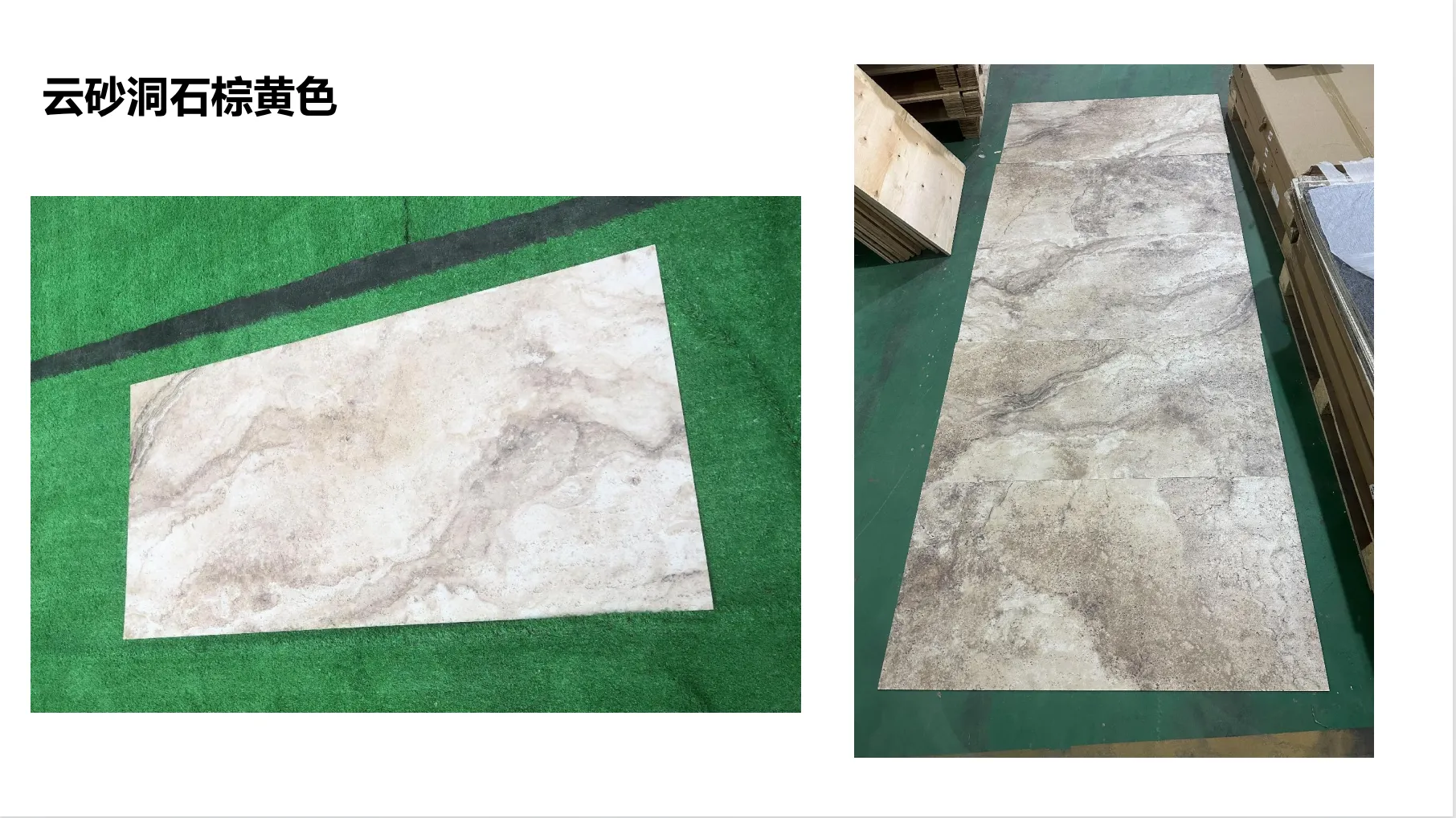
Now, let's talk about the star of the show for many designers: dolomitic travertine (dark grey) . Travertine has been a go-to for luxury builds for centuries—think the Colosseum's iconic stone arches—but traditional travertine is porous, heavy, and prone to staining. Dolomitic travertine, part of the MCM Project Series, fixes all that by blending the classic travertine texture with MCM's durability.
The dark grey variant is particularly popular for modern builds. Its deep, moody tone adds sophistication without feeling somber, and the subtle veining (a hallmark of natural travertine) gives walls and floors a sense of movement. But here's the kicker: unlike natural dark grey travertine, which can cost upwards of $150 per square meter, MCM dolomitic travertine (dark grey) comes in at around $60-$80 per square meter—without sacrificing quality.
Take the renovation of the historic Central Station in Vienna. The architects wanted to preserve the building's 19th-century grandeur while updating its interior for modern use. They chose dolomitic travertine (dark grey) for the ticket hall floors, pairing it with brass accents and warm lighting. The result? A space that feels both timeless and contemporary, with floors that can withstand the daily foot traffic of 100,000 commuters without showing wear.
| Material | Weight (kg/m²) | Installation Time (per 100m²) | Cost (USD/m²) | Durability (Scratch/Stain Resistance) |
|---|---|---|---|---|
| Natural Dark Grey Travertine | 45-55 | 3-4 days | $120-$180 | Low (prone to stains) |
| MCM Dolomitic Travertine (Dark Grey) | 10-12 | 1-2 days | $60-$80 | High (resistant to scratches/stains) |
| Traditional Concrete Panels | 60-70 | 2-3 days | $40-$60 | Medium (prone to cracking) |
| MCM Flexible Stone | 8-10 | 1 day | $50-$70 | High (flexible, impact-resistant) |
One of the best things about the MCM Project Series is how well it plays with others. Pairing MCM materials with tried-and-true options like fair-faced concrete or foamed aluminium alloy board (vintage silver) creates hybrid solutions that leverage the strengths of each material—resulting in builds that are more durable, more efficient, and more visually striking.
Fair-faced concrete (also called "architectural concrete") is loved for its raw, industrial look, but it's heavy and can be difficult to work with for intricate designs. By combining it with MCM big slab boards, you get the best of both worlds: the solidity of concrete with the design flexibility of MCM.
The new Tech Hub in Berlin is a perfect example. The building's lower floors use fair-faced concrete for structural support, while the upper floors feature MCM big slabs in a light grey finish that mimics concrete's texture. The MCM panels add depth to the facade without adding weight, and the contrast between the rough concrete and smooth MCM creates a dynamic, modern look that's become a landmark in the city's tech district.
Foamed aluminium alloy boards are lightweight, corrosion-resistant, and have a sleek, metallic finish—ideal for adding a touch of modernity. When paired with the earthy texture of dolomitic travertine (dark grey), the result is a design that feels both grounded and forward-thinking.
The Coastal Museum in Sydney used this combo for its exterior. The lower half of the building features dolomitic travertine (dark grey) panels, evoking the rugged Australian coastline, while the upper half uses foamed aluminium alloy board (vintage silver) to represent the ocean's reflection of the sky. The vintage silver finish adds warmth to the metal, preventing it from feeling cold, and the contrast in textures makes the building stand out against the surrounding landscape.
At the end of the day, large-scale construction is about balancing three things: time, money, and vision. MCM Project Series materials like flexible stone, big slab boards, and dolomitic travertine (dark grey) don't just check one box—they check all three. Here's how:
Large-scale construction will always have its challenges, but materials like the MCM Project Series and dolomitic travertine (dark grey) are turning those challenges into opportunities. They're proving that you don't have to choose between beauty and practicality, tradition and innovation, or speed and sustainability. Instead, you can have a building that's as functional as it is stunning, as durable as it is design-forward.
So, the next time you're staring at a design that seems "too ambitious" for traditional materials, remember: MCM and hybrid solutions are here to make the impossible possible. After all, the best buildings aren't just built—they're crafted , and with the right materials, crafting something extraordinary has never been easier.
Recommend Products












