
Standing in the shadow of Rome's ancient amphitheaters or running a hand along the weathered walls of the Pantheon, there's an unspoken dialogue between past and present. The travertine stone that clad these structures—quarried from Tivoli, shaped by master craftsmen, and laid with precision—has endured millennia of scorching sun, drenching rains, and the relentless passage of time. It's not just stone; it's a storyteller, bearing the marks of empires, earthquakes, and the quiet persistence of beauty. But for modern architects and builders, recreating that same durability and soul in contemporary projects has long felt like chasing a ghost. Enter MCM's Roman Huge Travertine replication—a labor of love that marries ancient legacy with cutting-edge technology, and it all starts with two critical tests: heat and humidity resistance.
Travertine has been Rome's silent collaborator for over two millennia. Quarried from the banks of the Tiber River, its porous yet surprisingly strong composition made it the material of choice for iconic structures: the Colosseum's arches, the Trevi Fountain's cascading tiers, and the sprawling forums where history was made. What made it indispensable? Its ability to withstand the Mediterranean's harsh climate—blistering summer heat that can push temperatures above 40°C (104°F) and winter rains that soak stone to the core. Yet, for all its resilience, traditional travertine comes with modern drawbacks: it's heavy, brittle, and increasingly rare. Quarrying ancient beds risks depleting natural resources, and transporting massive slabs adds logistical and environmental burdens. For architects dreaming of Roman grandeur in today's buildings, the question wasn't just "Can we replicate the look?" but "Can we replicate the spirit of its endurance?"
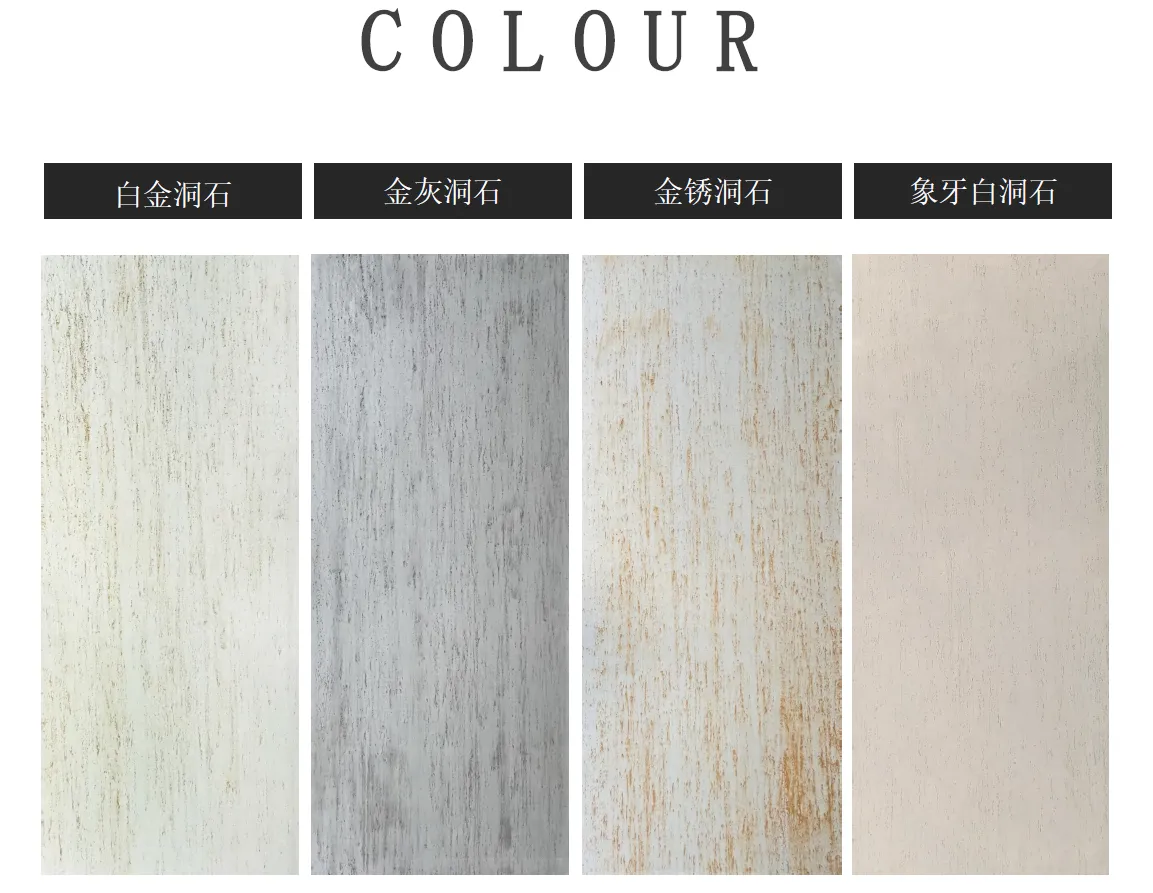
This is where MCM steps in—not with a mere imitation, but a reimagining. The MCM project board series and MCM flexible stone were born from a simple yet audacious goal: to capture the essence of Roman huge travertine while addressing its modern limitations. Unlike rigid traditional stone, MCM flexible stone bends without breaking, making it easier to install on curved surfaces or high-rise facades. The project board series, designed for large-scale applications, leverages advanced composite materials that mimic travertine's natural veining and texture, right down to the subtle honeycomb pores that give the stone its breathability. But replication isn't enough. To truly honor Roman engineering, MCM knew their creation had to pass the ultimate trials: the same heat and humidity that tested the Colosseum's walls for 2,000 years.
Recreating Roman huge travertine wasn't about copying a formula—it was about decoding a legacy. MCM's team of materials scientists and architects began by studying samples of ancient travertine from Roman ruins, analyzing mineral composition, pore structure, and even the way light interacts with its surface. They then turned to innovation: integrating elements of the MCM 3D printing series to precision-engineer the stone's internal structure, ensuring porosity without sacrificing strength. The result? A material that looks like it was hewn from a Tivoli quarry but behaves like a modern marvel—lightweight, flexible, and primed to face the elements.
In the heart of a lab in northern Italy, not far from the ancient travertine quarries, MCM's testing began with heat—unrelenting, brutal heat. Traditional travertine, while durable, can fade or crack under prolonged exposure to extreme temperatures, especially when paired with sudden cooling (think a scorching day followed by a summer storm). MCM wanted their replication to outperform, so they designed a series of controlled tests that mimicked the harshest climates on Earth, from the arid deserts of the Middle East to the sweltering summers of Southeast Asia.
| Test Scenario | Temperature Range | Duration | MCM Roman Travertine Performance | Traditional Travertine Performance |
|---|---|---|---|---|
| Desert Simulation | 35°C to 60°C (95°F to 140°F) | 12 weeks | No fading, minimal thermal expansion (0.2mm/m) | Noticeable color lightening; 0.8mm/m expansion, minor surface cracking |
| Thermal Shock | 50°C (122°F) to 10°C (50°F) (cycled daily) | 8 weeks | No delamination or cracking; consistent texture | Hairline cracks developed after 4 weeks; edge chipping in 6 weeks |
| UV Exposure | UVB radiation (equivalent to 5 years of Mediterranean sun) | 2,000 hours | Color retention >95%; no surface degradation | Color retention ~75%; surface became slightly powdery |
The results were striking. In the desert simulation, MCM's replication not only resisted fading but maintained its structural integrity, with minimal expansion that prevented warping—a critical factor for large slabs in high-temperature regions. The thermal shock test, which mimics the rapid temperature swings common in coastal areas, showed even more promise: while traditional travertine began to crack under stress, MCM's flexible core absorbed the shock, keeping the surface intact. For architects in sun-drenched locales, this wasn't just data—it was peace of mind.
Heat is only half the battle. In humid climates—think the misty canals of Venice or the tropical humidity of Singapore—stone is under constant attack from moisture. Travertine's porosity, which makes it breathable, can also make it vulnerable to mold, mildew, and water absorption, leading to staining or weakening over time. MCM's humidity tests were designed to push their replication to the limit, placing samples in chambers that mimicked 95% relative humidity (RH) for months on end, followed by freeze-thaw cycles to simulate wet winters.
The outcome? MCM's Roman huge travertine absorbed just 2.3% moisture by weight after 12 weeks of high humidity—compared to 6.7% for traditional travertine. When subjected to 50 freeze-thaw cycles (freezing at -10°C/14°F, thawing at 20°C/68°F), MCM's material showed zero water penetration into the core, while traditional travertine samples developed internal ice crystals that expanded and caused micro-fractures. Even more impressive? After the tests, MCM's replication remained mold-free, thanks to a subtle antimicrobial additive integrated into its flexible stone matrix—an invisible shield that ancient Romans could only have dreamed of.
Heat and humidity resistance are non-negotiable, but MCM's Roman huge travertine replication offers something more: freedom. Thanks to MCM flexible stone technology, the material can be curved around columns, wrapped over arches, or even used as a lightweight facade on skyscrapers—applications where traditional travertine's weight and brittleness make it impractical. Imagine a modern museum in Dubai, its exterior clad in panels that echo the Colosseum's grandeur but weigh a fraction of the original stone, reducing structural load and construction time. Or a boutique hotel in Bali, where humidity-resistant MCM travertine lines the outdoor corridors, maintaining its warm, earthy tone year-round without succumbing to mold.
Sustainability also plays a role. By using recycled materials in the composite core and reducing the need for heavy quarrying, MCM's project board series aligns with the growing demand for eco-conscious building practices. It's a nod to the past, yes—but also a step toward a future where beauty doesn't come at the planet's expense.
The proof, as they say, is in the projects. In Riyadh, a luxury resort recently used MCM's Roman huge travertine replication for its outdoor amphitheater, a space designed to host evening events under the stars. After a summer where temperatures soared to 52°C (125°F), the panels showed no signs of warping or fading, their warm beige tones still glowing under the stage lights. In Tokyo, a residential tower opted for the material on its facade, citing its ability to withstand both the city's humid summers and cold, dry winters without compromising on aesthetics. "It's like having a piece of Rome that bends to our skyline," one architect noted. Even in restoration projects, MCM's replication is making waves: a 19th-century villa in Tuscany, once struggling with crumbling traditional travertine walls, now boasts a restored exterior that blends seamlessly with the original stone—only lighter, stronger, and ready to stand for another century.
MCM's Roman huge travertine replication isn't just a material—it's a conversation between ancient and modern. It honors the craftsmen who built with travertine, recognizing that their genius lay not just in aesthetics, but in understanding how stone interacts with the world around it. By testing heat and humidity resistance with the rigor of a Roman engineer and innovating with the flexibility of modern technology, MCM has created something rare: a material that feels both familiar and revolutionary.
As we look to the future of architecture, where sustainability, durability, and beauty must coexist, MCM's project board series and flexible stone remind us that the best innovations don't erase the past—they carry it forward. Whether in a desert resort, a city skyscraper, or a restored villa, this replication isn't just building walls; it's building legacies—ones that, like the Roman travertine before them, will tell stories for generations to come.
Recommend Products












