
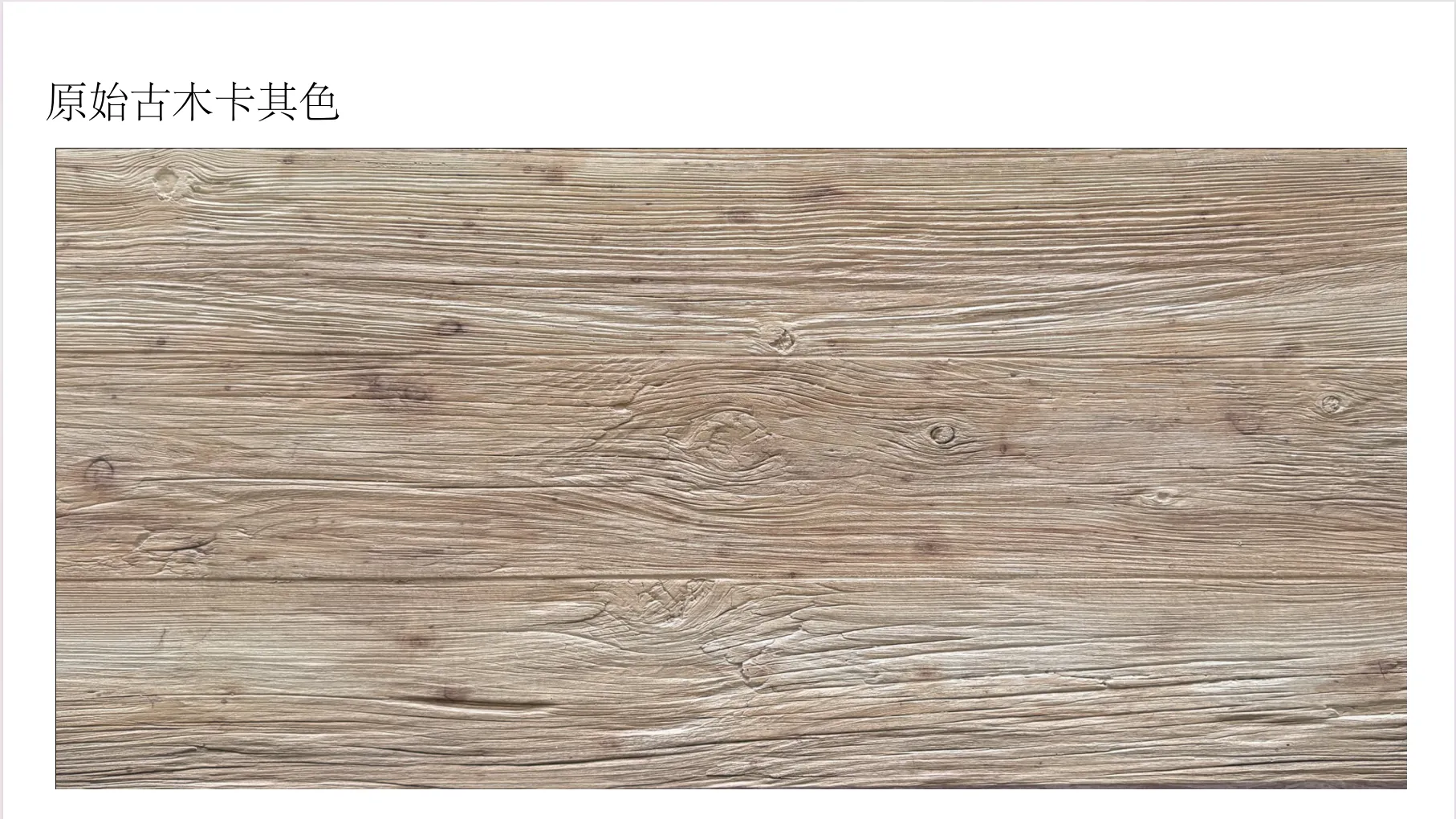
Walk into any modern home design studio, and you'll likely hear a familiar debate: "Should we use reclaimed ancient wood for that accent wall, or go with MCM panels?" It's a question that cuts to the heart of a bigger conversation—how do we build spaces that honor nature while protecting it? Natural ancient wood, with its rich grains and centuries of history, feels like a nod to the past. But MCM (Modified Composite Material), with its sleek versatility and promise of sustainability, is increasingly seen as the future. Today, we're diving deep into the environmental impact of both, weighing their pros and cons not just as materials, but as choices that shape our planet's health.
There's a reason ancient wood—think reclaimed oak beams from 18th-century barns or teak planks salvaged from sunken ships—captures our imagination. It's more than a building material; it's a storyteller. Each knot, crack, and weathered mark tells a tale of time, making spaces feel rooted and alive. For designers and homeowners alike, choosing ancient wood often feels like a responsible choice, too: "If it's already been cut, isn't reusing it better than letting it go to waste?" On the surface, that logic holds. Reclaimed ancient wood does divert material from landfills and avoids the need to harvest new trees, which sounds eco-friendly. But dig deeper, and the picture gets more complicated.
First, let's talk sourcing. While "ancient wood" sometimes refers to reclaimed timber, it can also include wood from old-growth forests—trees that have stood for centuries, providing critical habitats for wildlife, storing carbon, and stabilizing ecosystems. Harvesting these trees, even legally, disrupts delicate balances. Old-growth forests take centuries to regrow, and once cleared, they rarely return to their original biodiversity. Even reclaimed wood isn't always guilt-free: transporting massive beams or planks across continents (say, from a European barn to a home in California) racks up a significant carbon footprint. Then there's processing: unless the wood is locally sourced, it may require chemical treatments to remove pests, which can leach into soil or water, or intensive sanding and refinishing that generates waste and air pollution.
But perhaps the biggest challenge with ancient wood is scale. As demand for its "authenticity" grows, so does pressure to find more sources. In some regions, this has led to illegal logging, where protected forests are quietly stripped of their oldest trees, or to the dismantling of historic structures (like old barns or temples) that hold cultural value. What starts as a desire to "reuse" can quickly become a cycle of exploitation, driven by the belief that natural materials are inherently "better."
Enter MCM: Modified Composite Material. If ancient wood is the wise elder, MCM is the innovative upstart—blending science, technology, and sustainability to reimagine what building materials can be. You've probably seen MCM without realizing it: those sleek, textured facades on modern restaurants, the durable outdoor decking that resists rain and rot, or the lightweight panels used in high-rise cladding. MCM isn't a single material but a family of products, each designed to mimic the look and feel of natural materials (stone, wood, metal) while addressing their environmental flaws. From MCM flexible stone that bends like fabric to MCM 3D printing series that creates custom shapes with minimal waste, MCM is redefining "green building" for the 21st century.
So, what's in MCM? It varies by product, but many formulations use recycled or abundant materials. For example, foamed aluminium alloy board (vintage silver) —a popular MCM option—often incorporates recycled aluminum, reducing reliance on bauxite mining (a process that scars landscapes and generates toxic waste). MCM big slab board series , used for large-scale cladding, might blend natural minerals with polymers derived from plant-based sources or recycled plastics, cutting down on the need to quarry stone. Even the manufacturing process is evolving: MCM 3D printing series uses additive manufacturing to layer materials precisely, slashing waste compared to traditional cutting methods, where up to 30% of a stone slab might end up as scrap.
But MCM's real environmental claim to fame? Its durability. Unlike ancient wood, which requires regular sealing, painting, or replacement to fight off mold, pests, or warping, MCM is engineered to last. Imagine a MCM flexible stone facade on a coastal home: it won't fade in the sun, crack in saltwater air, or need annual power washing. That longevity matters because, environmentally speaking, the longer a material lasts, the lower its overall impact. A wood deck that needs replacement every 10 years, for example, has a higher lifecycle carbon footprint than an MCM deck that lasts 50. MCM also thrives in harsh climates, reducing the need for resource-heavy repairs or replacements—critical in a world where extreme weather events are becoming the norm.
Ancient Wood: The sourcing of ancient wood is a mixed bag. Reclaimed wood (from old buildings, ships, or furniture) avoids new deforestation, but it's limited in supply. When demand outstrips supply, suppliers may turn to old-growth forests, which are irreplaceable. These forests act as carbon sinks—one mature tree can store 48 pounds of carbon per year—and their loss releases stored carbon back into the atmosphere, worsening climate change. Even reclaimed wood often requires long-distance transportation, adding to its footprint.
MCM: MCM's sourcing depends on the specific product, but many MCM lines prioritize sustainability from the start. For example, foamed aluminium alloy board (vintage gold) uses recycled aluminum, which requires 95% less energy to produce than new aluminum. MCM flexible stone often uses waste stone dust from quarries, diverting byproducts that would otherwise pile up in landfills. Some MCM manufacturers also source local materials to reduce transportation emissions, and a few (like those using 3D printing series ) design products to use minimal raw materials, further lowering their sourcing impact.
Ancient Wood: Processing ancient wood is often seen as "low impact," but that's not always the case. If the wood is rough and needs refinishing, it may go through sanding (which releases wood dust, a respiratory irritant), staining (with chemical-laden dyes), or pressure-treating (to prevent rot, using arsenic or copper compounds that can be toxic). Even "natural" treatments, like linseed oil, require energy to produce and transport. And while small-scale, local processing might have a low carbon footprint, industrial-scale operations (like those supplying big-box home stores) often use fossil fuel-powered machinery, driving up emissions.
MCM: MCM manufacturing does require energy—no getting around that. But innovations are making it smarter. Take MCM 3D printing series : traditional manufacturing methods (like cutting stone slabs or molding metal) often waste 20-30% of materials as scrap. 3D printing, by contrast, builds products layer by layer, using only the material needed, which slashes waste. Some MCM plants also run on renewable energy (solar, wind) to power their facilities, offsetting emissions. For example, factories producing foamed aluminium alloy board (gold) have started using solar-powered furnaces to melt recycled aluminum, reducing their reliance on coal or natural gas. Even better, many MCM products are designed to be lightweight, which cuts down on transportation energy later in the supply chain—an often-overlooked but critical part of the lifecycle.
Here's where MCM starts to pull ahead. Ancient wood, for all its charm, is vulnerable. Even with regular maintenance (sealing every 1-2 years, treating for pests), it can warp in humidity, rot in rain, or become infested with termites. In coastal areas, saltwater air accelerates decay; in dry climates, wood can crack and splinter. A reclaimed wood deck, for example, might last 15-20 years with meticulous care. An MCM deck, though? Products like MCM big slab board series are engineered to resist all of that: they don't warp, rot, or attract pests, and many are UV-resistant, so they won't fade in the sun. Some MCM panels even come with warranties of 50 years or more—meaning they'll outlast most homes, reducing the need for replacement and the environmental cost that comes with it.
Consider MCM flexible stone for exterior cladding: unlike natural stone (which can crack in freeze-thaw cycles) or wood (which swells and shrinks), flexible stone bends with temperature changes, avoiding damage. Homeowners who choose it spend less time (and money) on repairs, and the material stays functional longer, which matters for sustainability—after all, the most eco-friendly material is the one you never have to replace.
Even the most durable materials eventually reach the end of their useful life. How they're disposed of matters just as much as how they're made.
Ancient Wood: The good news? Wood is biodegradable. If an ancient wood beam or plank is too damaged to reuse, it can be chipped into mulch, burned as firewood (though burning releases stored carbon), or composted. Some companies even repurpose old wood into smaller items (like coasters or picture frames), extending its life. The bad news? If it's been treated with chemicals (like pressure-treated wood), it can't be safely composted or burned, and ends up in landfills, where those chemicals may leach into soil and groundwater.
MCM: MCM's end-of-life story is still being written, but it's promising. Many MCM products are made from recyclable materials: foamed aluminium alloy board (in all its finishes—vintage silver, gold, etc.) is 100% recyclable, as aluminum can be melted down and reused indefinitely without losing quality. MCM flexible stone , which often blends natural minerals with polymers, is trickier, but some manufacturers are developing take-back programs, where old panels are ground up and used as aggregate in new MCM products. Even better, because MCM is so durable, many products can be repurposed: a worn big slab board from a facade might find new life as a garden path or a workshop table, delaying disposal altogether.
| Environmental Factor | Natural Ancient Wood | MCM (e.g., Flexible Stone, Foamed Aluminium, 3D Printed Series) |
|---|---|---|
| Sourcing Impact | High risk of deforestation (if from old-growth) or cultural disruption (if reclaimed unsustainably); limited supply. | Low reliance on virgin resources; uses recycled materials (e.g., recycled aluminum) and waste byproducts (e.g., stone dust). |
| Manufacturing Waste | Moderate to high (sanding dust, chemical runoff from treatments, scrap from cutting). | Low (3D printing reduces scrap; precise molding minimizes waste). |
| Carbon Footprint (Lifecycle) | Variable: Low if local and reclaimed, but high if transported long distances or treated with chemicals. | Moderate, but falling: Renewable energy use and lightweight design offset manufacturing emissions. |
| Lifespan | 10-30 years (with heavy maintenance); prone to decay, pests, and warping. | 30-50+ years (minimal maintenance); resistant to weather, pests, and wear. |
| End-of-Life Disposal | Biodegradable if untreated; hazardous if chemically treated. | Recyclable (aluminium-based MCM); repurposable; some take-back programs emerging. |
| Carbon Storage | High (stores carbon from growth); but releases it if burned or decomposed. | Low (no natural carbon storage), but reduces emissions via durability and recycled content. |
So, is MCM "better" than natural ancient wood? The answer isn't black and white. Ancient wood, when sourced responsibly (think locally reclaimed, untreated, and minimally transported), can be a sustainable choice—one that honors tradition and adds irreplaceable character. But for most large-scale or high-impact projects (like commercial buildings, coastal homes, or areas with strict environmental regulations), MCM offers a compelling alternative: the look and feel of natural materials, with a fraction of the environmental risk.
What matters most isn't choosing "natural" or "modern"—it's choosing intentionally . Ask questions: Where did this material come from? How was it made? How long will it last? Can it be recycled or repurposed? For MCM, that might mean seeking out brands that use 3D printing series to reduce waste or foamed aluminium alloy board made from 100% recycled metal. For ancient wood, it means verifying that it's truly reclaimed (not harvested from old-growth) and sourced locally to cut down on transportation emissions.
At the end of the day, both MCM and ancient wood have a role to play in building a sustainable future. The key is to use each where it shines brightest—ancient wood for small, meaningful touches that celebrate history, and MCM for durable, scalable solutions that protect the planet for generations to come. After all, the most eco-friendly material isn't the one that's "natural" or "new"—it's the one that, from start to finish, leaves the lightest footprint.
Recommend Products












