
Walk into any iconic building—whether it's a historic museum, a sleek modern hotel, or a cozy neighborhood café—and you'll notice something immediately: the materials tell a story. The walls, the floors, the pillars—they don't just hold up the structure; they set the mood, evoke emotion, and even influence how we move through space. For decades, natural marble has been the gold standard for that "wow" factor. Its veiny patterns, cool touch, and timeless elegance make it a favorite for grand pillars in lobbies or statement pieces in luxury homes. But in recent years, a new contender has emerged: MCM, or Modified Composite Material. Products like MCM flexible stone , Lunar Peak Silvery panels, and foamed aluminium alloy boards are redefining what's possible in building design.
But here's the thing: choosing between natural marble pillars and MCM isn't just about aesthetics. It's about practicality, budget, and long-term satisfaction. Architects, designers, and even homeowners often find themselves stuck between the allure of natural stone and the innovation of modern composites. Which one lasts longer? Which is easier on the wallet? And does that "natural" feel come with hidden costs? Let's dive in—not with dry specs and jargon, but with real-world talk about what these materials mean for your project, your budget, and the spaces you care about.
Before we get into costs and durability, let's make sure we're on the same page. Natural marble pillars are exactly what they sound like: slabs of stone quarried from the earth, cut into columns, and polished to a shine. Each one is unique—no two pillars will have the same veining or coloration, which is part of their charm. But that uniqueness comes with limitations: marble is heavy, porous, and prone to wear and tear over time.
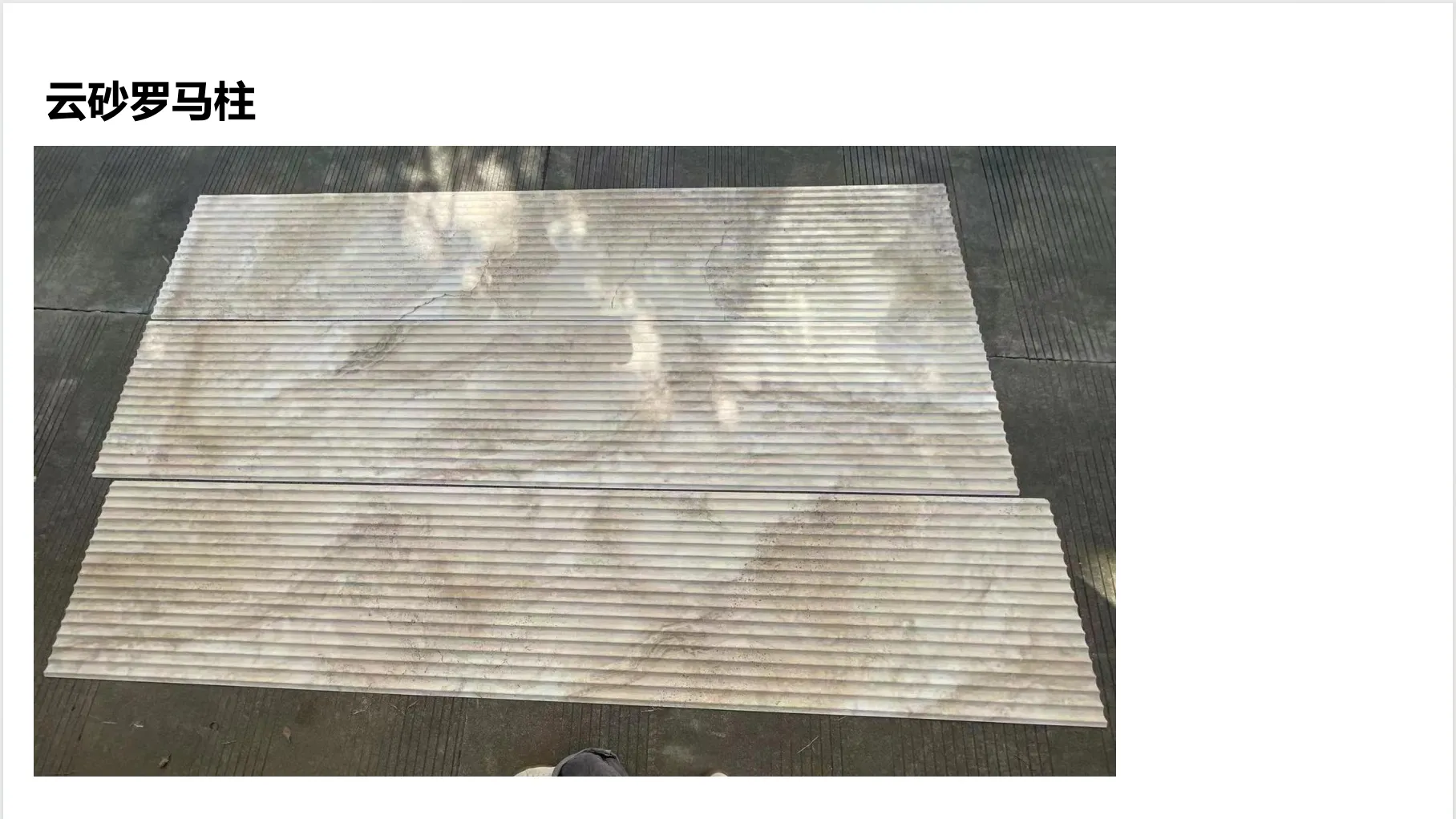
MCM, on the other hand, is a engineered material. Think of it as nature's best features, reimagined with science. MCM products blend natural minerals (like stone powder or fibers) with polymers to create panels that mimic the look of natural materials but with added benefits. For example, MCM flexible stone can bend slightly without cracking, making it ideal for curved surfaces or high-traffic areas. The Lunar Peak series —including Silvery, Golden, and Black—offers metallic, moon-like finishes that are hard to replicate in natural stone. And foamed aluminium alloy boards (available in vintage silver, gold, or bold gold) add a industrial-chic vibe while being lightweight and rust-resistant.
Today, we're focusing on a specific use case: pillars. Those vertical structures that frame entrances, divide rooms, or stand as focal points. Whether you're designing a hotel lobby, a restaurant, or a home's grand foyer, the choice between natural marble and MCM pillars will ripple through your project—from initial quotes to maintenance checks five years down the line.
Let's start with the question everyone asks first: "How much is this going to cost me?" It's not just about the price tag on the material itself—though that's a big part of it. We need to talk about installation, maintenance, and even unexpected expenses that pop up years after the project is done. Let's break it down, side by side.
Natural marble isn't cheap. A single slab of high-quality marble (think Carrara or Calacatta) can cost anywhere from $80 to $200 per square foot, depending on the rarity of the veining and where it's quarried. And since pillars are 3D structures, you're not just buying a flat slab—you're paying for custom cutting, shaping, and polishing to turn that slab into a cylindrical or square pillar. For a standard 8-foot-tall pillar with a 2-foot diameter, you might be looking at $1,500 to $3,000 just for the raw marble.
MCM, on the other hand, is engineered for efficiency. Take Lunar Peak Silvery panels, for example. These MCM panels are prefabricated in standard sizes (though they can be custom-cut) and cost roughly $30 to $70 per square foot. Since MCM panels are lighter and easier to shape, that same 8-foot pillar might only set you back $600 to $1,200 in materials. Even the more premium MCM options, like foamed aluminium alloy board (vintage gold) , top out around $90 per square foot—still significantly less than most natural marble.
Why the difference? Marble is a finite resource, quarried by hand in many cases, and each slab is one-of-a-kind. MCM, by contrast, is mass-produced in factories, with consistent quality and lower waste. That scalability brings the cost down without sacrificing style.
Here's where the cost gap widens even more: installation. Natural marble is heavy . A single cubic foot of marble weighs around 160 pounds. That 8-foot pillar we mentioned earlier? It could easily tip the scales at 500 pounds or more. Moving that into place requires specialized equipment—cranes, forklifts, or at least a team of 4-5 strong workers. And if your project is on the second floor or in a tight urban space? Prepare for added fees for rigging or maneuvering.
Installation labor for natural marble pillars typically runs $100 to $200 per hour, and the process can take 2-3 days for a single pillar (including securing it to the foundation and finishing the edges). For a small project with 4 pillars, that's $800 to $2,400 in labor alone.
MCM pillars? They're a breeze by comparison. MCM flexible stone panels weigh about 3-5 pounds per square foot—less than 10% the weight of marble. Even denser options like foamed aluminium alloy boards are lightweight, thanks to their foam core. That means you can install a pillar with just 2 workers and basic tools (no cranes needed). Labor costs drop to $50 to $80 per hour, and installation time? A single pillar might take just 4-6 hours. For 4 pillars, that's $400 to $960—half the cost of marble installation, in many cases.
Natural marble is like a high-maintenance pet: stunning to look at, but it needs constant care. Marble is porous, which means it stains easily. A spilled glass of red wine, a drizzle of olive oil, or even water left standing can seep into the stone and leave a permanent mark. To prevent this, you'll need to seal the marble every 6-12 months. A good quality sealer costs $20 to $50 per bottle, and hiring a professional to apply it adds another $150 to $300 per pillar, per year.
Scratches are another issue. Marble is relatively soft (it ranks 3-4 on the Mohs hardness scale, compared to granite's 6-7). A stray chair leg, a dropped tool, or even high heels can leave visible scratches. Repairing those scratches often requires professional polishing, which can cost $200 to $500 per pillar, depending on the damage.
MCM, by contrast, is engineered to be low-maintenance. Most MCM panels—including Lunar Peak Silvery and flexible stone —come with a protective top layer that resists stains, scratches, and UV rays. Spill wine on an MCM pillar? Wipe it up with a damp cloth, and it's gone. No sealing required. Even if a scratch does occur (say, from a heavy piece of furniture), many MCM products can be touched up with a simple paint marker or refinishing kit, costing $10 to $30 instead of hundreds.
| Cost Aspect | MCM Pillar (e.g., Lunar Peak Silvery) | Natural Marble Pillar |
|---|---|---|
| Initial Material Cost | $600 – $1,200 per pillar | $1,500 – $3,000 per pillar |
| Installation Labor | $200 – $480 per pillar | $400 – $1,200 per pillar |
| Annual Maintenance (Sealing, Polishing) | $0 – $50 per pillar (touch-ups only) | $170 – $350 per pillar (sealing + occasional repairs) |
| Total Cost Over 10 Years | $800 – $1,730 per pillar | $2,900 – $6,500 per pillar |
Note: Prices are estimates based on average market rates in 2025 for a standard 8-foot pillar. Costs may vary by location, pillar size, and material quality.
When you add it all up, MCM pillars can save you 50-70% over a decade compared to natural marble. That's not chump change—especially for commercial projects with dozens of pillars or homeowners watching their budget.
Cost is important, but what good is a cheap material if it cracks, fades, or looks worn after a year? Let's talk about durability—the ability of these pillars to stand up to the elements, daily wear, and the test of time. After all, a pillar isn't just a decoration; it's part of your space's infrastructure.
Natural marble is surprisingly delicate when exposed to the elements. UV rays from sunlight can fade its color over time, turning bright whites into dull grays. Rainwater, especially in areas with acid rain, can erode the surface, making the marble look pitted or rough. Freeze-thaw cycles are even worse: water seeps into the pores, freezes, expands, and cracks the stone from the inside out. For outdoor pillars (like those at a resort entrance or a patio), natural marble might need to be replaced every 10-15 years if not meticulously maintained.
MCM, by contrast, is built for resilience. Take Lunar Peak Golden panels: their polymer coating reflects UV rays, preventing fading. MCM flexible stone is water-resistant, so rain (or even a power washer) won't damage it. And because MCM isn't porous, freeze-thaw cycles are a non-issue—no internal cracking, no surface erosion. Many MCM manufacturers back their products with 15-20 year warranties for outdoor use, which tells you something about their confidence in durability.
Let's get real: pillars get bumped. Whether it's a delivery cart in a hotel lobby, a kid's toy in a home, or a guest's suitcase in a restaurant, your pillars are going to take some hits. How do MCM and marble stack up?
As we mentioned earlier, marble is soft. A moderate impact—like a chair scraping against it—can leave a noticeable scratch. A harder impact, like a heavy box being dropped, might chip the edge. These flaws aren't just cosmetic; they can weaken the pillar over time, especially if water seeps into cracks.
MCM panels, thanks to their composite structure, are much tougher. Foamed aluminium alloy boards have a metal core that resists dents. MCM flexible stone has a slight give, which absorbs impact instead of cracking. Even the Lunar Peak Black panels, which have a matte finish, stand up to scratches better than marble. In lab tests, MCM often scores 6-7 on the Mohs hardness scale—comparable to granite, and far harder than marble.
We touched on this earlier, but it's worth repeating: weight matters for durability. A heavy marble pillar puts constant stress on the foundation it's sitting on. Over time, that stress can lead to cracks in the floor, uneven settling, or even structural damage—especially in older buildings or areas with weak soil. In extreme cases, you might need to reinforce the foundation before installing marble pillars, adding thousands to your project cost.
MCM pillars are lightweight, so they put minimal stress on foundations. This is a game-changer for renovation projects, where you don't want to risk damaging existing structures. It also opens up design possibilities: imagine a spiral staircase with MCM pillars supporting the railings—something that would be nearly impossible with heavy marble.
In 2023, the Grand Horizon Hotel in Miami faced a dilemma: their 1920s lobby needed a refresh, and the original marble pillars were showing their age—stained, scratched, and starting to crack at the base. The design team considered two options: replacing them with new natural marble pillars or switching to MCM. Here's what happened:
The hotel chose MCM. Two years later, the pillars still look brand-new. "We get compliments every day on how the silvery finish catches the lobby chandeliers," says the hotel manager. "And when a luggage cart scraped one pillar last month? We wiped it with a magic eraser, and it was gone. No repair bill, no downtime."
Cost and durability are critical, but let's not forget why we care about pillars in the first place: they're part of the design story. Natural marble has a timeless beauty, but MCM offers something marble can't: versatility . Let's talk about the creative side of this choice.
MCM isn't a one-trick pony. The product lineup is staggering, which means you can match almost any aesthetic. Want a modern, minimalist look? Fair-faced concrete MCM panels offer that raw, industrial vibe. Going for a tropical feel? Bali stone or bamboo mat board MCM brings warmth and texture. Love the look of aged metal? Foamed aluminium alloy board (vintage gold) has that perfect patina, right out of the box.
The travertine series is a great example of MCM's mimicry skills. Travertine (starry green, red, orange, blue) replicates the look of natural travertine's pitted surface but with added color options you'd never find in nature. Imagine a pillar with travertine (starry blue) finish—like holding a piece of the night sky in your lobby. Natural travertine, by contrast, is limited to earth tones and requires filling those pits with epoxy to prevent staining.
To be fair, natural marble has an advantage here: authenticity. No two marble pillars will ever look exactly alike. The veining is formed over millions of years by mineral deposits, creating patterns that are literally one-of-a-kind. For historic buildings or projects where "heritage" is the key theme, natural marble can't be replicated. A historical pathfinders stone MCM panel might mimic aged stone, but it doesn't have the same story as marble quarried from the same mountain as Michelangelo's statues.
That said, many MCM products are designed to enhance natural beauty, not replace it. For example, wood grain board MCM uses real wood fibers in the composite, giving it the texture and warmth of wood without the warping or rotting. It's a middle ground for designers who want the look of nature with the performance of engineering.
At the end of the day, the choice between MCM and natural marble pillars depends on your priorities. Let's break it down based on what matters most to you:
Here's the bottom line: MCM has come a long way from its early days as a "cheap alternative." Today, products like MCM flexible stone , Lunar Peak series , and foamed aluminium alloy boards are standing toe-to-toe with natural marble in terms of beauty—while outperforming it in cost, durability, and versatility. For most modern projects, MCM isn't just the practical choice; it's the smart one.
Whether you're an architect sketching plans, a designer moodboarding a space, or a homeowner dreaming of a grand entrance, remember: the best material isn't just the one that looks good today. It's the one that still looks good, functions well, and fits your budget five, ten, even twenty years from now. And more often than not, that material is MCM.
Recommend Products












