
Walk into any well-designed space—a cozy café, a sleek office lobby, or a warm family home—and chances are, you'll spot it: the timeless presence of wood. For centuries, natural wood has been the gold standard of design, prized for its warmth, unique grain patterns, and the organic character it brings to walls, floors, and furniture. It's more than a material; it's a feeling. The way sunlight filters through wooden slats, the soft creak of a well-loved floorboard, the subtle variations in tone that tell a story of growth and time—these are the things that make wood irreplaceable. But here's the thing: as much as we adore it, natural wood comes with a set of challenges that modern design can no longer ignore. Enter MCM, or Modified Composite Material, a rising star in the world of building materials. And at the heart of its appeal? Weaving real photos technology, a game-changer that's closing the gap between the charm of natural wood and the practicality of modern composites.
Let's start with the obvious: wood is beautiful. Not just "nice to look at" beautiful, but deeply sensory. Run your hand over a polished oak tabletop, and you'll feel the slight ridges of its grain, a texture that's both smooth and alive. In a world of cold metals and sterile plastics, wood adds a layer of humanity to spaces. It's no wonder interior designers often call it "the soul of a room." Think about rustic cabins with exposed wooden beams, where the wood feels like a hug from nature. Or minimalist homes with light ash flooring, where the wood's pale tones create an airy, calm atmosphere. Wood adapts—it can be stained, painted, or left raw, each treatment highlighting a different facet of its personality.
But beauty aside, natural wood has its flaws. For one, it's a finite resource. Deforestation and unsustainable logging practices have made sourcing genuine hardwoods not just expensive, but ethically questionable. Then there's durability. Wood is porous, which means it soaks up moisture like a sponge. In humid climates, it warps. In dry environments, it cracks. Spills, scratches, and UV rays from sunlight? They fade wood's color and wear down its surface, turning that once-vibrant tabletop into a dull, patchy shadow of its former self. And let's not forget maintenance: regular polishing, staining, and sealing are non-negotiable if you want wood to last. For busy homeowners or commercial spaces with heavy foot traffic, that upkeep can feel like a never-ending chore.
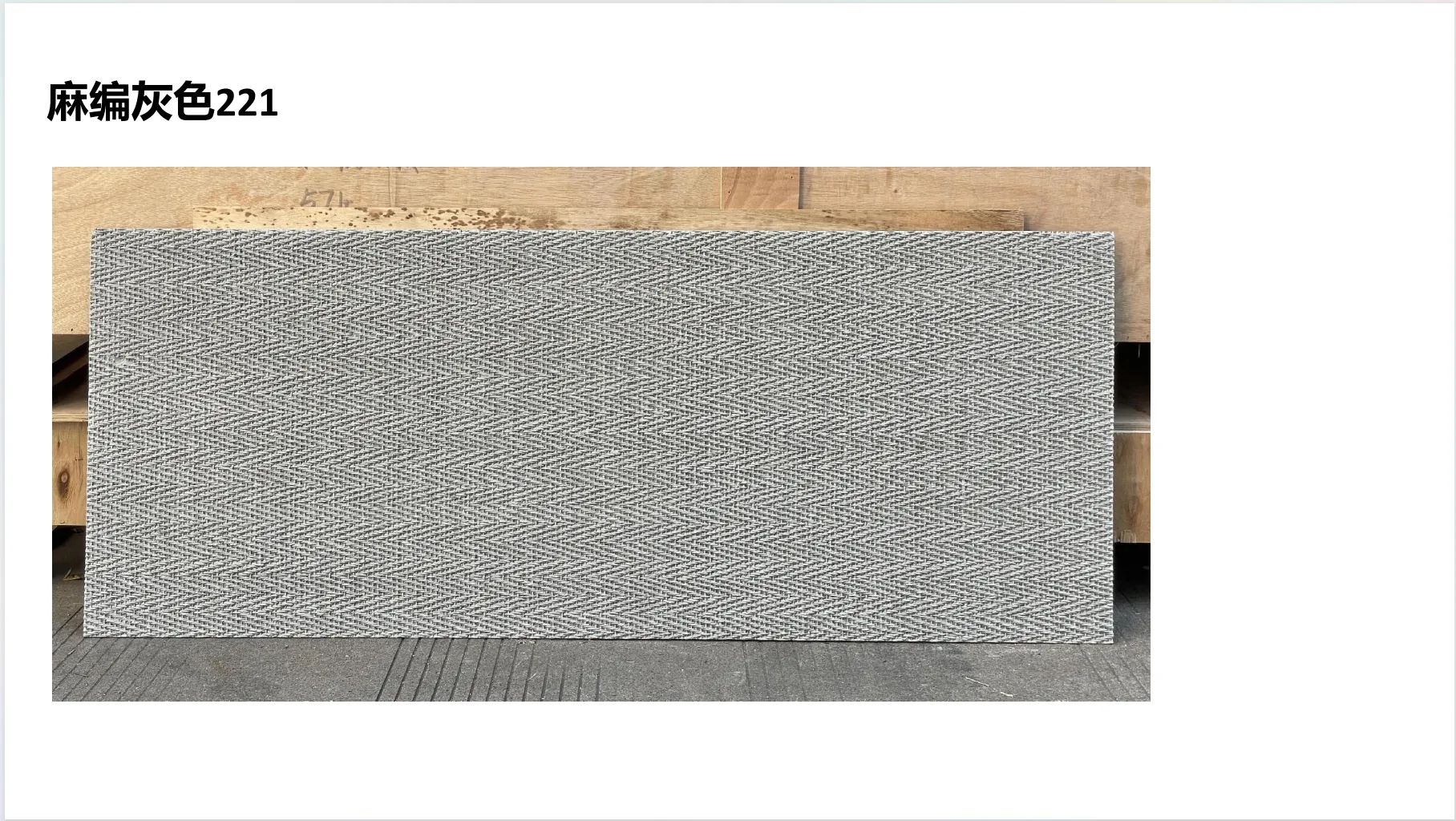
This is where MCM steps in. Short for Modified Composite Material, MCM is a blend of natural minerals, polymers, and reinforcing fibers designed to mimic the look and feel of traditional materials—like wood, stone, or marble—without their drawbacks. Think of it as nature's best qualities, reimagined for the 21st century. MCM products are lightweight, water-resistant, fire-retardant, and incredibly durable. They don't warp, crack, or fade. And because they're made from recycled or abundant materials, they're often more sustainable than their natural counterparts. But for a long time, there was a catch: while MCM could replicate the color of wood, it struggled with the character . The grain patterns felt flat, the texture too uniform. It looked "good enough," but not quite "real." That is, until weaving real photos technology came along.
MCM isn't just one material—it's a family. From wood grain board that mimics the warmth of oak to travertine (starry green) that captures the earthy elegance of natural stone, MCM products are designed to cater to every aesthetic. And they're versatile: you'll find them on exterior facades, interior walls, furniture, and even ceiling panels. But the star of the show? The technology that makes these materials look so authentic. Weaving real photos isn't just about slapping a picture of wood onto a panel; it's a process that layers high-resolution images of real wood grain with textured overlays, creating a surface that tricks both the eye and the touch. It's art meets engineering, and the result is nothing short of remarkable.
Imagine taking a photograph of a 100-year-old oak tree, capturing every knot, every swirl, every tiny imperfection that makes that tree unique. Now, imagine translating that photograph into a physical texture, so precise that when you run your finger over it, you can almost feel the tree's history. That's weaving real photos technology in a nutshell. It starts with high-definition imaging: photographers travel the world to capture the most stunning examples of natural materials—aged wood, weathered stone, even fossilized coral. These images are then digitized and enhanced, with every detail sharpened to preserve the material's inherent beauty.
But the magic doesn't stop there. The digitized images are paired with a multi-layered printing process that adds depth. Using advanced inkjet technology, the image is printed onto a base layer, and then a textured topcoat is applied—think of it as adding "ridges" and "valleys" that match the contours of the original wood grain. The result? A surface that looks and feels so real, even experts sometimes struggle to tell the difference between MCM wood grain board and genuine hardwood. Take, for example, MCM's foamed aluminium alloy board (vintage silver) : while it's a sleek, metallic material, weaving real photos technology could theoretically replicate the patina of aged silver, complete with subtle scratches and tonal variations that make it feel like a heirloom piece.
What makes this technology so revolutionary is its ability to balance consistency and uniqueness. Natural wood is beautiful, but each plank is different—sometimes frustratingly so, if you're trying to create a uniform look in a large space. Weaving real photos lets designers choose a specific wood grain pattern and replicate it perfectly across hundreds of panels, ensuring a cohesive aesthetic without sacrificing that "handmade" feel. It's the best of both worlds: the charm of natural variation, with the reliability of modern manufacturing.
| Attribute | Natural Wood | MCM Wood Grain Board (Weaving Real Photos) | MCM Travertine (Starry Green) |
|---|---|---|---|
| Durability | Prone to warping, cracking, and fading; requires regular maintenance | Water-resistant, scratch-proof, and UV-stable; minimal upkeep needed | Highly durable, resistant to moisture and impact; ideal for high-traffic areas |
| Sustainability | Requires logging; may contribute to deforestation if not sourced responsibly | Made from recycled materials and abundant minerals; low carbon footprint | Uses sustainable manufacturing processes; reduces reliance on natural stone mining |
| Aesthetic Versatility | Limited by natural grain patterns and species availability | Can replicate any wood species, from oak to teak, with customizable colors | Offers unique finishes like "starry green," blending stone-like texture with artistic flair |
| Maintenance | Needs regular polishing, staining, and sealing | Wipe clean with a damp cloth; no sealing or refinishing required | Resistant to stains and easy to clean; no special treatments needed |
| Cost | High upfront cost + ongoing maintenance expenses | Lower upfront cost + minimal long-term costs | Mid-range upfront cost with long-term savings on upkeep |
Let's ground this in real life. Consider a busy coastal restaurant with an outdoor patio. The designer initially chose natural teak for the decking, drawn to its rich color and classic look. But within a year, the salt air and rain had taken their toll: the teak warped, some boards rotted, and the once-uniform deck looked patchy and worn. The restaurant had to replace the decking, costing thousands of dollars and disrupting business. Fast forward to today, and that same restaurant might opt for MCM wood concrete board (light grey) instead. With weaving real photos technology, the board looks just like weathered teak—complete with the subtle gray patina and grain patterns—but it's impervious to moisture, salt, and UV rays. No warping, no rotting, and a fraction of the maintenance. The result? A patio that looks timeless, even after years of coastal exposure.
Or take a family home in a humid climate. The homeowners dreamed of a wood-paneled accent wall in their living room, but worried about mold and mildew. Traditional wood would have required constant sealing and dehumidifying to survive. Instead, they chose MCM wood grain board . The weaving real photos technology replicated the look of walnut, with deep brown tones and intricate grain that catches the light just like the real thing. But unlike real walnut, this board doesn't absorb moisture. It's mold-resistant, easy to clean, and the color stays vibrant year after year. The homeowners get the warmth they wanted, without the stress of maintenance.
Sustainability isn't just a buzzword—it's a necessity. MCM's eco-friendly credentials are hard to ignore. By using recycled materials and reducing the need for logging or stone mining, MCM products lower our carbon footprint. For example, foamed aluminium alloy board (vintage silver) is made from recycled aluminum, a material that requires 95% less energy to recycle than to produce from raw ore. That's a win for the planet, and for designers who want to create beautiful spaces without compromising their values.
Practically speaking, MCM is also a dream for installers. Its lightweight nature makes it easier to transport and hang, cutting down on labor costs. Unlike natural stone, which can be heavy and brittle, MCM panels are flexible enough to bend around curves, opening up new design possibilities. And because they're pre-finished, there's no messy on-site painting or sealing—just install and enjoy.
At the end of the day, MCM isn't here to replace natural wood. It's here to extend its legacy. There will always be a place for genuine hardwood in high-end furniture or heritage buildings, where its uniqueness is part of the appeal. But for the rest of us—for busy families, commercial spaces, or eco-conscious designers—MCM offers a smarter, more sustainable way to bring wood's beauty into our lives. And weaving real photos technology? It's the bridge that makes this possible. It lets us keep the warmth, the texture, and the story of wood, without the warping, the upkeep, or the guilt.
So the next time you walk into a space and think, "This wood is stunning," take a closer look. It might just be MCM, working quietly in the background to blend the best of nature and innovation. And isn't that the future of design? Not choosing between beauty and practicality, but having both—thanks to technologies that turn "what if" into "what is."
Recommend Products












