
Let's set the scene: You're standing on a construction site, hard hat in hand, staring at a calendar that's counting down faster than you'd like. The project is a boutique hotel with a high-end exterior, and the client is already dreaming of the grand opening. But here's the kicker: the exterior cladding—the "face" of the building—could make or break your timeline. Choose the wrong material, and you're looking at delays, budget overruns, and a lot of late-night problem-solving. Choose wisely, and you might just finish early, impress the client, and become the hero of the project. Today, we're diving into two heavyweights in the cladding world: the timeless Roman huge travertine and the innovative MCM (Modified Composite Material) systems. Which one will help you cross the finish line faster?
First, let's talk about the classic. Roman huge travertine isn't just a material—it's a piece of history. Quarried from regions like Tivoli, Italy, this natural stone has been gracing buildings for millennia. Think the Colosseum, the Pantheon, or the ancient Roman baths—structures that have stood the test of time, their warm, porous surfaces telling stories of empires past. There's no denying its allure: the soft, earthy tones, the unique veining, and the organic texture that feels both grand and grounded. For clients who want a "timeless" look, it's a top pick.
As beautiful as it is, Roman huge travertine comes with a hidden price tag: time. Let's break down why installing this stone can stretch your timeline like taffy.
Roman huge travertine slabs are heavy . We're talking 80–100 kg per square meter for thick slabs. That's like hauling a small refrigerator up a flight of stairs—except you're doing it for hundreds of square meters. Transporting these behemoths requires specialized trucks, cranes, and even structural assessments of the delivery route (will that bridge handle the weight?). Once on-site, moving slabs from the delivery truck to the installation area means more cranes, more labor, and more logistical headaches. A delay in delivery? Now you're waiting on stone instead of installing it.
Natural stone is unpredictable. Even "huge" travertine slabs aren't uniform—veins, pores, and density vary from piece to piece. That means most cutting and shaping has to happen on-site . You'll need skilled stonemasons with diamond-tipped saws, water jets, and a lot of patience to trim slabs to fit corners, windows, or custom designs. A single miscalculation, and you've wasted a slab (and money) and added hours to the process. Compare that to a material that arrives pre-cut to your exact specifications—we'll get to that later.
Installing Roman travertine is a labor of love, but love takes time. Traditional methods involve applying mortar to the substrate, carefully placing the slab, and then waiting for the mortar to cure. Curing isn't a "set it and forget it" step—it can take 24–48 hours per layer, and that's if the weather cooperates. Rain? Freeze? You're pausing work. Plus, because the slabs are heavy, installers often work in teams of 2–3 per slab, slowing down the pace. For a 500 sqm facade, you're looking at 2–3 weeks of installation time, not including prep work or curing delays.
John, a project manager with 15 years in commercial construction, summed it up: "We used Roman travertine on a museum project last year. The client insisted on 'authenticity,' so we went all in. But between the delivery delays (a slab cracked in transit), the on-site cutting (we had to redo three corner pieces), and the mortar curing time, we lost a full month. The stone looked stunning, but the client wasn't thrilled about the extra costs from the delay."
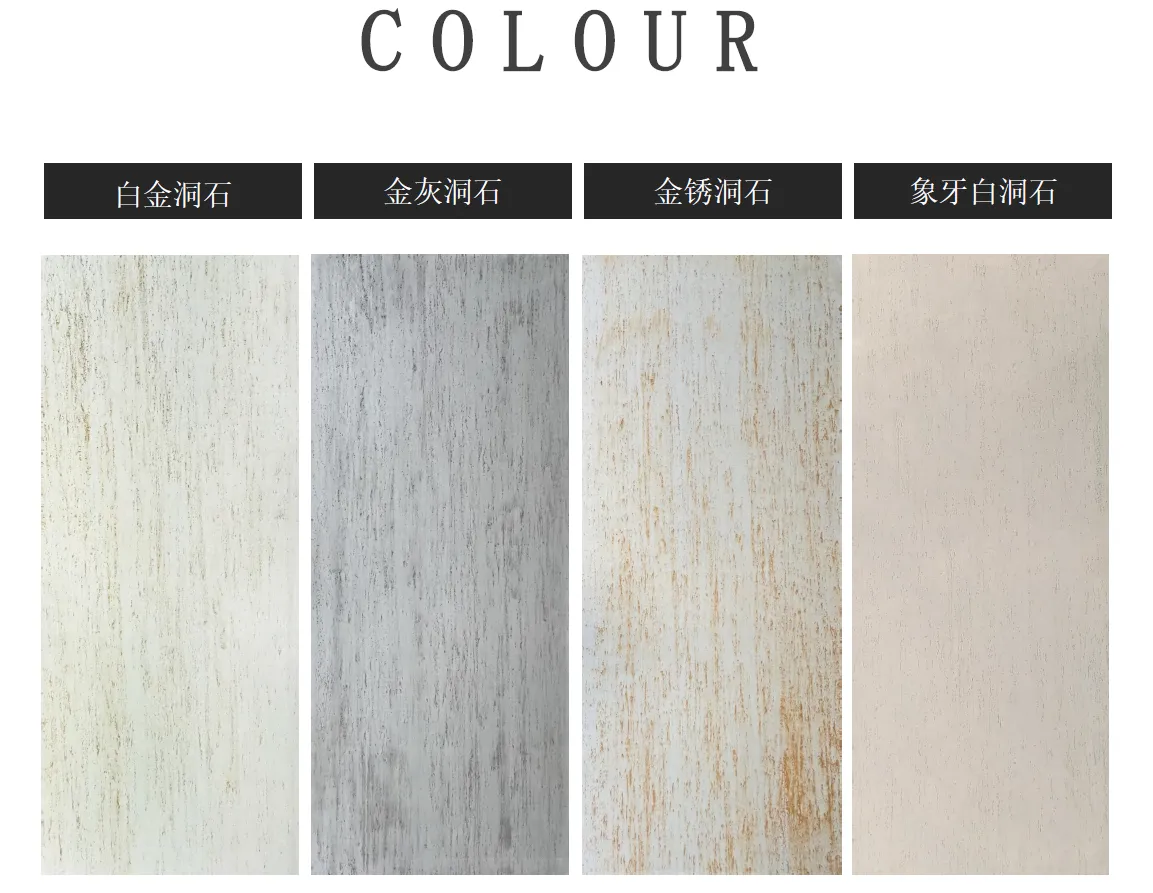
Now, let's shift to the modern contender: MCM. Short for Modified Composite Material, MCM is an engineered material designed to mimic the look of natural stone, wood, or metal—without the hassle. It's lightweight, durable, and, crucially, prefabricated . Think of it as the "fast-casual" of cladding: same great style, but ready in minutes instead of hours. Key products in the MCM lineup include MCM flexible stone , prefabricated MCM panel systems , and architectural big slab solutions —all built with one goal in mind: to make installation faster, easier, and more predictable.
MCM panels weigh in at a featherlight 8–12 kg per square meter—about 10% of the weight of Roman travertine. That's a game-changer. No need for heavy-duty cranes or reinforced delivery trucks; a couple of workers can carry a panel with ease. On-site, moving panels from the storage area to the wall is as simple as using a hand cart. This cuts down on transport time, reduces the risk of on-site accidents, and even eliminates the need for structural reinforcements (your building's frame will thank you).
Here's where MCM really shines: prefabricated MCM panel systems . These panels are engineered, cut, and finished in a factory— before they ever hit your site . Need a panel with a custom cutout for a window? Done. Want a specific color match to the client's brand? No problem. The panels arrive labeled, sorted by installation order, and ready to stick (or screw) into place. No on-site cutting, no dust, no wasted material. It's like ordering a pizza with all your toppings pre-added—no need to assemble it yourself.
Installing MCM is a breeze compared to natural stone. Most systems use either mechanical fixing (screws or clips) or high-strength adhesive—no messy mortar, no curing time. A team of 2–3 installers can put up 100–150 square meters of MCM in a single day. Let that sink in: 150 sqm in one day. For Roman travertine, that same team might finish 20–30 sqm on a good day. Why the difference? No waiting for mortar to dry, no painstaking alignment of heavy slabs, and no need for specialized stonemasons. Even complex designs—curves, angles, or custom patterns—are easier with MCM's flexibility (hello, MCM flexible stone that bends around corners!).
Maria, a site supervisor who switched to MCM for a retail project, put it best: "We did a 600 sqm facade with prefabricated MCM panels. The panels arrived on a Monday, labeled 'North Wall, Row 1' to 'South Wall, Row 5.' My team of 4 installers started Tuesday morning and finished by Friday afternoon. That's 5 days for 600 sqm. With travertine, that would've taken 3 weeks, easy. And we didn't have a single cracked slab or missed measurement."
Numbers speak louder than words. Let's break down how Roman huge travertine and MCM stack up in key timeline-critical areas with a real-world example: installing 500 square meters of exterior cladding on a 3-story building.
| Factor | Roman Huge Travertine | MCM Systems (Including Prefabricated Panels) |
|---|---|---|
| Transport & On-Site Handling | 3–5 days (heavy slabs, crane rental, structural checks) | 1 day (lightweight panels, standard delivery, manual handling) |
| On-Site Cutting/Preparation | 5–7 days (custom cutting, shaping, waste management) | 0 days (prefabricated to exact dimensions in factory) |
| Installation Time | 14–21 days (20–30 sqm/day with mortar curing) | 3–5 days (100–150 sqm/day with dry installation) |
| Total Timeline (Start to Finish) | 22–33 days | 4–6 days |
| Labor Required | 4–5 workers (stonemasons, crane operators, laborers) | 2–3 workers (general installers, no specialized skills needed) |
We've talked a lot about time, but what about the long run? You don't want to save time now only to deal with repairs later. Roman travertine is durable—there's a reason it's lasted 2,000 years—but it's porous. Without regular sealing, it stains easily, and harsh weather can wear down its surface. MCM, on the other hand, is engineered to be weather-resistant, UV-stable, and low-maintenance. It won't stain, fade, or crack in extreme temperatures, which means less upkeep over time (and fewer future delays for repairs).
Sustainability is another win for MCM. Roman travertine quarrying can be resource-intensive, with significant waste (up to 30% of quarried stone is discarded as off-cuts). MCM uses recycled materials in its composite blend and produces minimal waste during manufacturing. Plus, its lightweight nature reduces carbon emissions during transport—a small but meaningful win for eco-conscious projects.
Let's cut to the chase: If you're prioritizing speed, MCM systems are the clear winner. From transport to installation, MCM slashes weeks off the timeline, requires less labor, and minimizes on-site headaches. Roman huge travertine is undeniably beautiful and steeped in history, but its natural properties—weight, unpredictability, and labor-intensive installation—make it a slowpoke in the race against the clock.
That said, there are projects where Roman travertine still makes sense: heritage restorations, clients who insist on "authentic" natural stone, or projects with flexible timelines and big budgets. But for most commercial builds, hospitality projects, or retail spaces where time is money, MCM—with its prefabricated panel systems , architectural big slab solutions , and lightweight flexibility—will get you to the finish line faster, cheaper, and with fewer gray hairs.
At the end of the day, construction is about balance: beauty, budget, and timeline. MCM doesn't just tip the scales toward speed—it does it without sacrificing style. And in a world where deadlines wait for no one, that's a game-changer.
Recommend Products












