
When you're planning a building project—whether it's a cozy home addition, a bustling office space, or a community hub—safety is the foundation of every decision. And in a world where fires can start in the blink of an eye, the materials you choose can mean the difference between a minor incident and a disaster. Today, we're putting two popular building materials under the microscope: MCM flexible stone and Sawing Wood Board. We'll break down their fire resistance properties, weigh their pros and cons, and help you understand which might be the better fit for your next project. Let's get started.
First, let's make sure we're on the same page. MCM flexible stone is a modern marvel in building materials. Short for "Modified Composite Material," it's a lightweight, durable cladding option made by blending natural minerals, polymers, and fibers. The result? A material that's flexible enough to bend around curves, yet tough enough to withstand the elements. It comes in a stunning array of finishes—think Lunar Peak silvery with its moonlit sheen, or Travertine (starry blue) that mimics the night sky—and it's gaining popularity for both interior and exterior use.
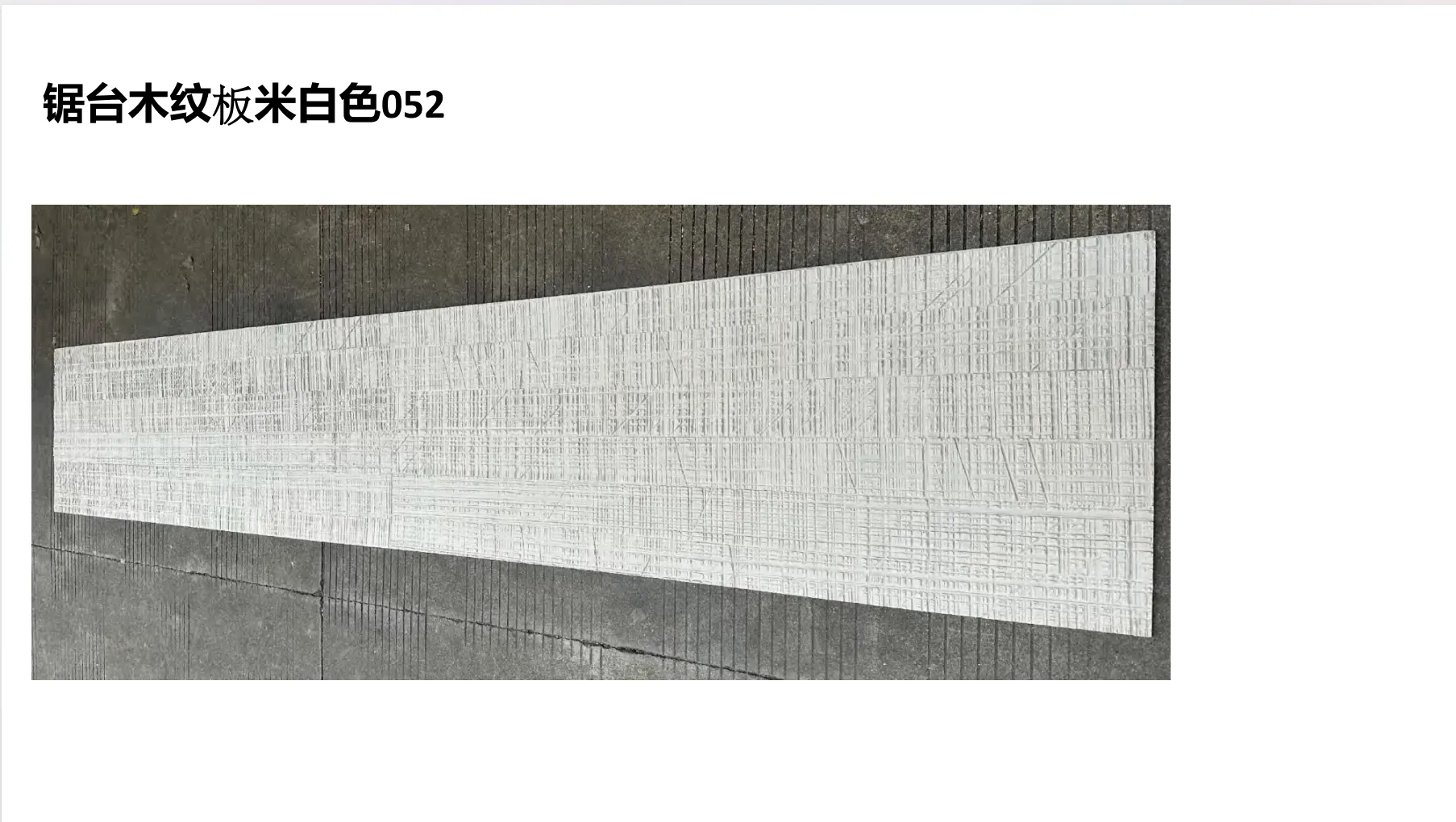
Sawing Wood Board , on the other hand, is a classic. Crafted from solid wood planks that are sawn, sanded, and finished, it's beloved for its warm, organic look. Whether you're going for a rustic cabin vibe or a sleek modern interior, wood boards add texture and character that's hard to replicate. But as we'll explore, that charm comes with some trade-offs when it comes to fire safety.
Let's start with MCM flexible stone. One of the biggest selling points of this material is its impressive fire resistance. To understand why, let's dig into its composition. MCM is made primarily of inorganic materials—think crushed stone, cement, and minerals—that don't burn easily. Unlike wood, which is organic and fuel for flames, MCM's core is non-combustible. That means even if exposed to high heat, it won't catch fire or contribute to the spread of flames.
But don't just take my word for it. MCM flexible stone undergoes rigorous testing to meet global fire safety standards. For example, in the ASTM E84 test (the standard for measuring surface burning characteristics), MCM typically earns a Class A rating—the highest possible. This means it has a flame spread index of 0-25 (compared to wood, which can have a flame spread index of 75-150 or higher) and minimal smoke production. In real terms, that translates to slower flame spread and less toxic smoke, giving occupants more time to evacuate in an emergency.
Let's paint a scenario: Imagine a kitchen where a grease fire sparks on the stove. If the backsplash is made of MCM flexible stone, here's what happens: The material doesn't ignite. The flames might lick at it, but they won't catch. Instead of the fire spreading to the walls and ceiling, it stays contained to the stove area. Meanwhile, the MCM releases little to no smoke—critical because most fire deaths are caused by smoke inhalation, not burns.
Another key factor? MCM's durability under heat. Unlike some materials that crack or crumble when exposed to high temperatures, MCM maintains its structural integrity. This is why it's a favorite in commercial buildings like hospitals, schools, and hotels, where fire safety regulations are strict. Take, for example, a school in Texas that recently renovated its auditorium using Lunar Peak silvery MCM panels. The design team chose it not just for its sleek look, but because they needed a material that could meet the state's strict fire codes for educational facilities. "We didn't want to sacrifice style for safety," says the project architect, "and with MCM, we didn't have to."
While we're focusing on fire resistance, it's worth noting that MCM flexible stone brings other benefits to the table. It's lightweight, which makes installation faster and cheaper (no need for heavy-duty structural support). It's also water-resistant, mold-resistant, and low-maintenance—no sealing or refinishing required. And with options like Fair-faced concrete MCM or Travertine (vintage gold) , you don't have to compromise on aesthetics for safety.
Now, let's turn to Sawing Wood Board. There's no denying that wood is beautiful. It adds warmth, texture, and a connection to nature that's hard to match. A wood-paneled wall in a living room feels cozy; a wood ceiling in a restaurant creates ambiance. But when it comes to fire, wood has a big drawback: it's combustible.
Wood is made of cellulose, a organic compound that ignites when exposed to heat above 300°F (149°C). Once ignited, it burns readily, releasing flammable gases that feed the flames. In a fire, wood boards can catch fire quickly, and the flames can spread rapidly across the surface. What's more, burning wood produces thick, black smoke filled with carbon monoxide and other toxins—again, the leading cause of fire-related deaths.
You might be thinking, "But can't I just treat wood with fire retardants?" It's true—there are products on the market that claim to make wood more fire-resistant. These treatments work by coating the wood or soaking into it, creating a barrier that slows ignition and flame spread. Some even meet Class B or C fire ratings, which are better than untreated wood but still lower than MCM's Class A.
But here's the catch: fire-retardant treatments aren't permanent. Over time, they can wear off due to cleaning, weather exposure, or normal wear and tear. And reapplication? It's not just a hassle—it can alter the wood's appearance, making it look dull or discolored. Plus, even with treatment, wood is still organic. In a prolonged fire, the retardant will eventually break down, and the wood will ignite.
Let's revisit that kitchen scenario, but this time with a wood backsplash. The grease fire sparks, and within seconds, the flames reach the wood. The wood ignites, and the fire spreads up the backsplash to the cabinets. The smoke is thick and acrid, making it hard to see or breathe. Before you know it, the entire kitchen is ablaze. That's the difference between a contained incident and a full-blown disaster.
Don't get me wrong—I love wood. It's a timeless material, and in low-risk areas (like a bedroom with no nearby heat sources), it can be safe when properly maintained. But when it comes to high-risk zones—kitchens, near fireplaces, commercial spaces with high occupancy—wood's fire risks can't be ignored.
To make this comparison crystal clear, let's put MCM flexible stone and Sawing Wood Board head-to-head in a table. We'll focus on key fire resistance properties, so you can see the differences at a glance:
| Property | MCM Flexible Stone | Sawing Wood Board (Untreated) |
|---|---|---|
| Fire Resistance Rating | Class A (ASTM E84) | Class C or lower |
| Ignition Temperature | >1,000°F (538°C) | 300-500°F (149-260°C) |
| Flame Spread Index | 0-25 (low spread) | 75-150+ (high spread) |
| Smoke Production | Very low (non-toxic) | High (toxic smoke) |
| Structural Integrity in Fire | Maintains shape and strength | Chars, warps, and collapses |
| Maintenance for Fire Safety | None (fire resistance is inherent) | Regular reapplication of fire retardants |
Now that we've compared the specs, let's talk about where each material is best suited. MCM flexible stone is a no-brainer for spaces where fire safety is non-negotiable. Think hospitals, schools, hotels, and high-rise apartments—places with lots of people who need time to evacuate. It's also ideal for high-heat areas like kitchens, fireplaces, and outdoor grilling zones.
Take, for example, the new wing of City General Hospital. The design team chose MCM Fair-faced concrete panels for the exterior cladding. Why? Because hospitals need to meet strict fire codes to protect patients who might not be able to evacuate quickly. The MCM panels not only meet those codes but also give the building a modern, clean look that patients and staff love.
Sawing Wood Board, on the other hand, is perfect for spaces where fire risk is low and aesthetics are top priority. A home office with no nearby heat sources? A bedroom with a wood accent wall? Go for it. Just be sure to opt for fire-retardant treatments and keep the area clear of flammable items. Many homeowners also use wood in combination with MCM—wood for the ceiling, MCM for the walls near the fireplace, for example—to balance style and safety.
To get a professional perspective, I chatted with Sarah Chen, a fire safety engineer with 15 years of experience. "When I consult on projects, I always the importance of material selection," she told me. "Wood is beautiful, but in high-occupancy or high-risk areas, it's just not worth the risk. MCM flexible stone, on the other hand, gives you the best of both worlds—style and peace of mind. I've seen it in action during fire tests, and it holds up incredibly well. It's a game-changer for fire safety in design."
Architect Mark Wilson echoed that sentiment. "Clients often come to me wanting a warm, inviting space, and wood is their first choice. But when I explain the fire risks, especially in commercial projects, they're open to alternatives. MCM has been a lifesaver because it can mimic the look of wood or stone—like Travertine (vintage gold) or wood grain board —without the fire hazard. It lets us create spaces that feel cozy but are built to protect."
At the end of the day, choosing between MCM flexible stone and Sawing Wood Board comes down to balancing your priorities: safety, aesthetics, and practicality. If fire resistance is a top concern—and let's be honest, it should be—MCM flexible stone is the clear winner. Its non-combustible core, low flame spread, and minimal smoke production make it a reliable choice for any space where people live, work, or gather.
But that doesn't mean you have to say goodbye to beauty. MCM comes in such a wide range of finishes—from the sleek metallic look of foamed aluminium alloy board (vintage silver) to the natural texture of gobi panel —that you can achieve any aesthetic you want. Whether you're going for industrial chic, coastal calm, or rustic charm, there's an MCM option that fits.
Sawing Wood Board will always have a place in design for its warmth and character. Just be mindful of where you use it, and take steps to minimize fire risks. And when in doubt, talk to a professional—an architect, engineer, or fire safety expert can help you make the best choice for your project.
At the end of the day, the most important thing is that you feel confident in your building materials. After all, a space that looks great but isn't safe isn't a space worth creating. With MCM flexible stone, you can have both: a design that turns heads and a safety net that gives you peace of mind. And that's a combination worth investing in.
Recommend Products












