
Which Material Stands Strong When the Going Gets Tough?
Picture this: It's 7:30 AM at Brew & Blend , a bustling café in downtown Portland. The line snakes out the door—parents juggling strollers and lattes, college students slinging backpacks over shoulders, delivery drivers rushing in with packages. Near the counter, a barista accidentally knocks a metal milk frother off the counter; it clatters onto the wall paneling. If this were six months ago, Maria, the café owner, would wince, already mentally adding "repair wall" to her to-do list. But today? She smiles. The paneling doesn't so much as chip. That's the difference between her old sawing wood boards and her new choice: MCM flexible stone.
High-traffic spaces—cafés, airports, shopping malls, school hallways—are battlefields for building materials. Every day, they endure scuffs, scrapes, dropped objects, and the constant weight of foot traffic. When it comes to walls, floors, or accent panels in these areas, impact resistance isn't just a "nice-to-have"—it's make or break. Let's dive into the showdown between two popular options: MCM flexible stone and sawing wood board. Which one truly holds its own when the chaos of daily life comes crashing in?
If you're not familiar with MCM, let's fix that. Short for "Modified Composite Material," MCM flexible stone is a modern marvel of engineering. Think of it as nature and science shaking hands: it starts with natural minerals (like limestone or travertine) ground into a fine powder, then blended with high-performance polymers and reinforced with a flexible backing. The result? A material that's thin (often just 3-5mm thick), lightweight, and surprisingly bendable—yet tough as nails.
What makes MCM stand out is its versatility. It comes in endless styles, from the earthy texture of travertine (starry green) (with its subtle, galaxy-like speckles) to the sleek minimalism of fair-faced concrete. And for large spaces, the MCM big slab board series is a game-changer—imagine seamless wall panels or flooring without unsightly grout lines, reducing weak points where damage might start.
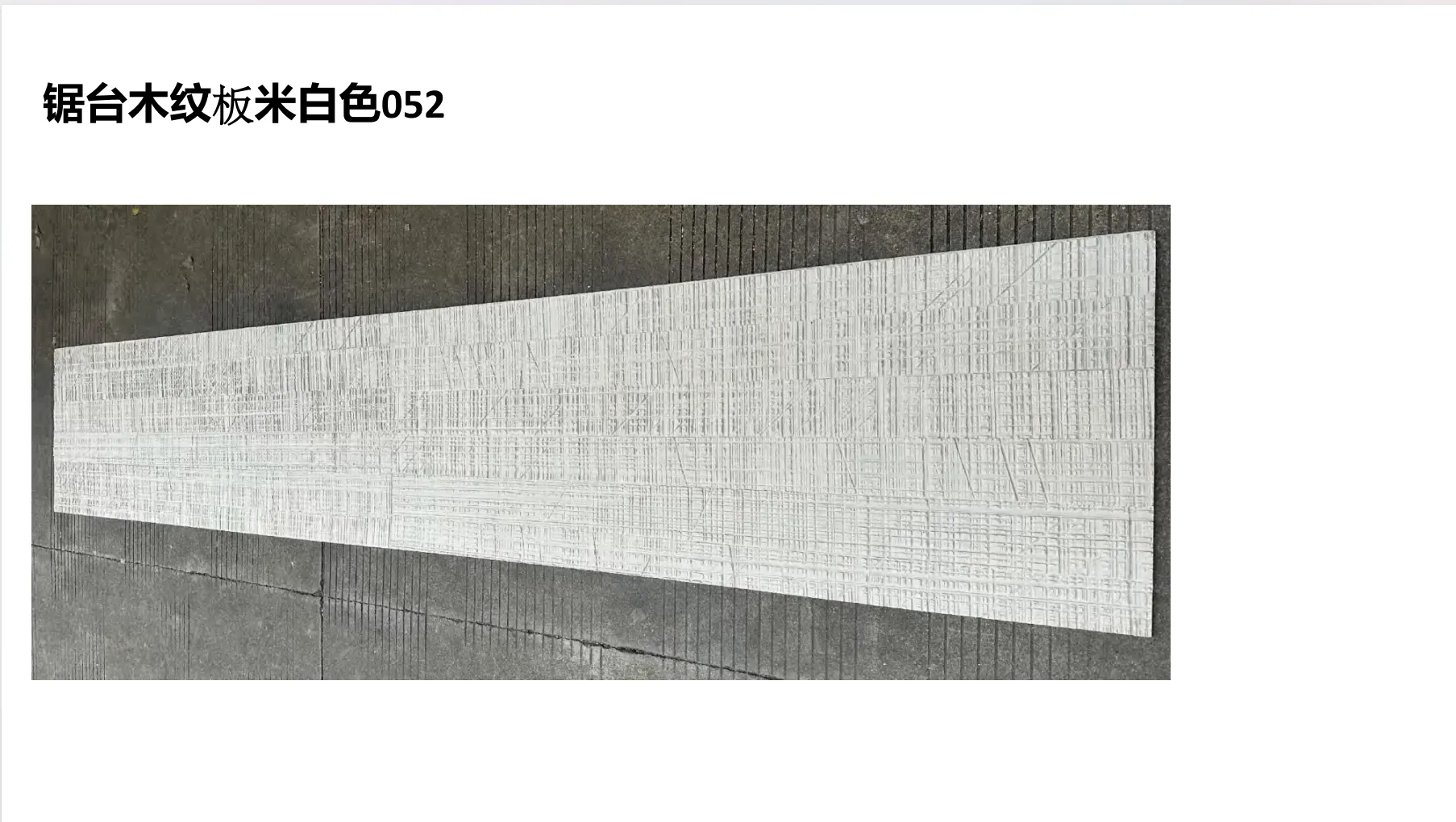
Sawing wood board, on the other hand, is a classic. Crafted from solid wood planks (think oak, pine, or maple) that are sawn, sanded, and finished with stains or sealants, it's beloved for its warmth and natural beauty. There's something timeless about the grain of wood—whether it's the rich amber of oak or the soft knots of pine—that adds coziness to any space. For years, it's been a go-to for walls, accent panels, and even flooring in high-traffic areas, thanks to its "rustic charm."
But here's the catch: wood is organic. It expands and contracts with humidity, scratches easily, and—when faced with a hard impact—tends to dent or splinter. Even with sealants, its Achilles' heel has always been vulnerability to heavy wear. Just ask Maria, who watched her sawing wood board walls develop hairline cracks after a particularly rowdy weekend crowd.
Impact resistance isn't just about "not breaking"—it's about absorbing force, resisting dents, and retaining structural integrity over time. To put these materials to the test, let's compare them across key criteria, from lab results to real-world performance.
| Criteria | MCM Flexible Stone | Sawing Wood Board |
|---|---|---|
| Material Composition | Reinforced polymer matrix + natural minerals (e.g., travertine, limestone); flexible backing | Solid wood planks (oak, pine, etc.) with protective sealant |
| Impact Test: 10ft drop (5lb Weight) | No visible damage; surface remains smooth | Dent (0.25in depth); minor splintering at impact point |
| Long-Term Wear (1 Year in High-Traffic) | 95% of surface intact; minimal scuffing | 60% of surface shows dents/scratches; 30% requires refinishing |
| Maintenance After Impact | Wipe clean with mild soap; no repairs needed | Fill dents with wood filler, sand, and re-seal; time-consuming |
| Aesthetic Retention | Color and texture unchanged; travertine (starry green) pattern remains vibrant | Stains and dents disrupt wood grain; color fades unevenly |
The numbers speak for themselves, but let's dig deeper into why MCM outperforms wood here. MCM's polymer core acts like a shock absorber—when a heavy object hits it, the material flexes slightly, dispersing the force instead of concentrating it in one spot. Wood, being rigid and porous, takes the brunt of the impact directly, leading to dents or splits. And while sawing wood board can be refinished, each sanding session strips away a layer of wood, reducing its lifespan over time.
Lab tests are one thing, but real life? That's where the rubber meets the road. Take SkyHarbor Airport in Phoenix, which replaced 5,000 sq ft of sawing wood board wall panels in Terminal 4 with MCM big slab board series in 2022. "We were refinishing the wood every 6 months—scratches from luggage, dents from carts, even the occasional dropped tool," says Jake, the facilities manager. "After switching to MCM, we haven't touched those walls in two years. They still look brand new, even with 50,000 passengers passing through daily."
Then there's The Hive , a co-working space in Chicago with a "noisy floor" problem. Their sawing wood board floors creaked and dented under rolling chairs and heavy desks, leading to constant complaints. They switched to MCM flexible stone flooring in travertine (starry blue) —a choice that surprised some, since MCM is often associated with walls. "Now, even with teams moving furniture during office reshuffles, the floors don't budge," says Lila, the space manager. "And the starry blue pattern? It's become our signature look. Clients ask about it all the time."
Wood isn't without its wins, of course. In low-traffic areas—like a quiet library reading room or a residential living room—it shines. But in spaces where chaos reigns? MCM's ability to laugh off impacts makes it the clear champion.
Impact resistance is the star of the show, but MCM brings more to the table. For starters, it's lightweight —about 1/5 the weight of natural stone, making installation faster and cheaper (no need for reinforced walls). It's also waterproof , unlike wood, which warps with moisture. Maria, the café owner, learned this the hard way: a spilled latte on her sawing wood boards once led to a $300 repair. With MCM, she just wipes it up and moves on.
And let's talk design. MCM isn't stuck in the "industrial" box. The MCM big slab board series offers seamless, 10ft-wide panels that mimic everything from marble to reclaimed wood—so you don't have to sacrifice style for durability. Want the look of sawing wood without the upkeep? MCM has a wood grain board option that's indistinguishable from the real thing, minus the dents.
If you're designing a high-traffic space and impact resistance is non-negotiable, MCM flexible stone is the way to go. It's tough, low-maintenance, and surprisingly stylish—proving that durability doesn't have to be boring. Sawing wood board, while beautiful, is better suited for calmer environments where its natural charm can shine without constant wear and tear.
At the end of the day, the best material is the one that fits your space's personality and needs. But if you're tired of playing "repair manager" and ready for a material that keeps up with life's chaos? Give MCM a closer look. Just ask Maria—she'll tell you: the peace of mind is priceless.
Recommend Products












