
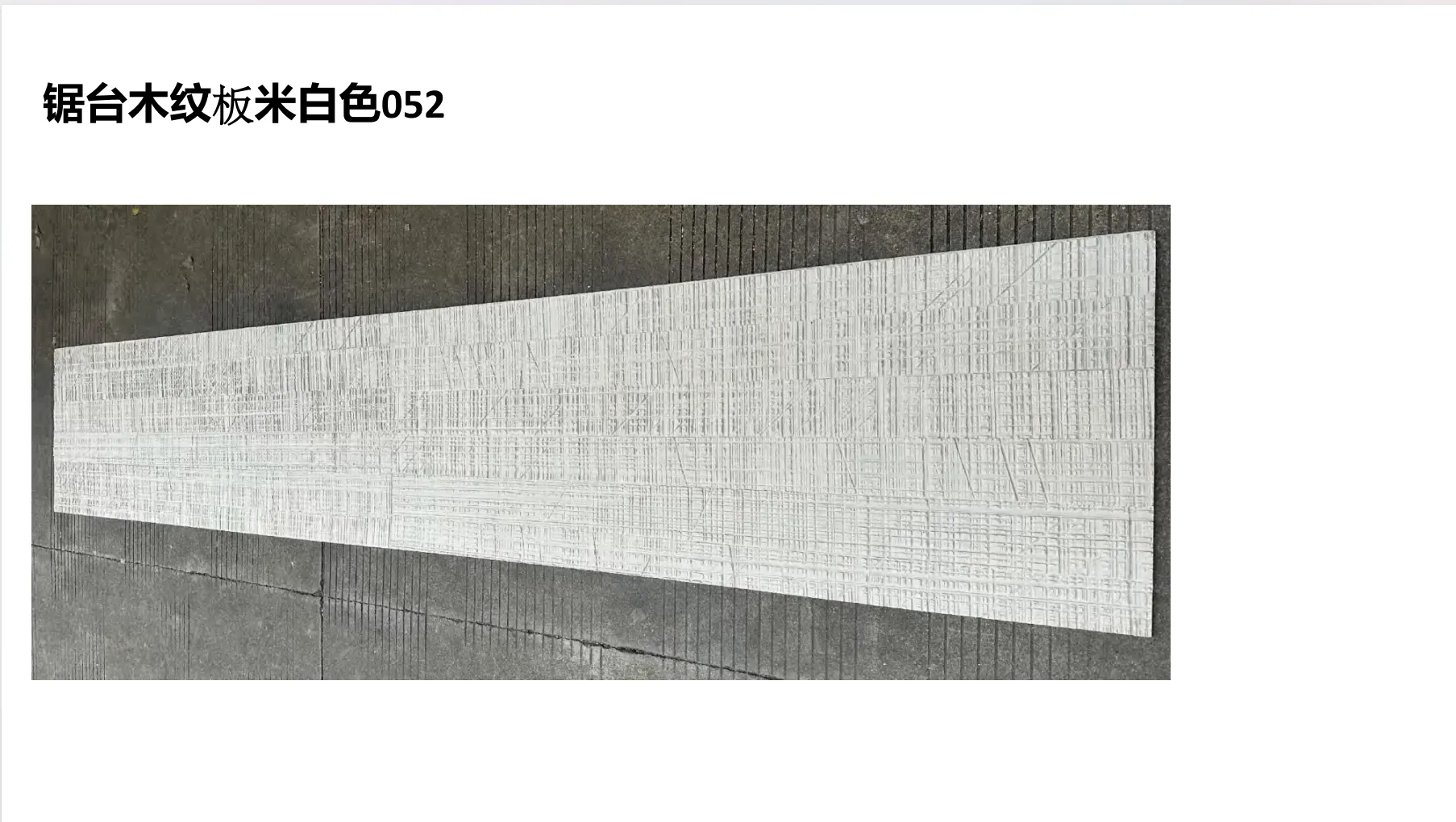
Walk into any home improvement store or flip through an architecture magazine, and you'll notice a timeless debate: natural materials versus engineered alternatives. For decades, sawing wood board has been the go-to for its warm, organic charm—think exposed beams in a countryside cottage or a sleek wooden accent wall in a modern apartment. But here's the catch that builders and homeowners rarely talk about until it's too late: wood and pests are old enemies. Termites, wood-boring beetles, and even mold love nothing more than making a meal (or a home) out of untreated timber. Enter MCM, or Modern Composite Material—a category of engineered materials designed to mimic nature's beauty without its vulnerabilities. Today, we're diving deep into how two standout MCM products— MCM flexible stone and wood concrete board —stack up against traditional sawing wood board when it comes to keeping pests at bay.
Let's start with the classic: sawing wood board. Crafted by cutting and sanding natural timber into flat panels, it's easy to see why this material has stood the test of time. It's affordable upfront, versatile (use it for flooring, walls, or outdoor decks), and carries that unbeatable "natural" vibe. But here's where the fairy tale ends: wood is alive, even after it's cut. Its core is packed with cellulose, a sugar that termites and carpenter ants crave. Left unchecked, a single termite colony can eat through 2-3 pounds of wood per week—enough to compromise a wall's structural integrity in months.
Take it from Maria, a homeowner in Atlanta who renovated her porch with sawing wood board in 2018. "I loved the way it looked—warm, inviting, like a cabin in the city," she recalls. "But two years later, I noticed tiny holes in the boards and sawdust piles underneath. An exterminator confirmed termites had nested in the joists. We had to tear out half the porch, fumigate, and replace it. Total cost? $8,000—three times what the initial installation cost."
It's not just termites. Powderpost beetles leave pin-sized holes as they burrow, while moisture-loving mold weakens wood fibers, making it even more attractive to pests. To fight back, homeowners often turn to chemical treatments or pressure-treated wood—but those solutions come with trade-offs. Treated wood leaches chemicals over time (bad for pets and the environment), and even then, it's not foolproof. After 5-7 years, the protective coatings wear thin, and pests come calling again.
MCM isn't just a buzzword—it's a revolution in construction. Short for Modern Composite Material, MCM products are engineered by blending natural aggregates (like stone or wood fibers) with high-performance polymers, creating a material that looks and feels like the real thing but with supercharged durability. Two stars of the MCM lineup are MCM flexible stone and wood concrete board —and both are changing the game for pest resistance.
Imagine stone that bends. That's MCM flexible stone in a nutshell. Made by compressing natural stone particles (think marble, granite, or travertine) with a polymer binder, it's thin (as little as 3mm thick), lightweight, and—most importantly—completely pest-proof. Why? Because there's no organic material for pests to eat. Termites can't digest stone particles, and beetles can't burrow through the dense polymer matrix. It's like serving a steak dinner to a vegan—they'll just walk away.
Contractors love it for exterior cladding, backsplashes, and even furniture. "I used MCM flexible stone on a beach house in Florida last year," says Jake, a general contractor with 15 years of experience. "Salt air, humidity, and termites are constant threats there. Traditional stone is heavy and cracks in storms, but this stuff? It's lightweight enough to install on second-story walls, and after 18 months, not a single pest mark. The homeowners still can't believe it looks like real travertine."
If you love the look of wood but hate the pests, wood concrete board is your new best friend. This MCM hybrid mixes wood fibers (for that authentic grain texture) with a concrete matrix, creating a panel that's 70% concrete, 30% wood. The result? A material that looks like weathered oak or smooth maple but acts like a fortress against pests. The concrete binds the wood fibers so tightly that termites can't chew through, and the low moisture absorption means mold can't take hold. It's like wrapping wood in a suit of armor.
Take it from Lisa, a homeowner in Texas who replaced her wooden deck with wood concrete board three years ago. "We had termites in our old deck—they ate through the support beams so badly, the whole thing started sagging," she says. "The wood concrete board looks just like the original, but it's cooler in the sun, doesn't splinter, and we've never seen a termite near it. Even the exterminator was impressed."
Words are one thing—data is another. Let's break down how sawing wood board, MCM flexible stone, and wood concrete board compare in key areas that matter most when fighting pests:
| Material | Core Composition | Pest Resistance | Maintenance Needs | Typical Lifespan | Best For |
|---|---|---|---|---|---|
| Sawing Wood Board | 100% natural wood (pine, oak, cedar, etc.) | Low (vulnerable to termites, beetles, mold) | High (annual sealing, pest inspections, occasional treatments) | 5-15 years (untreated); 10-20 years (treated) | Indoor accent walls (low moisture, no pest exposure) |
| MCM Flexible Stone | Stone aggregates + polymer binder | High (no organic content; pests cannot digest or nest) | Low (occasional cleaning with soap and water) | 30-50 years (resistant to fading, cracking, and pests) | Exterior cladding, bathrooms, kitchens (high moisture/pest risk) |
| Wood Concrete Board | Wood fibers + concrete matrix | Very High (concrete blocks pests; wood fibers are sealed) | Low (hose down occasionally; no sealing needed) | 25-40 years (resistant to rot, warping, and pests) | Decks, fences, outdoor furniture (high foot traffic/pest exposure) |
Numbers tell a story, but real-life examples drive it home. Let's look at two case studies where MCM materials solved pest problems that wood couldn't handle:
A popular farm-to-table restaurant in Portland, Oregon, wanted to lean into its "rustic chic" vibe with sawing wood board paneling on its exterior walls. Within two years, guests started noticing tiny holes in the wood—signs of powderpost beetles. The restaurant closed for a week to tent and fumigate, costing $12,000 in lost revenue and treatments. Six months later, the beetles returned. Frustrated, the owners switched to MCM flexible stone in a "weathered oak" finish. Five years on, the panels still look brand-new, and there's been zero pest activity. "We get compliments on the 'wood' walls all the time," says the owner. "No one realizes it's stone—except us, when we skip the annual pest inspection bill."
Mark, a homeowner in New Orleans, built his dream home with sawing wood board flooring in 2015. By 2018, he noticed soft spots in the floorboards. An inspection revealed termites had eaten through the subfloor, requiring $25,000 in repairs. "I treated the wood, sealed it, did everything the experts said," Mark recalls. "But termites in Louisiana are relentless." When he renovated his basement in 2020, he chose wood concrete board for the floors and walls. "It looks exactly like the old wood floors, but it's cool to the touch and doesn't creak," he says. "Three years later, the termite bait stations around my house are still empty. I wish I'd known about MCM sooner."
You might be thinking, "Why not just use pressure-treated wood? It's supposed to be pest-resistant." Let's set the record straight. Pressure-treated wood is infused with chemicals like copper azole or ACQ to deter pests, but it's not a silver bullet. First, the chemicals wear off over time—especially in high-moisture areas like bathrooms or outdoor decks. After 5-7 years, the wood becomes vulnerable again. Second, treated wood is still porous, meaning pests can nest in cracks or under the surface, even if they can't eat the wood itself. Third, those chemicals aren't great for the planet: they leach into soil and water, harming beneficial insects and wildlife.
MCM, on the other hand, is designed to be pest-resistant from the ground up. There's no need for toxic treatments because the materials themselves are inhospitable to pests. And because MCM is often made with recycled stone or wood fibers, it's a greener choice too—no deforestation, no chemical runoff, just durability that lasts decades.
Let's talk money. Sawing wood board is often cheaper upfront—around $2-5 per square foot for untreated pine, versus $8-12 per square foot for MCM flexible stone or wood concrete board. But here's the math most people miss: the cost of pest damage. The average termite infestation costs $3,000 to repair, and that's not counting annual treatments ($300-500) or early replacements. Over 10 years, that "cheap" wood board could end up costing 2-3 times more than MCM.
Jake, the contractor we mentioned earlier, puts it this way: "Homeowners see the upfront price of MCM and flinch, but I always ask, 'How much is peace of mind worth?' I had a client who spent $10,000 on wood siding, then $8,000 on termite repairs 4 years later. If they'd invested in MCM flexible stone initially for $18,000, they'd still be ahead—and stress-free."
At the end of the day, sawing wood board has its place—if you're building a decorative shelf in a dry, pest-free attic. But when it comes to high-risk areas like exteriors, bathrooms, kitchens, or decks, MCM flexible stone and wood concrete board are in a league of their own. They offer the beauty of natural materials without the all-you-can-eat buffet for pests, the endless maintenance, or the heartache of unexpected repairs.
Pests don't care about aesthetics—they care about survival. And when given the choice between a wooden panel packed with cellulose and an MCM panel made of stone or concrete, they'll always choose the wood. So why not choose the material that chooses you back? Whether you're building a new home or renovating an old one, MCM isn't just an upgrade—it's insurance against the pests that threaten to turn your dream space into a nightmare.
Recommend Products












