
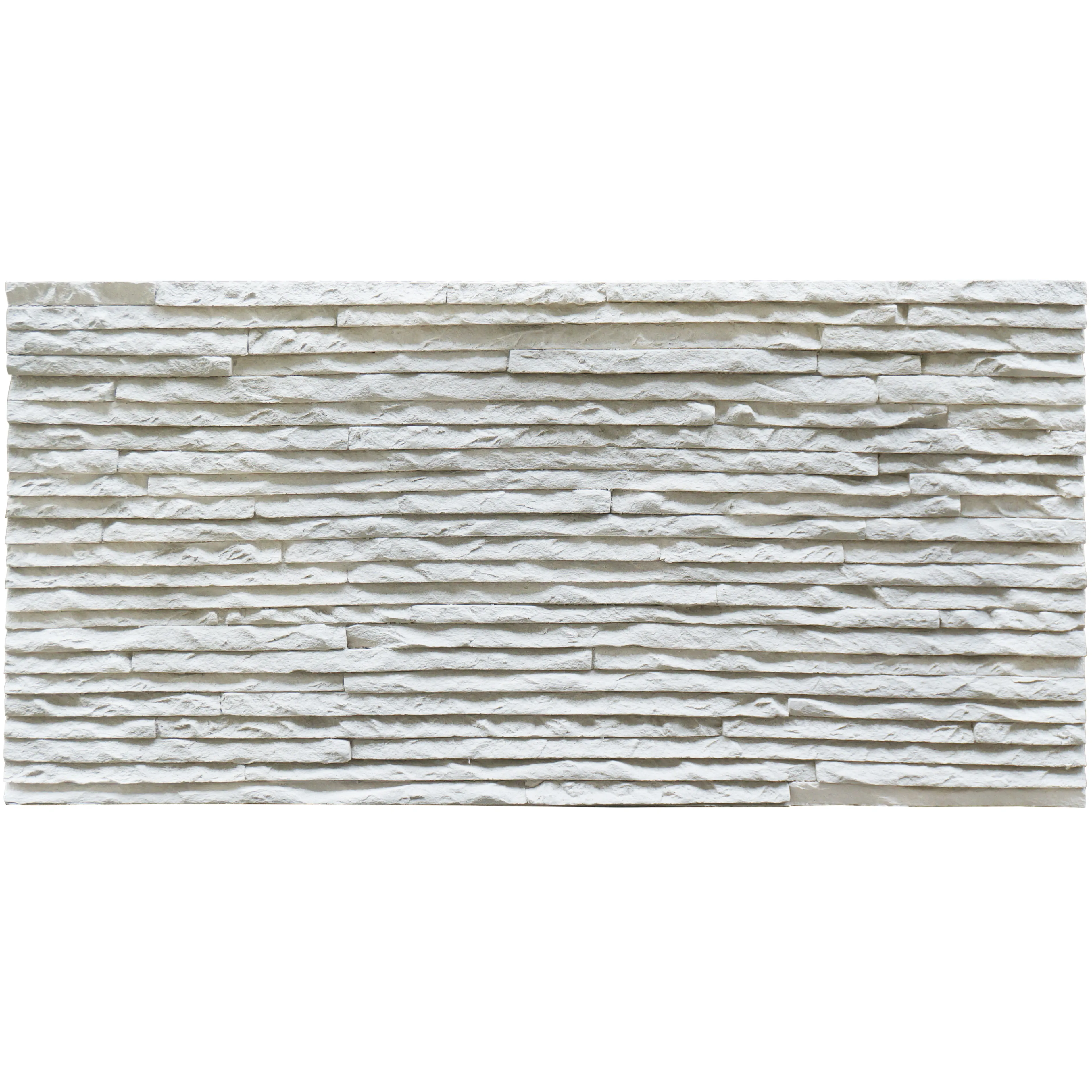
In the world of architecture and design, every material tells a story. It shapes the walls we lean against, the floors we walk on, and the spaces we call home. Today, that story is increasingly intertwined with a crucial chapter: sustainability. As architects, builders, and homeowners alike seek to blend beauty with responsibility, one material has emerged as a quiet revolutionary—MCM, or Modified Composite Material. Among its diverse lineup, Muretto Stone (Beige) stands out not just for its warm, earthy elegance, but for its ability to redefine what it means to build sustainably. Let's dive into how this innovative material stacks up against traditional options, and why its environmental benefits are more than just a trend—they're a necessity.
MCM isn't just another building product—it's a response to a planet in need. Traditional construction materials, while timeless, often come with hidden costs: quarries stripped of natural stone, forests cleared for timber, and carbon emissions from energy-heavy production. MCM, by contrast, is engineered to work with nature, not against it. At its core, MCM flexible stone combines recycled minerals, polymers, and natural pigments to mimic the look and texture of natural stone, concrete, or wood—without the environmental toll.
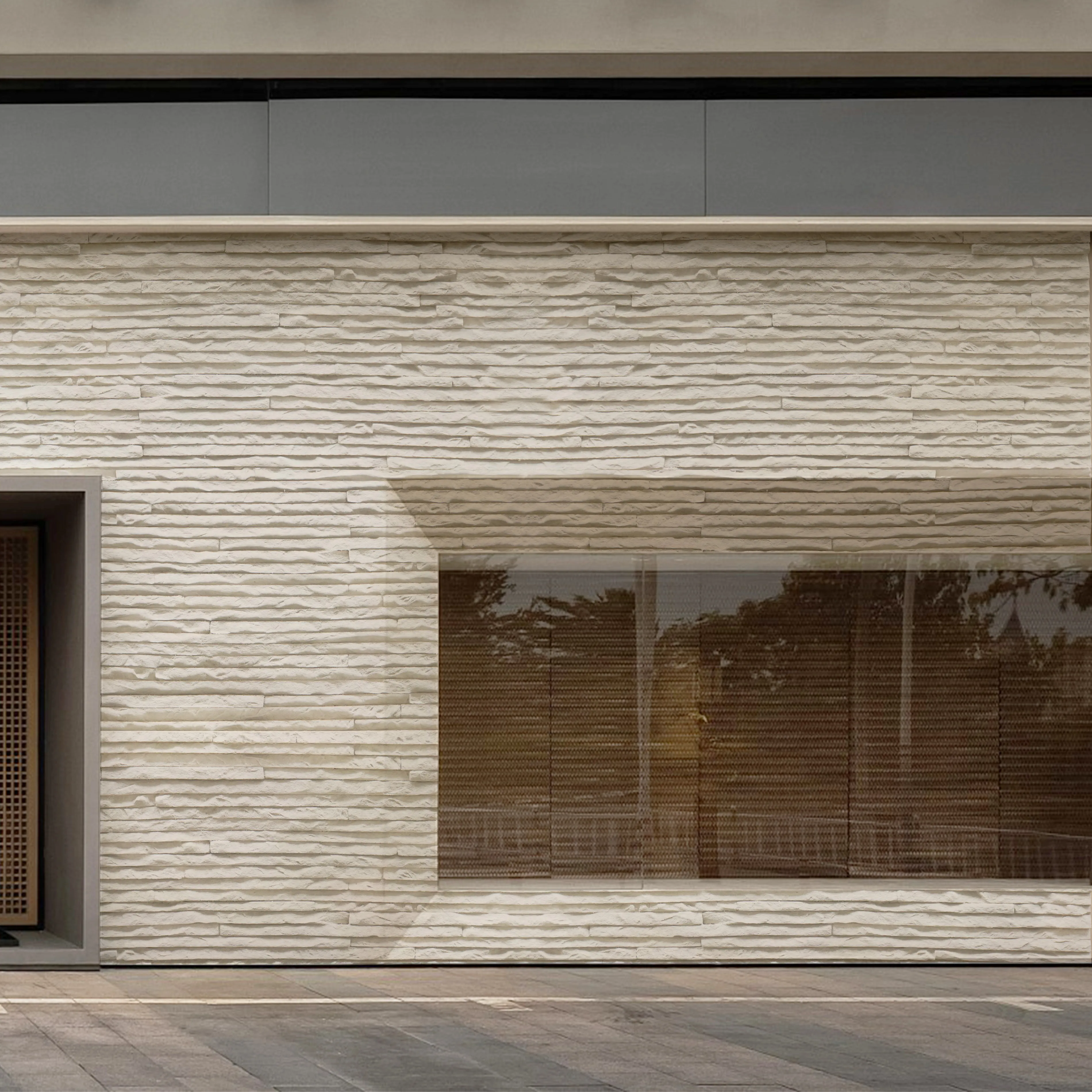
Take Muretto Stone (Beige) as an example. Part of the MCM big slab board series, it draws inspiration from the soft, sunlit hues of traditional travertine (beige), a stone cherished for its organic veining and warm tone. But unlike its natural counterpart, Muretto Stone (Beige) is crafted to be lightweight, flexible, and infinitely adaptable—proving that sustainability and aesthetics can walk hand in hand.
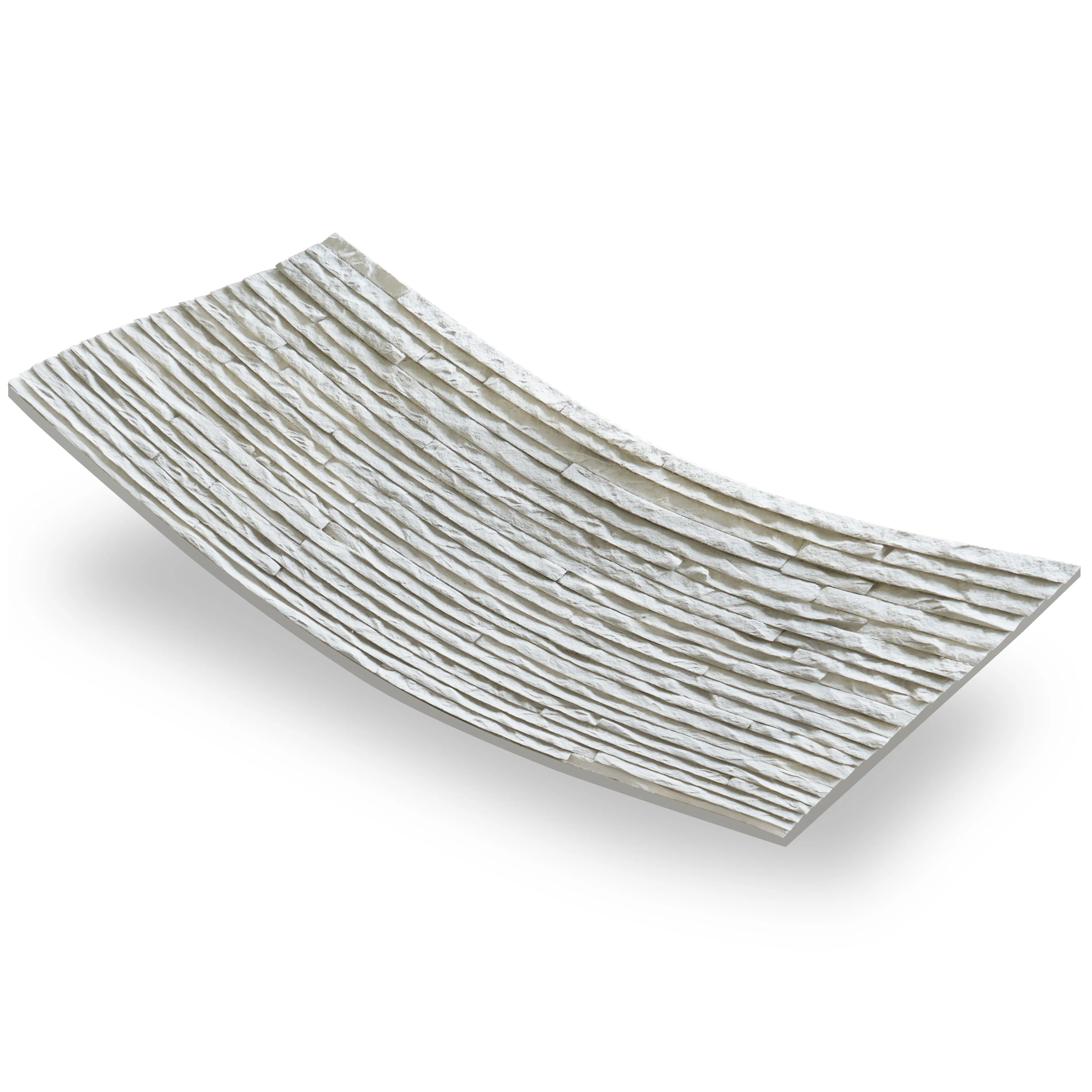
Muretto Stone (Beige) isn't just a "green" alternative—it's a material designed for real life. Its name, "Muretto," evokes the charm of old-world masonry, and its beige palette mirrors the softness of sun-baked earth. But beneath its classic exterior lies cutting-edge engineering. As part of the MCM flexible stone family, it bends without breaking, making it ideal for curved walls, accent features, or even furniture. Imagine a café with a curved clad in Muretto Stone (Beige)—the material's flexibility allows for seamless, flowing lines that would be nearly impossible with heavy natural stone.
But what truly sets it apart is its environmental DNA. Let's break down how Muretto Stone (Beige) compares to two common traditional materials: natural travertine (beige) and fair-faced concrete.
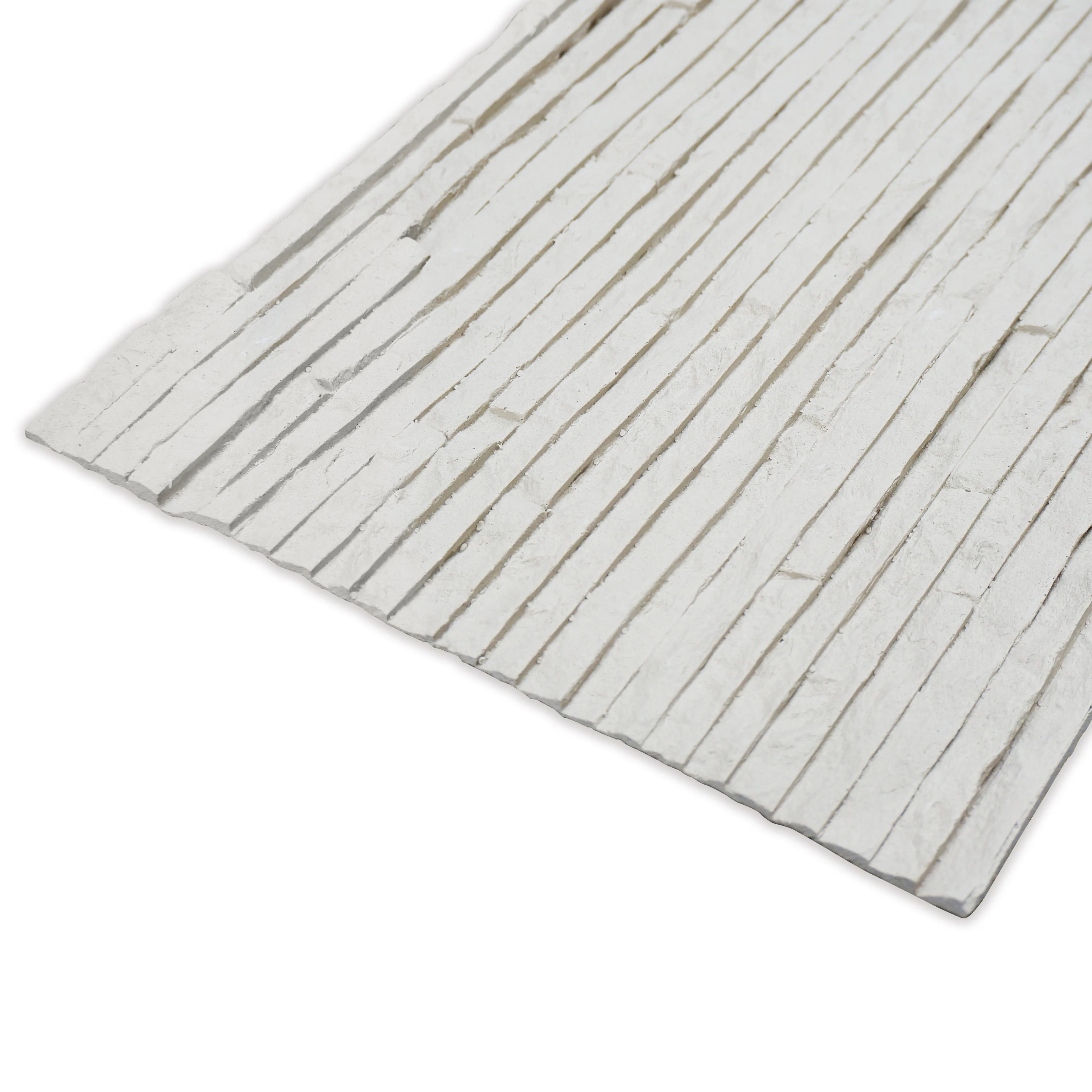
To understand Muretto Stone (Beige)'s impact, let's put it head-to-head with the materials it's often replacing. Below is a comparison of key environmental metrics, followed by a deeper dive into what these numbers really mean for our planet.
| Feature | Muretto Stone (Beige) | Natural Travertine (Beige) | Fair-Faced Concrete |
|---|---|---|---|
| Resource Usage | Uses 30-50% recycled materials; minimal virgin resource extraction | Requires quarrying; depletes natural stone reserves | Relies on cement (high CO2 emissions) and sand (often over-mined) |
| Carbon Footprint | 50-70% lower emissions than natural stone production | High emissions from quarrying, cutting, and transportation | Cement production alone accounts for ~8% of global CO2 |
| Weight | 3-5 kg/m² (lightweight, reduces structural load) | 20-30 kg/m² (heavy, requires reinforced structures) | 2400 kg/m³ (extremely heavy, increases foundation needs) |
| Durability | Resistant to cracking, fading, and moisture; 20+ year lifespan | Prone to chipping; may require sealing every 2-3 years | Susceptible to spalling in freeze-thaw climates |
| Recyclability | Can be ground down and reused in new MCM production | Limited recycling; often ends up in landfills | Recyclable but energy-intensive to process |
Natural travertine (beige) has been quarried for centuries, but every block extracted leaves a gaping hole in the earth. Quarrying disrupts ecosystems, displaces wildlife, and depletes non-renewable resources. Muretto Stone (Beige), by contrast, starts with recycled materials—crushed stone waste, reclaimed polymers—and adds just enough virgin materials to ensure quality. This "closed-loop" approach means fewer quarries, less mining, and a lighter touch on fragile landscapes.
Fair-faced concrete, while versatile, relies on cement—a material whose production releases massive amounts of CO2. For every ton of cement produced, roughly 0.8 tons of CO2 are emitted. MCM production, however, skips the high-temperature kilns needed for cement, slashing emissions significantly. It's a small shift in process, but multiplied across construction projects worldwide, it adds up to a big win for the climate.
Imagine a construction site where workers aren't straining under the weight of heavy stone slabs. Muretto Stone (Beige) weighs a fraction of natural travertine—just 3-5 kg per square meter compared to 20-30 kg for traditional stone. This lightness reduces the need for reinforced structural supports, cutting down on steel and concrete use. It also makes transportation easier: a single truck can carry 10 times more MCM panels than natural stone, slashing fuel consumption and emissions during delivery.
For builders, this translates to faster installation and lower labor costs. For the planet, it means fewer resources wasted on supporting heavy materials. It's a win-win that traditional materials simply can't match.
Sustainability isn't just about production—it's about longevity. A material that needs frequent replacement is rarely eco-friendly, no matter how "green" it is initially. Muretto Stone (Beige) excels here. Its composite structure resists the wear and tear that plagues traditional materials: no chipping from foot traffic, no fading under UV rays, and no moisture damage that leads to mold or rot. Unlike natural travertine, which often requires sealing to prevent staining, Muretto Stone (Beige) comes with a built-in protective layer, reducing maintenance needs and extending its lifespan to 20+ years.
Consider a commercial space, like a hotel lobby, where floors and walls endure constant use. With Muretto Stone (Beige), there's no need for costly repairs or replacements every few years—saving both money and the environmental impact of manufacturing new materials.
At the end of its life, Muretto Stone (Beige) doesn't become waste—it becomes a resource. Unlike natural stone, which is often dumped in landfills when a building is renovated, MCM panels can be ground into a powder and reused in the production of new MCM materials. This circular approach minimizes waste and reduces the need for fresh raw materials, creating a sustainable cycle that traditional options can't replicate.
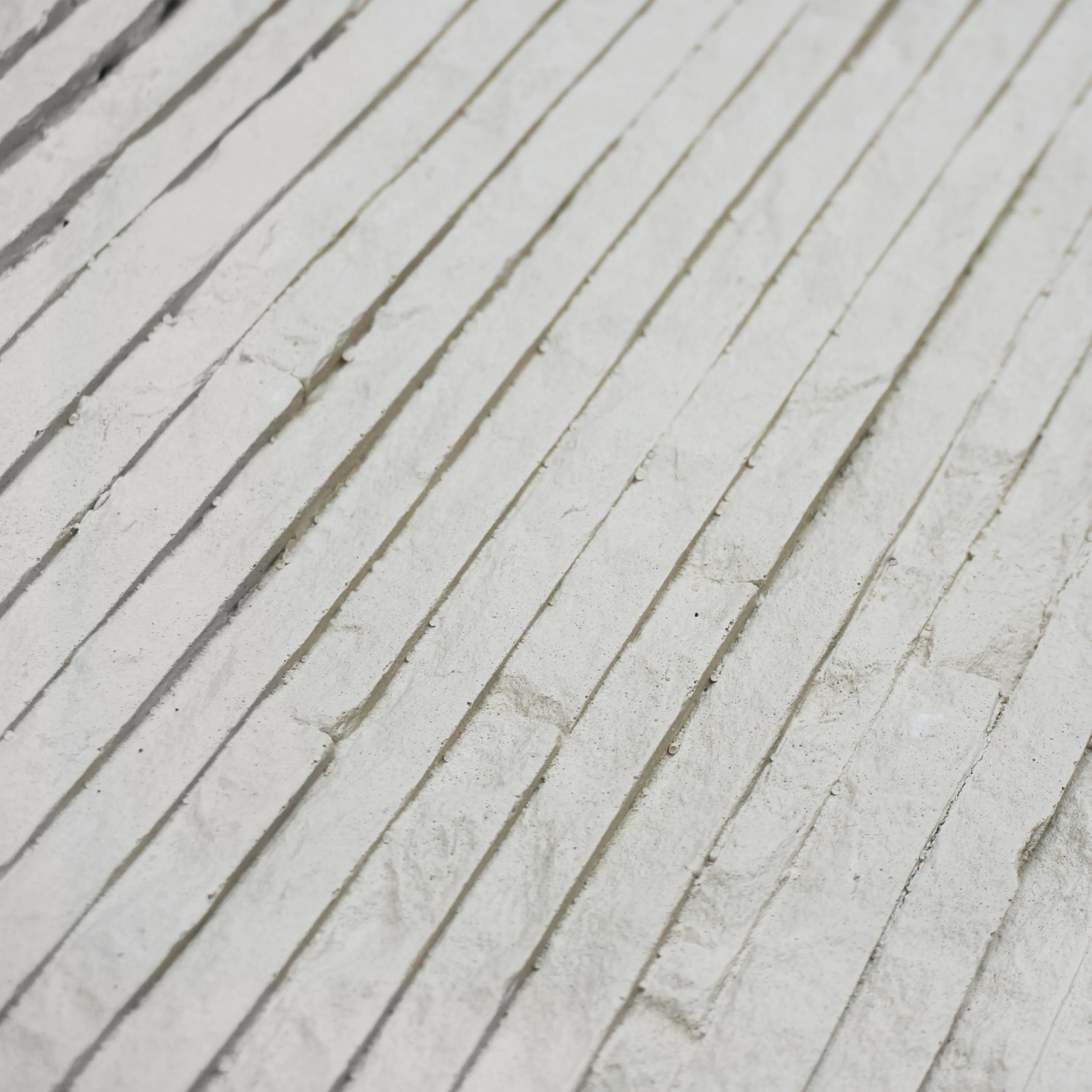
Sustainability isn't just about metrics—it's about people. When we choose materials like Muretto Stone (Beige), we're creating spaces that are healthier for the planet and for the people who inhabit them. Traditional materials like fair-faced concrete can off-gas harmful chemicals, while natural stone may harbor allergens if not properly sealed. MCM, however, is non-toxic and low-VOC, improving indoor air quality and reducing health risks for occupants.
Architects and designers are noticing, too. A recent project in Milan, Italy, replaced traditional travertine cladding with MCM big slab board series panels, including Muretto Stone (Beige), for a mixed-use development. The result? A building that reduced its carbon footprint by 40% during construction, while still exuding the timeless elegance of natural stone. "Clients want beauty, but they also want to feel good about their choices," says Laura, an architect on the project. "Muretto Stone (Beige) lets them have both."
As the world grapples with climate change, the demand for sustainable building materials will only grow. Muretto Stone (Beige) is more than a product—it's a preview of what's possible when innovation meets responsibility. It proves that we don't have to sacrifice aesthetics for the planet, or vice versa. Whether you're building a home, a office, or a public space, the choice of material is a choice about the kind of future we want to create.
In the end, MCM isn't just changing how we build—it's changing why we build. It's a reminder that every wall, every floor, and every surface has the power to tell a story of care: for our planet, for our communities, and for the generations to come. And in that story, Muretto Stone (Beige) is more than a chapter—it's a turning point.
Recommend Products












