
Ever stood outside a building at golden hour, watching the sun dip low and turn the walls into something almost alive? That warm, honeyed light doesn't just illuminate— it reveals. It shows whether a wall is just a barrier, or a storyteller. Today, we're diving into two heavyweights of exterior design: MCM (Modified Composite Material) and traditional stone. We'll talk textures that catch the light, colors that bloom at sunset, and why the choice between them isn't just about looks—it's about how a building breathes.
Before we compare, let's pause. Exterior walls are the first conversation a building has with the world. A rough-hewn stone wall whispers of history; a sleek modern panel shouts innovation. But at golden hour? All walls soften. The question is: which materials embrace that softness, and which just endure it? Let's start with the newcomers: MCM.
MCM isn't a single material—it's a category of lightweight, flexible panels designed to mimic the look of natural materials without the bulk. Think of it as nature's greatest hits, remixed for the modern world. What makes MCM special? It's not just about copying stone or wood; it's about enhancing them. MCM panels can capture the essence of a material— the grain of bamboo, the sparkle of travertine, the sheen of metal— and then turn it up a notch when the sun hits.
Take travertine (starry orange) , for example. Traditional travertine is lovely, with its porous, earthy texture, but MCM's version? It's like someone took a jar of starlight and mixed it into the stone. Those tiny, iridescent flecks in the panel aren't just paint—they're mineral composites that catch the sunset's orange and red hues, making the wall glow from within. It's travertine, but better: lighter, brighter, and unapologetically vivid.
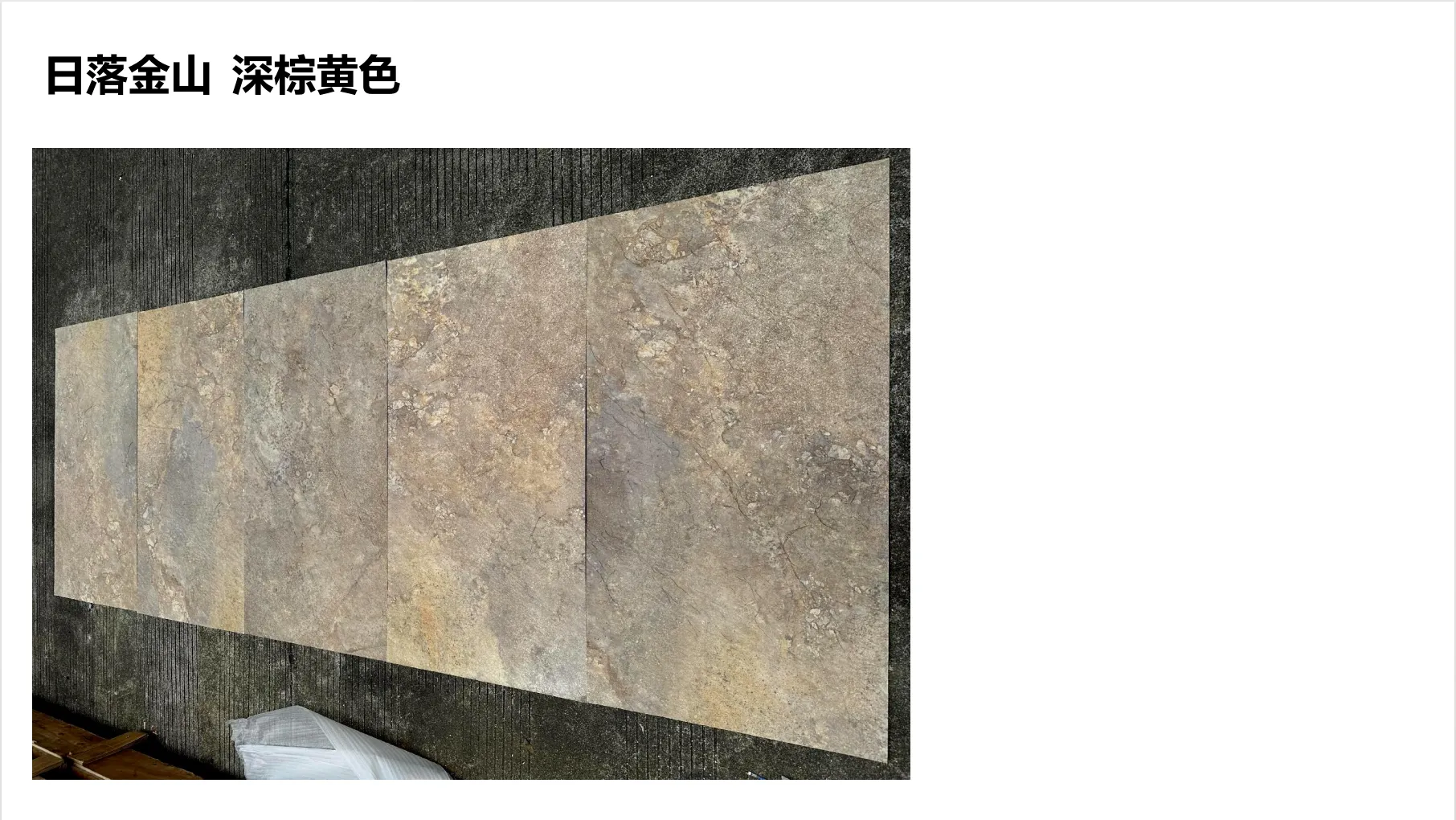
Then there's lunar peak golden . If travertine (starry orange) is a campfire, lunar peak golden is a harvest moon. This MCM panel has a subtle metallic undertone, not the in-your-face shine of chrome, but a soft, brushed finish that mimics the way moonlight (or sunset) plays on aged brass. At golden hour, it doesn't just reflect light—it absorbs the warm tones, turning from a muted gold to something almost liquid, like honey poured over concrete.
And let's not sleep on bamboo mat board . Real bamboo is beautiful, but it warps, fades, and demands constant upkeep. MCM's take? A woven texture so precise, you'll want to reach out and touch it. The fibers are raised just enough to cast tiny shadows at sunset, creating a rhythm of light and dark that feels organic, not manufactured. It's the calm of a bamboo forest, minus the maintenance.
Traditional stone? It's the elder statesman here. Marble, travertine, granite—these materials have been around since the pyramids, and for good reason. They're tough, they age gracefully, and they carry the weight of time in every vein and crack. But traditional stone isn't just about durability; it's about authenticity . No two slabs are the same. A vein of quartz might run through a travertine slab like a lightning bolt, or a patch of iron oxide could turn a granite corner pink. These "flaws" are what make traditional stone feel alive.
Take fair-faced concrete , for example. It's not flashy, but at golden hour, its raw, unpolished surface becomes a canvas. The tiny air bubbles and subtle color variations—some areas lighter, some darker—catch the light unevenly, creating a texture that feels like a fingerprint. It's industrial, yes, but in the soft glow of sunset, it softens into something almost poetic: a reminder that beauty doesn't have to be perfect.
Then there's natural travertine (not the MCM kind). With its pitted surface and earthy tones, it's like holding a piece of the earth's crust. At sunset, the pits trap light, turning into tiny golden wells, while the smoother areas reflect the sky. It's a dance of light and shadow that MCM can mimic, but never fully—because in traditional travertine, every pit and crack is a result of millions of years of geological history. You're not just looking at a wall; you're looking at time.
Enough talk—let's compare. Below is a breakdown of how MCM and traditional stone stack up in the areas that matter most, especially when the sun is low and the light is magic.
| Feature | MCM (with Real Examples) | Traditional Stone (with Real Examples) |
|---|---|---|
| Aesthetic Versatility | Can mimic dozens of textures: travertine (starry orange) (with star-like flecks), lunar peak golden (metallic warmth), bamboo mat board (woven organic texture). Colors stay vibrant over time, even in harsh sunlight. | Limited by nature: fair-faced concrete (raw, industrial), natural travertine (earthy pits), granite (speckled, dense). Colors may fade or darken with weathering, creating a "patina of age." |
| Texture Depth | Engineered to catch light: travertine (starry orange) has raised flecks that glow; bamboo mat board has woven ridges that cast dynamic shadows at sunset. | Organic, unpredictable texture: Natural travertine's pits and veins create random light patterns; granite's crystalline structure sparkles unevenly. |
| Weather Resistance | Lightweight and flexible: Resists cracking in freeze-thaw cycles. Lunar peak golden panels, for example, have a protective coating that prevents fading, so that golden hue stays bright for decades. | Durable but heavy: Traditional stone can chip or erode over time (e.g., limestone may dissolve in acid rain). Requires sealing to maintain color. |
| Installation Ease | Lightweight (5-8kg per panel) and easy to cut: A team can install bamboo mat board panels in hours, not days. No need for heavy machinery. | Heavy (20-30kg per slab) and labor-intensive: Installing natural travertine requires cranes, mortar, and skilled masons. Mistakes are hard to fix. |
| Environmental Impact | Uses 70% less raw material than traditional stone. Many MCM panels (like foamed aluminium alloy board variants) include recycled content. Low carbon footprint in transport due to light weight. | Mining and quarrying can disrupt ecosystems. Heavy transportation increases carbon emissions. Limited recycling options for waste slabs. |
Scenario 1: The Modern Home with MCM's Lunar Peak Golden
Imagine a sleek, single-story home in Arizona, where the desert sun blazes hot by day and cools quickly at night. The exterior walls are clad in
lunar peak golden
MCM panels. At noon, they're a muted, sophisticated gold—subtle enough not to clash with the desert landscape. But as the sun sets, something shifts. The panels, which have a slightly textured surface, start to glow. The metallic particles in the MCM catch the orange and pink of the sky, turning the entire house into a warm, golden beacon. A neighbor walks by and stops: "Is that… real metal?" No, it's MCM. Lightweight, durable, and designed to make the desert sunset feel like it's part of the house.
Scenario 2: The Heritage Cottage with Traditional Fair-Faced Concrete
Now, picture a 100-year-old cottage in the English countryside, its exterior walls made of
fair-faced concrete
(a choice made decades ago for its industrial charm). The concrete is pitted and stained in places—watermarks here, a patch of moss there. At noon, it looks utilitarian, almost harsh. But at golden hour? The sun turns the concrete from gray to a warm, honeyed beige. The watermarks, once flaws, become dark lines that look like brushstrokes. The moss glows green against the warm stone. A passerby pauses, not to admire the "beauty," but to feel something deeper: nostalgia. This wall has seen a century of sunsets, and each one has left its mark.
So, which is better? It depends on the story you want to tell. MCM is for the dreamers—those who want the warmth of travertine, the sheen of metal, or the texture of bamboo, but with modern perks like lightweight installation and vibrant, long-lasting color. Travertine (starry orange) MCM doesn't just look like travertine; it improves on it for golden-hour drama. Lunar peak golden turns a modern home into a sunset magnet.
Traditional stone, though, is for the historians. It's for buildings that want to say, "I've been here." Fair-faced concrete and natural travertine don't need to be perfect—their imperfections are their charm. They age with grace, and each sunset adds another layer to their story.
At the end of the day, both MCM and traditional stone have a place. But here's the secret: the best exterior walls aren't just built—they're felt . Whether it's the starry glow of MCM's travertine or the weathered wisdom of traditional concrete, what matters most is how they make you feel when the sun dips low and the world turns golden. Because in that moment, a wall isn't just a wall. It's a memory in the making.
Recommend Products












