
Choosing the right material for a space isn't just about checking boxes for durability or cost—it's about capturing a feeling. For decades, traditional stone like marble and travertine has been the gold standard for adding luxury and timelessness to homes and buildings. But anyone who's worked with natural stone knows its quirks: the weight that strains structures, the porosity that demands constant sealing, the limited sizes that leave unsightly seams. Enter MCM (Modified Composite Material), a modern innovation that's redefining what building materials can do. Among its impressive lineup, Marble Stream Stone shines brightest, blending the soul of natural stone with the smarts of 21st-century engineering. Let's dive into why this material isn't just a trend, but a transformative choice for anyone who wants beauty without compromise.
Natural stone has a romance to it—each slab tells a story of millions of years of geological formation. Walk into a room with a polished marble floor, and you can almost feel the weight of history in its veining. But that romance often comes with a price, both literal and logistical. Take travertine , for example. Its porous, honeycomb structure is part of its charm, but it's also a magnet for spills and stains. A single glass of red wine can leave a permanent mark unless sealed religiously—something homeowners quickly learn after the first mishap. Then there's the weight: a standard slab of natural marble can weigh over 200 pounds, making installation a Herculean task, especially in high-rise buildings where structural limits are tight. And if you dream of curved walls or custom shapes? Traditional stone often cracks under the pressure of cutting or bending, leaving designers stuck with rigid, boxy layouts.
Even fair-faced concrete , a staple of industrial-chic design, has its downsides. While it's durable, it's prone to chipping, and achieving a consistent finish across large surfaces is notoriously tricky. For all their beauty, traditional materials often force a trade-off: either you sacrifice practicality for aesthetics, or you settle for something functional but lacking character.
MCM flips the script on traditional stone by starting with the best parts of natural materials—minerals like calcium carbonate and quartz—and blending them with high-performance polymers. The result? A material that's 70% lighter than natural stone, but just as strong. MCM flexible stone isn't just a "fake" stone; it's a reimagined version, designed to fix the flaws of the real thing without losing its soul. Imagine holding a slab of MCM in your hands: it's thin enough to bend slightly (yes, bend!) but feels solid, with a texture that's warm to the touch, not cold and sterile like some synthetics. That flexibility opens up a world of design possibilities—curved fireplaces, wavy accent walls, even custom 3D-printed textures from the MCM 3D printing series that mimic everything from tree bark to rippling water.
But MCM's magic isn't just in its bendability. It's also in its resilience. Unlike porous travertine, MCM resists stains and moisture, so you can install it in kitchens, bathrooms, or even outdoor patios without fretting over spills or rain. And because it's made in controlled factory conditions, every slab is consistent—no more surprises like unexpected veins or color variations that derail a project. For designers, this means peace of mind; for homeowners, it means a space that looks intentional, not haphazard.
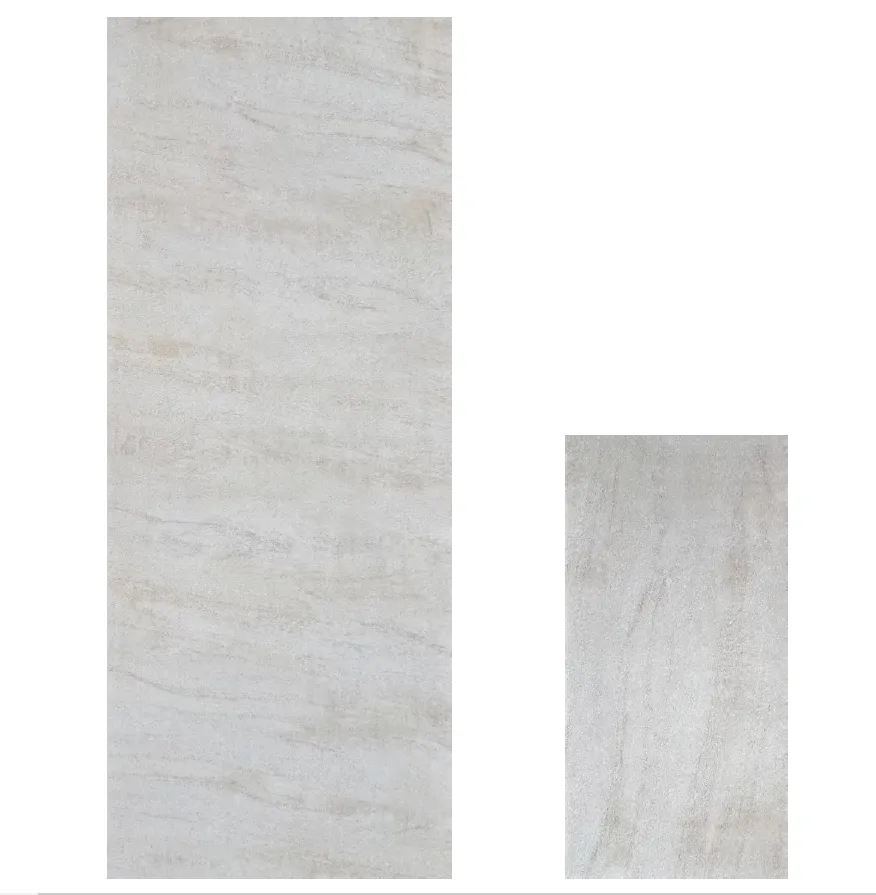
If MCM is the future of building materials, Marble Stream Stone is its masterpiece. At first glance, you'd swear it's natural marble: soft, flowing veining in shades of white, gray, and cream, as if a stream froze mid-flow and turned to stone. But look closer, and the differences reveal themselves. Run your hand over it, and you'll notice a subtle, matte finish that's smoother than natural marble (no tiny pits or rough spots), yet still feels organic, not plastic. That's because MCM captures the essence of marble's texture without the imperfections. And unlike natural marble, which fades under harsh sunlight, Marble Stream Stone retains its color for decades, even when used outdoors—a boon for pool surrounds or exterior cladding.
What really sets it apart, though, is its adaptability. Take a recent project I worked on: a boutique hotel in the city that wanted a grand lobby with a curved feature wall. The designer initially dreamed of natural marble, but the weight of traditional slabs would have required reinforcing the building's structure—a costly, time-consuming process. Enter Marble Stream Stone. Because it's lightweight (around 5 pounds per square foot), the installers could mount it directly to the existing drywall, saving weeks of work and thousands of dollars. The result? A sweeping, 20-foot curved wall that looks like it's carved from a single block of marble, with no visible seams. Guests walk in and gasp, not realizing the material is working with the building, not against it.
| Feature | MCM (Marble Stream Stone) | Traditional Stone (Natural Marble/Travertine) |
|---|---|---|
| Weight | 5–8 lbs per sq ft (70% lighter than natural stone) | 20–30 lbs per sq ft (requires structural reinforcement) |
| Porosity | Low (resists stains; no sealing needed) | High (prone to spills; needs sealing every 6–12 months) |
| Installation Time | 50% faster (lightweight, easy to cut/shape on-site) | Slower (heavy slabs require machinery; precise cutting) |
| Design Flexibility | High (bends for curves; 3D printing for custom textures) | Low (rigid; prone to cracking when shaped) |
| Long-Term Cost | Lower (minimal maintenance; no replacement due to staining) | Higher (sealing, repairs, potential replacement) |
Materials don't just build spaces—they shape experiences. Take Sarah, a homeowner in Portland who wanted to renovate her kitchen. She'd always loved the look of marble countertops but was terrified of etching from acidic foods like lemon or vinegar. "I have two kids and a busy life," she told me. "I didn't want to stress every time someone left a soda can on the counter." We suggested Marble Stream Stone, and a year later, her kitchen still looks brand-new. "Last month, my son spilled his orange juice and forgot to wipe it up for hours," she laughed. "I panicked, but when I cleaned it, there wasn't a mark. It's like having a marble countertop that actually likes being lived on."
Then there's the café in Seattle that used travertine (starry blue) as an accent with Marble Stream Stone. The owner wanted a "cosmic earth" vibe—warm, grounding marble paired with pops of deep blue that evoke a starry sky. Traditional travertine in that shade would have been rare (and expensive), but MCM's color-matching technology made it possible to create a custom starry blue hue that's consistent across every panel. Now, the café's walls feel like a conversation between earth and sky, and customers can't stop taking photos—proof that MCM doesn't just replicate beauty; it expands it.
MCM isn't just a better stone—it's a new way of thinking about building materials. Take rammed earth board (gradient) , another standout in the MCM lineup. It mimics the warm, earthy texture of traditional rammed earth but adds a twist: gradient colors that shift from soft terracotta to deep sienna, a effect impossible to achieve with natural rammed earth. It's perfect for homeowners who want that "desert modern" look but need something lightweight enough for second-story walls. Or 3D printing series , which lets designers create textures as unique as a fingerprint—think honeycomb patterns, leaf veins, or even custom logos embedded into the material. With MCM, the only limit is imagination.
And let's not forget sustainability. Traditional stone quarrying is resource-intensive, often leaving scars on landscapes. MCM, by contrast, uses recycled minerals and requires 80% less energy to produce than natural stone. For eco-conscious builders, that's a win-win: beauty without guilt. Even better, MCM is fully recyclable at the end of its life, closing the loop on waste.
At the end of the day, MCM isn't here to replace traditional stone. It's here to give us more choices—to let us have the warmth of travertine, the elegance of marble, or the ruggedness of concrete, without the headaches. Marble Stream Stone embodies this spirit: it's a material with heart, one that understands that the best spaces aren't just built—they're lived in, loved, and made to last. Whether you're designing a luxury hotel, a cozy home, or a bold commercial space, it's proof that you don't have to choose between beauty and practicality. With MCM, you get both—and that's a story worth building.
Recommend Products












