
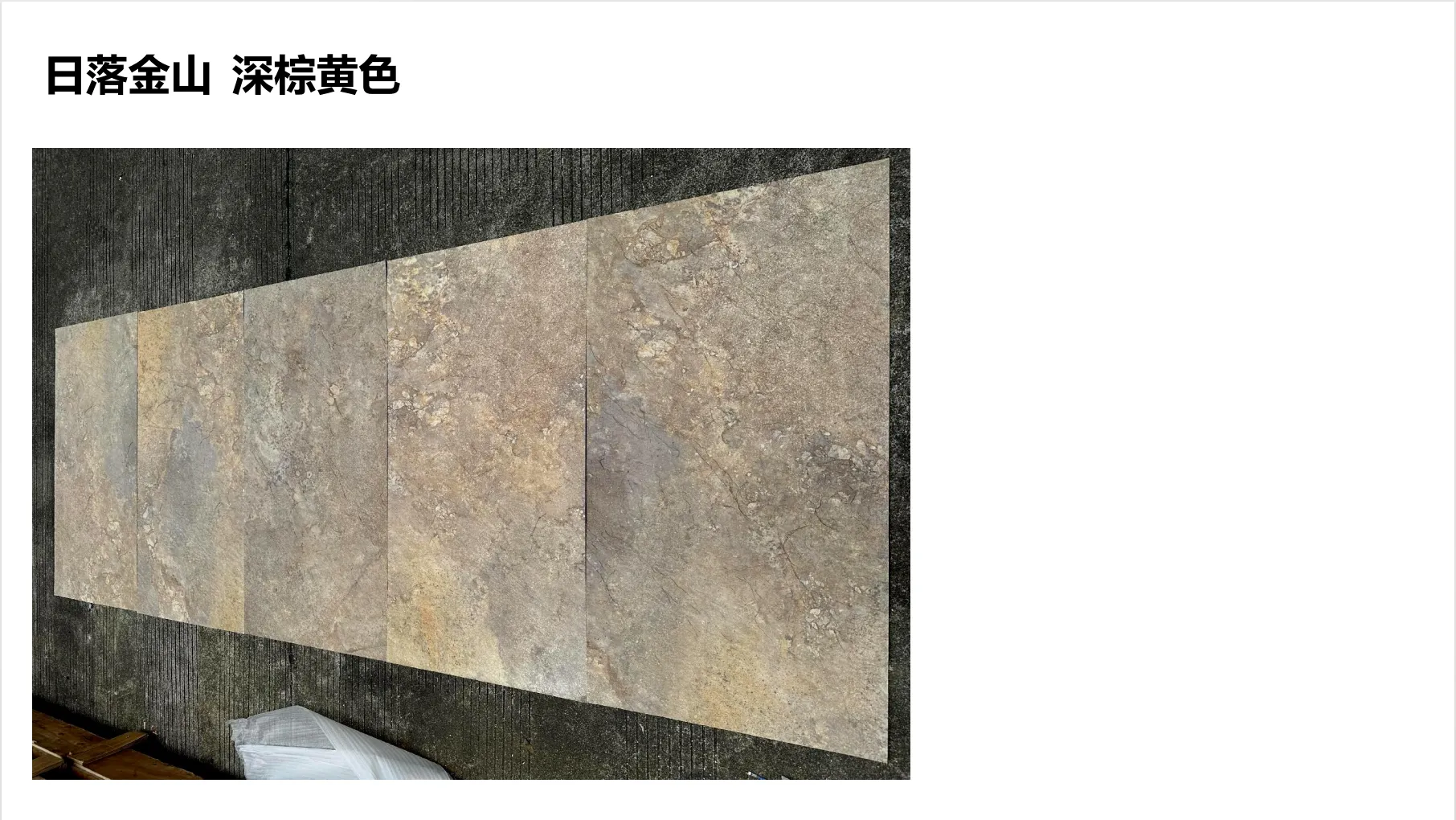
Your home's exterior is more than just a protective shell—it's the first impression visitors get, a reflection of your style, and a silent storyteller of the care you put into your space. When it comes to choosing cladding materials, two names often rise to the top: MCM (Metal Composite Material) and vinyl siding. Both promise to transform your home's look, but they couldn't be more different in how they deliver on that promise. Today, we're diving deep into this comparison, with a special focus on MCM flexible stone —a game-changer in the world of cladding—and how it stacks up against traditional vinyl siding, especially when the golden sunset real photos start rolling in. Let's break it down.
At its core, MCM is a sandwich of two thin metal layers (often aluminum) bonded to a non-metallic core. But we're not here to talk about generic MCM—we're focusing on MCM flexible stone , a specialized variant that mimics the look and texture of natural stone. Think of it as stone's lightweight, durable cousin. It's engineered to capture the organic beauty of materials like travertine or the sleek, otherworldly vibe of the lunar peak series (silvery, golden, black—take your pick), all while being flexible enough to wrap around curves, corners, and complex architectural details.
Vinyl siding, on the other hand, is the tried-and-true plastic cladding we've all seen on suburban homes. Made from polyvinyl chloride (PVC) resin, it's known for being budget-friendly and easy to install. It comes in sheets or panels, often designed to mimic wood grain, and is available in a range of solid colors. For decades, it's been the go-to for homeowners looking to spruce up their exteriors without breaking the bank.
Let's cut to the chase: how do these materials look, especially in those magical moments when the sun dips low and paints the sky in hues of amber and rose? That's where golden sunset real photos become our best judge. Vinyl siding, for all its affordability, tends to flatten out in warm light. Its synthetic surface reflects sunlight in a harsh, uniform way, lacking the depth and texture that make natural materials feel alive. MCM flexible stone , though? It's a different story.
Take travertine , for example—a natural stone famous for its pitted surface and warm, earthy tones. MCM flexible stone replicates that texture so accurately that when the golden sunset hits, the light dances in those tiny pits and veins, creating a play of shadows and highlights that feels almost alive. The lunar peak series, with its metallic sheen, takes this a step further: the silvery variant shimmers like moonlight on water, while the golden option glows like liquid honey under the setting sun. Vinyl, by contrast, might have a wood-grain print, but it's a flat, two-dimensional imitation—no amount of sunset light can make it look "real."
| Feature | MCM Flexible Stone | Vinyl Siding |
|---|---|---|
| Texture | Deep, tactile, and natural—mimics travertine , stone, or lunar peak metallic finishes. | Shallow, printed patterns (wood grain, smooth) with no real depth. |
| Color Range | Rich, nuanced tones—think golden sunset amber, travertine beige, lunar peak silvery-gray. | Bold, solid colors (white, gray, blue) with limited variation. |
| Light Interaction | Catches light dynamically—shadows and highlights create depth in photos. | Reflects light uniformly, appearing flat in photos. |
| Long-Term Aesthetics | Retains color and texture for decades; ages gracefully. | Fades over time, often turning chalky or dull in direct sunlight. |
Looks matter, but what happens when the golden sunset fades and the storm clouds roll in? Here's where MCM flexible stone truly shines. Thanks to its metal core and stone-like outer layer, it's built to withstand the worst Mother Nature throws at it. Heavy rain? No problem—its non-porous surface repels water, preventing mold or rot. Hailstorms? The flexible stone layer absorbs impact without cracking (unlike rigid stone, which can shatter). Even extreme temperatures—blistering summer heat or freezing winter cold—barely phase it. It won't warp, melt, or become brittle over time.
Vinyl siding, unfortunately, isn't as resilient. On hot days, PVC can soften and warp, causing panels to buckle or pull away from the wall. In cold climates, it becomes rigid and prone to cracking if hit by a stray branch or hailstones. And let's talk about color retention: vinyl fades, and it fades fast. That vibrant blue you loved? After a few years of sun exposure, it'll turn a muted, washed-out gray. MCM flexible stone , by contrast, uses advanced coating technologies that lock in color—even after a decade of golden sunset exposure, it'll look as fresh as the day it was installed.
Installing cladding shouldn't feel like solving a Rubik's Cube, and MCM flexible stone gets this. Its lightweight design (about a third the weight of traditional stone) and flexibility make it a breeze for contractors to work with. It can curve around bay windows, wrap over gables, or even be applied to uneven surfaces—no need for extensive structural modifications. This flexibility also means fewer seams, giving your home a seamless, high-end look.
Vinyl siding, while lightweight, comes with its own set of headaches. Panels are designed to interlock, but they expand and contract with temperature changes. Installers have to leave "gap space" to accommodate this movement, which can lead to unsightly gaps in cold weather or bulging in heat. And if a panel gets damaged? You'll need to replace the entire section, since individual panels are hard to remove without breaking the interlock. With MCM, repairs are simpler: just cut out the damaged area and replace it—no fuss, no mess.
Let's be honest: no one wants to spend their weekends power-washing or repainting their home's exterior. MCM flexible stone gets this, too. A quick rinse with a garden hose once or twice a year is all it takes to keep it looking clean. Its non-porous surface resists dirt and grime, so even pollen or bird droppings wipe away easily. No scraping, no painting, no sealing—just set it and forget it.
Vinyl siding demands more attention. It's porous enough to trap dirt, so you'll need to scrub it with soap and water regularly to avoid stains. And when that faded color starts to bother you? You'll either have to live with it or repaint the entire house (and repainting vinyl is tricky—paint can peel or bubble if not applied properly). For busy homeowners, this is a dealbreaker. Why spend time maintaining siding when you could be enjoying that golden sunset from your porch instead?
In today's world, sustainability isn't just a buzzword—it's a responsibility. MCM flexible stone checks this box, too. Many manufacturers use recycled aluminum in the metal core, and the stone-like outer layer often contains natural, eco-friendly pigments. Plus, its durability means less frequent replacement, reducing waste over time. Some MCM products even contribute to LEED points, making them a favorite for green-building projects.
Vinyl siding, made from PVC, is a different story. PVC production releases harmful chemicals, and once installed, vinyl doesn't biodegrade. When it eventually needs replacement, it ends up in landfills, where it can take centuries to break down. For homeowners looking to reduce their carbon footprint, vinyl is a hard sell.
Let's address the elephant in the room: upfront cost. Vinyl siding is cheaper to buy and install—no question. If you're on a tight budget, it might seem like the obvious choice. But here's the catch: MCM flexible stone is an investment, not an expense. While it costs more initially, it lasts 30+ years with minimal maintenance. Vinyl, on the other hand, needs replacement every 10–15 years (sooner if it's exposed to harsh weather). When you factor in repainting, repairs, and replacement costs, MCM ends up being the more affordable option over time.
And let's not forget resale value. Homes clad in MCM flexible stone —with its travertine textures, lunar peak sheens, and golden sunset glow—command higher prices on the market. Buyers notice quality, and MCM signals that you've invested in your home's longevity and beauty. Vinyl, unfortunately, is often seen as a "temporary fix," which can hurt your home's resale appeal.
Still on the fence? Let's look at real-world examples. Take a modern home in Colorado, clad in MCM flexible stone in the lunar peak golden finish. When the sun sets over the Rockies, the siding glows like it's lit from within—photos of this home go viral on real estate sites, with comments like, "It looks like a palace!" Compare that to a neighboring home with vinyl siding in "sunset orange." In photos, the color looks flat and artificial, more like a neon sign than a warm, inviting exterior.
Or consider a coastal cottage in Maine, where MCM flexible stone in travertine beige was chosen for its ability to withstand salt spray and high winds. After five years, it still looks brand new, with the stone texture deep and rich. The vinyl-sided cottage next door? Its panels are warped from the ocean breeze, and the once-bright white has turned a dingy gray. When the owners took golden sunset real photos for a listing, guess which home sold first?
At the end of the day, the choice between MCM flexible stone and vinyl siding comes down to priorities. If upfront cost is your only concern, vinyl might seem tempting. But if you want a home that turns heads at sunset, stands up to the elements, and adds value for decades to come, MCM flexible stone is the clear winner. Its ability to mimic natural beauty—whether travertine 's earthy warmth or lunar peak 's celestial shimmer—paired with unbeatable durability and low maintenance, makes it more than a cladding material. It's an investment in your home's story, one that'll shine bright in every golden sunset real photo for years to come.
So, when you're ready to give your home an exterior that matches its personality, remember: not all cladding is created equal. MCM flexible stone doesn't just cover your home—it transforms it. And in a world where first impressions matter, that transformation is priceless.
Recommend Products












