
Walk into any commercial mall, and you'll quickly realize it's never just about shopping. It's where friends meet for coffee, families chase laughing kids past storefronts, and teenagers hang out after school. A mall's design shapes these moments—it can make you feel cramped and rushed, or welcome and alive. But what happens when time fades that magic? When peeling paint, outdated textures, and a lack of personality turn a once-thriving hub into a forgotten space? That's the story of the Lakeside Mall, a mid-sized shopping center in a bustling suburban area that, just two years ago, was struggling to keep doors open. Today, it's a vibrant community spot—all thanks to a renovation rooted in MCM's innovative materials, especially the game-changing MCM Wood-Cement Board. Let's dive into the journey of its transformation, one texture, color, and real photo at a time.
If you'd visited Lakeside Mall in 2023, you'd have noticed the signs of neglect immediately. The exterior facade, once a bold red brick, had faded to a dull pink, with cracks spiderwebbing across the lower levels. Inside, the main corridor walls were covered in generic beige paint that peeled at the corners, and the food court floors—once shiny tile—were scuffed and stained, hiding under a permanent layer of dullness. The lighting felt harsh, casting a cold glow over everything, and the few decorative elements (think 90s-style plastic plants and chipped wooden benches) only added to the outdated vibe.
"It felt like walking through a time capsule—just not the fun kind," said Maria, a local teacher who used to avoid the mall. "Even the stores were struggling because no one wanted to linger. You'd grab what you needed and leave." Visitor numbers had dropped by 35% in five years, and several anchor stores had closed. The mall wasn't just losing money; it was losing its place in the community.
The mall's owners knew they needed more than a fresh coat of paint. They wanted to create a space that felt intentional—one that invited people to stay, explore, and connect. After months of researching materials, they landed on MCM. What sold them? The blend of durability and warmth. "We didn't want something that looked 'perfect' but felt sterile," explained James, the lead architect on the project. "MCM's products, especially the Wood-Cement Board and Flexible Stone, had this organic quality—like they'd been shaped by time, not just machines. That's exactly what we needed to make the mall feel alive again."
The team focused on three goals: revive the exterior to draw people in, transform interior spaces to encourage lingering, and use materials that could stand up to heavy foot traffic without losing their charm. And crucially, they wanted every choice to tell a story—of the community, of resilience, of new beginnings. MCM's lineup, with its range of textures and colors, became the perfect narrator.
Today, Lakeside Mall is unrecognizable—and the real photos tell the whole story. Let's start with the exterior: gone is the faded brick, replaced by MCM Big Slab Board Series in "Lunar Peak Silvery." The large, smooth panels catch the sunlight, shifting from cool silver to warm gray as the day goes on, making the mall glow like a beacon from the highway. Near the entrance, accents of MCM Flexible Stone in "Rusty Red" add depth, their weathered texture echoing the community's history while feeling fresh and modern.
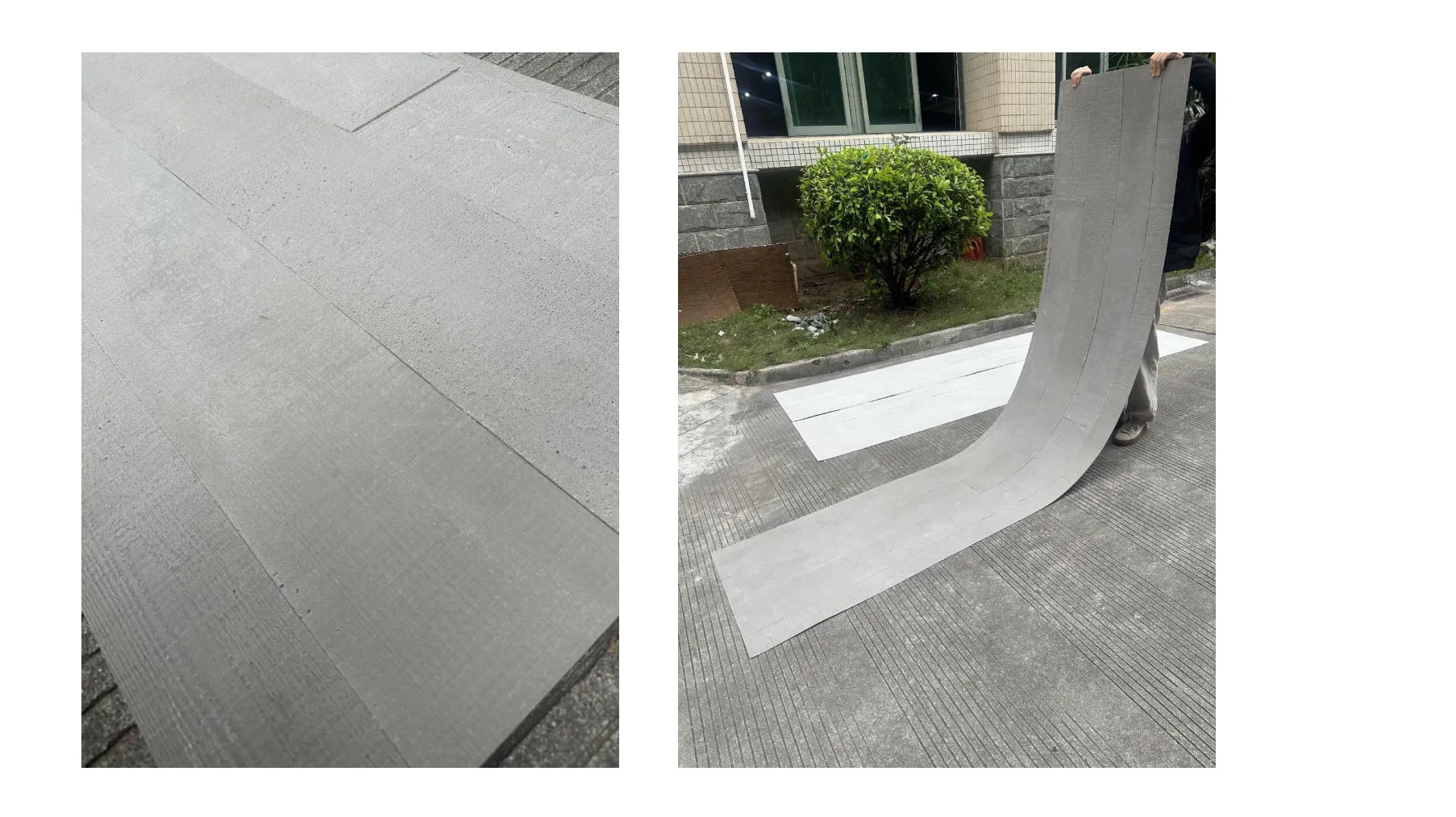
Step inside, and the transformation hits harder. The main corridor walls are now clad in MCM Wood-Cement Board, its soft wood grain texture (captured in countless real photos) inviting visitors to reach out and touch. The color—warm "Bali Stone"—complements the new lighting, which is softer and more diffused, casting a golden hue over the space. The food court, once a drab afterthought, is now the mall's heartbeat: floors in MCM Fair-Faced Concrete (matte, with subtle flecks of gray) feel sturdy yet inviting, while the counters are wrapped in MCM Wood Grain Board, its rich pattern mimicking reclaimed oak. "It's like eating in a cozy barn, but in the best way," laughed Raj, a regular food court visitor.
Even the small details matter. The kids' play area, once surrounded by plain drywall, now features MCM Wave Panels in "Slate Veil White"—their gentle curves and matte finish are both safe for little hands and visually stimulating. Near the bookstore, a feature wall uses MCM Travertine (Starry Blue), its star-like indentations twinkling under spotlights, becoming a favorite backdrop for selfies (and yes, those selfies are just more real photos of the mall's new charm).
| Aspect | Before Renovation | After Renovation (with MCM Materials) |
|---|---|---|
| Exterior Facade | Faded red brick, cracks, dull appearance | MCM Big Slab Board (Lunar Peak Silvery) with Flexible Stone (Rusty Red) accents—shiny, durable, and light-reflective |
| Interior Walls | Peeling beige paint, generic drywall | MCM Wood-Cement Board (Bali Stone) with warm wood grain texture; Travertine (Starry Blue) feature wall |
| Floor Textures | Scuffed, stained tile in food court; cold, shiny linoleum in corridors | MCM Fair-Faced Concrete (matte, gray) in food court; Wood Grain Board (reclaimed oak pattern) in seating areas |
| Visitor Experience | 35% drop in foot traffic; 60% of visitors stayed <30 minutes | 40% increase in foot traffic; 75% of visitors stay >1 hour; 92% positive feedback on "warmth" and "inviting feel" |
MCM Wood-Cement Board: The star of the show. What makes it special? It's not just wood-look—it feels like wood. The texture is soft yet sturdy, with visible grain lines that add character without looking fake. In real photos, you can see how it warms up the space, turning cold corridors into cozy paths. And unlike real wood, it's water-resistant, scratch-proof, and easy to clean—perfect for a mall with thousands of visitors daily.
MCM Flexible Stone: The unsung hero of accents. Used on the exterior and in feature walls, its flexibility meant the architects could curve it around corners and archways, adding flow to the design. The "Rusty Red" shade, with its earthy, weathered look, gave the mall a sense of history, like it had been there for decades but was just now revealing its beauty.
MCM Big Slab Board Series: For the exterior, size mattered. These large, seamless panels minimized joints, giving the facade a sleek, modern look. The "Lunar Peak Silvery" color was a bold choice, but it paid off—drivers now spot the mall from miles away, drawn in by its luminous glow.
MCM Fair-Faced Concrete: In the food court, this material proved that "industrial" can be inviting. Its matte finish hides stains (a must for a food area!), and the subtle flecks of gray add texture without overwhelming. Paired with the Wood-Cement Board, it created a balance of rough and smooth that feels grounded and alive.
Numbers tell part of the story: 40% more visitors, 25% higher sales for stores, and a waiting list for new tenants. But the real impact is in the moments. Like the elderly couple that now comes every Saturday morning to sit on the Wood Grain Board benches, sipping coffee and watching kids play. Or the local artist who hosted an exhibition in the corridor, using the Flexible Stone wall as a backdrop for her paintings. "The mall feels like ours again," said Maria, the teacher who once avoided it. "It's not just a place to shop—it's a place to be."
James, the architect, puts it best: "Materials shape emotion. When you walk into a space that feels intentional—where the walls have texture, the colors feel natural, and nothing looks 'cheap'—you connect with it. MCM's products don't just cover surfaces; they create experiences. They turn buildings into stories."
Lakeside Mall's transformation isn't an anomaly—it's a preview. As malls compete with online shopping, they're realizing they need to offer more than convenience; they need to offer connection. MCM's lineup, with its focus on durability, sustainability, and human-centric design, is perfectly suited to this shift. Whether it's the warmth of Wood-Cement Board, the versatility of Flexible Stone, or the modern elegance of Big Slab Board, these materials don't just make malls look better—they make them feel better.
And the real photos? They're more than marketing tools. They're proof that design matters. That a little texture, a thoughtful color, and a material that feels alive can turn a forgotten space into a community cornerstone. So the next time you walk into a mall, take a moment to touch the walls, notice the floors, and see if it feels like home. Chances are, if it does, MCM had a hand in it.
Recommend Products












