
Walk into any modern commercial space today—whether it's a sleek tech startup lobby, a bustling downtown restaurant, or a high-end retail boutique—and you'll notice something different. These aren't just "spaces" anymore; they're stories. Stories about brand identity, about sustainability, about how we want to feel when we work, shop, or connect. And at the heart of that storytelling? The materials that shape the walls, the floors, the very bones of the building. In a world where generic drywall and basic tiles no longer cut it, designers and architects are hunting for materials that do more: materials that blend durability with beauty, sustainability with personality, and practicality with that "wow" factor. Enter MCM's Wood-Cement Board Real Photos and Big Slab Series—a lineup that's quietly redefining what commercial design can be.
Not long ago, commercial materials were chosen with one question in mind: "Will this hold up?" Aesthetics took a backseat to cost and durability. But as businesses realized that their physical spaces are extensions of their brand—places that attract customers, retain employees, and even drive innovation—that mindset shifted. Now, the question is: "What story does this material tell?" Does it say "we're forward-thinking"? "We care about the planet"? "We pay attention to the little things"? This shift has architects and designers on the hunt for materials that check all the boxes: tough enough for high-traffic areas, stunning enough to make a statement, and responsible enough to align with modern values. And that's where MCM steps in.
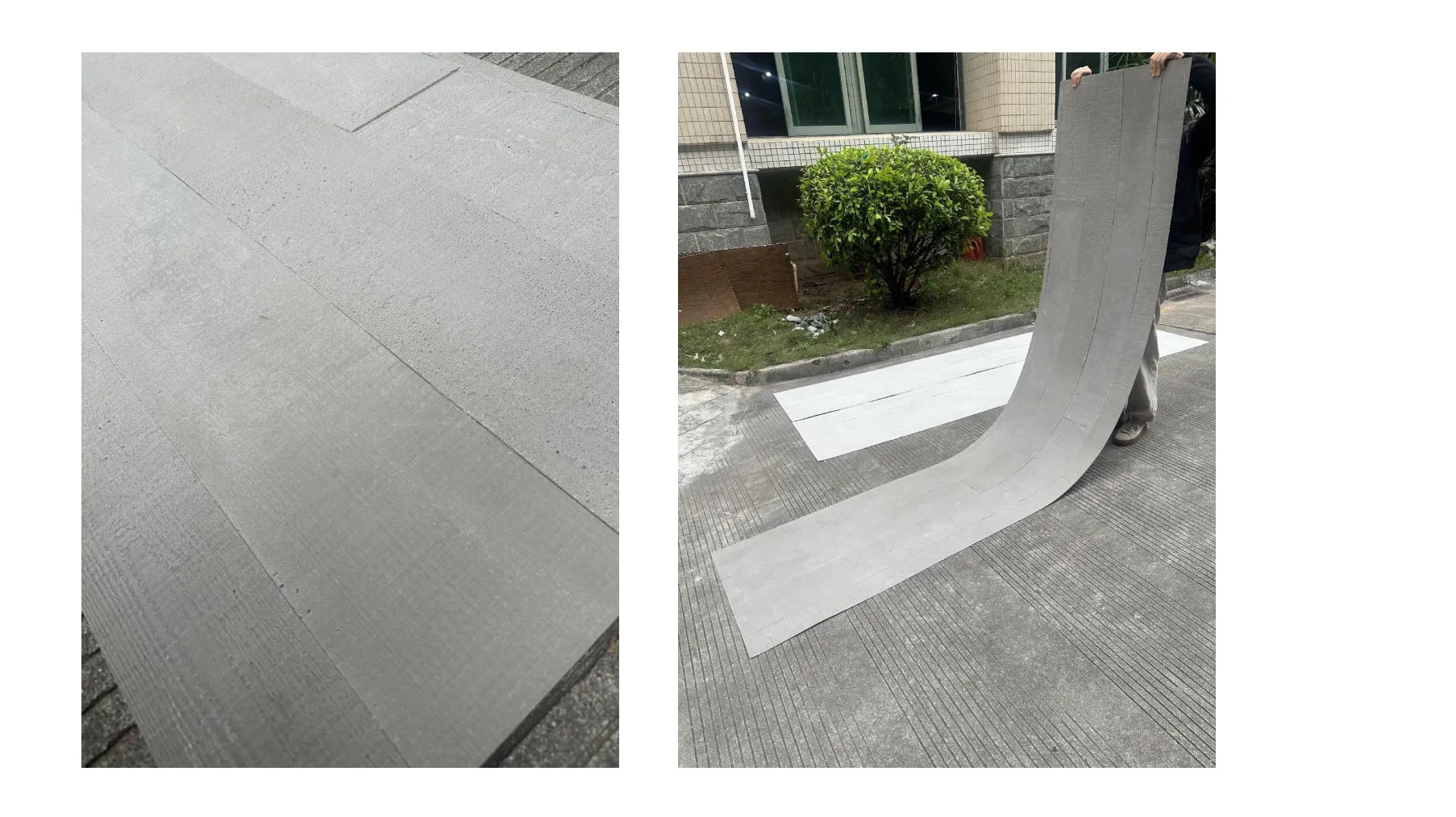
Let's start with the star of the show: MCM's Wood-Cement Board. If you've seen the real photos, you know what I'm talking about. These aren't your grandma's wood panels, and they're not cold, sterile concrete slabs, either. They're a marriage of two worlds: the organic warmth of wood and the rugged, industrial charm of concrete. One glance at the real photos, and you'll notice the details—the way the wood grain isn't just printed on, but embedded, with subtle knots and variations that make each board feel unique, like a piece of reclaimed timber that's been given a modern twist. Then there's the concrete base: smooth but not overly polished, with a slight texture that catches the light, adding depth without feeling heavy.
Here's the thing about these real photos—they don't lie. You can see how the material plays with light throughout the day: soft morning light brings out the warmth of the wood tones, while harsh afternoon sun highlights the concrete's cool undertones. In one photo, a restaurant wall clad in Wood-Cement Board serves as the backdrop for leather banquettes and brass fixtures; the material grounds the space, making it feel cozy but not cluttered. In another, a startup office uses it on a feature wall behind the reception desk, pairing it with greenery and warm lighting to say, "We're innovative, but we're also human." It's versatile, sure—but more than that, it's expressive . It doesn't just fill a space; it shapes the mood.
Now, pair that Wood-Cement Board with MCM's Big Slab Series, and you've got a game-changer. Let's talk about size for a second. Traditional wall panels or tiles often come in small, manageable sizes—but that means seams. Lots of seams. And seams can break the flow of a design, making a large space feel choppy or busy. The Big Slab Series solves that. These slabs are big—we're talking up to 1200x2400mm big—and that means fewer joints, a cleaner line, and a seamless look that turns walls into canvases. Imagine a hotel lobby where the entire back wall is one continuous slab of MCM Wood-Cement Board; no interruptions, just a smooth expanse of texture that draws the eye and makes the space feel larger, more intentional.
But it's not just about looks. Big slabs mean faster installation, too. Fewer pieces to cut, fewer adhesives to apply, fewer hours on the clock—all of which translates to lower labor costs and shorter project timelines. For commercial projects, where delays can eat into budgets, that's a big win. And because MCM's Big Slabs are lightweight (thanks to their innovative composite core), they're easier to transport and handle, even for large-scale installations like facade cladding. So whether you're covering a small accent wall or an entire building exterior, these slabs deliver on both beauty and practicality.
Let's get real—no matter how pretty a material is, if it can't stand up to the chaos of commercial life, it's useless. Coffee spills, scuff marks, humidity, UV rays, the occasional rogue shopping cart… commercial spaces take a beating. So how does MCM's Wood-Cement Board hold up? Let's break it down:
Great materials don't exist in a vacuum—they play well with others. And MCM's Wood-Cement Board and Big Slab Series are no exception. Take fair-faced concrete, for example. It's a material loved for its raw, unfiltered look—concrete in its purest form, with visible aggregates and subtle color variations. When paired with MCM's Wood-Cement Board, the result is magic. Imagine a retail store where the lower half of the walls are clad in fair-faced concrete, rugged and industrial, while the upper half features Wood-Cement Board, adding warmth and softness. The contrast is striking but balanced—like a perfectly curated outfit, where every piece has its role.
Or mix in metal accents: brass fixtures pop against the wood-cement's earthy tones, while black steel adds a modern edge. Even glass works—imagine a conference room with floor-to-ceiling windows, the walls lined with MCM Big Slabs in Wood-Cement. The glass keeps the space bright and open, while the wood-cement adds warmth, making long meetings feel less sterile and more collaborative. The point is, MCM isn't a diva; it's a team player, enhancing the materials around it while holding its own.
Let's talk about actual projects—because nothing tells a story like real-world results. Take a recent office renovation in downtown Chicago, for example. The client, a creative agency, wanted a space that felt "industrial but inviting"—a place where employees would want to collaborate, not just clock in. The design team chose MCM's Wood-Cement Board Big Slabs for the main lobby wall, pairing them with exposed brick and warm pendant lights. The result? A space that feels like a converted warehouse (but with all the modern amenities), where clients walk in and immediately get a sense of the agency's creative, down-to-earth vibe. The real photos of the finished space went viral on design blogs—proof that materials can be a marketing tool, too.
Then there's the boutique hotel in Bali. With a focus on "modern tropical" design, the architects needed a material that could stand up to the island's humidity while complementing the lush surroundings. They chose MCM's Wood-Cement Board for the exterior facade, using Big Slabs to create a seamless, organic look that blends with the greenery. The real photos show the building at dusk, the wood tones glowing softly against the darkening sky, making the hotel feel like a retreat, not just a place to stay. Guests rave about the "cozy yet luxurious" vibe—and much of that comes down to the materials.
Let's circle back to sustainability, because it's not just a buzzword anymore. Today's businesses—especially those targeting younger consumers and employees—know that their choices matter. Green building materials aren't just good for PR; they're good for the planet, and they're good for long-term cost savings (think lower energy bills, less waste). MCM gets this. Their Wood-Cement Board and Big Slab Series are designed with the circular economy in mind: recycled content, minimal production waste, and a lifespan that outlasts many traditional materials (so less need for replacement down the line). Plus, because they're lightweight, transporting them requires less fuel, and installing them uses fewer resources. It's a material that lets businesses walk the walk on their sustainability promises—not just talk about it.
At the end of the day, commercial design is about connection. It's about creating spaces that make people feel something—whether that's inspired, comfortable, or excited. MCM's Wood-Cement Board Real Photos and Big Slab Series do exactly that. They're materials with personality: warm enough to feel inviting, tough enough to keep up with the chaos, and responsible enough to feel good about. They're not just building materials; they're storytellers. And in a world where every business is fighting to be memorable, that's the greatest superpower of all.
So, if you're an architect, a designer, or a business owner looking to level up your commercial space, do yourself a favor: check out the real photos. See the way the light hits the wood grain, the seamless stretch of a Big Slab wall, the way the material transforms a room from "nice" to "unforgettable." Trust me—once you see it, you'll wonder how you ever settled for "good enough."
| Feature | MCM Wood-Cement Board | Solid Wood Panels | Standard Concrete Slabs | Fair-Faced Concrete |
|---|---|---|---|---|
| Weight | Lightweight (easy installation) | Heavy (requires structural support) | Very heavy (limited applications) | Heavy (needs careful planning) |
| Durability | Scratch, moisture, and UV resistant | Prone to warping, rot, and scratches | Durable but prone to cracking | Durable but porous (needs sealing) |
| Aesthetics | Warm wood grain + industrial concrete edge | Warm but uniform; limited industrial look | Industrial but cold; lacks warmth | Raw, organic texture; less warmth |
| Sustainability | Recycled materials, low VOC (green building materials) | Depends on sourcing; may involve deforestation | High carbon footprint in production | Moderate; can include recycled aggregates |
| Installation | Fast (big slabs = fewer seams) | Time-consuming (cutting, sealing, fitting) | Slow (heavy, requires specialized labor) | Skilled labor needed for finish |
Recommend Products












