
High-rise buildings have always been more than just structures—they're vertical cities, where thousands live, work, and connect. But here's the thing: designing their interiors isn't just about making them look good. It's about balancing beauty with brute practicality. You need materials that can handle the hustle of daily foot traffic, the wear of time, and still make every floor feel like a place people want to be. That's where the MCM Project Board Series comes in, and today, we're zeroing in on a standout star: the Wood-Cement Board. We're not just talking specs—we're diving into real photos, real spaces, and why this material is becoming a go-to for architects and designers tackling high-rise interiors.
Let's start with the obvious: high-rises are tough on materials. Lobbies see hundreds of people daily—scuff marks from shoes, coffee spills, the occasional rogue shopping cart. Corridors need to stay bright and welcoming, even after years of doors slamming and luggage dragging. And residential units? Homeowners want warmth, not something that feels like a sterile office. Add to that the logistical nightmare of installing heavy materials way up on the 30th floor, and suddenly, "just pick something pretty" goes out the window.
For years, designers have juggled trade-offs. Natural wood looks amazing but warps in humidity and scratches easily. Concrete is durable but can feel cold and industrial. Stone is timeless but heavy, driving up installation costs and structural stress. What if there was a material that checked all the boxes—durable, lightweight, warm, and actually looks like it belongs in a luxury space? Enter MCM's Project Board Series, a line of modified composite material panels built for exactly these challenges. And at the heart of it? The Wood-Cement Board, a product that's been turning heads in real photos from some of the most talked-about high-rise projects.
First, let's get to know the family: the MCM Project Board Series isn't a one-trick pony. It's a collection of panels designed to solve specific interior needs, from sleek lobbies to cozy residential floors. Think of it as a toolbox for designers—each product brings something unique to the table. There's the crisp, industrial edge of fair-faced concrete, the organic texture of bamboo mat board, and the classic appeal of wood grain board. But today, we're focusing on the Wood-Cement Board, a hybrid that marries the best of wood's warmth with cement's resilience. And the best part? We've got real photos to prove it's not just marketing hype.
Real Photos, Real Impact: When we say "real photos," we mean snapshots from actual high-rise projects—no stock images, no filters. These are the kinds of spaces you'd walk into and think, "Wow, what is that material?" From the 28th-floor lobby of a residential tower in downtown Chicago to a co-working space on the 42nd floor of a commercial building in Singapore, the Wood-Cement Board is showing up where it matters most.
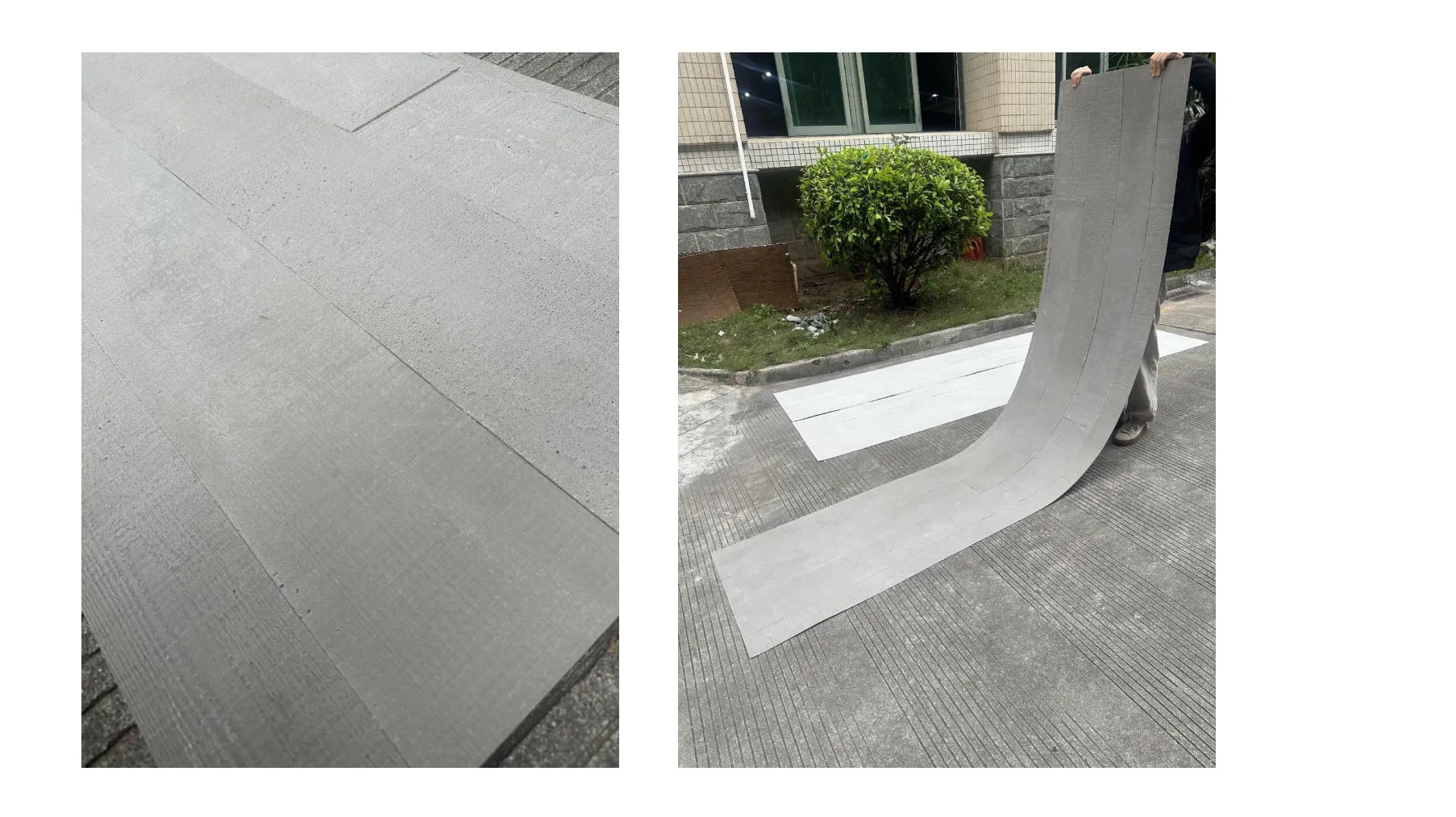
Let's talk about the star. The MCM Wood-Cement Board isn't your average composite. It's made with a blend of wood fibers and cement, reinforced with MCM's signature modified composite technology to make it lightweight (seriously—installers rave about how easy it is to lift, even on high floors) and flexible enough to bend around curves, but tough enough to stand up to years of use. But the real magic? How it looks in real life.
Take, for example, a photo from a recent project: a luxury high-rise lobby in Dubai. The walls are clad in Wood-Cement Board in a warm, honey-toned finish. The texture is subtle—you can see the faint grain of the wood fibers, like a well-worn oak table, but with a smoothness that feels intentional, not rough. The lighting in the lobby is soft, and when the afternoon sun hits the panels, they glow—warm, not harsh. It's the kind of wall you want to reach out and touch, just to confirm it's not real wood. But here's the kicker: that lobby has been open for two years, and there's not a single scratch or stain. No warping from the Dubai humidity, no fading from the sun. That's the MCM difference.
Another real photo: a residential corridor on the 15th floor of a building in Tokyo. The floors here take a beating—kids running, delivery people with heavy bags, pets tracking in mud. Instead of going with cold tile, the designer opted for Wood-Cement Board panels in a lighter, ash-gray shade. The photo shows the floor up close: the wood grain runs parallel, creating a sense of flow, and there's a slight matte finish that hides scuffs. What's impressive? Even after six months of use, the panels look brand new. A resident quoted in the project notes said, "I was worried it would look cheap, like fake wood, but it's the opposite—it feels so authentic, and I never have to stress about spills."
So, why are designers flocking to the Wood-Cement Board for high-rises? Let's break it down. First, weight. Traditional wood or stone panels add significant load to a building's structure, especially on upper floors. MCM's panels are up to 70% lighter than natural stone, which means engineers don't have to beef up the support beams—a huge cost-saver. Second, installation. Carrying heavy materials up 40 flights of stairs (or even using a crane) is a logistical nightmare. Wood-Cement Board panels are lightweight enough for two people to carry, cutting installation time by half, according to contractors we've spoken to.
Then there's versatility. High-rise interiors aren't one-size-fits-all. A lobby might need a bold statement, while a residential unit needs something cozy. Wood-Cement Board comes in a range of finishes—from the honey tone we mentioned earlier to a deep walnut, a soft maple, even a weathered gray that looks like driftwood. And because it's flexible, it can be used on walls, ceilings, even as accent pieces (think: a curved feature wall in a penthouse living room).
Sustainability is another win. MCM uses recycled wood fibers in its panels, and the production process emits less CO2 than traditional cement boards. For developers aiming for green building certifications (LEED, BREEAM), that's a big checkmark. Plus, since the panels last so long, there's less need for replacement—good for the planet, and good for the building's bottom line.
While Wood-Cement Board is stealing the spotlight, the Project Board Series has plenty of other players worth mentioning. Let's take a quick tour of some siblings that often show up in real photos alongside it:
To help you visualize how these products stack up, here's a quick breakdown of key players in the Project Board Series, based on real-world use cases and feedback from designers:
| Product | Key Features | Ideal For | Real Photo Vibe |
|---|---|---|---|
| Wood-Cement Board | Warm wood grain texture, lightweight, humidity-resistant | Lobbies, residential corridors, living rooms | Cozy yet durable—like a cabin in the sky |
| Wood Grain Board | Planked wood look, scratch-resistant, easy to clean | Kitchen backsplashes, accent walls, retail spaces | Classic and timeless—no fussy upkeep |
| Bamboo Mat Board | Woven organic texture, eco-friendly, flexible | Hotel lobbies, wellness centers, tropical-themed interiors | Relaxed and earthy—brings the outdoors in |
| Fair-Faced Concrete | Raw, industrial finish, high strength, fire-resistant | Tech offices, minimalist apartments, commercial spaces | Edgy and modern—cool without feeling cold |
Designers don't just pick materials out of a catalog—they need to see how they perform in real spaces. That's why MCM's "real photos" initiative has been a game-changer. Instead of relying on renderings, architects can flip through a portfolio of actual projects, seeing how the Wood-Cement Board ages, how it interacts with different lighting, and how it pairs with other materials.
Take a recent project in New York City: a 55-story mixed-use tower with residential units on the upper floors and retail on the lower levels. The design team wanted the residential corridors to feel like "home," not a hotel, so they used Wood-Cement Board in a soft, beige-wood finish. The real photos from the completed project show exactly that—warm lighting, the wood-cement walls paired with neutral carpets and potted plants, creating a space that feels welcoming, not sterile. A resident told the design team, "I walk down the hall and forget I'm in a high-rise. It feels like a boutique apartment building, not a skyscraper."
Then there's the retail space on the ground floor: they went with fair-faced concrete panels for a modern, urban look, but added Wood-Cement Board accents above the storefronts to soften the edge. The real photos show the contrast perfectly—concrete's cool gray against the wood-cement's warm tones, drawing pedestrians in without feeling too harsh.
At the end of the day, high-rise interiors need to do more than look good—they need to work, day in and day out. The MCM Project Board Series, and especially the Wood-Cement Board, checks all the boxes: durability, lightweight installation, sustainability, and that all-important "wow" factor. But don't just take our word for it—look at the real photos. Look at the spaces where people live, work, and connect, and see how these materials transform them from "just a building" to a place with soul.
Whether you're designing a luxury lobby, a cozy residential corridor, or a bustling commercial space, the Project Board Series has something to offer. And with real photos proving that these materials live up to the hype, it's no wonder architects and designers are making MCM their first choice for high-rise interiors. After all, in a world where first impressions matter, why settle for anything less than materials that look as good as they perform?
So, the next time you're in a high-rise and find yourself admiring the walls—take a closer look. Chances are, you're looking at MCM's Project Board Series. And if it's the Wood-Cement Board? You'll know it by that warm, inviting texture that feels like home, even 40 stories up.
Recommend Products












