
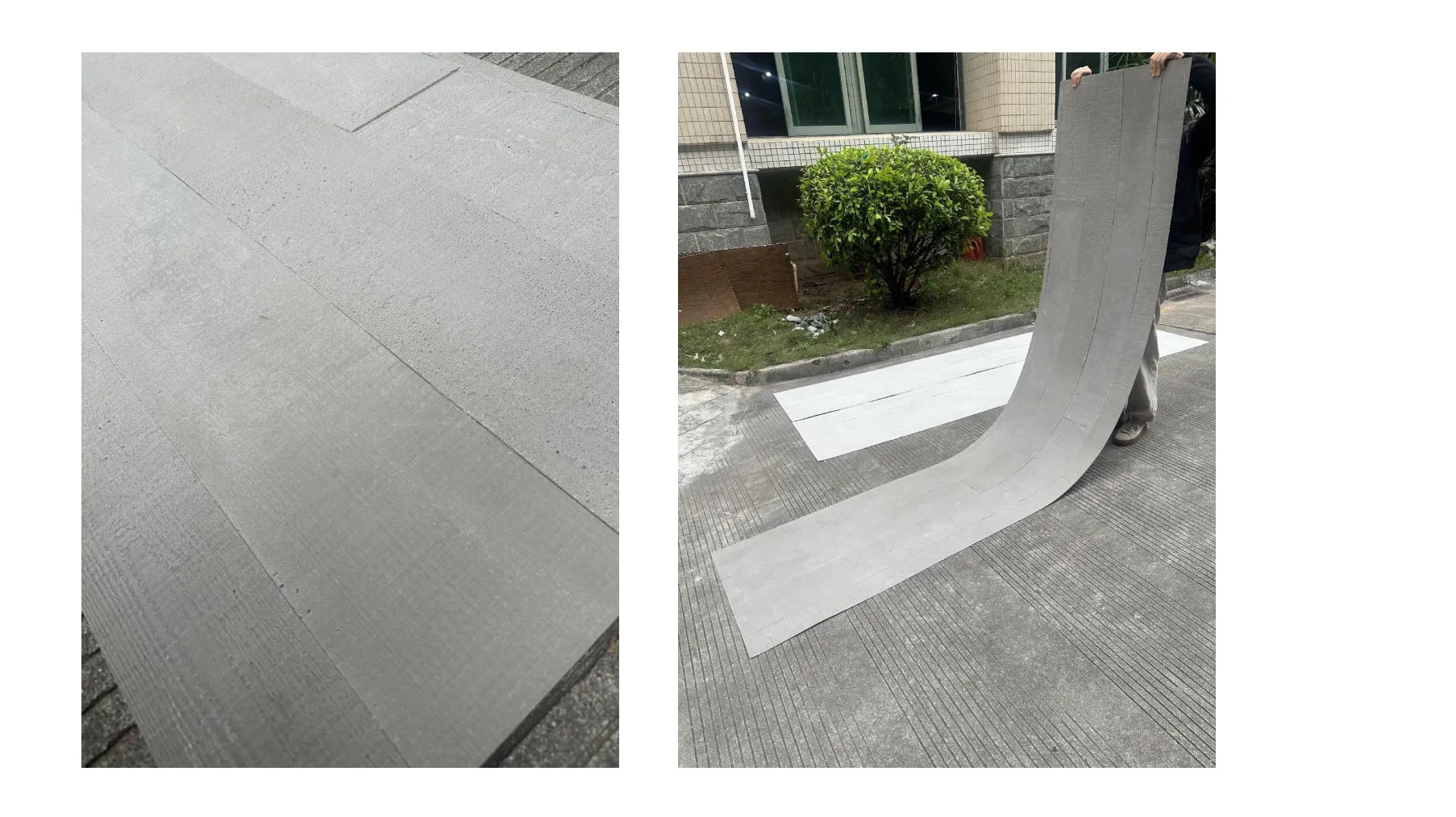
In the sun-drenched landscapes of Saudi Arabia, where tradition meets modernity, the exterior of a villa is more than just a wall—it's a statement. It speaks to the homeowner's taste, honors cultural roots, and stands as a shield against the harsh desert climate. In recent years, a quiet revolution has been unfolding across Riyadh, Jeddah, and Dammam: homeowners and architects are turning to MCM (Modified Composite Material) solutions to reimagine villa exteriors. Among these, MCM wood-cement board has emerged as a beloved choice, blending the warmth of natural wood with the resilience of industrial materials. Today, we dive into how this material, alongside other MCM innovations like MCM flexible stone and travertine (starry green) , is transforming villa facades—one renovation at a time.
Walk through any upscale Saudi neighborhood, and you'll notice a common thread: villas are designed to be both grand and welcoming. The exterior sets the tone for what lies beyond—the family gatherings, the quiet evenings, the memories made within. But in a climate where temperatures soar above 45°C in summer and sandstorms sweep through unexpectedly, beauty alone isn't enough. Materials must withstand UV radiation, resist moisture, and avoid warping or fading. For decades, homeowners faced a trade-off: choose natural wood for warmth and risk it warping under the sun, or opt for cold concrete that feels impersonal. Enter MCM wood-cement board—a material that laughs at this trade-off.
"We wanted our villa to feel like a 'home,' not a fortress," says Lina Al-Mansoori, a homeowner in Riyadh who renovated her family's 20-year-old villa last year. "Growing up, my grandfather's house had wooden shutters that creaked in the wind—warm, full of character. But when we tried to install real wood on our exterior, it started peeling within months. MCM wood-cement board changed everything. It looks just like the oak we loved, but after a year of Saudi summers, it still looks brand new."
At first glance, MCM wood-cement board could fool even the keenest eye. Its surface mimics the intricate grain patterns of cedar, oak, or teak, complete with the subtle knots and variations that make natural wood so charming. Run a hand over it, though, and you'll feel the difference: a smooth, sturdy texture that hints at its composite core. Made by blending wood fibers with cement and reinforcing agents, this material is lightweight (a fraction of the weight of solid wood or stone), fire-resistant, and impervious to pests—ideal for Saudi Arabia's unique challenges.
But what truly sets it apart is its versatility. Unlike natural wood, which limits design options due to its weight and fragility, MCM wood-cement board can be cut into custom shapes, curved around architectural details, or painted in earthy tones that complement the desert landscape. "We used it to clad the entire facade of a villa in Jeddah," says architect Omar Khalid. "The client wanted a modern take on the traditional Najdi mud-brick homes. The wood-cement board's grainy texture echoed the warmth of mud, while its durability meant we didn't have to worry about erosion from occasional rain. Paired with lunar peak silvery trim, it became the talk of the neighborhood."
While wood-cement board steals the spotlight, it rarely works alone. The magic of MCM lies in how its materials complement each other, allowing architects to craft layered, visually rich exteriors. Let's explore some standout options that often accompany wood-cement board in Saudi villa renovations:
| MCM Material | Key Features | Aesthetic Appeal | Climate Suitability | Best For |
|---|---|---|---|---|
| MCM Wood-Cement Board | Lightweight, wood-grain texture, fire-resistant, low maintenance | Warm, organic, blends with traditional and modern styles | Excellent—resists UV, moisture, and sand abrasion | Main facades, accent walls, pergolas |
| MCM Flexible Stone | Thin, bendable, real stone veneer look, easy to install | Earthy, textured, with natural stone variations (e.g., marble, granite) | High—resists heat and humidity, won't crack in temperature swings | Accent panels, column cladding, entranceways |
| Travertine (Starry Green) | Unique star-like mineral deposits, porous yet durable | Vibrant green base with subtle metallic flecks, evokes desert oases | Good—requires sealing but thrives in dry climates | Patio floors, garden walls, poolside accents |
| Lunar Peak Silvery | Metallic sheen, lightweight, scratch-resistant | Sleek, modern, with a soft silver glow that catches moonlight | Excellent—no fading, resistant to salt air (ideal for coastal Jeddah) | Trim, window frames, decorative borders |
| Fair-Faced Concrete | Raw, industrial look, high compressive strength | Minimalist, contemporary, with visible aggregate texture | Superior—heat-resistant, low maintenance | Modern villa facades, retaining walls, outdoor kitchens |
To truly understand the impact of MCM materials, let's step into the renovation journey of the Al-Harthy family in north Riyadh. Their 1990s villa, once clad in beige stucco, had begun to show its age: cracks from shifting soil, faded paint, and a facade that felt disconnected from their modern lifestyle. "We wanted to honor my parents, who built this home, but also make it our own," says daughter Reem Al-Harthy. "We dreamed of a space that felt cozy enough for family dinners yet impressive enough for guests."
The Al-Harthys partnered with architect Sarah Ahmed, who proposed a bold vision: cladding the main facade in MCM wood-cement board (in a warm oak finish) and pairing it with travertine (starry green) for the lower half of the walls. To add contrast, Sarah suggested lunar peak silvery for the window frames and a fair-faced concrete patio that extended from the villa to the garden. "The goal was to balance 'warmth' and 'strength,'" Sarah explains. "Wood-cement board brings the warmth, while the stone and concrete add the durability needed here."
The result? A villa that looks like it's been there for decades, yet feels utterly fresh. The wood-cement board, with its natural grain, softens the sharp lines of the modern architecture, while the starry green travertine adds a pop of color that echoes the date palms in the garden. "On weekends, neighbors stop to ask about the materials," Reem laughs. "My father, who was skeptical at first, now says it's the 'best upgrade we've ever made.'"
What makes MCM wood-cement board and its counterparts so special isn't just their technical specs—it's the emotions they evoke. For many Saudi families, a villa is a legacy, passed down through generations. Renovating its exterior isn't just about updating a structure; it's about breathing new life into a space that holds memories. MCM materials excel here because they bridge the old and the new.
Take travertine (starry green) , for example. Its earthy tones and sparkling mineral deposits remind many of the lush oases that have sustained desert communities for centuries. When used in a modern villa, it's a nod to heritage without feeling outdated. Similarly, MCM wood-cement board pays homage to the wooden doors and shutters of traditional Najdi homes, but with a durability that ensures it will protect the next generation.
"My grandmother used to tell stories about her childhood home, where the wooden beams creaked during sandstorms," says Ahmed, a Jeddah-based designer. "When I use wood-cement board, I'm not just installing a facade—I'm helping families keep those stories alive. The material looks like the wood she knew, but it won't fade or break. It's heritage, reimagined."
As Saudi Arabia continues to grow, with new villa developments and renovation projects on the rise, MCM materials are poised to play an even bigger role. Innovations like 3D printing series MCM panels (which allow for custom textures and patterns) and foamed aluminium alloy board (vintage gold) (adding a touch of luxury to modern designs) are already gaining traction. Homeowners are also increasingly prioritizing sustainability—MCM materials, which are often made from recycled content and require less energy to produce than natural stone, align perfectly with this shift.
But at the core, the appeal will always lie in that human connection. A villa's exterior, clad in MCM wood-cement board, doesn't just stand against the desert—it lives with it. It weathers storms, glows in the sunset, and welcomes loved ones home. In a world that often feels rushed, that's a gift worth investing in.
Whether you're renovating a family heirloom or building a new villa from scratch, the materials you choose for the exterior matter. They shape how you feel when you pull into the driveway, how your guests perceive your home, and how well it stands the test of time. MCM wood-cement board, with its blend of warmth and resilience, isn't just a trend—it's a solution that understands the unique needs of Saudi homeowners. Paired with materials like MCM flexible stone, travertine (starry green), and lunar peak silvery, it's a recipe for a villa exterior that's as beautiful as it is enduring.
So, to the homeowners of Saudi Arabia: the next time you look at your villa's exterior, think beyond the paint and the stucco. Think of the stories it could tell, the warmth it could exude, and the legacy it could hold. With MCM, that vision is closer than you think.
Recommend Products












