
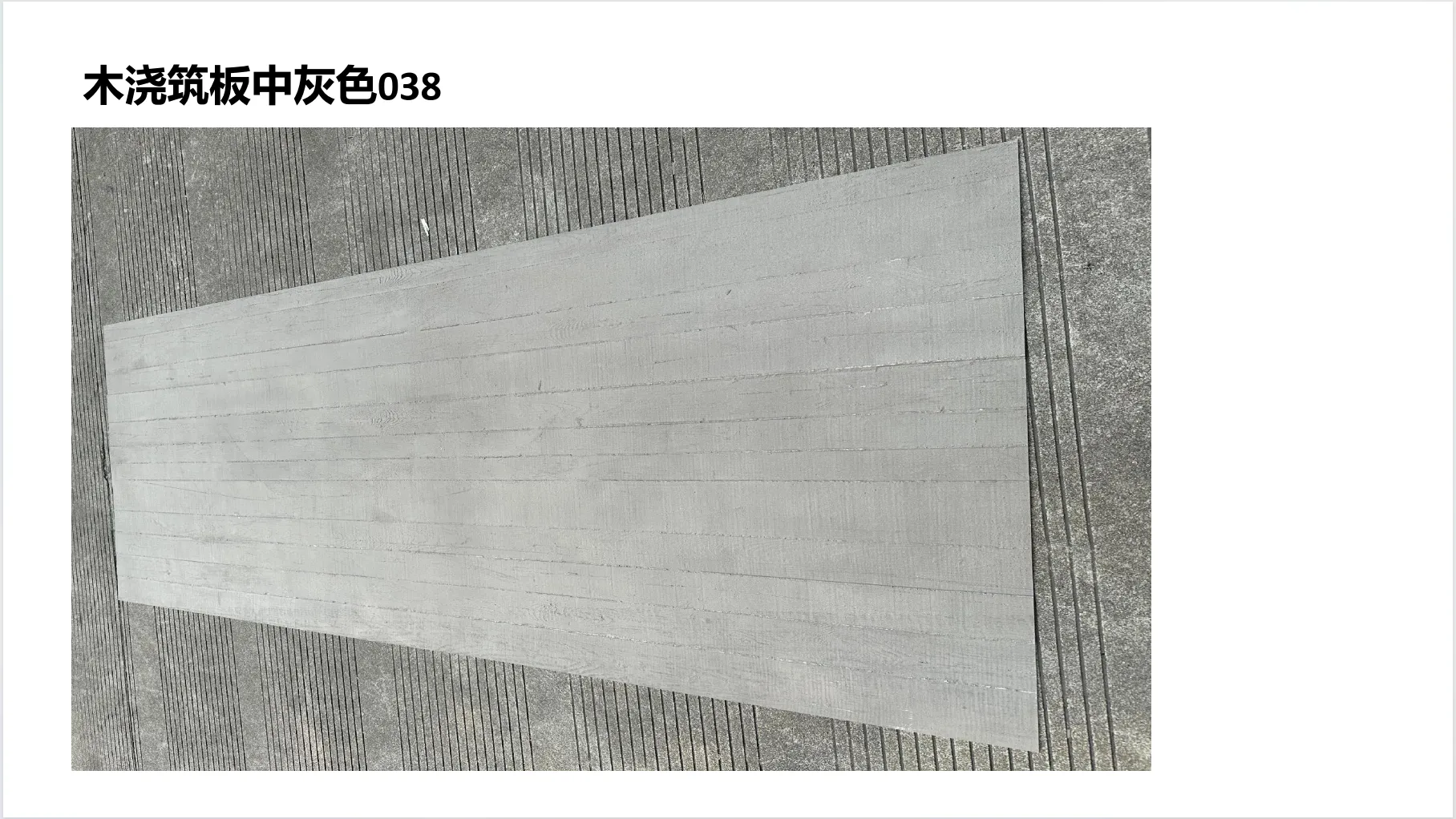
In the heart of Riyadh, where the desert sun dips low to gild the sky in hues of amber and rose, there stands a hotel that doesn't just accommodate guests—it tells a story. Its exterior, a tapestry of textures and tones, weaves together Saudi Arabia's rich cultural heritage with cutting-edge architectural innovation. Walk up to its facade, and your hand might brush against a surface that feels like weathered wood, yet stands unyielding against 50°C heat. Peer closer, and you'll notice a stone-like finish that bends gently around curved walls, defying the rigidity of traditional building materials. This is the magic of MCM materials at work—and today, we're diving into how wood concrete board , MCM flexible stone , and fair-faced concrete turned this vision into reality.
Saudi Arabia's landscape is a masterclass in contrasts: vast deserts stretching to the horizon, historic mud-brick villages clinging to rocky outcrops, and modern cities rising like mirages with glass and steel. For architects tasked with designing hotel exteriors here, the challenge is clear: create something that honors this duality while withstanding one of the harshest climates on Earth. Blistering summer heat, sandstorms that scour surfaces, and the need to balance modern luxury with cultural sensitivity—these aren't just bullet points on a checklist. They're the make-or-break factors that shape every design decision.
"We wanted the hotel to feel rooted in Saudi soil, not like a foreign import," says Lina Al-Mansoori, the lead architect on the project. "But roots need to be strong enough to survive the desert. Traditional stone is heavy, hard to shape, and in extreme heat, it absorbs and radiates warmth—making interiors feel like ovens. Wood? Beautiful, but in Saudi's humidity and termite risk, it's a maintenance nightmare. We needed materials that could breathe with the environment, not fight it."
That's where MCM (Modified Composite Material) stepped in. A range of lightweight, flexible cladding solutions, MCM products are engineered to mimic the look and texture of natural materials—wood, stone, concrete—while offering the resilience modern architecture demands. For this Saudi hotel, three stars emerged from the MCM lineup: wood concrete board (in both light grey and dark grey), MCM flexible stone , and fair-faced concrete . Let's break down why they became the project's backbone.
| Material | Key Features | Why It Shone in Saudi Arabia |
|---|---|---|
| Wood Concrete Board (Light Grey & Dark Grey) | Mimics weathered oak and teak; lightweight (1/5th the weight of natural wood); resistant to termites, moisture, and UV rays. | Added warmth to the facade without the upkeep of real wood. Light grey softened the sun's glare; dark grey added depth, echoing the shadow of desert rocks. |
| MCM Flexible Stone | Thin (as little as 3mm), bendable sheets that replicate travertine, slate, and desert sandstone; fire-resistant and easy to install on curved surfaces. | Allowed the design team to create sweeping, organic curves on the hotel's entrance canopy—mimicking sand dunes—without heavy structural support. |
| Fair-Faced Concrete | Sleek, uncoated finish with subtle texture; thermal insulation properties; low maintenance. | Provided a modern, minimalist contrast to the organic wood and stone, reflecting Saudi's forward-thinking spirit. |
The hotel's facade isn't just a wall—it's a conversation. "We drew inspiration from the najdi architecture of old Riyadh," Al-Mansoori explains, referencing the traditional mud-brick homes with their intricate latticework and earthy tones. "But we wanted to reimagine that for today. The wood concrete board, with its light grey finish, echoes the pale limestone of historic forts, while the dark grey adds the depth of shaded alleyways in old markets."
Walk around to the hotel's south wing, and you'll see the MCM flexible stone in action. Here, the material was shaped into undulating waves, mimicking the sand dunes of the Rub' al Khali desert. "Natural stone would have required massive steel supports to curve like that," says Ahmed Hassan, the project's construction manager. "MCM flexible stone weighs almost nothing by comparison. Our installers could carry sheets up ladders with one hand—saving time and labor costs. And when a sandstorm hit midway through installation? The sheets didn't chip or scratch. They just needed a quick hose-down, and they looked brand new."
The wood concrete board takes center stage at the hotel's entrance. Here, the light grey planks are arranged in a herringbone pattern, their texture so convincing that guests often reach out to touch them, expecting splinters. "A European tourist once asked where we sourced the old-growth oak," laughs Al-Mansoori. "I told her it was concrete—and she refused to believe me until I showed her the wood concrete board real photos from the factory. The way the light plays on the grain? It's uncanny."
Six months after opening, the hotel's exterior has already proven its mettle. "In July, when temperatures hit 48°C, the wood concrete board stayed cool to the touch," Hassan notes. "That's because MCM's core is insulating—unlike real wood, which would bake under the sun. The fair-faced concrete, too, has exceeded expectations. We worried it might stain in the dust, but rain (yes, Saudi gets occasional downpours!) washes it clean, leaving that signature matte finish."
For guests, the materials create an atmosphere that feels both luxurious and grounded. "The lobby opens onto a terrace clad in dark grey wood concrete board," says Mariam, a frequent guest from Jeddah. "In the evening, when the lanterns are lit, it feels like sitting in a traditional majlis (gathering room), but with all the modern comforts. The texture of the wood underfoot—warm, not cold like stone—makes you want to stay longer."
As Saudi Arabia continues to grow as a global travel hub, projects like this hotel are setting a new standard for exterior design. "Gone are the days of one-size-fits-all glass boxes," Al-Mansoori reflects. "Clients want buildings that tell a story— our story. MCM lets us do that without compromising on performance. The wood concrete board, the flexible stone—they're not just materials. They're tools to bridge the old and the new."
And for those who haven't seen it in person? The wood concrete board real photos and MCM flexible stone close-ups circulating online are causing a stir. "Architects from Dubai and Kuwait have reached out asking for samples," Hassan says with a smile. "I tell them: come visit. See how the desert light dances on the wood grain, how the stone curves like it's alive. MCM doesn't just build facades—it builds experiences."
In the end, that's the beauty of it: MCM materials don't just withstand the desert—they embrace it. And in doing so, they're helping Saudi Arabia write a new chapter in architectural history—one where tradition and innovation stand side by side, as sturdy and stunning as the hotel itself.
Recommend Products












